Liber XXXIV · Vodou & Hoodoo · Chapter IX: West African Vodun
West African Vodun: The Religion of Benin, Togo and Dahomey
West African Vodun explained: the Fon and Ewe religion of Benin and Togo, Mawu-Lisa and Legba, Dahomey and Ouidah, Fa divination, priests, art and revival.

West African Vodun is the indigenous religion of the Gbe-speaking peoples, especially the Fon, Ewe, Aja and Mina, of present-day Benin, Togo and neighbouring parts of Ghana and Nigeria. Its practitioners serve the vodun, a great and varied company of spirits and divine powers under a creator God, through shrines, initiated priesthoods, divination and possession. It is the ancestral source of Haitian Vodou and of the Jeje nation of Brazilian Candomblé, and remains a living religion practised by millions today.
The Gbe Peoples and the Meaning of Vodun§
The Gbe languages, which include Fon and Ewe, are spoken along the coastal plain between the Volta River and the Lagos lagoon. Here the word vodun names the mysterious powers that lie beyond ordinary understanding, and by extension the spirits who embody those powers and the shrines and objects through which they are served. Vodun is therefore not the name of a single deity or a single institution, but of an entire religious field.
Vodun is open and plural. Alongside spirits honoured across the region there are vodun of particular lineages, towns, markets and lagoons, and new vodun can arrive from elsewhere, adopted because they have proved effective. Some came from Yoruba neighbours to the east, others from the north. Scholars such as Suzanne Preston Blier and Dana Rush have stressed this capacity for absorption as a defining feature of the religion.
Mawu-Lisa, Legba and the Pantheon of Vodun§
The creator§
Fon theology, as recorded in Abomey in the early twentieth century by Melville and Frances Herskovits and others, often describes the creator as Mawu-Lisa, a paired deity in which Mawu, associated with the moon, night, coolness and motherhood, is joined with Lisa, associated with the sun, day, heat and strength. In some accounts both descend from an elder ancestor, Nana Buluku. Like Bondye in Haiti, the creator is supreme but distant, and most religious activity is directed to the vodun.
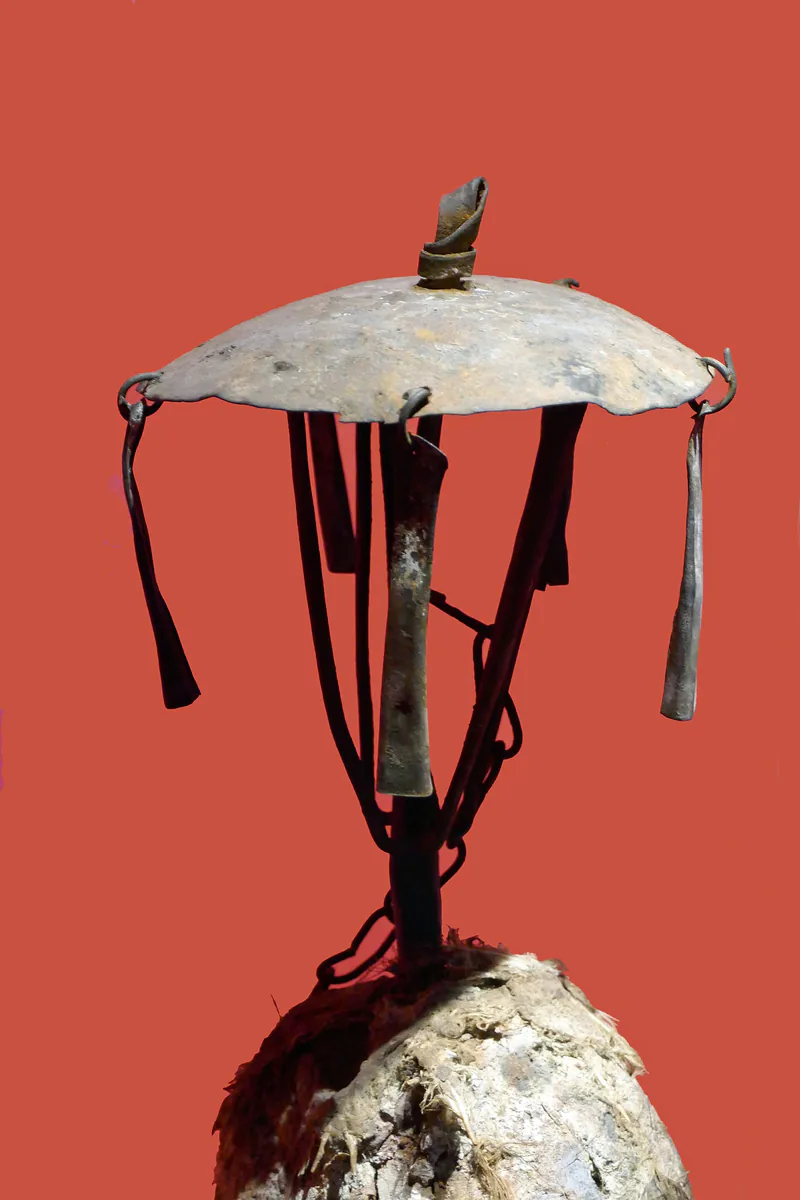
Major vodun§
- Legba is the guardian of entrances, messenger and interpreter between humans and the other vodun. Clay figures of Legba guard the gates of compounds and towns. He is witty, unpredictable and indispensable, and in the Americas he became the Haitian lwa Legba.
- Sakpata is the vodun of the earth and of smallpox and other epidemic diseases, feared and honoured as one who punishes and heals.
- Hevioso (Xɛbioso), also called So, is the vodun of thunder and lightning, who strikes wrongdoers and is linked to the Yoruba Ṣàngó.
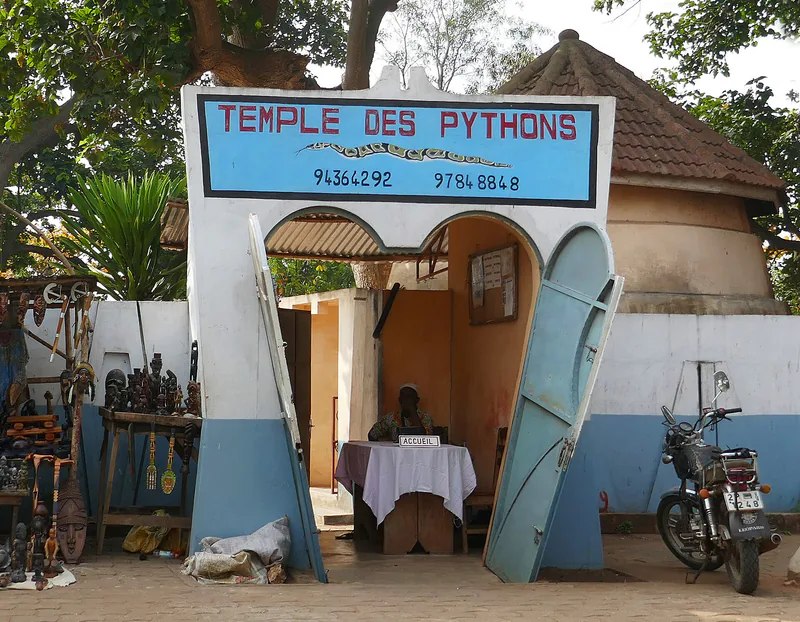
- Dan is the serpent, symbol of continuity, movement and wealth, often shown as a rainbow or a serpent biting its tail. The Temple of Pythons in Ouidah honours Dangbe, a python vodun. Dan became Danbala in Haiti.
- Gu is the vodun of iron, tools and war, akin to the Yoruba Ògún.
- Mami Wata is a water spirit of wealth, beauty and danger served across West and Central Africa. Her popular image as a woman with long hair holding snakes owes much to a nineteenth-century European print of a snake charmer, a good example of the way Vodun adopts new imagery.
Dahomey, Ouidah and the Atlantic Slave Trade§
The kingdom of Dahomey, with its capital at Abomey, grew from the early seventeenth century to become the dominant power of the region. In 1727 it conquered the coastal kingdom of Hueda and its port, Ouidah, which became one of the busiest slave-trading ports in West Africa. Over the following century and a half a large number of captives from the region were sold to European traders and carried to Saint-Domingue, Brazil, Cuba and elsewhere.
The kings of Dahomey used religion as an instrument of state. They organised the cults of royal ancestors, the tohosu (spirits of royal children born with unusual features) and imported vodun, and they appointed and controlled priests. European visitors described the annual royal ceremonies, the "customs", in which offerings for the royal dead included human sacrifices of war captives. These rites are historically documented, but European writers also exaggerated them and used them to justify colonial conquest; modern historians such as Robin Law and Edna Bay have tried to separate evidence from propaganda.
The link between Ouidah and the Americas is commemorated today by the Route des Esclaves, a road from the old town to the beach marked by monuments, and by the Door of No Return, erected in the 1990s. For the religion that formed on the other side of the ocean, see Haitian Vodou and The Lwa.
Priests, Initiates and Convents§
Each vodun is served by its own community. A senior priest or priestess (often called vodunon, "owner of the vodun", or by titles specific to particular cults) cares for a shrine, conducts offerings and oversees initiations. Initiates, the vodunsi ("wives" or "spouses of the vodun", whether male or female), undergo a period of seclusion in a convent, where they learn the songs, dances, language and prohibitions of their spirit and receive a new name. When they emerge, they may serve as mediums through whom the vodun appear in public ceremony.
Ceremonies feature drumming, songs, offerings and the possession of initiates. Among the Ewe of Togo and Ghana, the scholar Judy Rosenthal described the Gorovodu and Mama Tchamba orders, in which the spirits of northern peoples once enslaved by southern families are honoured. Such cults show that Vodun can remember the injustices of the regional slave trade from within.
Fa Divination, Bocio and Sacred Art§
Fa§
Divination is central to Vodun life. The system called Fa, closely related to Yoruba Ifá, is practised by specialist diviners (bokɔnɔ). Using palm nuts or a divining chain, the diviner obtains one of 256 signs (du), each linked to a body of verses, stories and prescribed sacrifices. Fa is also understood as a person's destiny, and consultations guide decisions about health, marriage, travel and the service of vodun.
Bocio and shrines§
Vodun art includes the bocio, carved wooden figures bound with cord, cloth, bones, iron and other materials, which serve as protective and empowering objects. Blier's African Vodun (1995) interprets them as expressions of the anxieties and hopes of their makers. Shrines may be heaped with offerings and layered with materials accumulated over decades. European travellers called such objects "fetishes", from the Portuguese feitiço, a term now avoided by most scholars because of its colonial overtones.
Royal art of Dahomey, including the appliqué cloths, bas-reliefs of the palaces at Abomey and metal sculptures, also drew on vodun imagery. The Royal Palaces of Abomey were inscribed on the UNESCO World Heritage list in 1985.
Colonialism, Revolution and the Vodun Revival§
France conquered Dahomey in 1892–1894, exiling King Béhanzin, and colonial administrators and missionaries treated Vodun as superstition. Christianity and Islam spread widely, yet many people combined church or mosque with Vodun obligations.
After independence in 1960, and especially under the Marxist-Leninist government of Mathieu Kérékou (1972–1990), the state campaigned against what it called "feudal" forces and sorcery, and Vodun priests faced persecution. With the democratic transition of 1990 the situation reversed. An international festival of Vodun culture, Ouidah 92, was held in early 1993, and in the 1990s Benin made 10 January a national holiday for Vodun and traditional religions. Each year large crowds gather in Ouidah for celebrations that combine ritual, music and cultural tourism.
Vodun continues to change. It interacts with Pentecostal Christianity, often in tension, and with diaspora practitioners from Haiti, Brazil and the United States who come to Benin in search of roots. For the comparison between Vodun and its American descendants, see What Is Voodoo? and, for the Brazilian Jeje tradition, Candomblé and Umbanda.
Frequently asked questions§
Is Vodun the same as Haitian Vodou?§
No, but they are closely related. Haitian Vodou developed in colonial Saint-Domingue from Fon, Yoruba and Kongo traditions together with Catholicism. Many of its spirits, such as Legba and Danbala, descend from vodun of the Fon, but the two religions have distinct histories, languages and rituals.
Where is Vodun practised today?§
Mainly in southern Benin and Togo, and among Ewe communities in Ghana and Gbe-speaking communities in Nigeria. Many people who identify as Christian or Muslim also take part in Vodun ceremonies or consult its priests.
What happens on 10 January in Benin?§
Since the 1990s Benin has marked 10 January as a public holiday for Vodun and traditional religions. The largest celebrations take place in Ouidah, with ceremonies, processions and music.
Did Vodun involve human sacrifice?§
The royal court of Dahomey did practise human sacrifice in its state ceremonies before the colonial conquest, as did many states in world history. These were political rites of the kingdom, not a feature of Vodun as practised by ordinary communities, and they ended over a century ago.
Sources and further reading§
- African Vodun: Art, Psychology, and Power — Suzanne Preston Blier, 1995
- Dahomey: An Ancient West African Kingdom — Melville J. Herskovits, 1938
- Vodun in Coastal Bénin: Unfinished, Open-Ended, Global — Dana Rush, 2013
- Wives of the Leopard: Gender, Politics, and Culture in the Kingdom of Dahomey — Edna G. Bay, 1998
- Ouidah: The Social History of a West African Slaving Port, 1727–1892 — Robin Law, 2004
- Possession, Ecstasy, and Law in Ewe Voodoo — Judy Rosenthal, 1998
- Flash of the Spirit: African and Afro-American Art and Philosophy — Robert Farris Thompson, 1983