Liber I · Alchemy
Liber I
Alchemy
The Great Work, from Zosimos and Jabir to Paracelsus, Newton and Jung.
Alchemy was at once a laboratory craft, a natural philosophy and, for many of its practitioners, a spiritual discipline. This section follows it from Greco-Egyptian Alexandria through the Arabic Jabirian corpus and the Latin West to the chymistry of Boyle and Newton, and then into the psychological readings of C. G. Jung. Articles explain the Philosopher's Stone, the tria prima of salt, sulphur and mercury, the colour stages of the Work, alchemical emblems, and Chinese external and internal alchemy.
Chapters
The primary texts
All 1On the shelf
All 19 books Alchemy & MysticismAlexander Roob Alchemy Tried in the FireWilliam R. Newman Alchemy Tried in the FireWilliam R. Newman & Lawrence M. Principe AlchemyJohannes Fabricius AlchemyJohannes Fabricius Alchimie et paracelsisme en France à la fin de la Renaissance (1567–1625)Didier Kahn Alchimie et paracelsisme en France à la fin de la Renaissance (1567–1625)Didier Kahn Aula LucisThomas Vaughan Aula LucisThomas Vaughan
 A Dictionary of Alchemical ImageryLyndy Abraham The Forge and the CrucibleMircea Eliade The Forge and the CrucibleMircea Eliade Hermès TrismégisteDidier Kahn Hermès TrismégisteDidier Kahn
 The Hermetic MuseumA. E. Waite The Janus Faces of GeniusBetty Jo Teeter Dobbs The Janus Faces of GeniusBetty Jo Teeter Dobbs
 Mysterium ConiunctionisC. G. Jung Newton the AlchemistWilliam R. Newman Newton the AlchemistWilliam R. Newman ParacelsusCharles Webster ParacelsusCharles Webster ParacelsusAndrew Weeks ParacelsusAndrew Weeks
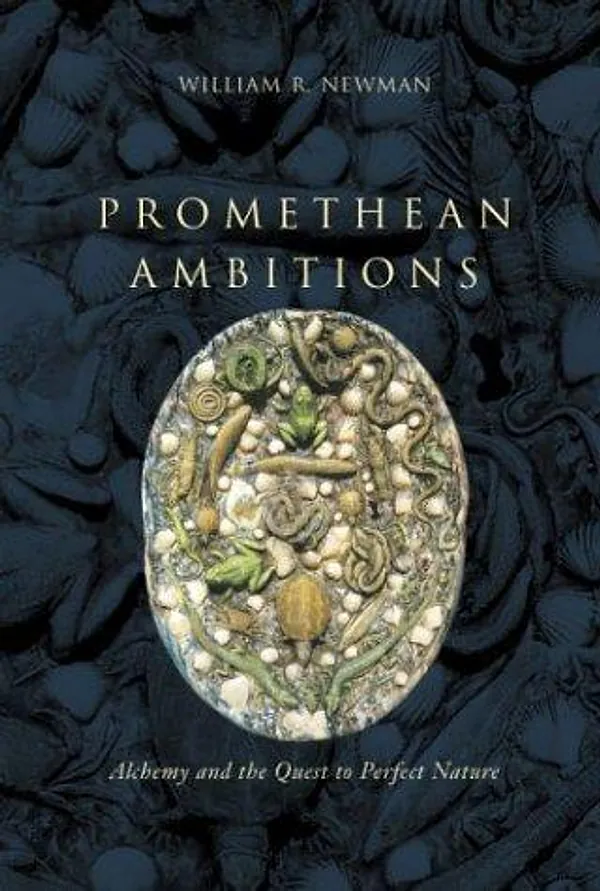 Promethean AmbitionsWilliam R. Newman
 Psychology and AlchemyC. G. Jung The Sceptical ChymistRobert Boyle The Sceptical ChymistRobert Boyle
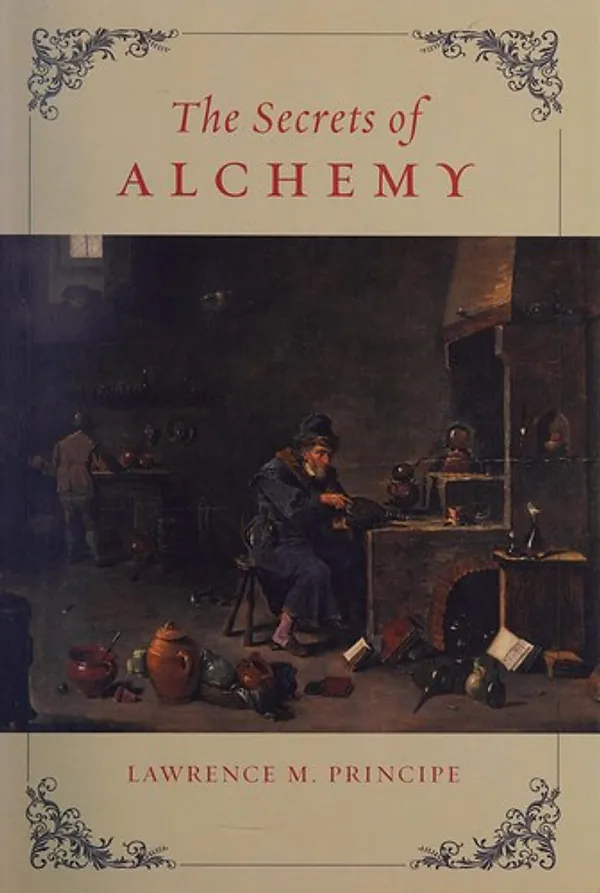 The Secrets of AlchemyLawrence M. Principe The Summa Perfectionis of Pseudo-GeberWilliam R. Newman The Summa Perfectionis of Pseudo-GeberWilliam R. Newman
Chronology
The full timeline- Empedocles teaches the four rootsc. 5th century BCE
- Zosimos of Panopolis writes on alchemyc. 300
- The Jabirian alchemical corpusc. 9th–10th century
- Zhang Boduan writes the Wuzhen pian1075
- Paracelsus burns the medical canon1527
- Death of Paracelsus1541
- Rosarium philosophorum printed1550
- Khunrath's Amphitheatrum1595
- Flamel's Hieroglyphic Figures published1612
- Maier's Atalanta fugiens1617
- Fulcanelli's Le Mystère des cathédrales1926