The Elixir of Life: Alchemy's Quest to Conquer Old Age
The elixir of life in alchemy: Chinese elixirs of immortality, Indian rasayana, Bacon and Rupescissa, potable gold, long-lived adepts and modern longevity.

The elixir of life is the substance that alchemists in many cultures hoped would cure disease, halt ageing and greatly prolong human life, in some traditions even granting immortality. It took different forms in Chinese, Indian, Islamic and European alchemy, from mineral elixirs eaten by Chinese emperors to the distilled "quintessence" of a medieval friar and the potable gold of Renaissance physicians. No elixir ever did what was claimed, and some caused serious harm, but the idea shaped medicine, chemistry, religion and literature for two thousand years.
What the elixir of life meant§
The word elixir comes from the Arabic al-iksīr, itself derived from a Greek word for a dry medicinal powder. In early Arabic and Latin alchemy it meant the agent that perfected metals, the substance otherwise known as the Philosopher's Stone. Because base metals were thought of as "sick" gold, it seemed natural to many writers that a medicine able to heal metals might also heal human bodies. From this analogy grew the idea of an elixir vitae, a medicine of life.
Different traditions meant different things by it. Some sought a cure for all diseases, others a slowing of old age, others physical immortality or a spiritual transformation in which the body itself became incorruptible. The historian Gerald Gruman, in his study of ideas about prolonging life (1966), showed how widespread such hopes were across cultures, and how often they were tied to religious ideas of paradise, purity and the end of time. The general setting of the alchemical tradition is described in What Is Alchemy?.
Elixirs of immortality in China§
China produced the oldest and most persistent search for an elixir of immortality. The First Emperor of Qin (r. 221–210 BCE) sent expeditions to find the islands of the immortals, said to hold a drug of deathlessness, and under the Han emperor Wu the master Li Shaojun reportedly advised that cinnabar be transformed into gold for eating vessels as a step towards immortality. By the fourth century CE, Ge Hong's Baopuzi ranked the "golden elixir" (jindan), prepared in the furnace from minerals, above all herbal and dietary methods.
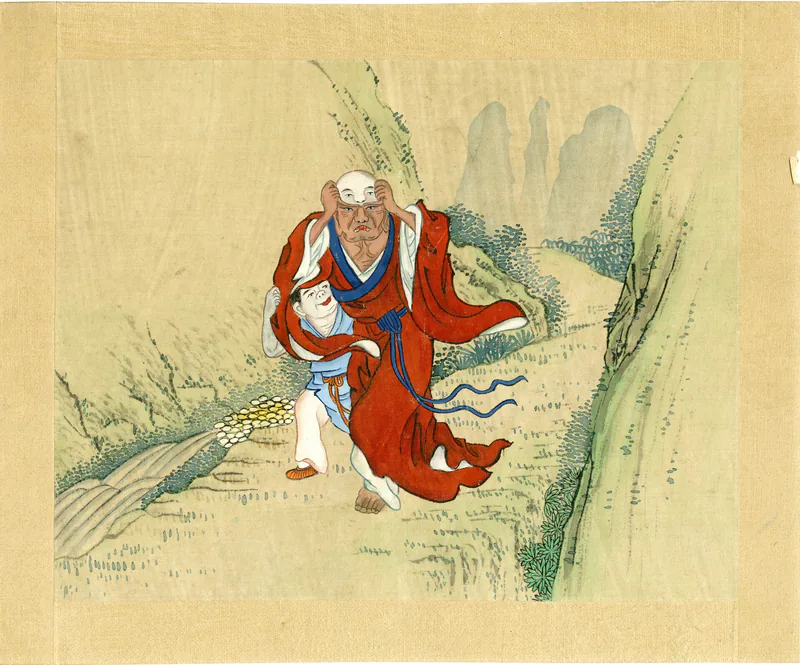
These elixirs often contained mercury, arsenic and other toxic minerals, and Chinese historians recorded the deaths of eminent people who took them, including, it is believed, several Tang emperors in the ninth century. The search for an outer elixir gradually gave way to inner alchemy (neidan), in which the elixir was formed within the practitioner's own body and mind through meditation, as in the Wuzhen pian and the older Cantong qi. The Chinese story is told more fully in the guide to Chinese alchemy and the article on Taoist immortality.
Rasayana and the perfected body in India§
In India, rasayana is one of the eight traditional branches of Ayurveda, the branch devoted to rejuvenation and long life. Classical medical texts describe rejuvenating regimens of diet, conduct and herbal preparations. From roughly the late first millennium CE, a distinct tradition of alchemy, often called rasashastra or "the science of mercury", developed alongside tantric religion. Its texts treated mercury, identified with the seed of the god Shiva, as the supreme agent of transformation, able both to perfect metals and to make the body imperishable.
David Gordon White, in The Alchemical Body (1996), showed how this alchemy belonged to the world of the Siddhas, tantric adepts who sought liberation in a perfected, divine body rather than escape from the body. Its methods are of historical and religious interest only. Many of its preparations were based on toxic metals, and modern public-health studies have found dangerous levels of heavy metals in some traditional remedies sold today. The wider religious setting is described in the article on tantra.
Prolonging life in medieval Islamic and Latin alchemy§
Arabic alchemists, including the authors of the corpus attributed to Jabir ibn Hayyan, developed the elixir mainly as a metallic medicine, but some writers extended its powers to the human body. When Arabic alchemy reached Latin Europe in the twelfth and thirteenth centuries, the medical promise of the elixir became a major theme.
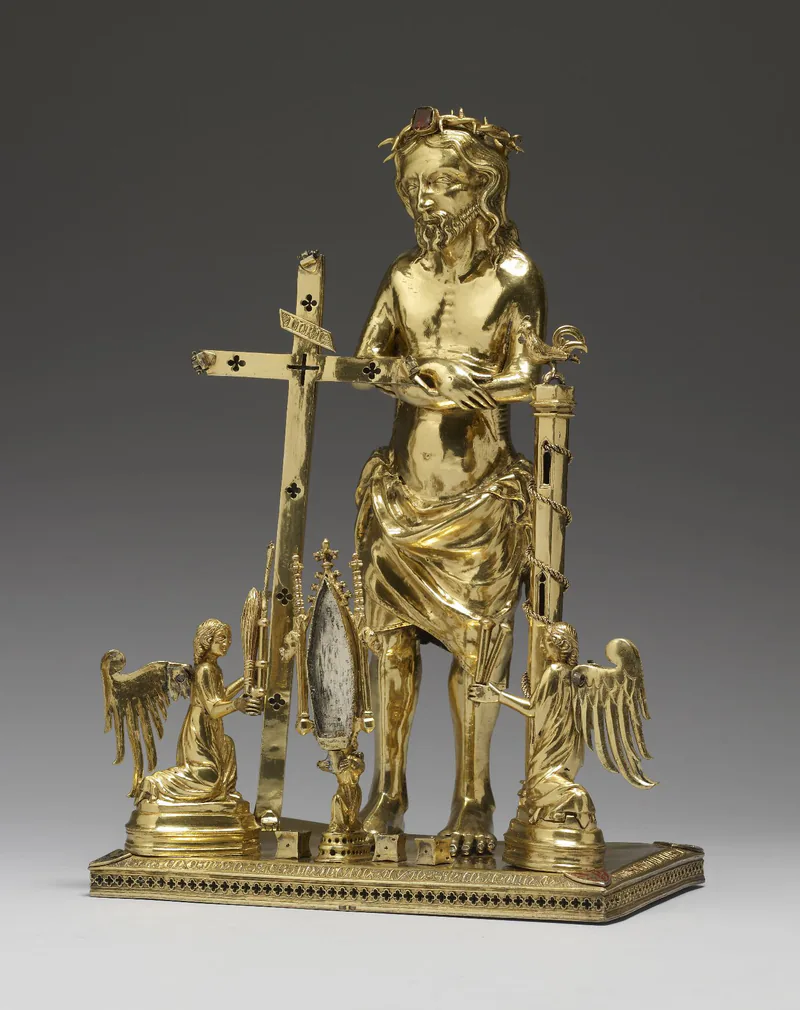
The English Franciscan Roger Bacon (c. 1220–c. 1292) argued that alchemy, joined with medicine and a proper regimen, could greatly lengthen human life, perhaps restoring the long lifespans of the biblical patriarchs. A treatise on delaying the accidents of old age circulated under his name and was translated into English in 1683 as The Cure of Old Age, and Preservation of Youth. Physicians such as Arnald of Villanova were also credited, often falsely, with works on preserving youth.
The most influential medieval contribution came from the Franciscan John of Rupescissa (c. 1310–c. 1366). In his On the Consideration of the Quintessence, written in the mid-fourteenth century, he described a "quintessence" obtained by repeated distillation of wine, essentially concentrated alcohol, which he believed to be an incorruptible, heaven-like substance able to preserve the body. Rupescissa wrote in expectation of the coming of Antichrist and wanted to equip faithful preachers with health and strength for the last days; Leah DeVun's study of 2009 shows how closely his alchemy and his prophecy were joined.
Potable gold and the Renaissance elixirs§
Renaissance physicians took up these ideas. Marsilio Ficino, in his Three Books on Life (1489), devoted the second book to prolonging the lives of scholars and recommended, among many other things, remedies containing gold, the metal of the sun. Gold, incorruptible and solar, seemed the ideal medicine against decay, and aurum potabile, "drinkable gold", became one of the most prestigious remedies of the age. In early seventeenth-century London, the physician Francis Anthony sold a potable gold that brought him wealth and conflict with the College of Physicians.
Paracelsus (1493/94–1541) turned alchemy decisively towards medicine. His treatise On Long Life, published after his death, discussed how the body's vital balsam might be preserved, and his followers sought powerful chemical arcana as remedies. Many of these preparations used mercury, antimony and other toxic substances; their history belongs to the rise of chemical medicine, not to any safe practice. Then as now, the pursuit of longevity through alchemy was no substitute for proper medical care.
Legends of long-lived adepts§
Belief in the elixir was sustained by stories of people who had supposedly found it. A tradition attached to the medieval author known as Artephius held that he had lived for more than a thousand years. The Parisian scribe Nicolas Flamel (d. 1418), posthumously turned into a successful alchemist, was said by the French traveller Paul Lucas in the early eighteenth century to be still alive in the East. The eighteenth-century courtier known as the Count of Saint-Germain was rumoured to be centuries old and to possess an elixir, rumours he did little to discourage.
Such legends belong to the wider world of alchemical hoaxes and transmutation claims and to the lives of the alchemists as they were imagined by later generations. They show how the elixir worked as a symbol of secret mastery: the adept who had conquered death was the ultimate proof that the art was real.
The elixir in literature and modern longevity§
The Romantic age made the elixir a literary theme. Mary Shelley's Victor Frankenstein is first fired by the old dream of the philosopher's stone and the elixir of life, and her short story "The Mortal Immortal" (1833) follows a pupil of Cornelius Agrippa who drinks an elixir and finds endless life a burden. Honoré de Balzac's "The Elixir of Long Life" (1830) and Edward Bulwer-Lytton's novel Zanoni (1842), with its immortal Rosicrucian adepts, explored the moral cost of escaping death.
In modern culture the term survives in advertising, fantasy fiction and the language of anti-ageing science. Historians such as Gruman have traced a long line from the alchemists' hopes to modern debates about extending the human lifespan, though contemporary biomedical research rests on quite different foundations. In the alchemical tradition itself the elixir also took on a spiritual meaning, as the transformation of the inner person rather than the indefinite prolongation of the outer one, a theme followed in the article on spiritual alchemy.
Frequently asked questions§
What is the elixir of life?§
It is a legendary substance sought by alchemists that would cure all diseases, restore youth and prolong life, in some traditions indefinitely. It was often identified with the Philosopher's Stone or with potable gold.
Did anyone ever find the elixir of life?§
No. Many people claimed to possess it and legends grew up around supposedly long-lived adepts, but no elixir has ever been shown to prolong life. Some historical elixirs, especially those made from mercury and other metals, were poisonous.
What is the difference between the elixir of life and the Philosopher's Stone?§
The terms overlap. "Elixir" originally meant the agent that transmuted metals, the same thing as the Stone, but over time "elixir of life" came to mean specifically a medicine for health and longevity.
Sources and further reading§
- A History of Ideas about the Prolongation of Life — Gerald J. Gruman, 1966
- Great Clarity: Daoism and Alchemy in Early Medieval China — Fabrizio Pregadio, 2006
- The Alchemical Body: Siddha Traditions in Medieval India — David Gordon White, 1996
- Prophecy, Alchemy, and the End of Time: John of Rupescissa in the Late Middle Ages — Leah DeVun, 2009
- The Cure of Old Age, and Preservation of Youth — Roger Bacon, 1683
- Three Books on Life (De vita libri tres) — Marsilio Ficino, 1489
- The Secrets of Alchemy — Lawrence M. Principe, 2013