Liber I · Alchemy · Chapter II: Alchemists
Jabir ibn Hayyan: The Jabirian Corpus and Arabic Alchemy
Jabir ibn Hayyan and the Jabirian corpus: the legend, the debate over authorship, the science of the balance, elixirs, and the Latin Geber of medieval Europe.
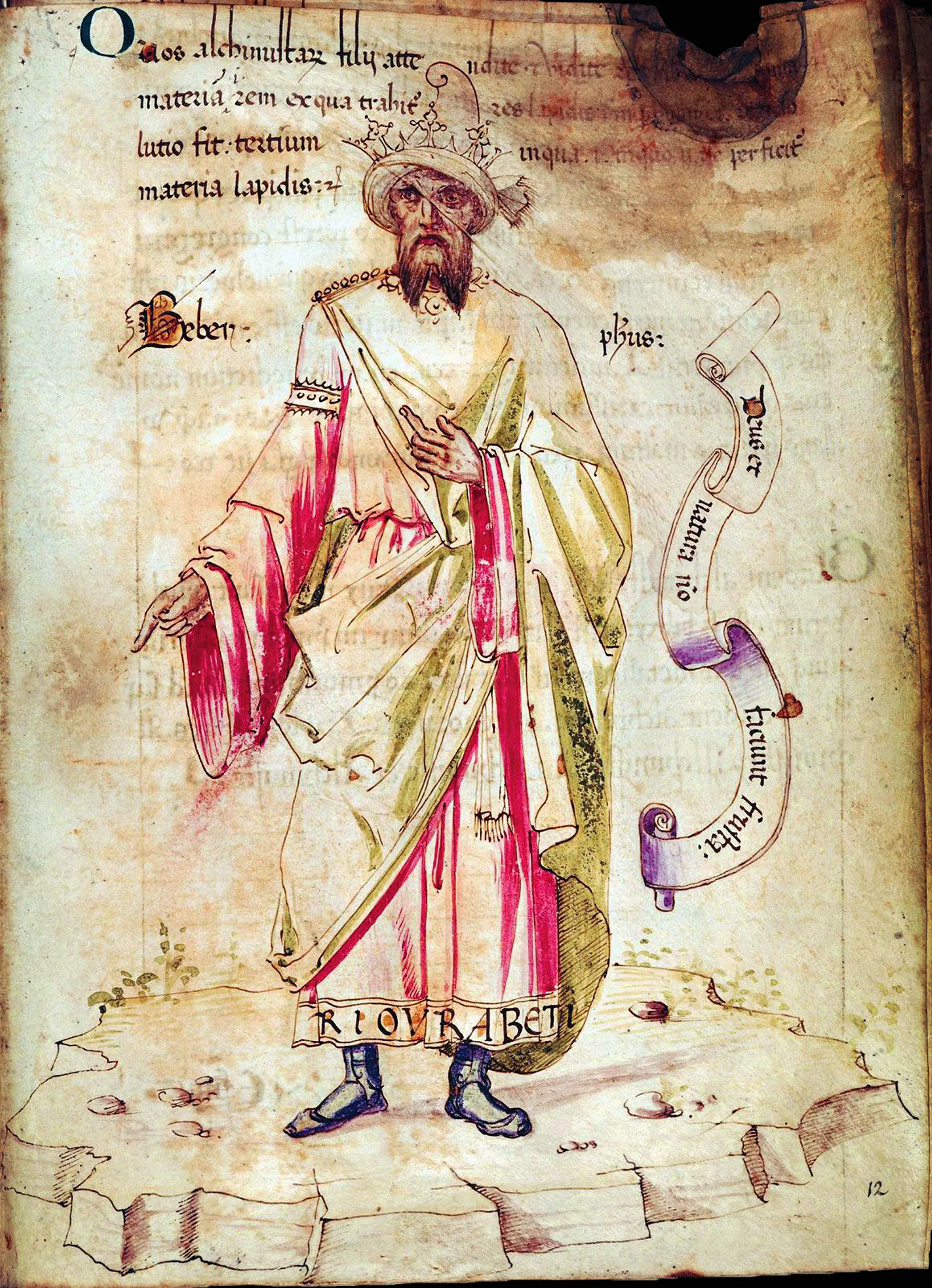
Jabir ibn Hayyan, known in medieval Europe as Geber, is the name attached to the largest and most influential body of Arabic alchemical writings, the Jabirian corpus. Tradition makes him an eighth-century alchemist of Kufa and a disciple of the Shi'i imam Ja'far al-Sadiq, but most modern scholars think the hundreds of treatises under his name were composed over a long period, largely in the ninth and tenth centuries, by authors working in Shi'i esoteric circles. The corpus gave Islamic and later European alchemy its theory of the elixir and its systematic approach to the laboratory.
The legend of Jabir ibn Hayyan§
According to the biographical tradition, Abu Musa Jabir ibn Hayyan was the son of a druggist of the Arab tribe of Azd who supported the Abbasid cause and was executed in Khurasan. Jabir is said to have grown up in Arabia and Kufa, studied under the imam Ja'far al-Sadiq (d. 765), and later enjoyed the patronage of the Barmakid viziers at the court of Harun al-Rashid. Later stories even claimed that his laboratory had been uncovered in Kufa long after his death, complete with a golden mortar, a tale that says more about his fame than about his life.
The earliest substantial account is in the Fihrist (catalogue) of the Baghdad bookseller Ibn al-Nadim, completed in 987. Ibn al-Nadim records that some people of his time denied that Jabir had ever existed, while others said he was real but that the books were written by others. He himself defended Jabir's existence and listed hundreds of titles. The legend thus already sat uneasily with the evidence when the corpus was still new.
The Jabirian corpus and the authorship debate§
The writings ascribed to Jabir are enormous in number: medieval lists run to hundreds of titles, and Jabir himself is made to speak of thousands. They are arranged in collections such as the One Hundred and Twelve Books, the Seventy Books, the Ten Books of Rectification, the Books of the Balances and the Five Hundred Books, together with works on medicine, philosophy, magic squares, talismans and religion. They cross-refer to one another constantly, presenting themselves as a single teaching deliberately scattered so that only the diligent can reassemble it.
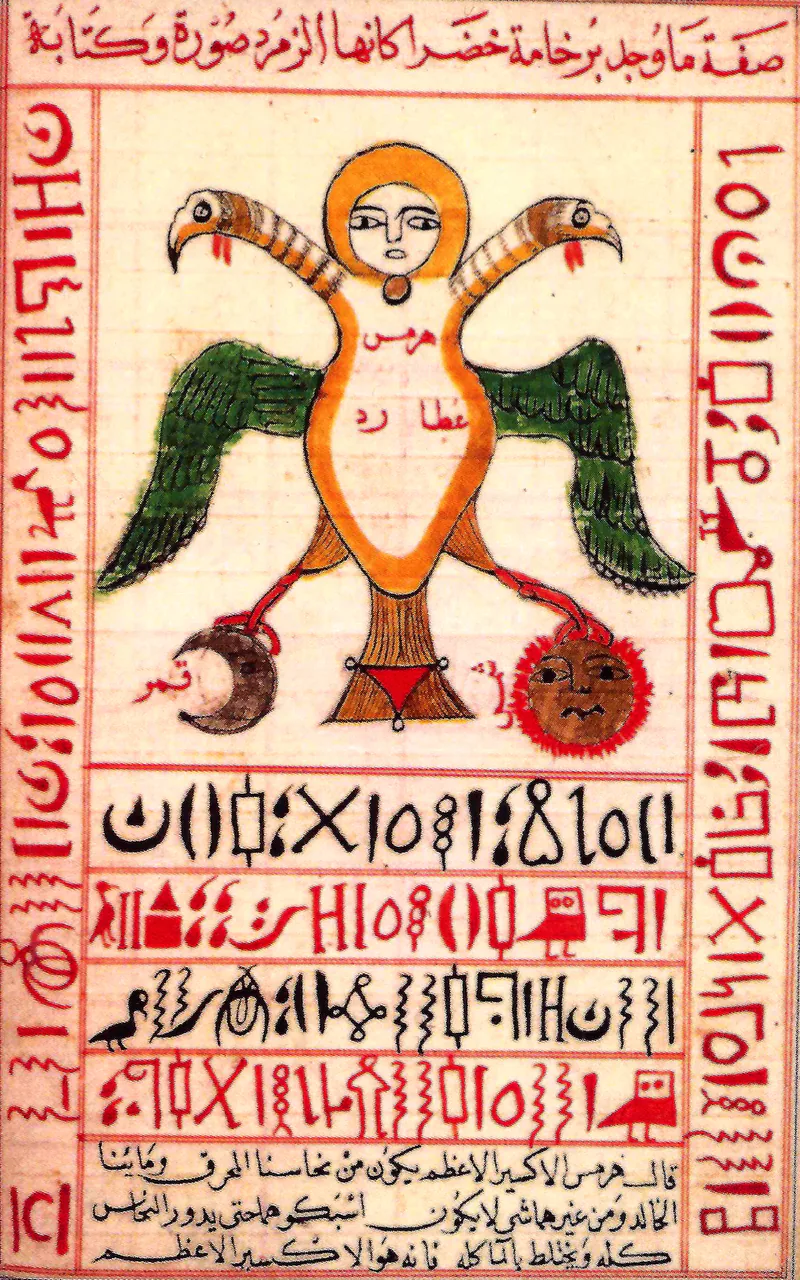
In his landmark study of 1942–43, Paul Kraus argued that the corpus could not be an eighth-century work. It drew on Greek scientific texts translated in the ninth century, used technical vocabulary of that period, and was saturated with ideas characteristic of Isma'ili and other Shi'i esoteric movements of the late ninth and tenth centuries, including expectations about a coming imam. Kraus concluded that the corpus was produced by a school over several generations. Fuat Sezgin later defended an eighth-century origin for at least part of the material. Current scholarship generally follows Kraus in seeing the corpus as a layered collection of mostly later date, while allowing that some elements may be older. The wider setting is described in the history of Islamic occult sciences.
Jabirian theory: natures, sulphur and mercury§
Jabirian alchemy rests on a physics of qualities. Following Greek natural philosophy, it holds that all bodies combine the four "natures" of hot, cold, wet and dry, but it treats these natures almost as separable substances that can be isolated in the laboratory and recombined. Metals, in this view, are formed in the earth from sulphur and mercury; each metal has some natures on its "outside" and others in its "inside", and transmutation means turning a metal inside out or correcting the balance of its natures.
This sulphur–mercury theory, shared with the Arabic Book of the Secret of Creation that also contains the Emerald Tablet, became the standard account of metals in both Islamic and Latin alchemy. It explains why the elixir seemed possible: if gold is simply a perfectly balanced union of the same principles found in lead, a medicine supplying exactly what lead lacks could perfect it. The idea was taken up in the Western concept of the Philosopher's Stone.
The science of the balance and the elixirs§
The most distinctive feature of the corpus is its "science of the balance" ('ilm al-mizan). The Jabirian authors held that the proportions of the natures in any substance could be measured by analysing the letters of its Arabic name, each letter having a numerical value and position. Central to the scheme is the series 1, 3, 5 and 8, whose sum, 17, recurs as a key number of the system. Through this method the alchemist was meant to calculate exactly how much of each nature was needed to correct a metal. The idea joins alchemy to the letter speculation found in other esoteric traditions, comparable in some ways to Jewish gematria.
In practice, the corpus is remarkable for its use of organic materials. Elixirs were to be prepared not only from minerals but from plants and from animal substances such as hair, blood, bones and eggs, which were repeatedly distilled to separate their natures. The books also describe the "science of generation" (takwin), the artificial production of minerals, plants, animals and even human beings, a theme that has attracted much modern attention as an early meditation on the limits of art and nature.
Religion, esotericism and the imam§
The Jabirian corpus is not a purely technical literature. It presents alchemical knowledge as part of a sacred hierarchy of learning transmitted from the imam to his initiates, and it frequently warns that its true meaning is hidden from the unworthy. Numbers, letters and cosmic cycles carry religious significance, and the corpus shares themes with the encyclopaedia of the Brethren of Purity and with Isma'ili cosmology. For this reason historians read it as a document of Shi'i esotericism as much as of chemistry. Its relation to the broader Muslim world of thought is discussed in the article on Islamic philosophy.
Geber in Latin Europe§
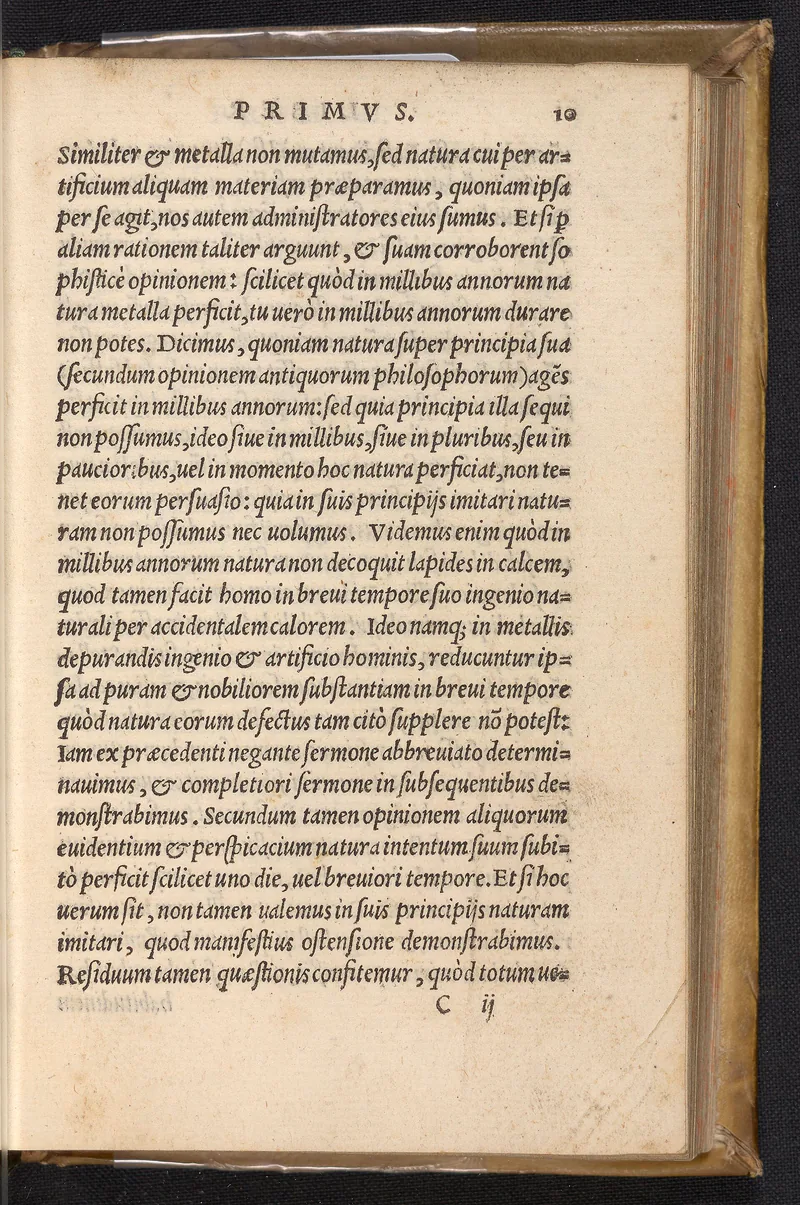
A few Jabirian works, such as the Book of Mercy and the Book of Seventy, were translated into Latin in the twelfth or thirteenth century. Far more influential, however, was the Summa perfectionis magisterii ("The Sum of Perfection of the Magistery"), which circulated under the name Geber from the late thirteenth century. Marcellin Berthelot first argued in the 1890s that it was not a translation from Arabic, and William Newman has shown that it was probably written by Paul of Taranto, an Italian Franciscan. Drawing on al-Razi and Avicenna as well as the Jabirian tradition, the Summa offered a clear, experimental account of metals based on tiny particles and on mercury as the key principle.
Further Latin texts, such as On the Investigation of Perfection and the Book of Furnaces, were added to the Geber name in the fourteenth century. These pseudo-Geber works contain some of the earliest clear European recipes for mineral acids, which is why popular histories credit "Jabir" with discovering nitric acid or aqua regia; the evidence does not support that attribution for the Arabic corpus. The popular claim that the English word "gibberish" derives from Geber's obscure language is also doubtful. The Latin reception is traced further in the history of Western alchemy.
Jabir's place in the history of alchemy§
Whoever wrote the Jabirian corpus, it marks a decisive moment. It turned the scattered recipes and allegories of Greek alchemy into a systematic theory with a coherent physics, a method of measurement and an ambitious programme of laboratory work. Through al-Razi, Avicenna's critics and the Latin Geber, its ideas shaped European alchemy until the seventeenth century. In modern Arab and Muslim memory, Jabir is often honoured as a founder of chemistry, a claim historians nuance but which reflects the real importance of the tradition bearing his name. His company is surveyed in Famous Alchemists.
Frequently asked questions§
Was Jabir ibn Hayyan a real person?§
It is uncertain. Already in the tenth century some scholars denied his existence. Most modern historians think the writings under his name were produced by later authors, though a historical figure may lie behind the legend.
Is Jabir the same as Geber?§
Geber is the Latin form of Jabir, but the most famous Latin Geber text, the Summa perfectionis, was written in Europe in the late thirteenth century, probably by Paul of Taranto. Scholars therefore distinguish the Arabic Jabir from the Latin "pseudo-Geber".
What is the science of the balance?§
It is the Jabirian method of measuring the proportions of hot, cold, wet and dry in a substance, partly by analysing the letters of its Arabic name. It was intended to tell the alchemist exactly how to correct a metal's imbalance.
Did Jabir discover acids?§
The clear early recipes for nitric acid and aqua regia appear in Latin pseudo-Geber works of the late thirteenth and fourteenth centuries. They are not found in the Arabic Jabirian corpus as it is known today.
Sources and further reading§
- Jâbir ibn Hayyân: Contribution à l'histoire des idées scientifiques dans l'Islam — Paul Kraus, 1942
- Names, Natures and Things: The Alchemist Jabir ibn Hayyan and His Kitab al-Ahjar (Book of Stones) — Syed Nomanul Haq, 1994
- The Summa Perfectionis of Pseudo-Geber — William R. Newman, 1991
- The Arabic Hermes: From Pagan Sage to Prophet of Science — Kevin van Bladel, 2009
- Alchemy — E. J. Holmyard, 1957
- The Secrets of Alchemy — Lawrence M. Principe, 2013