Liber XX · Kabbalah · Chapter IV: Hebrew Letters & Gematria
Gematria: Hebrew Letter Numerology in Kabbalah and Beyond
Gematria explained: Hebrew letter values, atbash, notarikon and temurah, rabbinic and kabbalistic uses, Greek isopsephy, Hermetic adoption and cautions.

Gematria is the interpretive technique of assigning numerical values to the letters of the Hebrew alphabet and finding meaningful connections between words or phrases whose letters add up to the same total. It appears in rabbinic literature as a minor tool of biblical interpretation and became far more prominent in medieval Jewish mysticism and Kabbalah. Related methods include letter-substitution ciphers such as atbash, acronym readings (notarikon) and letter permutation (temurah), while the Greek equivalent is called isopsephy.
How Gematria Works: Hebrew Letters as Numbers§
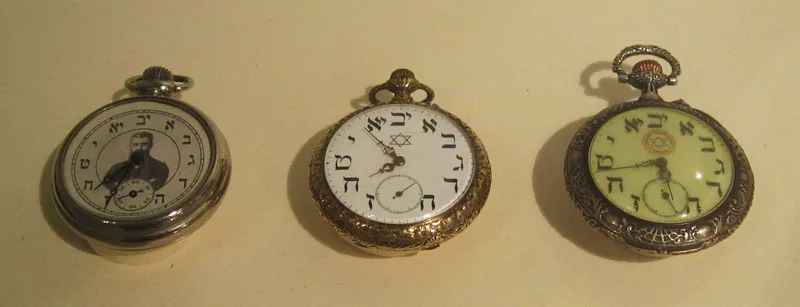
Hebrew, like Greek, had no separate numeral symbols in antiquity; letters doubled as numbers. The twenty-two letters fall into three groups of units, tens and hundreds:
- Units: Aleph 1, Bet 2, Gimel 3, Dalet 4, He 5, Vav 6, Zayin 7, Het 8, Tet 9
- Tens: Yod 10, Kaf 20, Lamed 30, Mem 40, Nun 50, Samekh 60, Ayin 70, Peh 80, Tsade 90
- Hundreds: Qof 100, Resh 200, Shin 300, Tav 400
This method is called mispar hekhrekhi ("necessary" or "standard number"). In some systems, the five letters that take a different form at the end of a word (Kaf, Mem, Nun, Peh, Tsade) are given values from 500 to 900, completing the hundreds. Hebrew numbers on coins, dates and page numbers are written this way, so the system was simply part of literate life. The numbers 15 and 16 are traditionally written Tet-Vav (9+6) and Tet-Zayin (9+7) rather than Yod-He and Yod-Vav, to avoid spelling fragments of the divine name.
A classic example: the word yayin ("wine", Yod-Yod-Nun) equals 10+10+50 = 70, the same as sod ("secret", Samekh-Vav-Dalet) = 60+6+4 = 70. The Talmud (Eruvin 65a) draws the lesson "when wine goes in, the secret comes out". Another well-known example is ehad ("one", Aleph-Het-Dalet = 13), which equals ahavah ("love", Aleph-He-Bet-He = 13), a pairing used by later homilists to connect divine unity and love. The numerical value of hai ("life", Het-Yod) is 18, which is why gifts in Jewish communities are often given in multiples of 18.
Variant counting methods§
Medieval and early modern writers developed many alternative systems. Some important ones are:
- Mispar gadol ("large number"): final letters take 500–900.
- Mispar katan ("small number"): zeros are dropped, so every letter is reduced to a value from 1 to 9.
- Mispar siduri ("ordinal number"): letters are numbered 1 to 22 by position.
- Mispar ha-kolel: one is added for the word as a whole, a method often used to justify a difference of one between two values.
- Milui ("filling"): each letter is spelled out in full and the values of its spelled name are counted. This was particularly important in Lurianic Kabbalah, where the four ways of spelling out the letters of YHVH produce the values 72, 63, 45 and 52, each linked to a divine configuration.
Atbash, Notarikon and Temurah§
Gematria is often grouped with other techniques of letter manipulation. Strictly speaking, these are not numerical, but in practice they were used together.
Atbash and other substitution ciphers§
Atbash replaces the first letter of the alphabet with the last, the second with the second-to-last, and so on: Aleph with Tav, Bet with Shin — hence the name A-T-B-Sh. The method appears to be applied already in the Hebrew Bible: in Jeremiah 25:26 and 51:41, Sheshakh is widely understood by ancient and modern interpreters as an atbash encoding of Bavel (Babylon), and in Jeremiah 51:1 Lev Kamai corresponds to Kasdim (Chaldeans). Similar ciphers include albam, which pairs the first half of the alphabet with the second half, and ayak bakar, based on the numerical groupings.
Notarikon§
Notarikon, from the Greek or Latin word for a shorthand writer, reads a word as an acronym for a phrase, or forms a word from the initial letters of a phrase. The Talmud (Shabbat 105a) interprets anokhi ("I"), the first word of the Ten Commandments, as an abbreviation of an Aramaic phrase meaning "I myself wrote and gave it". Rabbinic names such as Rambam (Rabbi Moses ben Maimon) and the Hasidic title Besht are later examples of the acronymic habit. The kabbalistic name AGLA, formed from the initials of the Hebrew phrase "You are mighty forever, O Lord" (Atah gibor le-olam Adonai), entered Christian amulets and grimoires.
Temurah§
Temurah ("exchange") is the permutation or rearrangement of letters within a word, or the systematic substitution of letters by another table. The Sefer Yetzirah describes God's combining and permuting of letters through "231 gates", and medieval mystics treated permutation as a sacred practice. Abraham Abulafia developed meditation techniques based on combining letters of divine names, accompanied by breathing and head movements, aimed at prophetic consciousness. His writings warn that such practices require preparation and guidance, and modern scholars note their intensity as a contemplative discipline.
Gematria in Rabbinic Literature§
The word gematria probably derives from Greek, either from geometria ("geometry") or from grammateia ("writing" or "letters"); both etymologies have been proposed. The Mishnah (Avot 3:18, in some numberings 3:23) mentions gematriot as "the after-courses (or seasoning) of wisdom", suggesting they were valued as an ornament to learning rather than its core.
Gematria appears in lists of the thirty-two hermeneutical rules attributed to Rabbi Eliezer ben Yose ha-Gelili, a list of uncertain date. In the Talmud and Midrash it is used in homiletical (aggadic) contexts. A frequently cited example concerns Abraham's 318 servants (Genesis 14:14): a midrash notes that 318 is the value of Eliezer, Abraham's servant, suggesting that Abraham went to battle with Eliezer alone. Interestingly, the Epistle of Barnabas, an early Christian text, offers a Christian numerical reading of the same 318, showing that number-based interpretation was a shared ancient practice.
Rabbinic tradition generally did not allow gematria to determine law. Its use was limited to supporting or decorating arguments derived through other means, and later medieval authorities such as Abraham ibn Ezra cautioned against arbitrary numerical interpretation.
Gematria in Medieval Mysticism and Kabbalah§
The great flowering of gematria came among the German Pietists (Hasidei Ashkenaz) of the twelfth and thirteenth centuries. Eleazar of Worms and others used it to uncover connections between biblical verses, prayers and divine names, sometimes counting words and letters in prayers to ensure that the liturgy matched hidden numerical patterns. Jacob ben Asher's Torah commentary Ba'al ha-Turim (fourteenth century) is full of brief gematria observations and remains popular in traditional study.
In theosophical Kabbalah, gematria served the larger symbolic system of the sefirot on the Tree of Life and the names of God. Abulafia's ecstatic Kabbalah made letter calculation central to its mystical practice. The Lurianic school used numerical values of divine names, especially the "filled" spellings mentioned above, as the basis of its prayer intentions (kavvanot). The seventy-two-letter name of God, derived from three consecutive verses of Exodus (14:19–21) each containing seventy-two letters, was one of the most important objects of such speculation. For the broader context of these developments, see What Is Kabbalah?.
Greek Isopsephy and Other Ancient Parallels§
The Greek practice of isopsephy ("equal pebbles") is attested earlier than Hebrew gematria. Graffiti from Pompeii, before 79 CE, include a lover's line saying that he loves a girl "whose number is 545". The Roman biographer Suetonius records a satirical Greek verse observing that the name of the emperor Nero has the same numerical value as the phrase "killed his own mother". Some ancient magical papyri use numerical values of divine names; the Gnostic deity Abrasax or Abraxas has letters totalling 365, the number of days in the year.
The most famous instance in the Christian tradition is the "number of the beast", 666, in Revelation 13:18. Many scholars hold that it is a gematria of "Nero Caesar" written in Hebrew letters (Nrwn Qsr), especially since some ancient manuscripts read 616, which matches the Latin form "Nero" written in Hebrew letters without the final nun. This interpretation is widely held, though not universally accepted.
Arabic has its own system, abjad, assigning values to letters in a similar way, used in chronograms, poetry and esoteric practice, including in some forms of Islamic mysticism.
Gematria in Hermetic Qabalah and Modern Esotericism§
Christian Cabalists of the Renaissance, such as Johann Reuchlin and Cornelius Agrippa, discussed gematria, notarikon and temurah as parts of a "cabalistic art" of interpretation. In the nineteenth and twentieth centuries the Hermetic Order of the Golden Dawn and its successors used gematria to connect the names of gods, spirits and concepts with the paths and sefirot of the Tree of Life. Aleister Crowley's Sepher Sephiroth listed Hebrew words by numerical value as a reference for this purpose, and Crowley and his followers also devised English-language systems.
In Hermetic usage, gematria tends to function as a tool for finding correspondences in a symbolic universe, often detached from the textual and legal framework of Jewish interpretation. Popular modern "Bible codes" and numerology-based predictions also borrow the vocabulary of gematria.
Cautions and criticisms§
Because there are many counting systems and almost unlimited ways to combine words, nearly any two terms can be linked by some method. Medieval critics already noted this, and modern scholars point out that gematria is persuasive only within an interpretive tradition that already holds the connections to be meaningful. Traditional teachers usually present it as a way of decorating or illustrating established ideas rather than proving them. Readers should be particularly wary of claims that gematria predicts future events or confirms modern political or conspiratorial theories, which have no basis in traditional practice.
Frequently asked questions§
What is gematria in simple terms?§
Gematria is a method of interpreting Hebrew words by adding up the numerical values of their letters. Words with the same total are considered to have a meaningful connection. It is used in Jewish homiletics, Kabbalah and, in adapted forms, Western esotericism.
What is the numerical value of the Hebrew letters?§
In the standard system, Aleph through Tet equal 1 to 9, Yod through Tsade equal 10 to 90, and Qof through Tav equal 100 to 400. Some systems give the final forms of five letters values from 500 to 900.
What is the difference between gematria and atbash?§
Gematria converts letters into numbers and compares the totals. Atbash is a substitution cipher that swaps the first letter of the alphabet with the last, the second with the second-to-last, and so on, producing a new word rather than a number.
Is gematria used in Jewish law?§
No. Rabbinic tradition regards gematria as a homiletical technique that can support or illustrate a teaching but not establish law. Its main use has been in sermons, commentaries and mystical interpretation.
Sources and further reading§
- Kabbalah — Gershom Scholem, 1974 (section on gematria)
- Language, Torah, and Hermeneutics in Abraham Abulafia — Moshe Idel, 1989
- The Mystical Experience in Abraham Abulafia — Moshe Idel, 1988
- Major Trends in Jewish Mysticism — Gershom Scholem, 1941
- Ba'al ha-Turim — Jacob ben Asher, 14th century
- Number in Scripture — E. W. Bullinger, 1894 (a Christian example of the genre)
- Sepher Sephiroth — Aleister Crowley, 1912
- De arte cabalistica — Johann Reuchlin, 1517