Liber XX · Kabbalah · Chapter II: Christian & Hermetic Qabalah
Christian Cabala and Hermetic Qabalah: A Complete Guide
Christian Cabala and Hermetic Qabalah explained: Pico, Reuchlin, Kabbala Denudata, Lévi, the Golden Dawn, Dion Fortune, and how they differ from Kabbalah.

Christian Cabala and Hermetic Qabalah are the two great non-Jewish adaptations of Jewish Kabbalah. Christian Cabala arose in Renaissance Italy and Germany, when scholars such as Giovanni Pico della Mirandola and Johannes Reuchlin used Kabbalistic texts to argue for Christian doctrines; Hermetic Qabalah grew out of it in the nineteenth-century occult revival, when Éliphas Lévi and the Golden Dawn combined the Tree of Life with tarot, astrology and ceremonial magic. Both differ substantially from the Jewish tradition from which they borrowed.
Kabbalah, Cabala and Qabalah: A Question of Terms§
All three words transliterate the Hebrew qabbalah, "received tradition." In English-language writing it has become customary to use Kabbalah for the Jewish mystical tradition described in What Is Kabbalah?, Cabala (or Cabbala) for the Christian appropriation of the Renaissance and early modern period, and Qabalah for the Hermetic and occult system of the nineteenth and twentieth centuries. The convention is helpful but not rigid: older books use the spellings interchangeably, and some practitioners prefer one spelling for reasons of their own.
Precursors: Converts and Medieval Christian Interest§
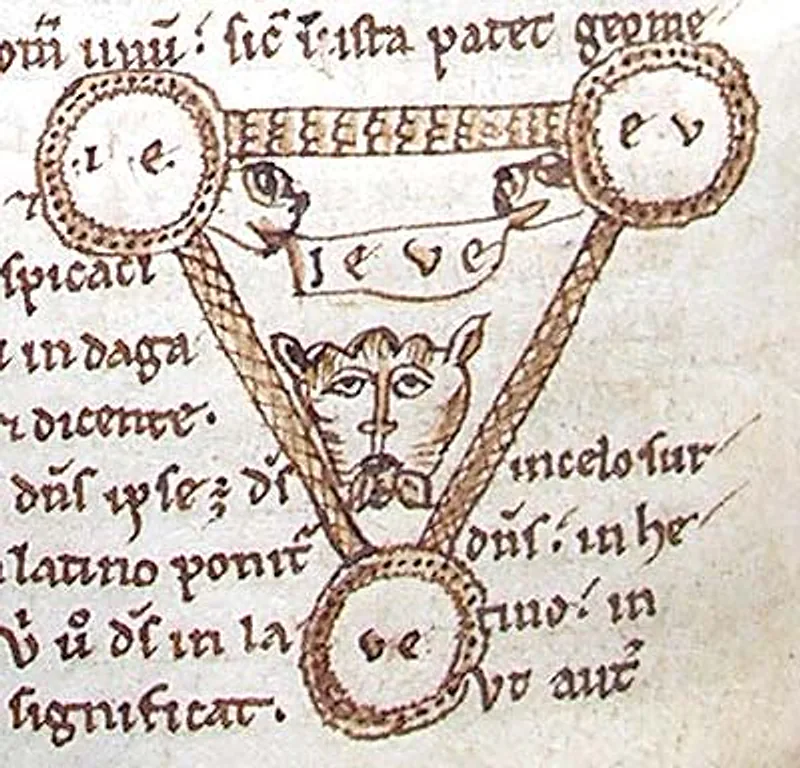
Christian interest in Jewish esoteric teaching long predates the Renaissance. The twelfth-century convert Petrus Alfonsi used a diagram of the divine name to suggest the Trinity, and later converts, such as Abner of Burgos (Alfonso of Valladolid) in the fourteenth century and Paul de Heredia in the fifteenth, used Kabbalistic or pseudo-Kabbalistic arguments in polemics aimed at Jews. These efforts were largely missionary. What changed in the late fifteenth century was that Christian humanists began to treat Kabbalah as a source of ancient wisdom in its own right, alongside the Corpus Hermeticum and Platonism.
Pico, Reuchlin and Renaissance Christian Cabala§
Giovanni Pico della Mirandola (1463–1494) studied Hebrew and had Kabbalistic works translated into Latin by the convert Flavius Mithridates. In 1486 he published 900 theses for a public debate in Rome, among them dozens of Kabbalistic propositions and the bold claim that magic and Kabbalah were the sciences that best proved the divinity of Christ. Pope Innocent VIII condemned several of the theses, and the debate never took place, but Pico had made Kabbalah part of the program of Renaissance philosophy.
The German humanist Johannes Reuchlin (1455–1522) gave Christian Cabala its first systematic works. De verbo mirifico (1494) argued that adding the letter shin to the Tetragrammaton YHVH produced YHSVH, read as the name of Jesus, the "wonder-working word." De arte cabalistica (1517) presented Kabbalah as a Pythagorean philosophy of symbols. Reuchlin also defended Jewish books against proposals to confiscate and burn them, a controversy that became a major intellectual battle of the years before the Reformation.
Others extended the movement: the Venetian friar Francesco Giorgi's De harmonia mundi (1525); Paulus Ricius, who translated Joseph Gikatilla's Gates of Light; the French orientalist Guillaume Postel, who translated the Sefer Yetzirah and parts of the Zohar into Latin; and, in Rome, the Jesuit Athanasius Kircher, whose Oedipus Aegyptiacus (1652–1654) printed an influential Tree of Life diagram. Heinrich Cornelius Agrippa wove Kabbalistic names, letters and angels into his De occulta philosophia (1533), linking Christian Cabala with practical magic; see Agrippa's Three Books.
Kabbala Denudata and Christian Theosophy§
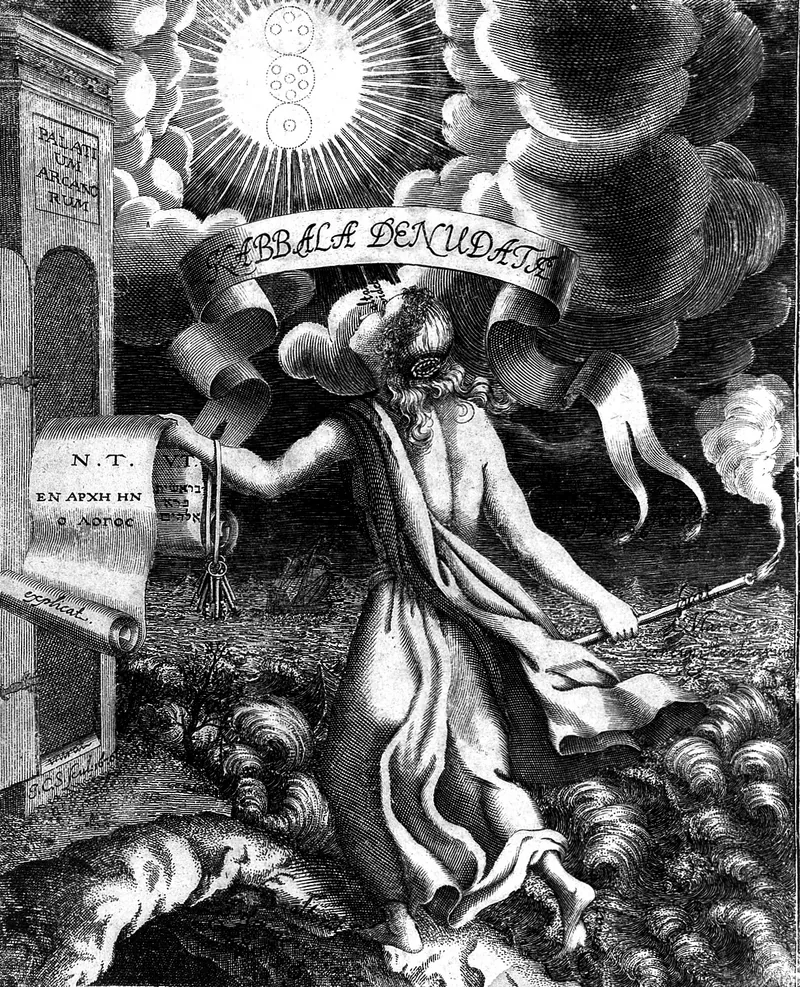
The most important single source for later Christian and occult knowledge of Kabbalah was the Kabbala Denudata ("Kabbalah Unveiled"), published in Sulzbach and Frankfurt in 1677–1684 by Christian Knorr von Rosenroth (1636–1689). It contained Latin translations of parts of the Zohar, including the Idra sections, of Lurianic texts and of a Hebrew lexicon of Kabbalistic terms, together with essays by the Cambridge Platonist Henry More and others. Knorr worked closely with Francis Mercury van Helmont, and their circle, which included Anne Conway, read Lurianic Kabbalah as a philosophy compatible with Christian universalism.
In German-speaking lands, Kabbalistic ideas mixed with the theosophy of Jacob Boehme and with Pietism. A famous painted teaching panel at Bad Teinach in Württemberg, commissioned by Princess Antonia of Württemberg and completed in 1673, arranges biblical figures according to the sefirot; the Pietist theologian Friedrich Christoph Oetinger (1702–1782) later published an interpretation of it. Through such channels Kabbalah became part of the background of Western esotericism generally, including Rosicrucian and Masonic symbolism.
The Occult Revival and Hermetic Qabalah§
The French magus Éliphas Lévi (1810–1875) made Kabbalah the key to his system of "high magic" in Dogme et rituel de la haute magie (1854–1856). He identified the twenty-two tarot trumps with the twenty-two Hebrew letters and treated the Tree of Life, the Tetragrammaton and the tarot as a single universal language. French successors such as Papus continued this synthesis.
In England, S. L. MacGregor Mathers translated three books of the Kabbala Denudata into English as The Kabbalah Unveiled (1887). The Hermetic Order of the Golden Dawn, which he helped lead, built its grades on the sefirot of the Tree of Life, from Malkuth (Neophyte, 1=10) upward, and attributed the twenty-two connecting paths to the Hebrew letters, tarot trumps and astrological signs and planets. It added the "four colour scales," the four worlds and correspondences of every kind, creating the Hermetic Qabalah taught in most twentieth-century occult literature. Aleister Crowley tabulated it in Liber 777; see Tarot and Qabalah in Thelema.
Later writers made the system widely accessible. Dion Fortune's The Mystical Qabalah (1935) presented each sefirah as a stage of psychological and spiritual development; Israel Regardie's A Garden of Pomegranates (1932) and The Tree of Life (1932) were standard introductions. Hermetic Qabalah also shaped Wicca, Thelema and much of contemporary magic, and is often what people mean when they speak of Kabbalah in occult contexts.
How These Traditions Differ from Jewish Kabbalah§
Jewish Kabbalah is embedded in Hebrew scripture, rabbinic law, prayer and the commandments; its aim is understanding God, repairing the world (tikkun) and drawing close to the divine within the life of Torah. Christian Cabala read the same symbols as prophecies of Christ and the Trinity. Hermetic Qabalah detached them further, making the Tree a universal filing system for gods of every pantheon, tarot cards and planetary forces, and using it for ritual magic, which most Jewish Kabbalists regarded with suspicion.
Gershom Scholem, the founder of the academic study of Kabbalah, was dismissive of the occultists' understanding; later historians such as François Secret, Joseph Dan and Wouter Hanegraaff have treated Christian and Hermetic Qabalah as significant traditions in their own right, while emphasising their differences from the Jewish sources. For the Jewish tradition's own forms of practice, see Practical Kabbalah and Gematria.
Frequently asked questions§
What is the difference between Kabbalah, Cabala and Qabalah?§
They are different spellings of the same Hebrew word, conventionally used for three traditions: Kabbalah for Jewish mysticism, Cabala for Christian Renaissance forms, and Qabalah for the Hermetic occult system of the Golden Dawn and its heirs.
Who started Christian Cabala?§
Giovanni Pico della Mirandola is usually regarded as its founder, with his Kabbalistic theses of 1486. Johannes Reuchlin wrote the first systematic Christian Cabalist books in 1494 and 1517.
What is Hermetic Qabalah?§
Hermetic Qabalah is the Western occult adaptation of Kabbalah developed by Éliphas Lévi and the Golden Dawn. It uses the Tree of Life as a framework for tarot, astrology, ritual magic and spiritual development.
Is Hermetic Qabalah Jewish?§
No. It borrows the Tree of Life, Hebrew letters and divine names from Jewish Kabbalah, but it developed in Christian and occult circles and combines them with tarot, astrology and non-Jewish deities.
Sources and further reading§
- Kabbalah — Gershom Scholem, 1974
- Les Kabbalistes chrétiens de la Renaissance — François Secret, 1964
- The Christian Kabbalah: Jewish Mystical Books and Their Christian Interpreters — Joseph Dan (ed.), 1997
- Kabbala Denudata — Christian Knorr von Rosenroth, 1677–1684
- The Kabbalah Unveiled — S. L. MacGregor Mathers, 1887
- De arte cabalistica — Johannes Reuchlin, 1517
- The Mystical Qabalah — Dion Fortune, 1935
- A Garden of Pomegranates — Israel Regardie, 1932