Liber XII · High Magick · Chapter V: Golden Dawn
Hermetic Order of the Golden Dawn: History, Grades and Legacy
History of the Hermetic Order of the Golden Dawn: its 1888 founding, the Cipher Manuscripts, the grade system, Yeats and Farr, the 1900 schism and its legacy.
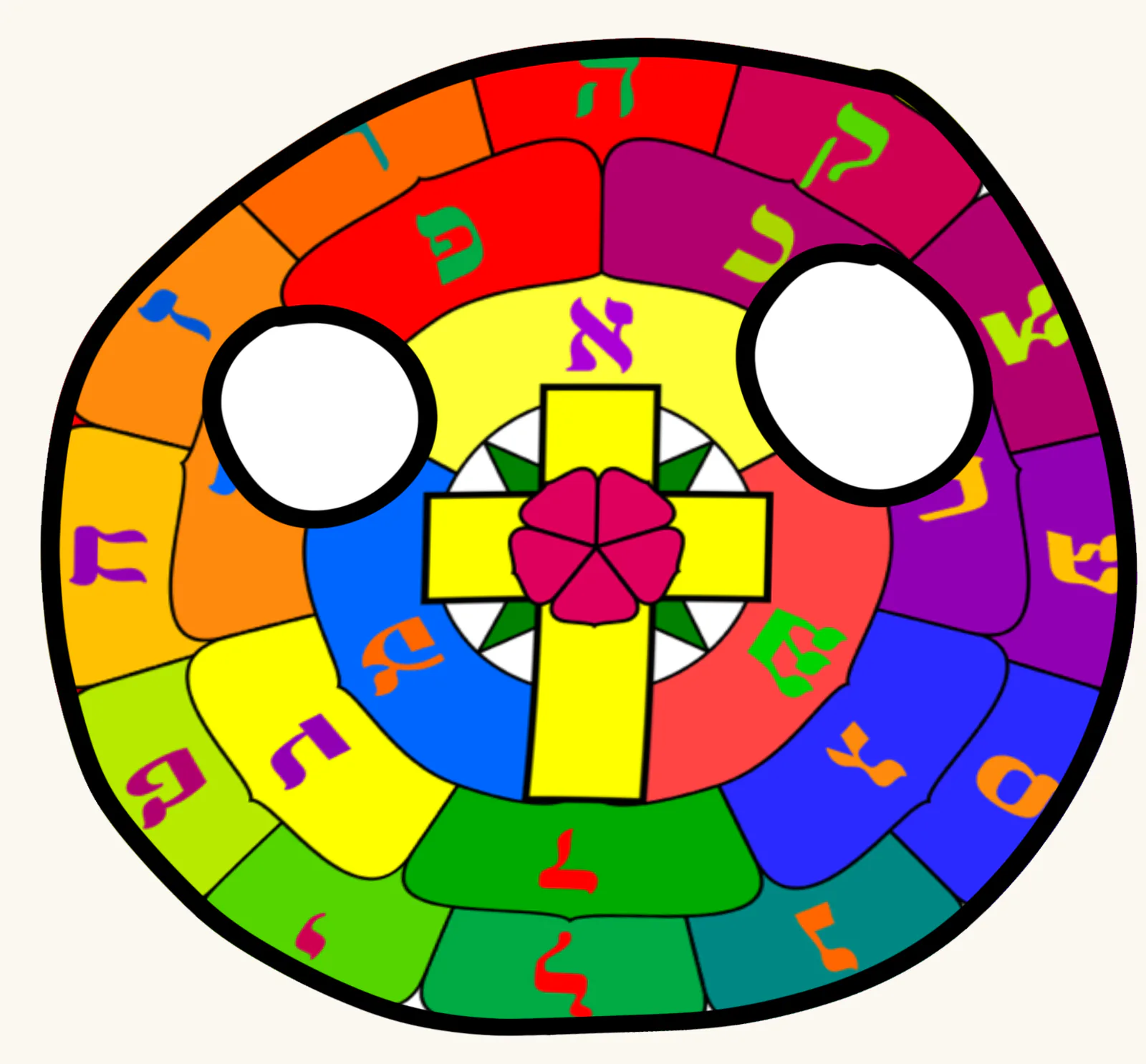
The Hermetic Order of the Golden Dawn was a British initiatory society founded in London in 1888 by three Freemasons, William Wynn Westcott, Samuel Liddell MacGregor Mathers and William Robert Woodman. It taught a synthesis of Kabbalah, astrology, alchemy, tarot, Enochian magic and Hermetic philosophy through a ladder of grades modelled on the Tree of Life. Although it fractured after barely twelve years, its rituals and teaching papers became the single most influential system of Western ceremonial magic in the twentieth century.
Founding of the Golden Dawn in 1888§
The order grew out of the overlapping world of late Victorian Freemasonry, Rosicrucianism and occult study. All three founders were members of the Societas Rosicruciana in Anglia, a Masonic Rosicrucian society limited to Master Masons. Westcott, a London coroner, was a scholar of Kabbalah who had published an English translation of the Sefer Yetzirah. Woodman, a retired physician, was Supreme Magus of the Rosicrucian society. Mathers, the youngest, was a self-taught student of Hebrew and of old magical manuscripts whose English translation of Knorr von Rosenroth's Kabbala Denudata appeared as The Kabbalah Unveiled in 1887.
The Cipher Manuscripts and Fräulein Sprengel§
According to the order's own account, Westcott came into possession of about sixty folios written in a simple substitution cipher drawn from a sixteenth-century book on cryptography by Johannes Trithemius. When decoded, the "Cipher Manuscripts" proved to contain skeletal outlines of five initiation rituals with notes on their symbolism. The manuscripts also gave the address of a German adept, Anna Sprengel, who supposedly granted Westcott a charter to found an English temple.
Historians have found no trace of Anna Sprengel, and most conclude that the letters attributed to her were fabricated, probably by Westcott. The origin of the Cipher Manuscripts themselves is less clear. They appear to date from the nineteenth century and may have come from the papers of the Masonic writer Kenneth Mackenzie or the circle of Frederick Hockley, but this remains unproven. What is certain is that Mathers expanded the outlines into full rituals of considerable dramatic and literary power.
The first temple, Isis-Urania No. 3, opened in London on 1 March 1888. Further temples followed, including Osiris in Weston-super-Mare, Horus in Bradford and Amen-Ra in Edinburgh, and later Ahathoor in Paris, where Mathers settled in 1892. Unlike regular Freemasonry, the order admitted women on equal terms from the outset.
The Golden Dawn Grade System§
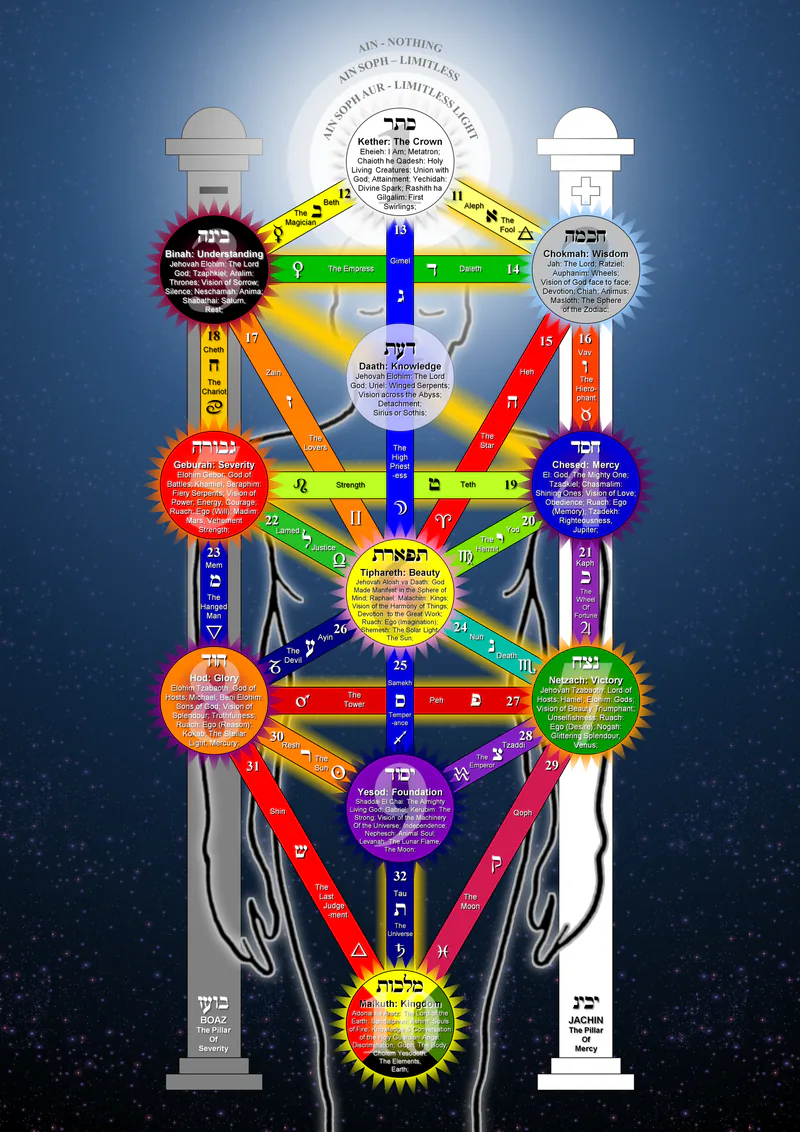
The grades were mapped onto the ten sefirot of the Kabbalistic Tree of Life, explained in our article on the Tree of Life and the ten sefirot. Each grade corresponded to a sefirah and to one of the four classical elements, with a numerical designation borrowed from the German Rosicrucian Gold- und Rosenkreuz order of the eighteenth century.
The Outer Order§
The First or Outer Order, properly called the Golden Dawn, comprised:
- Neophyte (0=0), an introductory grade outside the Tree.
- Zelator (1=10), attributed to Malkuth and Earth.
- Theoricus (2=9), attributed to Yesod and Air.
- Practicus (3=8), attributed to Hod and Water.
- Philosophus (4=7), attributed to Netzach and Fire.
Between Philosophus and the Second Order lay the Portal grade, added in the 1890s. In the Outer Order candidates passed examinations on Hebrew letters, astrological and alchemical symbols, Kabbalistic correspondences, geomancy and the attributions of the tarot. Teaching was conveyed by documents known as "Knowledge Lectures."
The Second Order: R.R. et A.C.§
The Second or Inner Order bore the Latin name Ordo Rosae Rubeae et Aureae Crucis, "the Order of the Red Rose and the Golden Cross," usually abbreviated R.R. et A.C. Mathers organised it in 1891–1892, and its central ritual initiated the candidate as an Adeptus Minor (5=6), attributed to Tiphareth. The ceremony took place in a seven-sided Vault of the Adepti, a recreation of the legendary tomb of Christian Rosenkreutz described in the Rosicrucian manifestos of the early seventeenth century.
Higher grades of Adeptus Major (6=5) and Adeptus Exemptus (7=4) followed. Above these lay the Third Order of "Secret Chiefs," superhuman adepts with whom Mathers claimed to be in contact and from whom he said he derived his authority.
Only in the Second Order did members practise magic in earnest. Adepts made and consecrated their own ritual implements, including a lotus wand, a rose cross lamen and the four elemental weapons. They studied the ritual of the pentagram and hexagram, the consecration of talismans, astral projection and "skrying in the spirit vision," tarot divination, and an elaborate system derived from the angel magic of John Dee and Edward Kelley, described in our article on Enochian magic. Much of this synthesis drew on earlier writers, especially Éliphas Lévi, whose correspondence of the tarot trumps with the Hebrew alphabet the order adapted into its own distinctive scheme. The order's tarot teaching later shaped the Rider–Waite–Smith deck, as traced in our history of tarot.
Notable Members: Yeats, Farr and Others§
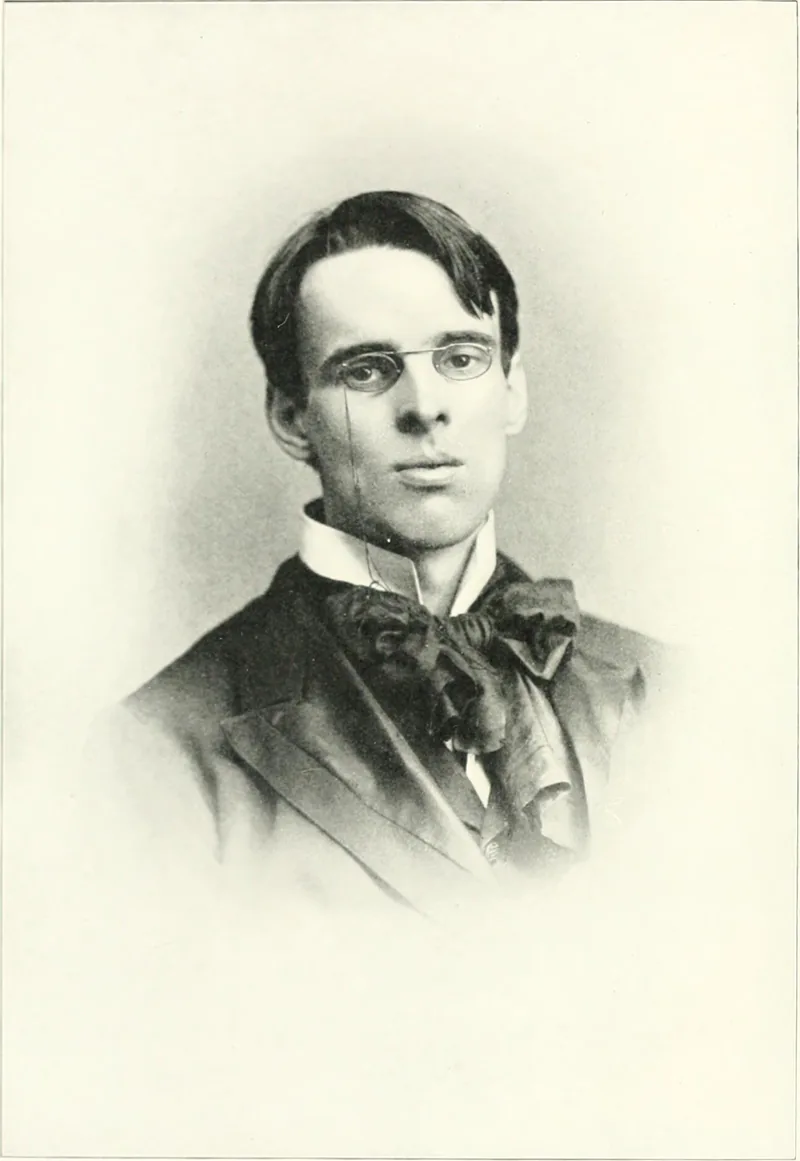
The Golden Dawn attracted a remarkable membership from the artistic and professional classes of London. The poet William Butler Yeats joined in 1890 and remained active in its successor bodies for some thirty years; symbolism and ideas from his magical work run through his poetry and his later book A Vision. Florence Farr, an actress, writer and associate of George Bernard Shaw, became one of the leading adepts and for a time served as Mathers' representative in London. Annie Horniman, the tea heiress who later financed the Abbey Theatre in Dublin, provided much of the order's money. Moina Mathers (born Mina Bergson, sister of the philosopher Henri Bergson) designed much of its symbolic artwork and became a leader in her own right.
Other members included the novelists Arthur Machen and Algernon Blackwood, the occult scholar Arthur Edward Waite, the engineer and later Buddhist monk Allan Bennett, and the painter Pamela Colman Smith. The most notorious recruit was Aleister Crowley, initiated as a Neophyte in November 1898.
The Schism of 1900§
By the late 1890s tensions were acute. Westcott withdrew in 1897 after his official superiors were told of his occult activities; Woodman had died in 1891. Mathers, living in Paris, governed by letter and asserted autocratic authority on the basis of his contact with the Secret Chiefs. He had expelled Annie Horniman in 1896, causing resentment among the London adepts.
The crisis came when the London adepts refused to initiate Crowley into the Second Order. Mathers initiated him in Paris in January 1900. In a letter to Florence Farr he then alleged that Westcott had forged the correspondence with Anna Sprengel. The London adepts formed a committee to investigate, and Mathers, refusing to accept their authority, sent Crowley to London in April 1900 to take possession of the Second Order's vault and papers. The episode descended into a confrontation in which Yeats and others denied him entry and the matter briefly went to court. The London group expelled Mathers.
The schism left several rival bodies. Mathers led the Alpha et Omega. A group around Waite took a mystical and Christian direction as the Independent and Rectified Rite. Another group, led by Robert Felkin and later including Yeats, became the Stella Matutina. The story of the 1900 revolt is reconstructed in detail by Ellic Howe and by R. A. Gilbert.
Regardie's Publication and the Spread of the System§
The order's materials were bound by oaths of secrecy, but they did not remain hidden. Crowley printed portions of the rituals in his periodical The Equinox from 1909. The decisive step came from Israel Regardie, who had served as Crowley's secretary and later joined the Stella Matutina's Hermes Temple in Bristol. Disillusioned with the declining order, Regardie published its rituals, Knowledge Lectures and Second Order papers in four volumes as The Golden Dawn between 1937 and 1940.
Regardie justified the publication as a means of preserving a system he feared would otherwise be lost. Whatever one thinks of the breach of oath, it transformed the Golden Dawn from a private society into a public body of teaching. Almost every later Western magical current, from Thelema to Wicca and modern ceremonial magic, drew on it directly or indirectly.
Successor Orders and Modern Revivals§
The original successor bodies declined over the first half of the twentieth century. The Stella Matutina's temple in New Zealand, Whare Ra, lasted until 1978. Dion Fortune, initiated in the Alpha et Omega, founded the Fraternity (later Society) of the Inner Light in the 1920s. Crowley built the A∴A∴ in 1907 on a reworked Golden Dawn grade structure, a story told in our article on Thelema and the Book of the Law.
From the 1970s onward several new organisations claimed the Golden Dawn name and lineage, some founded with Regardie's support. Disputes over the right to use the name, including litigation in the United States in the 1990s, have accompanied this revival. Today the term "Golden Dawn" refers both to these organisations and, more broadly, to a system of ritual magic practised by many individuals working from published sources.
Frequently asked questions§
Who founded the Hermetic Order of the Golden Dawn?§
It was founded in London in 1888 by William Wynn Westcott, Samuel Liddell MacGregor Mathers and William Robert Woodman. All three were Freemasons and members of the Societas Rosicruciana in Anglia. Mathers became its dominant figure and wrote most of its rituals.
Were the Cipher Manuscripts genuine?§
The manuscripts themselves exist and are preserved, and they appear to be nineteenth-century documents of uncertain authorship. The claim that they led to a German adept called Anna Sprengel who chartered the order is regarded by most historians as a fabrication, probably by Westcott.
What are the grades of the Golden Dawn?§
The Outer Order ran from Neophyte (0=0) through Zelator, Theoricus, Practicus and Philosophus (4=7), followed by a Portal grade. The Second Order began with Adeptus Minor (5=6). The numbers indicate each grade's position on the Kabbalistic Tree of Life.
Was Aleister Crowley a member of the Golden Dawn?§
Yes. Crowley was initiated in 1898 and progressed through the Outer Order. His initiation into the Second Order by Mathers in Paris in 1900, after the London adepts had refused him, helped trigger the schism that broke the order apart.
Does the Golden Dawn still exist?§
The original order did not survive as a single body, but several modern organisations claim its name or lineage, and its rituals are widely practised from Regardie's published texts. These groups are independent of one another and sometimes dispute each other's legitimacy.
Sources and further reading§
- The Golden Dawn (4 vols.) — Israel Regardie, 1937–1940
- The Magicians of the Golden Dawn: A Documentary History of a Magical Order 1887–1923 — Ellic Howe, 1972
- The Golden Dawn: Twilight of the Magicians — R. A. Gilbert, 1983
- The Place of Enchantment: British Occultism and the Culture of the Modern — Alex Owen, 2004
- Yeats's Golden Dawn — George Mills Harper, 1974
- The Kabbalah Unveiled — S. L. MacGregor Mathers, 1887