Liber XXXIII · Theosophy · Chapter II: Astral Projection & Dreams
Astral Projection and Dreams: History, Beliefs and Science
Astral projection and dreams explained: the astral body from Neoplatonism to Theosophy, out-of-body experiences, lucid dreaming and what science has found.

Astral projection, or astral travel, is the belief that a subtle "astral body" can separate from the physical body during sleep, trance or meditation and travel in the physical world or in non-physical planes. The idea draws on ancient notions of a subtle vehicle of the soul, was systematised by nineteenth-century Theosophists and occultists, and was popularised in the twentieth century alongside the study of dreams and out-of-body experiences. Science recognises out-of-body experiences and lucid dreams as real experiences, but has found no evidence that consciousness actually leaves the body.
Ancient Ideas of the Subtle Body and Soul Flight§
Many cultures have held that a part of the person can leave the body. In ancient Egypt the ba, often depicted as a human-headed bird, could move between the tomb and the world. Greek writers told of figures such as Hermotimus of Clazomenae, whose soul was said to wander while his body lay as if dead. Siberian and other shamanic traditions describe journeys of the soul in trance, though scholars caution against treating "shamanism" as a single universal religion.
The most important philosophical source for the later astral body is late Neoplatonism. Philosophers such as Porphyry, Iamblichus and Proclus described an ochēma or "vehicle" of the soul, a subtle, luminous or "pneumatic" body that the soul acquires as it descends through the heavenly spheres and that mediates between the soul and the physical body. Because this vehicle was associated with the stars, it was later called "astral" (from Latin astrum, star). In the sixteenth century Paracelsus wrote of a "sidereal body", and Renaissance magi linked imagination and dreams to celestial influences.
Dreams themselves were widely treated as a channel of divine communication. In Greek temples of Asclepius, the sick practised incubation, sleeping in the sanctuary in the hope of a healing dream, and biblical figures from Jacob to Joseph received revelations in sleep.
The Astral Body in Theosophy and Occultism§
In the nineteenth century Éliphas Lévi popularised the "astral light", an invisible universal medium carrying images and impressions, which he made central to magic (see Éliphas Lévi). Theosophy then elaborated a full anatomy of subtle bodies. Blavatsky's sevenfold human constitution was refined by Annie Besant and C. W. Leadbeater into a sequence of physical, etheric, astral, mental and higher bodies, each corresponding to a plane of nature. In this scheme, the astral body is the vehicle of emotion and desire and the body in which people are believed to function during sleep and immediately after death.
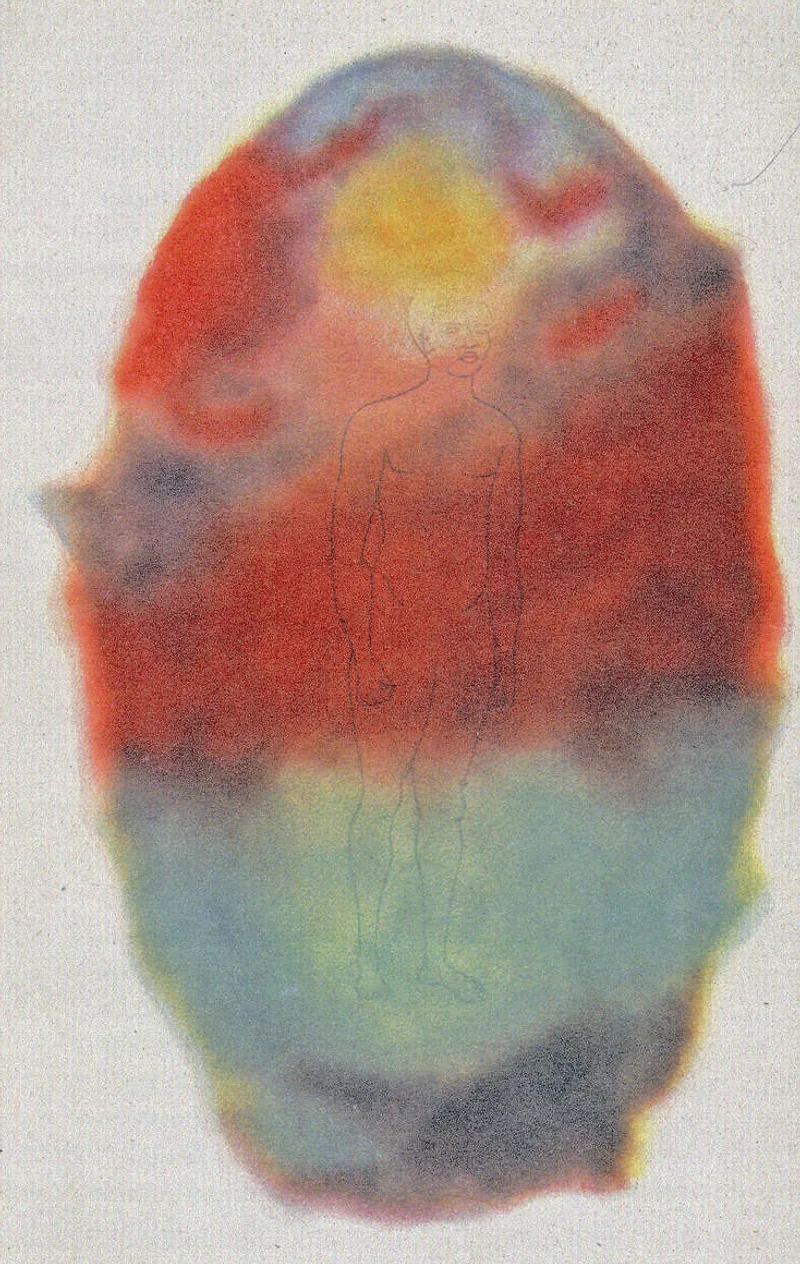
Rudolf Steiner used similar terms with his own meanings, describing an etheric (life) body and an astral body of sensation and consciousness. The vocabulary of etheric and astral bodies passed from these writers into the New Age.
Travelling in the Spirit Vision: Golden Dawn Methods§
The Hermetic Order of the Golden Dawn taught a practice its papers called "travelling in the spirit vision" or "skrying". A member would contemplate a symbol, such as a coloured tattva card representing one of the elements, until it became a doorway, and then imaginatively pass through it and explore the scene beyond, testing the visions with divine names and signs. A related exercise, "rising on the planes", involved ascending in vision through the paths of the Kabbalistic Tree of Life. Aleister Crowley described such work in his own writings, and these methods are the source of much later ritual "pathworking". Practitioners understood them variously as literal journeys and as disciplined use of the imagination.
Astral Projection in the Twentieth Century§
The modern idea of "astral projection" as a spontaneous or induced separation from the sleeping body owes much to a few twentieth-century books. Oliver Fox (Hugh Callaway) wrote of learning to wake within dreams and then leave the body, collected in Astral Projection (published in the late 1930s). Sylvan Muldoon and the psychical researcher Hereward Carrington published The Projection of the Astral Body (1929), describing a "silver cord" linking the astral to the physical body, an image some readers connected with a phrase in Ecclesiastes 12:6.
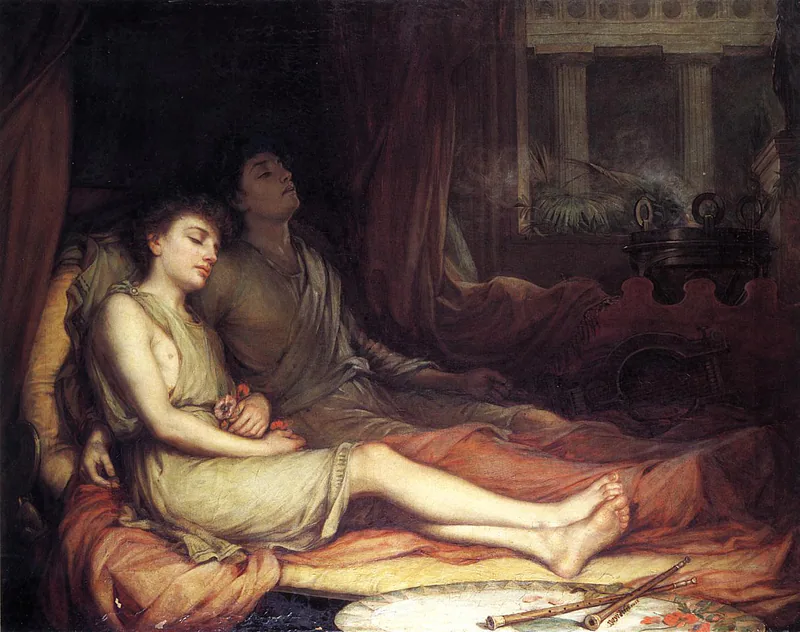
In 1971 the American businessman Robert Monroe published Journeys Out of the Body, which popularised the expression "out-of-body experience" (OBE) and led to the Monroe Institute and its sound-based "Hemi-Sync" techniques. The psychologist Celia Green had published a survey of such experiences in 1968, and the term OBE became the standard neutral label in research.
Lucid Dreaming and Dream Practices§
A lucid dream is a dream in which the dreamer knows they are dreaming. Aristotle noted the phenomenon, and the French scholar Léon d'Hervey de Saint-Denys described techniques for observing and directing dreams in 1867. The Dutch psychiatrist Frederik van Eeden coined the term "lucid dream" in a paper of 1913 for the Society for Psychical Research.
Lucid dreaming was long doubted by sleep scientists, but in the late 1970s and around 1980 the researchers Keith Hearne in England and Stephen LaBerge at Stanford independently showed that lucid dreamers could signal from within REM sleep using agreed eye movements. Lucid dreaming is now an established research topic.
Religious traditions have their own dream disciplines. Tibetan Buddhist dream yoga, one of the Six Yogas of Naropa, trains practitioners to recognise the dream state as a step toward recognising the illusory nature of experience, and Daoist and other contemplative traditions also cultivate awareness in sleep (see Taoist internal alchemy).
What Science Says About Out-of-Body Experiences§
Surveys suggest that a significant minority of people, perhaps one in ten, report at least one out-of-body experience in their lives, often during sleep transitions, illness, anaesthesia or near-death crises. Neuroscientists have linked OBEs to disrupted integration of visual, vestibular and bodily signals; in a widely cited 2002 study, Olaf Blanke and colleagues induced OBE-like sensations by electrically stimulating a patient's brain near the temporoparietal junction. Sleep paralysis, which often accompanies hypnagogic states, can produce vivid sensations of floating, presences and leaving the body.
Attempts to verify that people in an OBE can perceive hidden targets, such as numbers placed out of sight, have not produced convincing, repeatable results. The scientific consensus is that OBEs and lucid dreams are genuine and often meaningful experiences generated by the brain, not evidence that the mind physically leaves the body. Practitioners who experience frequent sleep paralysis, dissociation or distress are well advised to discuss it with a doctor.
Frequently asked questions§
Is astral projection the same as lucid dreaming?§
They overlap but are described differently. A lucid dream is a dream in which the sleeper knows they are dreaming, while astral projection is believed by practitioners to be an actual departure from the body. Many researchers regard reported astral projections as a form of lucid dream or hypnagogic experience.
What is the astral body?§
In Theosophy and related traditions the astral body is a subtle body of emotion and desire, one of several bodies surrounding the physical body. The idea descends from the Neoplatonic "vehicle of the soul" and from Paracelsus, and its modern form was shaped by Theosophical writers around 1900.
Is astral projection dangerous?§
There is no evidence of physical danger, and folk fears about not being able to return to the body have no basis. However, practices that deliberately induce sleep paralysis or dissociation can be frightening, and people with sleep disorders or mental health conditions should approach them with care.
Sources and further reading§
- The Elements of Theology — Proclus, ed. E. R. Dodds, 1933
- The Astral Plane — C. W. Leadbeater, 1895
- The Projection of the Astral Body — Sylvan Muldoon and Hereward Carrington, 1929
- Out-of-the-Body Experiences — Celia Green, 1968
- Journeys Out of the Body — Robert A. Monroe, 1971
- Beyond the Body: An Investigation of Out-of-the-Body Experiences — Susan Blackmore, 1982
- Lucid Dreaming — Stephen LaBerge, 1985
- The Golden Dawn — Israel Regardie, 1937