Liber XI · Hermeticism · Chapter V: Neoplatonism & Theurgy
Iamblichus of Chalcis: Life, Works and the Defence of Theurgy
Iamblichus of Chalcis explained: the Syrian Neoplatonist's life, Pythagorean works, On the Mysteries, his theory of theurgy and the soul, and legacy.
Iamblichus of Chalcis (c. 245–c. 325 CE) was a Syrian Neoplatonist philosopher who made ritual central to Platonic philosophy. Against his teacher Porphyry, he argued in On the Mysteries that the human soul cannot reach the gods by thought alone and needs theurgy, rites that use divine symbols placed in nature by the gods themselves. He also wrote a series of works on Pythagorean philosophy and mathematics and shaped the curriculum of every later Platonic school.
Life of Iamblichus in Roman Syria§
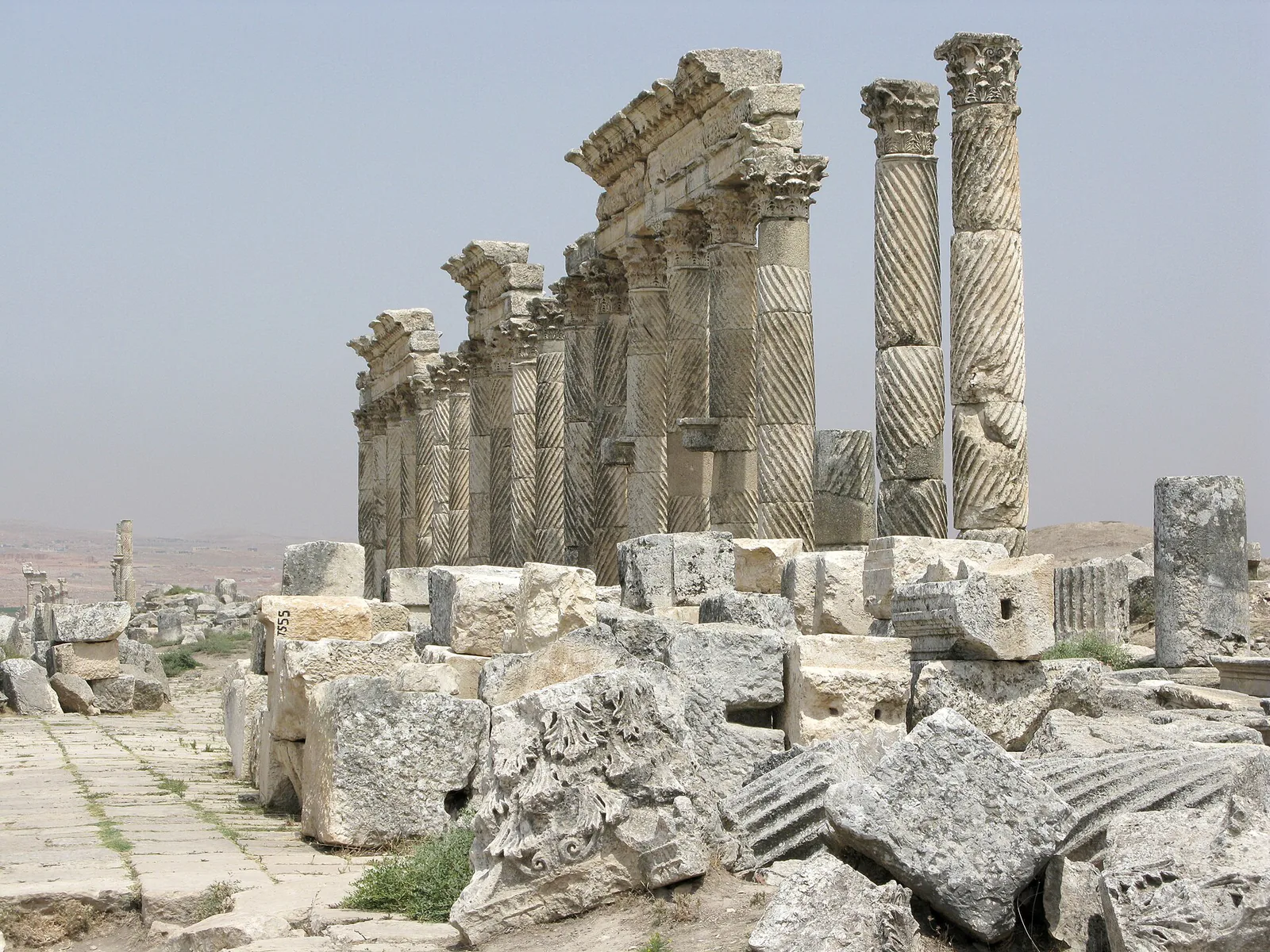
What is known of Iamblichus' life comes largely from the Lives of the Philosophers and Sophists by Eunapius of Sardis, written around 400 and coloured by admiration and legend. Iamblichus was born around 245 in Chalcis, usually identified with Chalcis ad Belum (modern Qinnasrin) in northern Syria. His name is a Greek form of a Semitic phrase, probably meaning "he is king" or "God is king", and Eunapius says he came from a wealthy and distinguished family, which some modern scholars have connected with the old priest-kings of Emesa.
He studied first with a philosopher named Anatolius and then with Porphyry, the pupil and editor of Plotinus, perhaps in Rome or Sicily. By the end of the third century he had returned to Syria and gathered his own students, probably at Apamea, a city with a strong Platonic tradition. His followers included Aedesius, who later founded a school at Pergamum, and Sopater, who was executed at the court of Constantine. He died around 325, at the time of the Council of Nicaea.
Eunapius tells stories of his powers: that his disciples believed he rose in the air and turned golden while praying, a rumour Iamblichus laughed at, and that at the hot springs of Gadara he called up two boys from the waters, spirits of the springs named Eros and Anteros. Such tales say more about how later pagans saw him than about his historical activity, but they show that he was remembered as a holy man as well as a teacher.
Pythagorean Philosophy and the Science of Number§
Iamblichus' largest project was a work in ten books on Pythagorean philosophy, of which four survive. On the Pythagorean Life presents Pythagoras as a divinely inspired sage who founded a community devoted to purification, friendship, silence and the study of number; it is one of the main ancient sources on the Pythagorean way of life. The Protrepticus, an exhortation to philosophy, preserves extensive passages from lost works, including Aristotle's own Protrepticus. Two further books treat the general science of mathematics and Nicomachus of Gerasa's Introduction to Arithmetic.
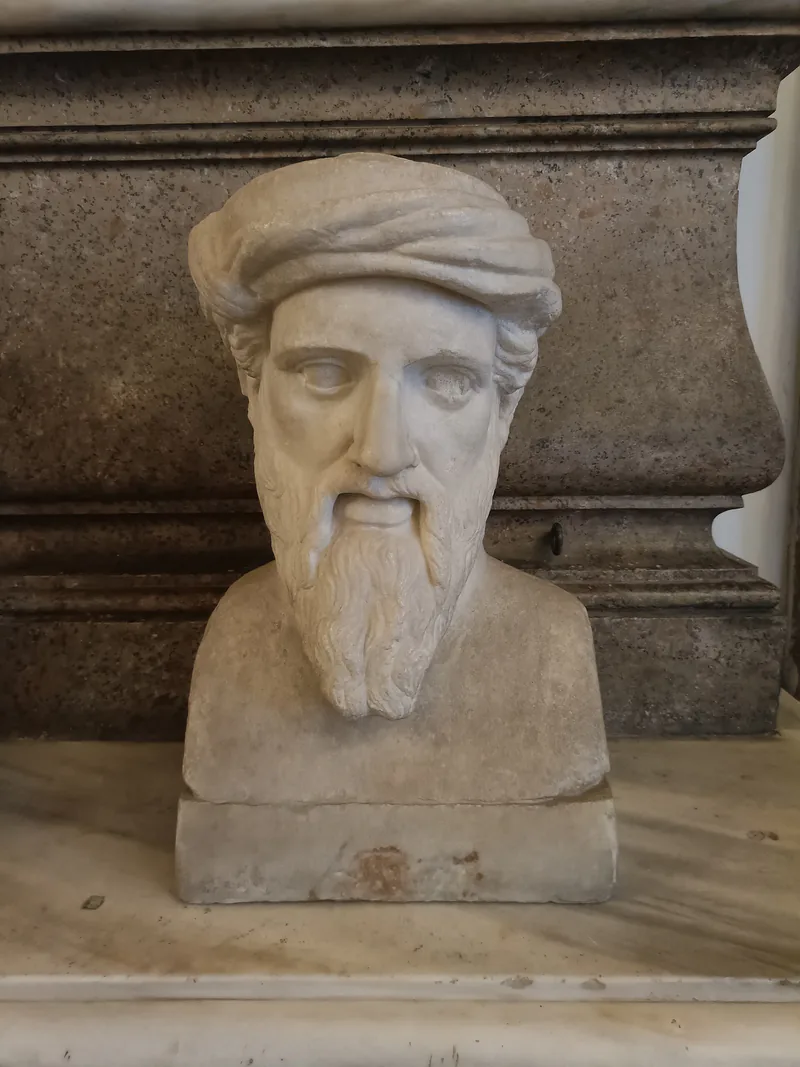
For Iamblichus, mathematics was not a technical skill but a bridge between the sensible world and the divine. Numbers mediate between the changing world and the unchanging Forms, so studying them purifies the mind and prepares it for higher contemplation. A related work, The Theology of Arithmetic, which assigns symbolic meanings to the numbers one to ten, was once attributed to him; it probably draws on his school and on Nicomachus. These texts lie behind much later number symbolism.
On the Mysteries: Abammon's Reply to Porphyry§
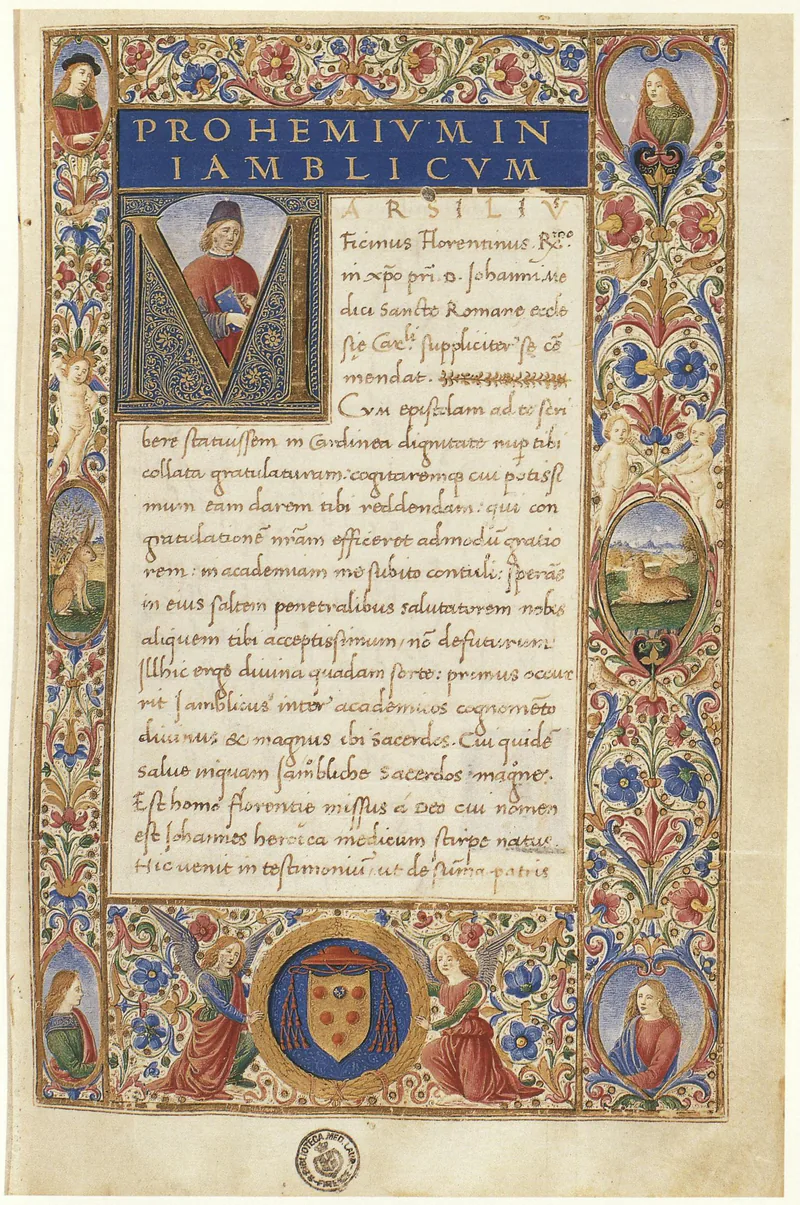
Iamblichus' most influential work is a reply to Porphyry's Letter to Anebo, in which Porphyry had questioned the theory behind divination, sacrifice, prayer and the invocation of gods. Writing in the persona of Abammon, an Egyptian priest and teacher of Anebo, Iamblichus answers each question in ten books. The ancient title was The Reply of the Master Abammon to the Letter of Porphyry to Anebo; Marsilio Ficino's Latin paraphrase of 1497 gave it the now familiar name On the Mysteries of the Egyptians. The text is available in the catalogue as On the Mysteries.
The work covers the classes of divine beings (gods, daimons, heroes and souls) and how they appear in visions; the nature of sacrifice and prayer; true and false divination; the role of fate and the stars; and the Egyptian theology of the first principles. In Book VIII Abammon appeals to the writings of Hermes, translated from Egyptian into Greek, as a source of priestly doctrine, an important early testimony to the prestige of Hermes Trismegistus among philosophers.
Theurgy and the Fully Descended Soul§
The philosophical core of On the Mysteries is a theory of the soul. Plotinus had taught that part of the soul never descends but remains always in the intelligible world, so that the philosopher need only turn inward to find it. Iamblichus rejected this. The soul, he argued, descends entirely into the body and is genuinely changed by embodiment. It cannot lift itself by its own power, because thought is a human activity and the gods are beyond it.
Union with the divine therefore requires divine action. Theurgy, "the work of the gods", consists of rites that use synthēmata or symbola, tokens the gods have sown in the world: certain stones, plants, animals, scents, sounds, names and figures that carry divine power. In performing these rites the soul does not compel the gods, which Iamblichus regarded as impious and impossible; rather, the gods act through their own tokens to purify the soul and raise it toward them. The theurgist's work is a participation in the divine ordering of the cosmos, the same chain of sympathy discussed in our article on correspondences.
Because souls differ, so do rites. Iamblichus distinguished most people, who are bound to the body and need material worship with offerings and temples; a middle group capable of more intellectual rites; and a rare few who can worship in a wholly immaterial way. Even the highest, however, began with material rites. This graded view allowed him to defend traditional temple religion as part of a philosophical path, and it explains why he was later seen as the champion of Hellenic cult. The broader debate is set out in Neoplatonism and theurgy.
The Iamblichean Curriculum and Metaphysics§
Iamblichus also left a lasting mark on the teaching of Plato. He established a reading order of twelve dialogues in two cycles: ten beginning with the First Alcibiades, on self-knowledge, and passing through ethical, logical and physical dialogues, followed by the Timaeus for physics and the Parmenides for theology. Each dialogue was to be read for its single central purpose (skopos). This curriculum, known from later commentators, was followed in Athens and Alexandria until the end of antiquity.
In metaphysics he multiplied the levels of reality between the One and the material world. He posited an utterly ineffable first principle above the One that is the cause of all things, and distinguished several orders of intellect and soul. His fragmentary commentaries on Plato and Aristotle and his treatise On the Soul, preserved in extracts by John Stobaeus, show a systematic mind that later Neoplatonists, especially Proclus, both developed and corrected.
Legacy: Julian, Proclus, Ficino and Modern Scholarship§
The emperor Julian (r. 361–363), the last pagan ruler of Rome, revered Iamblichus as the equal of Plato and drew on him in his Hymn to King Helios. Proclus called him "the divine Iamblichus" and adopted his view of theurgy, as did the last heads of the Athenian school. Through Proclus and Pseudo-Dionysius, Iamblichean hierarchies of divine beings passed into Christian thought.
In the Renaissance Marsilio Ficino's paraphrase, published by Aldus Manutius in Venice in 1497 together with other Neoplatonic texts, made On the Mysteries available to readers such as Agrippa, and it became a foundation of Marsilio Ficino's own theories of natural and spiritual magic. Modern opinion swung from E. R. Dodds's verdict that theurgy was a retreat into superstition to the more sympathetic readings of Gregory Shaw, John Dillon and others, who present Iamblichus as a serious religious philosopher concerned with how an embodied soul can be saved.
Frequently asked questions§
Who was Iamblichus?§
Iamblichus was a Neoplatonist philosopher from Chalcis in Syria who lived from about 245 to about 325 CE. A student of Porphyry, he founded his own school and is best known for defending theurgy as the way to union with the gods.
What is Iamblichus' On the Mysteries about?§
It is a reply to Porphyry's critical questions about gods, daimons, sacrifice, prayer and divination. Writing as the Egyptian priest Abammon, Iamblichus argues that these rites are effective because the gods act through them, and that they are necessary for the soul's salvation.
How did Iamblichus disagree with Plotinus?§
Plotinus believed that part of the soul always remains in the divine realm and can be reached through contemplation. Iamblichus held that the soul descends completely into the body and needs the divine help given in theurgic rites.
Why is Iamblichus important to Hermeticism?§
He cites the writings of Hermes as authoritative Egyptian wisdom, and his theory of theurgy and divine symbols shaped later Hermetic and Renaissance magic, particularly through Ficino's Latin version of On the Mysteries.
Sources and further reading§
- On the Mysteries — Iamblichus, 2003
- On the Pythagorean Way of Life — John Dillon & Jackson Hershbell, 1991
- Iamblichus: De Anima — John F. Finamore & John M. Dillon, 2002
- Theurgy and the Soul: The Neoplatonism of Iamblichus — Gregory Shaw, 1995
- Philostratus and Eunapius: The Lives of the Sophists — Wilmer Cave Wright, 1921
- Divination and Theurgy in Neoplatonism: Oracles of the Gods — Crystal Addey, 2014