Liber XXV · Secret Societies · Chapter II: Freemasonry
Freemasonry: Origins, Degrees, Symbols and History Explained
Freemasonry explained: origins in stonemasons' lodges, the 1717 Grand Lodge, the three degrees, symbols such as the square and compasses, and its history.

Freemasonry is a fraternal organisation that teaches moral and philosophical lessons through allegorical rituals based on the tools and legends of stonemasons, especially the building of King Solomon's Temple. It developed from the lodges of working masons in Scotland and England, took its modern form with the founding of a Grand Lodge in London in 1717, and spread worldwide in the eighteenth century. Freemasons describe their institution as "a peculiar system of morality, veiled in allegory and illustrated by symbols".
Origins: From Operative Masons to Speculative Lodges§
Medieval stonemasons were organised differently from most craft guilds, because their work moved from building site to building site. They met in "lodges", workshops attached to great building projects, and preserved traditional texts known as the Old Charges, which recounted a legendary history of geometry and masonry from biblical and classical times and set out rules of conduct. The oldest of these, the Regius Poem, is usually dated to around 1390.
The decisive developments took place in Scotland. In 1598 and 1599 William Schaw, Master of Works to King James VI, issued statutes regulating the masons' lodges, and lodge minutes survive from this period. In the seventeenth century some Scottish lodges began admitting gentlemen who were not working masons; Sir Robert Moray was initiated by members of an Edinburgh lodge at Newcastle in 1641. In England the antiquary Elias Ashmole recorded in his diary that he was "made a Free Mason" at Warrington in Lancashire in 1646. Historians such as David Stevenson have argued that Scottish lodges, with their use of the "art of memory" and Renaissance ideas, supplied much of the later fraternity's character.
The Grand Lodge of 1717 and Anderson's Constitutions§
On 24 June 1717, the feast of St John the Baptist, four London lodges met at the Goose and Gridiron tavern and formed a Grand Lodge, choosing Anthony Sayer as Grand Master. In 1723 the Presbyterian minister James Anderson published The Constitutions of the Free-Masons, which included a legendary history of the craft and a set of "Charges". The first charge stated that Masons were obliged only to "that religion in which all men agree", a broad, tolerant formula that reflected the latitudinarian spirit of the age. Historians such as Margaret Jacob have connected early Grand Lodge Freemasonry with Newtonian science and the Whig establishment; the natural philosopher John Theophilus Desaguliers was an early Grand Master.

Rival bodies soon appeared. The "Antients" Grand Lodge, founded in 1751, accused the original "Moderns" of altering the ritual; the two united in 1813 as the United Grand Lodge of England. Freemasonry spread quickly to Ireland, France, the Netherlands, the German states, the American colonies and, through military lodges and the British Empire, around the world.
The Three Degrees and the Legend of Hiram Abiff§
Craft or "Blue Lodge" Freemasonry confers three degrees: Entered Apprentice, Fellow Craft and Master Mason. Each is conferred in a ritual in which the candidate is led through the lodge, takes an obligation of secrecy, and is entrusted with signs and passwords and with explanations of the working tools.
The third degree centres on the legend of Hiram Abiff, the master craftsman of Solomon's Temple. In the Masonic story, which elaborates a figure mentioned in 1 Kings and 2 Chronicles, Hiram is murdered by three workmen who try to force him to reveal the Master's secret word; he refuses, and his body is later found and raised. The candidate enacts this drama of fidelity, death and raising, which Masons interpret as a lesson about integrity and the immortality of the soul. The Hiramic legend is first clearly documented in the 1720s, and the three-degree system appears in print in Samuel Prichard's exposure Masonry Dissected (1730).
Masonic Symbols and Their Meanings§
Masonic symbolism draws on the tools of the builder and the imagery of Solomon's Temple (see also the Seal of Solomon for related legends of the king):
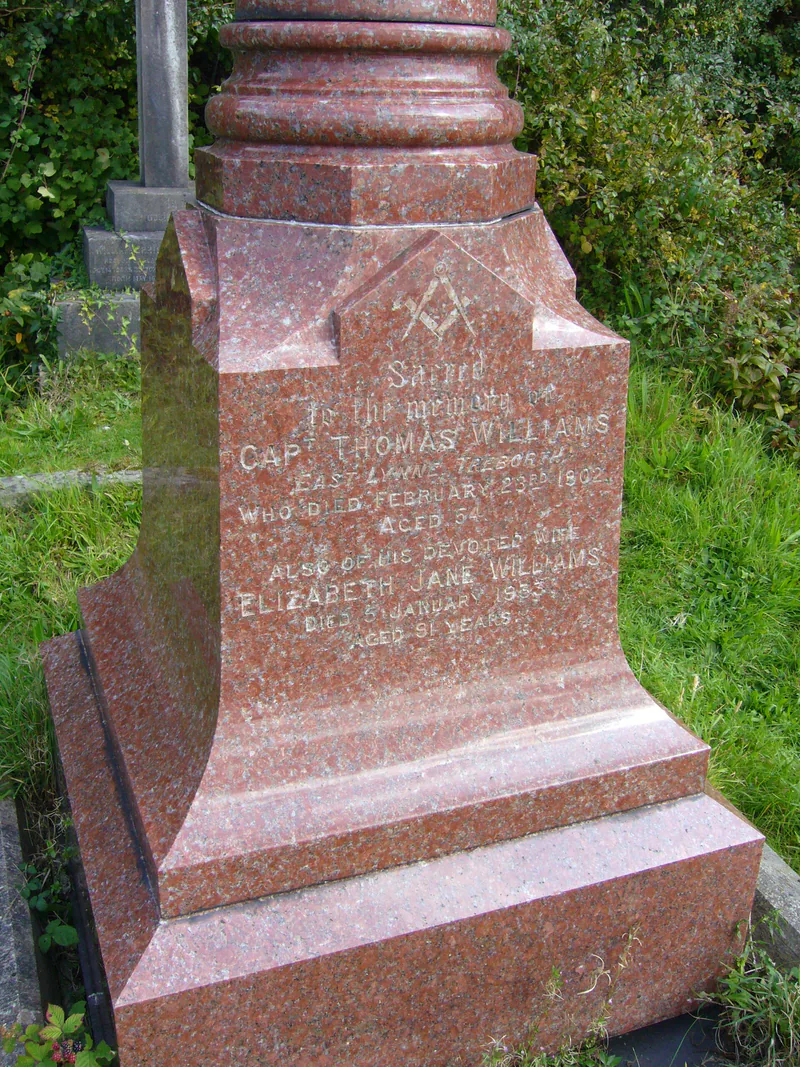
- The square and compasses, the best-known emblem, represent morality and the boundaries of conduct, often shown with the letter G, interpreted as God or Geometry.
- The two pillars, Jachin and Boaz, recall the bronze pillars at the entrance to Solomon's Temple.
- The checkered pavement of black and white squares represents the mingled good and evil of human life.
- The rough and perfect ashlar, unhewn and dressed stones, represent the person before and after moral improvement.
- The all-seeing eye, a symbol of divine providence, appears in Masonic imagery from the late eighteenth century; it was not originally a Masonic invention.
God is referred to in ritual as the Great Architect of the Universe, a title that allows members of different faiths to pray together.
Higher Degrees, Appendant Bodies and the Esoteric Turn§
From the 1730s onward, especially in France, many "higher" or "side" degrees were created, often with chivalric, alchemical or Kabbalistic themes. Andrew Michael Ramsay's oration of 1737 linked Freemasonry to the crusading knights, encouraging chivalric degrees and, later, Templar legends. Among the systems that survive are the Royal Arch, the York Rite, and the Ancient and Accepted Scottish Rite, organised with thirty-three degrees by a Supreme Council founded at Charleston, South Carolina, in 1801, which includes a Rosicrucian degree (see Rosicrucianism). Esoteric Masonic rites such as the Rite of Memphis-Misraïm and the Martinist systems became channels for occult teaching, and the Masonic lodge became the organisational model for orders like the Golden Dawn.
Prince Hall, Co-Masonry and Diversity§
In 1775 Prince Hall, a free Black man in Boston, was initiated with fourteen others in a military lodge. Refused a charter by local white Masons, the group received a warrant from the Grand Lodge of England in 1784 as African Lodge No. 459. Prince Hall Freemasonry became one of the most important institutions of African American civic life; many mainstream American grand lodges have recognised Prince Hall grand lodges only since the late twentieth century.
Most regular grand lodges admit only men, but women have their own Masonic and para-Masonic bodies. The French journalist Maria Deraismes was initiated in 1882, and in 1893 she and Georges Martin founded Le Droit Humain, an international order admitting both sexes, later promoted in the English-speaking world by Annie Besant as Co-Masonry. The Order of the Eastern Star is a related order for women and men. In 1877 the Grand Orient de France removed the requirement of belief in God, leading to a lasting division between "regular" Anglo-American Freemasonry and "liberal" continental Freemasonry.
Opposition and Controversy§
Freemasonry has long faced opposition. Pope Clement XII condemned it in 1738, and Catholic membership remains prohibited according to a 1983 declaration of the Congregation for the Doctrine of the Faith. In the United States the 1826 disappearance of William Morgan, who had threatened to publish Masonic rituals, led to the Anti-Masonic Party. Freemasons were persecuted by Nazi Germany, Francoist Spain and other authoritarian regimes, often under the slogan of a "Judeo-Masonic" plot. These accusations, and the hoaxes that fed them, are examined in our article on conspiracy myths.
Frequently asked questions§
Is Freemasonry a religion?§
Regular grand lodges insist that it is not a religion or a substitute for religion: it has no theology, sacraments or doctrine of salvation, and members belong to many faiths. Critics, including some churches, argue that its rituals, prayers and moral teachings give it a religious character.
Can women become Freemasons?§
Mainstream grand lodges in the Anglo-American tradition admit only men. Women can join mixed orders such as Le Droit Humain (Co-Masonry) or women-only Masonic bodies, which work similar degrees.
Did Freemasonry come from the Knights Templar?§
No documentary evidence supports a link. The idea of Templar descent was developed by eighteenth-century higher-degree rites, especially the German Strict Observance, long after the Templars were suppressed in 1312.
Sources and further reading§
- The Constitutions of the Free-Masons — James Anderson, 1723
- Masonry Dissected — Samuel Prichard, 1730
- Morals and Dogma — Albert Pike, 1871
- The Origins of Freemasonry: Scotland's Century, 1590–1710 — David Stevenson, 1988
- The Radical Enlightenment: Pantheists, Freemasons and Republicans — Margaret C. Jacob, 1981
- Revolutionary Brotherhood: Freemasonry and the Transformation of the American Social Order — Steven C. Bullock, 1996
- The Craft: A History of English Freemasonry — John Hamill, 1986
- Builders of Empire: Freemasons and British Imperialism — Jessica L. Harland-Jacobs, 2007
- Western Esotericism and Rituals of Initiation — Henrik Bogdan, 2007