Liber XXV · Secret Societies · Chapter V: Templar Legends
Templar Legends: The Knights Templar in Myth and History
Templar legends explained: the real Knights Templar and their trial, Baphomet, the Masonic Templar myth, survival legends, Rosslyn and the Priory of Sion.

The Knights Templar were a real military religious order, founded in Jerusalem around 1120 and dissolved by the pope in 1312 after the French king Philip IV had its members arrested on charges of heresy. Their dramatic fall gave rise to an enormous body of legends: that they guarded secret wisdom or treasure, worshipped an idol called Baphomet, survived in secret, and passed their mysteries to the Freemasons. Historians distinguish the documented history of the order from these later myths, most of which date from the eighteenth century onward.
The Historical Knights Templar§
Around 1119–1120 a French knight, Hugues de Payens, and a few companions vowed to protect pilgrims on the roads to Jerusalem, which had been captured in the First Crusade. King Baldwin II gave them quarters in part of the royal palace on the Temple Mount, believed to be the site of Solomon's Temple, and they became known as the Poor Fellow-Soldiers of Christ and of the Temple of Solomon. At the Council of Troyes in 1129 they received a rule, and Bernard of Clairvaux praised them in his treatise In Praise of the New Knighthood.
The order grew rapidly in wealth and influence. Donations of land throughout Europe supported its castles and soldiers in the East, and its network of houses made it an early international banker, holding deposits and transferring funds for pilgrims and kings. After the fall of Acre in 1291, the last major crusader stronghold, the order lost its main purpose while retaining great wealth.
The Arrest, Trial and Suppression, 1307–1314§
At dawn on Friday 13 October 1307, officers of King Philip IV of France arrested the Templars throughout the kingdom. The charges included denying Christ and spitting on the cross during initiation, obscene kisses, encouraging sodomy, and worshipping an idol, sometimes described as a head. Under torture, many Templars, including the Grand Master Jacques de Molay, confessed to some of the charges. Historians widely believe Philip's motives included his heavy debts and his struggle to assert royal power over the Church.

Pope Clement V, under heavy pressure, ordered arrests across Christendom, though outside France few Templars confessed and many were acquitted. In 1308, according to a document known as the Chinon Parchment, rediscovered in the Vatican Archives by the historian Barbara Frale in 2001, papal envoys absolved the order's leaders of heresy. Nonetheless, at the Council of Vienne in 1312, Clement suppressed the order by the bull Vox in excelso, as an administrative measure rather than a judgement of guilt, and transferred most of its property to the Knights Hospitaller. On 18 March 1314 Jacques de Molay and Geoffroi de Charney retracted their confessions and were burned on an island in the Seine.
The legend of the curse§
Both Clement V and Philip IV died within the year. A later legend claimed that Molay had summoned them from the flames to appear before God's judgement; the story developed in the decades after his death and was later embellished by writers. The common belief that Friday the 13th is unlucky because of the 1307 arrests is a modern assumption; the superstition itself is not documented before the nineteenth century.
Baphomet and the Accusation of Idolatry§
The name "Baphomet" appears in some trial testimonies as the name of the idol the Templars were accused of worshipping. Most historians regard it as an Old French corruption of "Mahomet" (Muhammad), reflecting accusations that the Templars had been corrupted by Islam. Nineteenth-century writers turned the name into an esoteric symbol: the Austrian orientalist Joseph von Hammer-Purgstall interpreted it as gnostic, and in 1856 Éliphas Lévi published his famous drawing of Baphomet as a winged, goat-headed androgyne representing the union of opposites. Lévi's image has no connection with the medieval Templars, but it became one of the most widely reproduced occult images, later used in satanic and anti-Masonic propaganda.
The Masonic Templar Myth§
The idea that Freemasonry continued the Templar order grew out of the chivalric enthusiasm of eighteenth-century French Freemasonry. In 1737 the Scottish Jacobite Andrew Michael Ramsay gave an oration claiming that Freemasonry descended from crusader knights, though he did not name the Templars. Within a few decades German and French higher degrees made the Templar link explicit. The Rite of Strict Observance, founded by Baron Karl Gotthelf von Hund in the mid-eighteenth century, taught that Templar knights had escaped to Scotland and preserved the order's secrets within Masonic lodges, ruled by "Unknown Superiors". The claim could not be substantiated, and the Strict Observance was effectively reformed at the Convent of Wilhelmsbad in 1782.
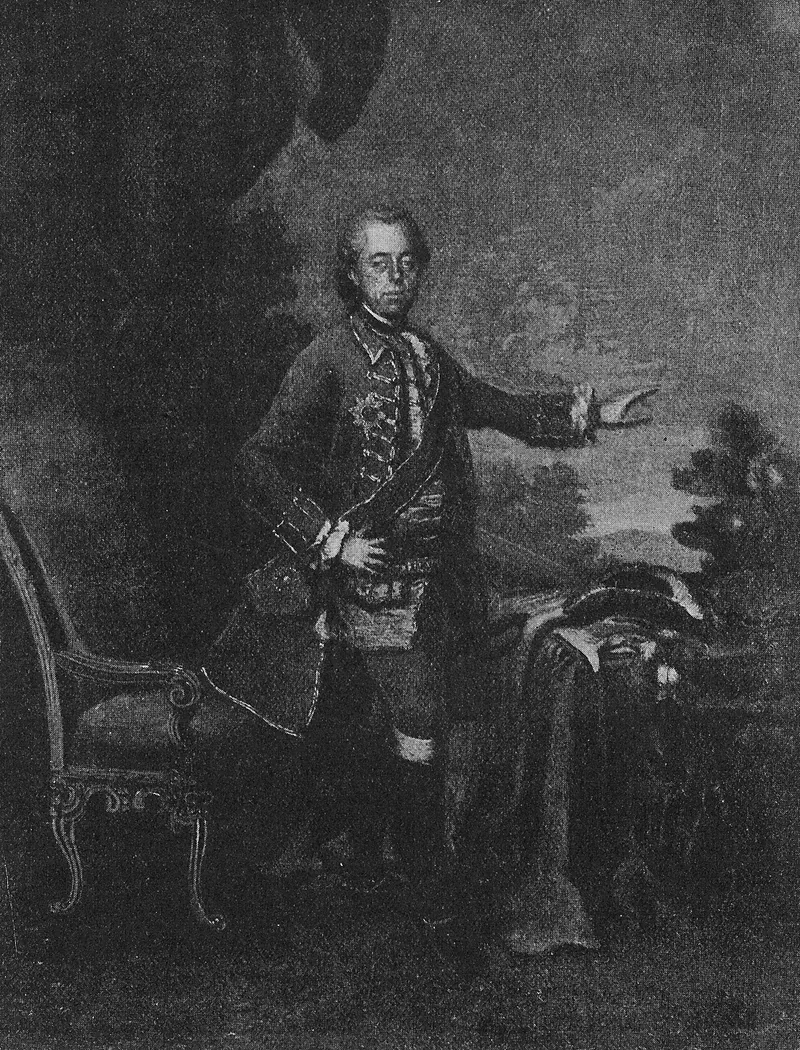
Templar degrees nonetheless survive in several Masonic systems, such as the Knights Templar of the York Rite in the United States and the Knight Kadosh degree of the Scottish Rite; Masonic authorities today generally treat them as symbolic commemoration rather than historical descent. See our guide to Freemasonry.
Survival Legends and Neo-Templar Orders§
Other legends imagine the order surviving in hiding. A popular story claims that Templar knights fought for Robert the Bruce at Bannockburn in 1314; no contemporary source supports this. In Portugal, by contrast, there was real continuity: King Denis secured the order's property for a new Order of Christ, founded in 1319, which later sponsored Portuguese voyages of discovery.
In 1804 the Parisian physician Bernard-Raymond Fabré-Palaprat founded an Ordre du Temple based on the "Larmenius Charter", which claimed an unbroken succession of grand masters since Molay; historians regard the charter as an eighteenth- or early nineteenth-century forgery. Numerous neo-Templar orders exist today, most of them chivalric or charitable societies without historical connection to the medieval order. The Templars were also drawn into anti-revolutionary conspiracy myths: in 1796 Charles-Louis Cadet de Gassicourt claimed that the French Revolution was the Templars' revenge on the monarchy.
Rosslyn, the Grail and the Priory of Sion§
In the late twentieth century Templar legends became a bestselling genre. Rosslyn Chapel near Edinburgh, founded in 1446 by William Sinclair, more than a century after the order's suppression, was claimed to contain Templar and Masonic secrets in its elaborate carvings; architectural historians interpret its iconography in terms of late medieval Catholic devotion. The Holy Blood and the Holy Grail (1982), by Michael Baigent, Richard Leigh and Henry Lincoln, combined the Templars with the Cathars (see Cathars and Bogomils), the Holy Grail and a supposed secret society, the Priory of Sion, guarding the bloodline of Jesus. The Priory of Sion was in fact founded in 1956 by Pierre Plantard, who planted forged "secret dossiers" in the Bibliothèque nationale de France in the 1960s; Plantard himself admitted fabrication under oath in 1993. Dan Brown's novel The Da Vinci Code (2003) spread these ideas worldwide, though its historical claims are rejected by scholars.
Frequently asked questions§
Why were the Knights Templar arrested?§
They were arrested in France in 1307 on the orders of King Philip IV, accused of heresy, idolatry and immoral initiation rites. Most historians believe the charges were largely fabricated or extracted by torture, and that Philip was motivated by debt and by his wish to dominate the Church.
Are the Freemasons descended from the Templars?§
No documentary evidence supports any direct link. The idea was developed in eighteenth-century Masonic higher degrees, particularly the German Strict Observance, and is now regarded by historians, including Masonic historians, as a legend.
What is Baphomet?§
Baphomet was the name of an idol the Templars were accused of worshipping at their trial, probably a corruption of "Mahomet". The famous goat-headed image is a symbolic drawing by Éliphas Lévi from 1856 and has nothing to do with the medieval order.
Sources and further reading§
- In Praise of the New Knighthood — Bernard of Clairvaux, c. 1130
- The Trial of the Templars — Malcolm Barber, 1978
- The New Knighthood: A History of the Order of the Temple — Malcolm Barber, 1994
- The Murdered Magicians: The Templars and Their Myth — Peter Partner, 1981
- The Knights Templar: A New History — Helen Nicholson, 2001
- The Templars: The Secret History Revealed — Barbara Frale, 2009
- The Templars — Dan Jones, 2017
- The Mythology of the Secret Societies — J. M. Roberts, 1972