Liber XXV · Secret Societies · Chapter V: Templar Legends
The Templar Survival Legend: Secret Knights After 1314
Did the Knights Templar survive in secret? The legend's history, from Scotland and the Strict Observance to the Larmenius Charter and neo-Templar orders.

The Templar survival legend is the belief that the Knights Templar, dissolved by Pope Clement V in 1312, did not really end but continued in secret, passing their rites, wealth or hidden knowledge to later brotherhoods such as the Freemasons. The legend was created in eighteenth-century Masonic lodges, elaborated by occultists, conspiracy theorists and novelists, and given institutional form by neo-Templar orders; historians find no evidence of any secret continuity, while documenting what actually happened to the order's members and property.
What Really Happened to the Templars After 1312§
The arrests ordered by Philip IV of France on 13 October 1307, the trials that followed and the burning of Jacques de Molay in 1314 are well documented (see Templar legends). Less dramatic, and less often told, is the fate of the order's thousands of other members and its vast estates.
In the bull Vox in excelso of 1312, issued at the Council of Vienne, Clement V suppressed the order by apostolic authority without formally condemning it. A second bull, Ad providam, transferred its property to the Knights Hospitaller, though the French crown extracted large sums first. In the Iberian kingdoms, where the Templars had fought in the Reconquista and the charges found little support, rulers negotiated different solutions. King James II of Aragon obtained a new Order of Montesa in 1317, and King Denis of Portugal secured papal approval in 1319 for the Order of Christ, which took over the Templar properties and some former brethren, and later sponsored Portuguese exploration.
Most surviving Templars, especially outside France, were pensioned off, sent to live in monasteries or allowed to join the Hospitallers. Their lives can sometimes be traced in local records. This dispersal, rather than any secret flight, is what the documents show, and it was in a sense a real "survival" of individuals and institutions. But there is no record of a hidden chapter preserving the order's rule, ritual or treasure.
Scotland, Bannockburn and Rosslyn: The Scottish Templar Legend§
The most popular survival story places the Templars in Scotland. In 1309 an inquiry at Holyrood examined only two Templars in the kingdom, both English-born, and heard hostile testimony from local witnesses; the order there was small. Nevertheless, modern writers have claimed that knights fleeing France found refuge with Robert the Bruce, who was then excommunicate, and that a Templar charge decided the battle of Bannockburn in June 1314. No chronicle of the battle mentions Templars, and the story cannot be traced earlier than Masonic and romantic writing of the eighteenth and nineteenth centuries. It was given wide currency by Michael Baigent and Richard Leigh's The Temple and the Lodge (1989).
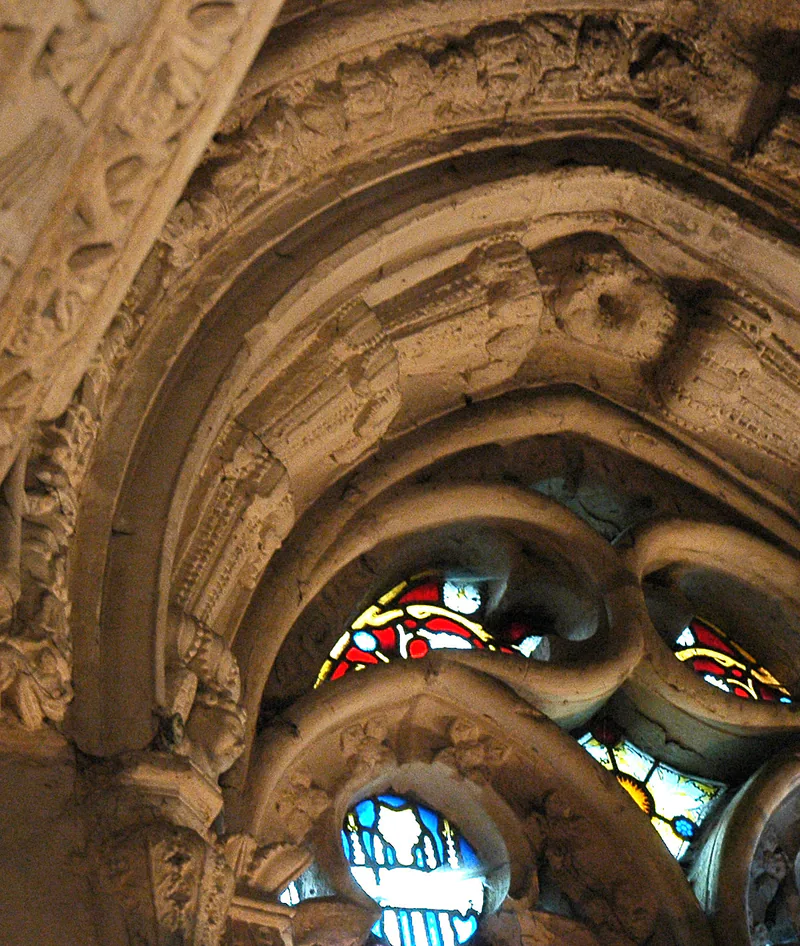
Linked to this is Rosslyn Chapel near Edinburgh, founded in 1446 by William Sinclair, Earl of Orkney, more than a century after the suppression. Its lavish carving has been read as a code of Templar and Masonic secrets. Architectural historians interpret its iconography, from the Seven Deadly Sins to the Green Men, as late medieval Catholic devotion; the Sinclair family's later role as hereditary patrons of Scottish masons, attested in documents of the 1600s, belongs to the history of operative masonry rather than to the Templars.
Ramsay's Oration and the Birth of Templar Freemasonry§
The survival legend as a coherent idea was born inside Freemasonry. Early eighteenth-century Masonic histories, such as Anderson's Constitutions of 1723, traced the craft to biblical builders and medieval masons. In 1737 the Scottish Jacobite Andrew Michael Ramsay, living in France, composed an oration claiming that Masonry had been revived by crusader knights in the Holy Land who joined with builders to restore the temples of God. Ramsay mentioned the crusaders and the Knights of St John, not the Templars, but his chivalric framing proved irresistible.
French "Scottish" degrees multiplied in the 1740s and 1750s, and some began to make the Templars the true bearers of Masonic secrets. The degree later known as Knight Kadosh, which survives in the Scottish Rite, dramatised vengeance for Molay's death, a theme that later anti-Masonic writers would take literally.
Baron von Hund and the Rite of Strict Observance§
The legend gained an organisation in Germany. Karl Gotthelf, Baron von Hund (1722–1776), a Saxon nobleman, claimed that in Paris in the 1740s he had been received into the Templar order by unknown superiors, one of whom he identified only as the "Knight of the Red Feather", sometimes thought to be the Jacobite pretender Charles Edward Stuart. Around 1751 he began building a Masonic system on his estate in Upper Lusatia that became the Rite of Strict Observance.
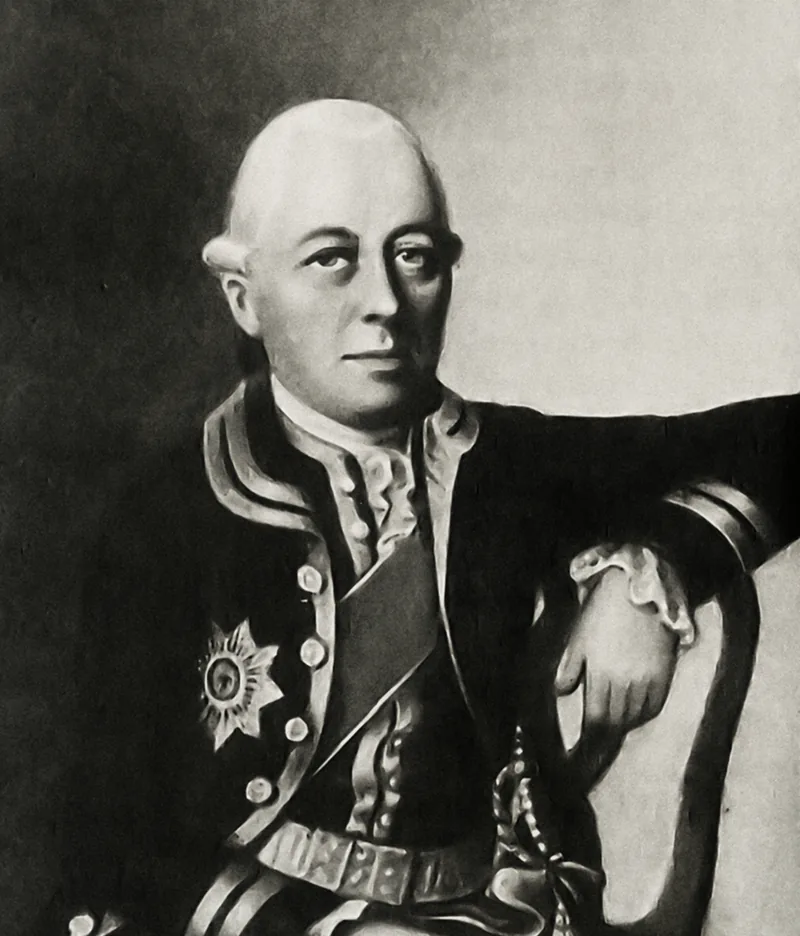
Its foundation story held that after Molay's death the Templar provincial Pierre d'Aumont escaped with a few companions to Scotland, disguised as working masons, and there secretly continued the order, which had preserved itself ever since inside Masonic lodges. Members of the inner degrees received knightly names and were divided into "provinces" corresponding to the medieval Templar map; all obeyed hidden "Unknown Superiors". For two decades the Strict Observance became the dominant form of German Freemasonry, attracting princes such as Duke Ferdinand of Brunswick. A rival "clerical" branch led by the theologian Johann August Starck claimed that the Templars' true secrets had been held by their priests.
The difficulty was that the Unknown Superiors never appeared. Successive conventions sought proof, and at the Convent of Wilhelmsbad in 1782 the delegates formally abandoned the claim of literal Templar descent. Under the influence of Jean-Baptiste Willermoz of Lyon they adopted instead a Christian chivalric system, the Rectified Scottish Rite, in which the Templars became a symbolic inspiration (see Martinism).
The Larmenius Charter and the Ordre du Temple§
In France the Revolution gave the legend new uses. In 1796 Charles-Louis Cadet de Gassicourt claimed that the Templars had survived to take revenge on the monarchy, an idea taken up by the counter-revolutionary writers discussed in Barruel and the Jacobin conspiracy myth. Others saw in the Templars martyrs of royal and papal tyranny, and François Raynouard's tragedy Les Templiers (1805) was a theatrical success.
In 1804 the Parisian physician Bernard-Raymond Fabré-Palaprat (1773–1838) emerged as grand master of a restored Ordre du Temple. Its title deed was the Charta Transmissionis, or Larmenius Charter, a Latin document in cipher dated 1324, in which one Johannes Marcus Larmenius declared that Molay had handed him the government of the order; beneath it ran the signatures of a continuous line of grand masters down to the eighteenth century. The order held public ceremonies under the Empire, including a commemoration of Molay in a Paris church in 1808.
Historians regard the charter as a forgery. Some date it to the early eighteenth century, when it may have served an aristocratic chivalric society; others think it was made shortly before 1804. Either way it cannot be traced before modern times. Fabré-Palaprat added a further claim in the 1820s, a supposed Greek manuscript of the Gospel of John called the Levitikon, which he used to found a "Johannite" church teaching that the Templars had preserved a secret, non-Catholic Christianity.
Neo-Templar Orders and the Modern Survival Myth§
Fabré-Palaprat's order split after his death, but its successors and many imitators continue. Some modern chivalric orders claim descent from the Ordre du Temple; Masonic bodies such as the Knights Templar of the York Rite in the United States, organised nationally in 1816, and the Masonic Knights Templar in Britain treat the Templar connection as symbolic. Occult orders also borrowed the name: the Ordo Templi Orientis, founded around 1900, claimed a Templar heritage of secret wisdom.
The legend's darker side appeared in the Order of the Solar Temple, a neo-Templar group founded in 1984 by Joseph Di Mambro and Luc Jouret. Between 1994 and 1997, seventy-four of its members and their children died in murder-suicides in Switzerland, France and Quebec, a tragedy that shocked the francophone world.
In popular culture the survival legend fuels treasure hunts, novels and documentaries, and it merges easily with the Priory of Sion hoax, which presented the Templars as the military arm of an even older secret society. Historians such as Peter Partner and Malcolm Barber have shown how each generation reshaped the Templars to fit its own concerns: Enlightenment Masons saw enlightened knights, revolutionaries saw victims of tyranny, occultists saw initiates, and conspiracy writers saw a hidden power. The medieval order itself, a religious military institution of the crusades, ended in 1312.
Frequently asked questions§
Did the Knights Templar survive in secret?§
No evidence supports a secret survival. The order was dissolved in 1312, its property went largely to the Hospitallers and to new orders in Portugal and Aragon, and its members were pensioned or joined other religious houses. Claims of hidden continuity date from the eighteenth century.
Are the Freemasons descended from the Templars?§
No. The idea arose in eighteenth-century French and German Masonic degrees, above all the Strict Observance, which abandoned the claim in 1782. Masonic Templar degrees today are understood as symbolic and commemorative.
What is the Larmenius Charter?§
It is a Latin document in cipher, dated 1324, presenting a line of secret Templar grand masters after Jacques de Molay. It was produced by the Ordre du Temple of Bernard-Raymond Fabré-Palaprat in 1804, and historians consider it a forgery of the eighteenth or early nineteenth century.
Did Templars fight at Bannockburn?§
No contemporary source says so. The story appears only in much later writing and was popularised in the late twentieth century.
Sources and further reading§
- The Murdered Magicians: The Templars and Their Myth — Peter Partner, 1982
- The New Knighthood: A History of the Order of the Temple — Malcolm Barber, 1994
- The Trial of the Templars — Malcolm Barber, 1978
- The Knights Templar: A New History — Helen Nicholson, 2001
- La Franc-maçonnerie templière et occultiste aux XVIIIe et XIXe siècles — René Le Forestier, 1970
- The Temple and the Lodge — Michael Baigent and Richard Leigh, 1989