Liber IX · Gnosticism · Chapter II: Cathars & Bogomils
Cathars and Bogomils: Medieval Dualism, Crusade and Inquisition
Cathars and Bogomils explained: dualist beliefs, the consolamentum and perfecti, the Albigensian Crusade, Montségur, Inquisition records and current debates.
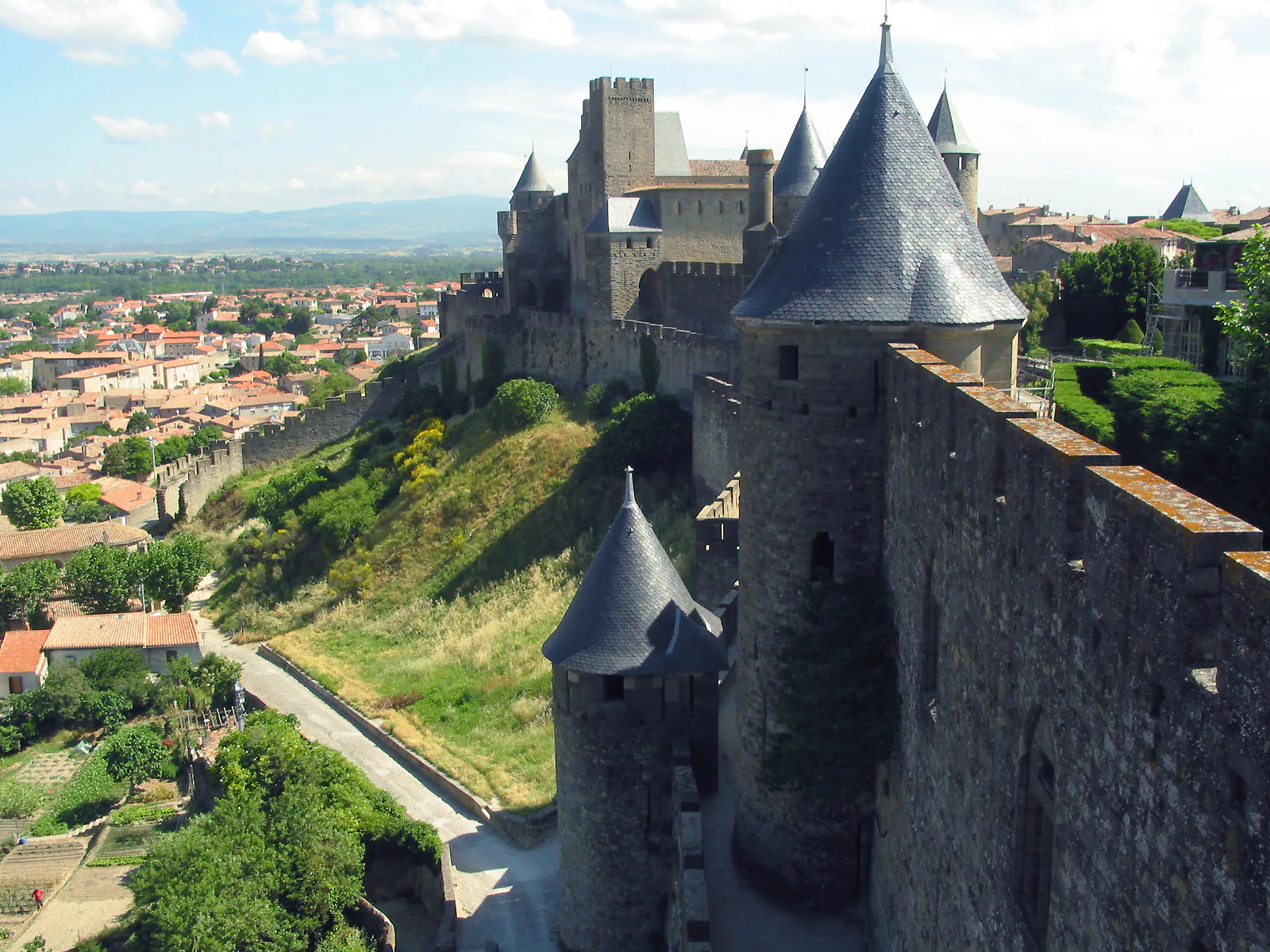
The Bogomils and the Cathars were medieval Christian movements that taught a dualist view of the world: the spiritual realm came from the good God, while the visible, material world was the work of an evil power, often identified with Satan. The Bogomils arose in tenth-century Bulgaria and spread through the Byzantine world; the Cathars flourished in the twelfth and thirteenth centuries in Languedoc and northern Italy until they were destroyed by the Albigensian Crusade and the Inquisition. Historians still debate how organised and how "dualist" these groups really were, and how far their image was shaped by their persecutors.
The Bogomils in Bulgaria and Byzantium§
The earliest clear evidence for the Bogomils is a polemical treatise by a Bulgarian priest, Cosmas, written probably in the late tenth century. Cosmas describes a priest named Bogomil (meaning "dear to God" or "beloved of God") who began teaching during the reign of Tsar Peter I (927–969). His followers rejected the sacraments, the veneration of icons and the cross, church buildings, and the Old Testament prophets; they prayed the Lord's Prayer repeatedly, practised fasting, and held that the devil was the maker of the visible world.
Historians have proposed several roots for these ideas. One frequently discussed source is the Paulicians, an Armenian dualist movement whose members were forcibly resettled by Byzantine emperors in Thrace. Others point to Bulgarian social conditions after the conversion of the country to Christianity in the 860s, and to the ascetic and apocryphal literature circulating in Slavonic. A direct connection with ancient Manichaeism is unlikely, though medieval opponents routinely called dualists "Manichaeans".
Bogomilism spread into the Byzantine Empire. Around 1100, under Emperor Alexios I Komnenos, a Bogomil leader named Basil the Physician was arrested in Constantinople and later burned in the Hippodrome; Anna Komnene recounts the episode in the Alexiad. The monk Euthymios Zigabenos wrote a detailed account of Bogomil teaching in his Dogmatic Panoply. According to Zigabenos, the Bogomils taught that Satanael, the elder son of God, rebelled, made the visible world and the human body, and was defeated by Christ, losing the divine suffix "-el" from his name.
The movement persisted in the Balkans for centuries. Its relationship with the independent Bosnian Church, which existed from the thirteenth to the fifteenth century, is disputed: older scholarship saw the Bosnian Church as Bogomil, while more recent work, such as that of John Fine, argues that it was largely a schismatic Catholic body that its enemies labelled heretical.
Catharism in Languedoc and Northern Italy§
In Western Europe, reports of dualist heretics multiply from the 1140s. Eckbert of Schönau, a German monk, preached sermons against heretics in the Rhineland in 1163 and is the first to use the name "Cathars", which he connected with the Greek word katharoi, "pure ones". The people themselves did not use the term; in Languedoc they were called "good men" and "good women" (bons hommes, bonnes femmes) or "good Christians", while their opponents called them "heretics" or "Albigensians", after the town of Albi.
In southern France the movement found support among the minor nobility, merchants and artisans of the Toulousain, the Lauragais, the Carcassès and the foothills of the Pyrenees. The region was politically fragmented, loosely controlled by the counts of Toulouse and the viscounts of Trencavel, and the Catholic clergy there were often criticised as worldly. In northern Italy, Cathar communities were present in cities such as Milan, Florence, Concorezzo and Desenzano, where the political conflict between the papacy and the emperor gave them protection for longer than in France.
A disputed document records an assembly at Saint-Félix-de-Caraman near Toulouse, traditionally dated 1167, at which a figure called Nicetas (Niquinta), described as a "pope" from Constantinople, is said to have reorganised the Cathar churches and installed bishops. The authenticity of this charter, which survives only in a seventeenth-century copy, is debated; some scholars accept it, while others regard it as a later fabrication.
Cathar Beliefs: Dualism and the Two Principles§
Cathar teaching, as reconstructed from both their own surviving writings and their opponents' accounts, centred on the problem of evil. If God is good, how can he have made a world full of suffering and death? The Cathar answer was that the visible world was made by an evil power. Two forms of this belief are attested.
- Absolute dualism held that there were two eternal principles, one good and one evil, each with its own creation. This view is expounded in the Book of the Two Principles, a Latin treatise from Italy associated with the circle of John of Lugio around 1250, one of the few surviving Cathar theological works.
- Moderate (mitigated) dualism held that there was one true God, and that the evil creator was a fallen being, usually Satan, who had rebelled and fashioned the material world. This view was closer to the Bogomil teaching and was associated with the church of Concorezzo.
In both forms, human souls were understood as fallen angels trapped in bodies, passing through successive lives until released. Many Cathars rejected the Old Testament God as the evil creator, read the New Testament, especially the Gospel of John, in a dualist light, and regarded Christ as an angelic being who only appeared to have a material body. They rejected Catholic sacraments, the doctrine of purgatory and the cult of the cross. The resemblance to the ancient idea of an ignorant creator discussed in our article on the demiurge is striking, but most historians do not believe there was a direct chain of transmission from the second-century Gnostics; the medieval movements drew on Bogomil teaching, the Bible and apocryphal works such as the Interrogatio Iohannis (the "Secret Supper").
The Consolamentum and the Perfecti§
The heart of Cathar religious life was the consolamentum, a ceremony of spiritual baptism by the laying on of hands, understood as the reception of the Holy Spirit. Two Cathar rituals survive, one in Latin and one in Occitan (the Lyon manuscript), describing the transmission of the Lord's Prayer to the candidate and the subsequent rite, in which the Gospel of John was placed on the candidate's head.
Those who received the consolamentum became "good men" or "good women", called perfecti and perfectae by the inquisitors. They lived a life of strict discipline: no meat, eggs, cheese or milk (fish was permitted), no sexual relations, no oaths, no violence, regular fasting and prayer. They often lived in small communal houses and worked as weavers or in other trades. Women could receive the consolamentum and preach, though women seem not to have held episcopal office.
Most supporters, called "believers" (credentes), did not take on these obligations. They showed respect to the perfect through a ritual greeting, the melioramentum, in which they asked for blessing and to be brought to a good end. Many believers received the consolamentum only on their deathbed. A further practice, the endura, in which some dying persons who had received the consolamentum refused food, is documented mainly in the late period; how widespread it was is disputed.
The Albigensian Crusade and the Fall of Montségur§
Preaching missions, including that of Dominic de Guzmán, the founder of the Dominican order, failed to stem the movement. In January 1208 the papal legate Pierre de Castelnau was murdered, allegedly by a retainer of Count Raymond VI of Toulouse. Pope Innocent III proclaimed a crusade, the first called against fellow Christians within Western Christendom.
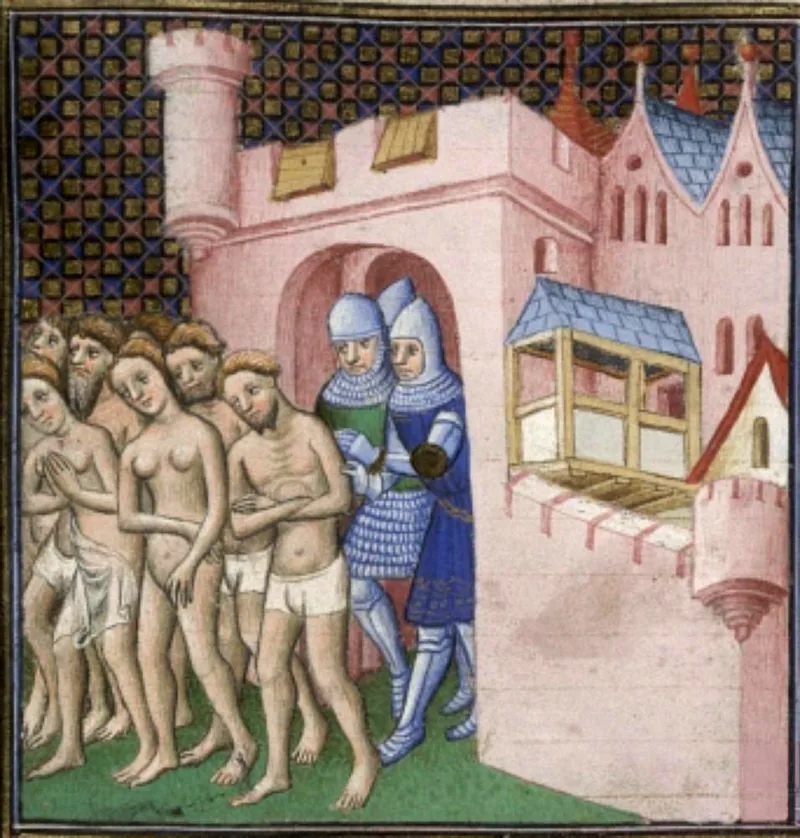
The Albigensian Crusade began in 1209. In July the crusaders sacked Béziers and massacred much of its population; the chronicler Caesarius of Heisterbach later attributed to the abbot Arnaud Amaury the order "Kill them all, God will know his own", though the quotation was written decades later and its authenticity is uncertain. Carcassonne fell soon after, and Simon de Montfort led the crusade until his death at the siege of Toulouse in 1218. The war became a struggle for control of the south between northern French barons, the French crown and the southern nobility. It ended with the Treaty of Paris (also called Meaux-Paris) in 1229, which placed the county of Toulouse on course for annexation by the French crown.
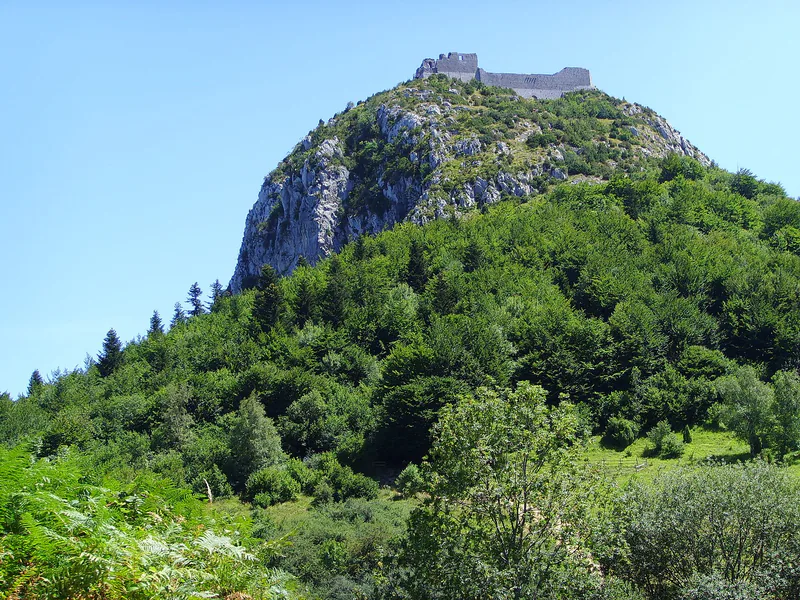
The last major Cathar stronghold was the fortress of Montségur in the Pyrenean foothills, which became a refuge for Cathar clergy. After a garrison from Montségur took part in the killing of inquisitors at Avignonet in 1242, a royal army besieged the castle. It surrendered in March 1244, and more than two hundred perfected men and women who refused to recant were burned. Later legends that the Cathars of Montségur smuggled out a treasure or the Holy Grail have no historical basis.
The Inquisition and Its Records§
The suppression of Catharism gave rise to the medieval inquisition as a standing institution. From 1233 Pope Gregory IX entrusted inquiries into heresy to Dominican and Franciscan friars. Inquisitors travelled through the countryside, summoned populations, granted periods of grace for confession, and interrogated suspects, recording testimony in large registers. Penalties ranged from pilgrimage and wearing yellow crosses to imprisonment and, for the obstinate or relapsed, handing over to the secular authorities to be burned.
These registers are the richest sources for Cathar life. The interrogations held in Toulouse in 1245–1246 by Bernard de Caux and Jean de Saint-Pierre survive in a later copy (Toulouse MS 609) and record testimony from more than five thousand people. The register of Jacques Fournier, bishop of Pamiers and later Pope Benedict XII, records investigations from 1318 to 1325 into the last revival of Catharism led by the Autier brothers. Emmanuel Le Roy Ladurie used it to write Montaillou (1975), a celebrated portrait of a Pyrenean village. Bernard Gui's inquisitor's manual, the Practica inquisitionis (c. 1323–1324), describes the beliefs inquisitors were looking for. The last known Cathar perfect in Languedoc, Guillaume Bélibaste, was burned in 1321.
These methods of investigation, record-keeping and categorising deviance later influenced the prosecution of other alleged heresies and, in modified forms, the European witch trials.
Historiographical Debates: Did the Cathars Exist?§
Since the 1990s, the history of Catharism has been the subject of lively disagreement. R. I. Moore's The Formation of a Persecuting Society (1987) argued that medieval Europe developed new mechanisms for defining and persecuting outsiders, including heretics, Jews and lepers, in the eleventh and twelfth centuries. In The War on Heresy (2012), Moore went further, arguing that the image of a coherent, dualist "Cathar Church" with its own hierarchy was largely constructed by churchmen and inquisitors, who imposed categories from earlier heresiology onto diverse local dissenters.
Mark Pegg's The Corruption of Angels (2001), based on the 1245–1246 Toulouse depositions, similarly argues that the "good men" of the Lauragais were embedded in local society and that the label "Cathar" distorts their religion. Other historians, including Peter Biller, Bernard Hamilton, Malcolm Lambert and Claire Taylor, have defended the reality of Cathar dualism and of contact with the Bogomils, pointing to surviving Cathar texts, such as the Book of the Two Principles and the rituals, that were produced by the movement itself. The debate parallels the discussion over ancient "Gnosticism" described in our overview of Gnosticism: in both cases, scholars ask how far a category reflects the believers' own self-understanding and how far it reflects the polemics of their opponents.
The Cathars have also had a vigorous afterlife. In the nineteenth century Napoléon Peyrat romanticised them as Occitan martyrs, and modern tourism in the Aude markets the region as "Cathar Country". They have been claimed as precursors by Protestants, regionalists, esotericists and modern Gnostic churches, and woven into popular theories about the Grail, none of which the historical evidence supports.
Frequently asked questions§
What did the Cathars believe?§
The Cathars believed that the material world was created by an evil power and that human souls were spirits trapped in bodies. Salvation came through the consolamentum, after which the perfect lived strict lives of prayer, fasting and celibacy. They rejected the Catholic sacraments and hierarchy.
How were the Bogomils and Cathars connected?§
Medieval sources indicate contacts between Balkan dualists and Western Cathars, including visits by Bogomil leaders and the transmission of texts such as the Interrogatio Iohannis. The extent of the connection is debated, but most historians accept some Bogomil influence on Western Catharism.
Why were the Cathars persecuted?§
The Catholic Church regarded their teachings as heresy that threatened the sacraments and church order. After the murder of a papal legate in 1208, Innocent III called a crusade, and the Inquisition was later established to identify and punish remaining believers. Political ambitions of the French crown also shaped the conflict.
Were the Cathars Gnostics?§
They shared some ideas with ancient Gnostic movements, especially the belief that the material world was made by a lower or evil power. However, there is no clear historical link between them, and their sources were Bogomil teaching and the Bible rather than the ancient Gnostic texts.
Sources and further reading§
- Alexiad — Anna Komnene, c. 1148
- Practica inquisitionis heretice pravitatis — Bernard Gui, c. 1323–1324
- Heresies of the High Middle Ages — Walter L. Wakefield and Austin P. Evans (trans.), 1969
- Montaillou: village occitan de 1294 à 1324 — Emmanuel Le Roy Ladurie, 1975
- The Formation of a Persecuting Society — R. I. Moore, 1987
- The Cathars — Malcolm Lambert, 1998
- The Corruption of Angels: The Great Inquisition of 1245–1246 — Mark Gregory Pegg, 2001
- The War on Heresy — R. I. Moore, 2012
- Christian Dualist Heresies in the Byzantine World, c. 650–c. 1450 — Janet Hamilton and Bernard Hamilton, 1998