Liber IX · Gnosticism · Chapter I: Apophatic Theology
The Cloud of Unknowing: Medieval Guide to Contemplative Prayer
The Cloud of Unknowing explained: the anonymous 14th-century English classic of apophatic prayer, its cloud of forgetting, naked intent and lasting influence.

The Cloud of Unknowing is an anonymous Middle English guide to contemplative prayer, written in the second half of the fourteenth century, which teaches that God cannot be grasped by thought but only reached by love. Its author tells a young disciple to place all creatures beneath a "cloud of forgetting" and to strike upward into the "cloud of unknowing" that lies between the soul and God with a "naked intent" of love, often gathered into a single short word. It is the classic English expression of apophatic theology, the way of approaching God by unknowing.
Authorship and Date of the Cloud of Unknowing§
The author of The Cloud did not give his name, and none of the seventeen or so surviving medieval manuscripts identifies him. On the evidence of the dialect, he lived in the north-east Midlands of England, and the earliest manuscripts and the works he cites suggest a date in the last quarter of the fourteenth century. He was clearly a priest, learned in Latin theology, and he wrote with the authority of an experienced spiritual director.
Scholars have proposed several identities. The Carthusian order, which had a strong presence in England and was devoted to solitary contemplation, has often been suggested, and Carthusians did much to copy and circulate the book. Others have imagined a hermit or a country parson. Walter Hilton, author of The Scale of Perfection, was once proposed as the author, but most scholars now regard him as a contemporary with a different style and emphasis, though the two writers share much. In the absence of new evidence, the question remains open.
The Cloud of Unknowing Group of Texts§
The author is known for a small group of related works, which together form a coherent body of teaching:
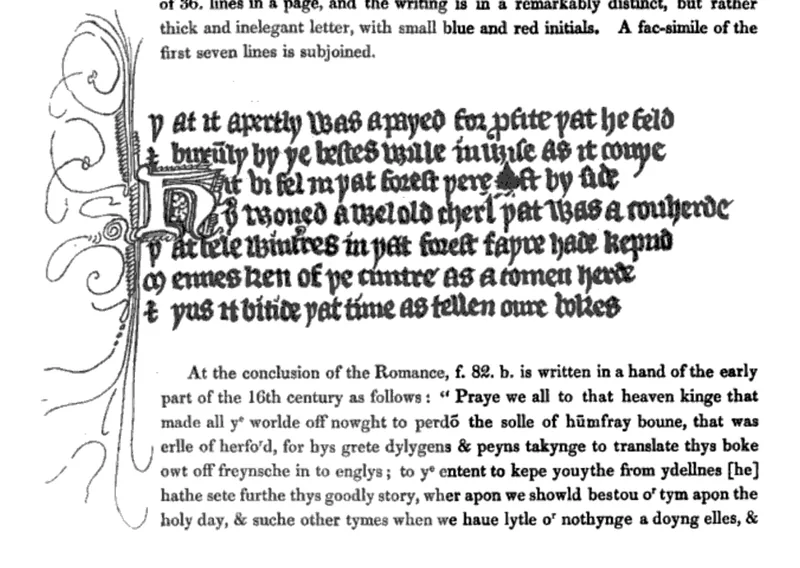
- The Cloud of Unknowing, seventy-five short chapters addressed to a disciple.
- The Book of Privy Counselling, a later work to the same or a similar reader, which answers objections and deepens the teaching on the "naked being" of God and the self.
- Deonise Hid Divinite, an English version of the Mystical Theology of Pseudo-Dionysius, made from Latin translations and commentaries, especially that of Thomas Gallus, abbot of Vercelli.
- A Letter of Prayer, A Letter of Discretion of Stirrings and A Treatise of Discerning of Spirits.
- Free adaptations of Richard of St Victor's Benjamin Minor.
The Dionysian translation reveals the author's sources. The Greek Mystical Theology, which can be read in our catalogue of texts, describes Moses entering the divine darkness on Sinai and teaches that God is reached by negating every concept. The Cloud author read Dionysius through the Victorine and Franciscan tradition, especially Gallus, which interpreted the highest union with God as an act of love above understanding.
The Teaching of the Cloud: Love Above Knowledge§
The work is framed as a letter to a young disciple who has moved from an ordinary Christian life to a more solitary, contemplative one. The author warns at the outset that the book is not for the merely curious, the gossip or the flatterer, but only for those genuinely called to contemplation; he asks that it not be copied or lent carelessly.
God Cannot Be Grasped by Thought§
The fundamental claim is that God, as he is in himself, cannot be comprehended by any created intellect, human or angelic. One can think about God's works, and about his attributes, and this is good and necessary for most of the Christian life. But in contemplation, the author argues, all such thinking must be set aside. God may be loved but not thought; by love he can be caught and held, but by thought never.
The Two Clouds§
The book's governing image is of two clouds. Above the soul, between it and God, is the cloud of unknowing, a darkness that the intellect cannot penetrate. This darkness is not an absence of God but the effect of God's excess over the mind. Beneath the soul, the contemplative must place a cloud of forgetting, covering all creatures, memories, ideas and even good and holy thoughts, so that none of them intrudes. The disciple is to rest in the darkness and beat upon the upper cloud with a "sharp dart of longing love".
The Naked Intent and the Single Word§
The author describes the contemplative act as a "naked intent" directed to God, stripped of images and reasoning. To help gather that intent, he suggests choosing a short word of one syllable, such as "God" or "love", and fastening it to the heart, so that it becomes a shield against distracting thoughts and a spear to strike the cloud. He is clear that the word is not a magical formula and has no power in itself; it is a way of concentrating the will. He also teaches that a short prayer of one syllable "pierces heaven".
Practical Counsel: Humility, Distraction and Discernment§
Much of the book is practical. The author distinguishes the active life, in its lower and higher degrees, from the contemplative life, using the story of Mary and Martha in Luke 10. He insists that contemplation rests on the foundations of confession, humility and charity, and that sins and imperfections are not reasons to give up.
He offers specific advice for handling distractions: one may try to look over the shoulders of intrusive thoughts towards God, or one may simply surrender, falling down before them like a captive and acknowledging one's helplessness. He also warns sternly against physical and emotional excess. Some would-be contemplatives, he says, strain their bodies, stare upward, breathe in odd ways or interpret the word "up" literally, and so harm themselves. The work counsels moderation, good sense and the guidance of an experienced director, an emphasis that remains sensible for anyone exploring intensive meditation today.
The Cloud places this practice firmly within the Church. The author assumes regular sacramental life and obedience, and he presents contemplation as a gift of grace that cannot be produced by technique. Its setting is the world of English religious life described in our article on Christian monasticism, especially the solitary vocations of anchorites and Carthusians.
The Cloud in the Apophatic Tradition§
The Cloud belongs to a long tradition of apophatic or negative theology that runs from Gregory of Nyssa's Life of Moses through Dionysius to the medieval West. Within that tradition there were different emphases. Some writers, such as the Dominican Meister Eckhart, stressed the intellect's self-transcendence into a ground beyond distinctions. The Cloud author, following the "affective" reading of Dionysius developed by Thomas Gallus and Franciscan writers, gives the decisive role to love: the will reaches where the intellect cannot follow.
The book also invites comparison with the Eastern Christian tradition of hesychasm and the Jesus Prayer, described in our article on Eastern Orthodox Christianity, which likewise uses a short repeated prayer to unify attention. The parallels are striking, though there is no evidence of direct influence. Comparisons with Buddhist or Hindu meditation are also common in modern writing; historians caution that the Cloud presupposes a personal God who is loved, and is not a technique for emptying the mind as an end in itself.
Influence and Modern Revival§
The Cloud circulated in manuscript in late medieval England, especially among Carthusians, and a Latin translation was made by the Carthusian Richard Methley around 1491. After the Reformation it was preserved among English Catholic exiles. In the seventeenth century the English Benedictine Augustine Baker (1575–1641) wrote a commentary on it and made it central to the spiritual formation of the English nuns at Cambrai.
The twentieth century brought a wide revival. Evelyn Underhill published a modernised edition in 1912, and Phyllis Hodgson's critical edition for the Early English Text Society appeared in 1944. In the 1970s the Trappist monks William Meninger, Basil Pennington and Thomas Keating of St Joseph's Abbey in Spencer, Massachusetts, drew on the Cloud to develop "Centering Prayer", a method of contemplative prayer for lay people that is now practised internationally. The book has also influenced writers and poets, including T. S. Eliot, who echoed it in Four Quartets. For the wider context of medieval English and continental contemplatives, see our guide to Christian mystics.
Frequently asked questions§
Who wrote The Cloud of Unknowing?§
The author is unknown. He was an English priest of the late fourteenth century writing in a North-East Midlands dialect, possibly a Carthusian or a solitary, and he also wrote The Book of Privy Counselling and several shorter treatises.
What is the cloud of unknowing?§
It is the author's image for the darkness between the soul and God, caused not by God's absence but by the inability of any created mind to comprehend him. The contemplative is to dwell in it and reach towards God by love rather than thought.
What is the cloud of forgetting?§
It is the "cloud" the contemplative places beneath himself, covering all creatures, memories and thoughts, even good ones, so that the mind's attention is not drawn away from the naked intent towards God.
Is the Cloud of Unknowing the source of Centering Prayer?§
Centering Prayer, developed by Trappist monks in Massachusetts in the 1970s, drew directly on the Cloud's advice to use a single sacred word to focus the will on God. Its creators also drew on the Desert Fathers and other Christian contemplative sources.
Sources and further reading§
- The Cloud of Unknowing and The Book of Privy Counselling — Phyllis Hodgson (ed.), 1944
- The Cloud of Unknowing — James Walsh (ed.), 1981
- The Cloud of Unknowing and Other Works — A. C. Spearing (trans.), 2001
- A Book of Contemplation the Which is Called the Cloud of Unknowing — Evelyn Underhill (ed.), 1912
- The Darkness of God: Negativity in Christian Mysticism — Denys Turner, 1995
- Mysticism — Evelyn Underhill, 1911