Liber IX · Gnosticism · Chapter I: Apophatic Theology
Apophatic Theology: The Via Negativa from Plato to Eckhart
Apophatic theology explained: the via negativa from Plato, Philo and Plotinus to Gregory of Nyssa, Dionysius, Maimonides, Eckhart, Cusa and modern thought.

Apophatic theology, also called negative theology or the via negativa, is the approach to God that proceeds by denial: it holds that the divine is beyond every concept, name and image, so that we speak most truly of God by saying what God is not. The word comes from the Greek apophasis, "denial" or "unsaying", and stands in contrast to kataphasis, affirmation. Rooted in Platonic philosophy and in the biblical image of God hidden in darkness, it runs through Jewish, Christian and Islamic mysticism from late antiquity to the present.
What Apophatic Theology Means§
Every religious language faces a problem: if God is infinite and the source of all things, how can finite words drawn from created things describe God? Kataphatic or affirmative theology answers that we can speak of God by analogy — God is good, wise and living, though in a higher way than creatures. Apophatic theology adds that each of these affirmations must then be denied, because God is not good or wise in any sense we can grasp. The negations do not reduce God to nothing; they point to a reality that exceeds every category.
In its most developed form, the apophatic way is not only a method of speech but a path of prayer. The mind is led to let go of images and concepts in order to approach God in silence, darkness or "unknowing". Classical writers insist that this is not ignorance in the ordinary sense but a knowing beyond knowledge. Many also hold that negation itself must be transcended: God is beyond both affirmation and denial.
Greek and Jewish Roots: Plato, Philo and Plotinus§
The philosophical seeds lie in Plato. In the Republic the Good is said to be "beyond being" in dignity and power, and the first hypothesis of the Parmenides argues that the absolutely One can have no name, description or knowledge. Later Platonists read these passages as a theology of the first principle.
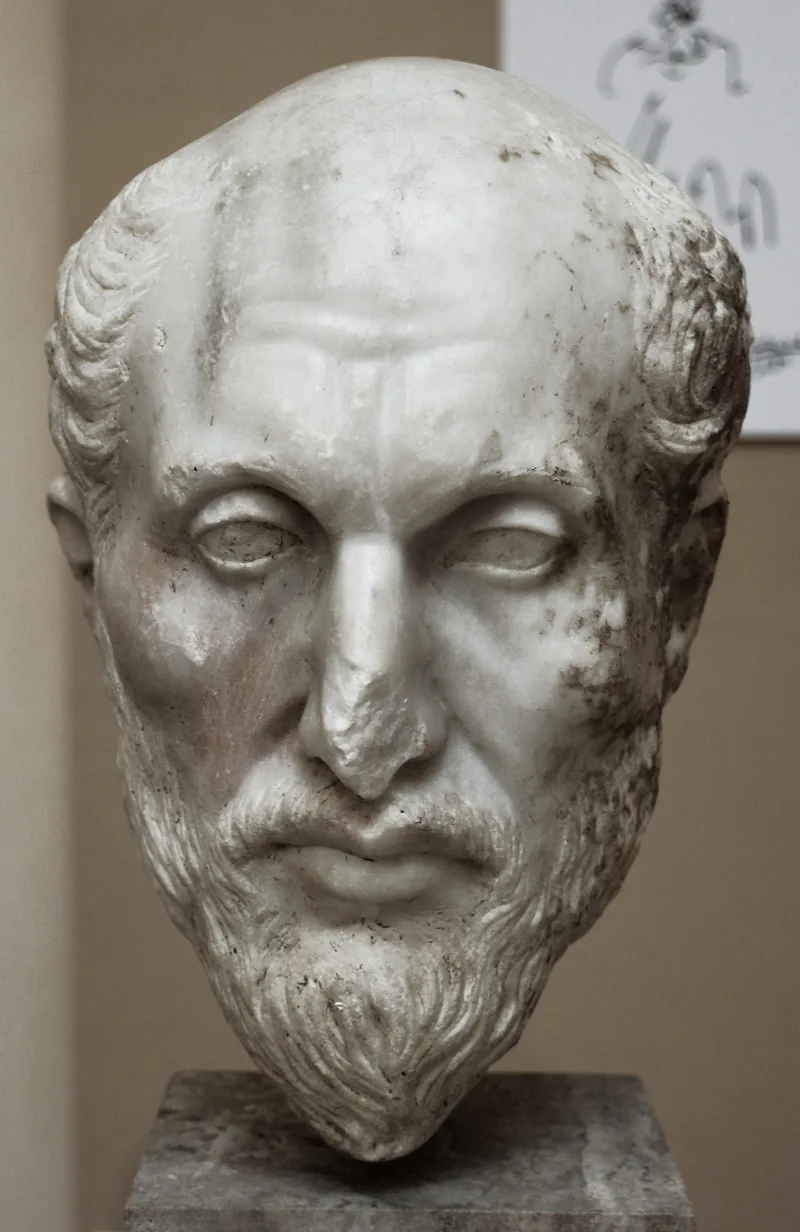
Philo of Alexandria, a Jewish philosopher of the first century, joined this Platonic tradition to the Bible. He taught that God's essence is unknowable and unnameable, and that only God's existence and powers can be known. Philo found a key text in Exodus 20:21, where "Moses drew near unto the thick darkness where God was" — an image that became the emblem of the whole apophatic tradition.
In the third century Plotinus gave negative theology its most rigorous philosophical form. In the Enneads the One is beyond being, intellect and even self-thought; strictly speaking we cannot say "it is" anything, only speak about it from our own side. Union with the One requires stripping away everything — Plotinus's famous instruction is to "take away all things". Later Neoplatonists such as Proclus and Damascius pushed this logic still further, and similar language appears in Gnostic texts such as the Apocryphon of John, whose Invisible Spirit is described by a long series of denials (see Gnostic cosmology).
The Church Fathers: Clement, Gregory of Nyssa and the Divine Darkness§
Christian writers in Alexandria adopted these ideas early. Clement of Alexandria (c. 150–c. 215) described abstraction from bodily qualities as a way to approach the God who is beyond place and name. But the decisive patristic voice was Gregory of Nyssa (c. 335–c. 395), one of the Cappadocian Fathers. Against the theologian Eunomius, who claimed that God's essence could be known through the name "unbegotten", Gregory argued that the divine nature is infinite and therefore incomprehensible.
In his Life of Moses Gregory describes the spiritual life in three stages, following Moses: from light at the burning bush, to the cloud, to the darkness on Sinai. The deeper the soul advances, the more it realises that God surpasses all knowledge. Because God is infinite, the journey never ends; the soul is always stretching forward into more of God, a theme scholars call epektasis, after Paul's words in Philippians 3:13. For Gregory, the "darkness" is not absence but the overwhelming excess of divine light.
Dionysius the Areopagite and the Mystical Theology§
The most influential apophatic writer of all wrote around 500 under the name of Dionysius the Areopagite, the Athenian convert of Acts 17. His brief treatise, the Mystical Theology, describes how Moses leaves behind the multitude and climbs into the "darkness of unknowing", where he is united to the One who is wholly unknown. Dionysius then lists the divine names in descending and ascending order, denying in turn every sensible and intelligible quality, until he concludes that the Cause of all is beyond every assertion and every denial.
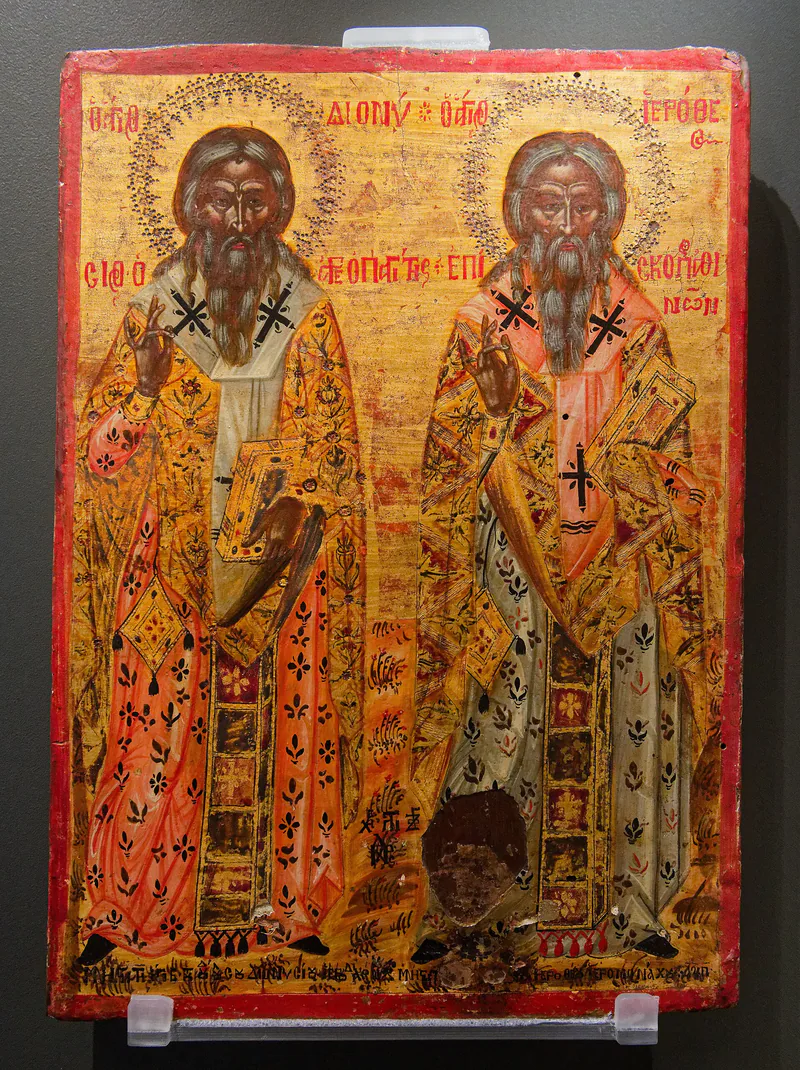
Dionysius combined this negative way with an affirmative theology of divine names and an elaborate hierarchy of angels and sacraments. His writings, treated as apostolic for a thousand years, carried the apophatic method into both Greek and Latin Christianity; their contents and reception are explored in Pseudo-Dionysius and Christian mysticism. In the East, Maximus the Confessor and, later, Gregory Palamas built on him, Palamas distinguishing between God's unknowable essence and God's knowable energies, a distinction central to hesychasm.
Medieval Developments: Eriugena, Maimonides and Eckhart§
In the ninth century the Irish scholar John Scottus Eriugena translated Dionysius into Latin and wrote the Periphyseon, in which God is called "nothing" by reason of excellence, since God is not any of the things that are. In Judaism, Moses Maimonides (1138–1204) argued in the Guide of the Perplexed that the only correct attributes of God are negative ones: to say "God is living" means only that God is not dead, and each negation brings us closer to God by removing an error. His doctrine had wide influence on Jewish and Christian scholastics, including Thomas Aquinas, who taught that we know of God more what God is not than what God is. Comparable ideas appear in Islamic thought, notably among Ismaili philosophers and in Sufism.
The boldest Latin apophatic writer was the Dominican Meister Eckhart (c. 1260–1328). Eckhart distinguished God, as named and related to creatures, from the silent "ground" or "Godhead" beyond all names, even beyond the Trinity as conceived. He urged a radical detachment in which the soul lets go of everything, including its own ideas of God, so that God may be born within it. Some of his statements were condemned in 1329, but his teaching lived on through his disciples Johannes Tauler and Henry Suso. In England the anonymous Cloud of Unknowing translated the Dionysian way into a practical guide to contemplative prayer.
Learned Ignorance and the Dark Night: Cusa and John of the Cross§
The fifteenth-century cardinal Nicholas of Cusa (1401–1464) gave the tradition a new philosophical form in On Learned Ignorance (1440). Since the infinite has no proportion to the finite, the human mind cannot comprehend God; the wise recognise their ignorance and approach God as the "coincidence of opposites", in whom the maximum and minimum are one. Cusa used mathematical images — an infinite circle that is also a straight line — to show how reason is led beyond itself.
In sixteenth-century Spain, the Carmelite poet John of the Cross turned the apophatic path into a spiritual psychology. His "dark night" describes the soul's experience as God withdraws consolations and concepts so that it may be united to God in faith, which he calls a dark and obscure guide. Here negation is no longer chiefly a matter of language but of lived experience: the soul is purified by passing through emptiness.
Apophaticism in Modern Theology and Philosophy§
In the twentieth century the Russian émigré theologian Vladimir Lossky presented apophaticism as the defining character of Eastern Orthodox theology, contrasting it with the conceptual theology he saw in the West. Catholic and Protestant thinkers rediscovered Dionysius and Eckhart, and comparative scholars noted parallels with the Buddhist philosophy of emptiness developed by Nagarjuna and with the Upanishadic formula neti neti, "not this, not this".
Philosophers have also returned to the tradition. Jacques Derrida discussed whether his deconstruction was a form of negative theology, and Jean-Luc Marion proposed a theology of God "without being". Historians such as Denys Turner and Michael Sells have stressed that classical apophaticism is not mere silence but a disciplined way of speaking and unsaying, in which every word about God is offered and then surrendered.
Frequently asked questions§
What is the difference between apophatic and cataphatic theology?§
Cataphatic (affirmative) theology describes God through positive statements, such as "God is good" or "God is light". Apophatic (negative) theology insists that these statements fall short and must be denied, because God transcends all concepts. Most classical theologians used both ways together, with negation as the higher stage.
Who are the main apophatic theologians?§
Key figures include Philo of Alexandria, Plotinus, Gregory of Nyssa, Pseudo-Dionysius the Areopagite, John Scottus Eriugena, Moses Maimonides, Meister Eckhart, the author of the Cloud of Unknowing, Nicholas of Cusa and John of the Cross. In modern times Vladimir Lossky made it central to Orthodox theology.
Does apophatic theology mean God does not exist?§
No. Apophatic writers deny that God is any of the things that exist in the ordinary sense, precisely because they regard God as the source of all being. Their negations aim to protect God's transcendence, not to deny God's reality.
Is apophatic theology a form of mysticism?§
Often it is. While negative theology began as a philosophical method, writers such as Gregory of Nyssa, Dionysius and Eckhart linked it to contemplative prayer, in which the mind passes beyond images and concepts towards union with God.
Sources and further reading§
- The Mystical Theology of the Eastern Church — Vladimir Lossky, 1957
- The Origins of the Christian Mystical Tradition: From Plato to Denys — Andrew Louth, 1981
- The Darkness of God: Negativity in Christian Mysticism — Denys Turner, 1995
- The Unknown God: Negative Theology in the Platonic Tradition: Plato to Eriugena — Deirdre Carabine, 1995
- Mystical Languages of Unsaying — Michael A. Sells, 1994
- Gregory of Nyssa: The Life of Moses — Abraham J. Malherbe and Everett Ferguson (trans.), 1978
- Pseudo-Dionysius: The Complete Works — Colm Luibheid (trans.), 1987