Liber IV · Buddhism · Chapter VI: Mahayana
Nagarjuna and Madhyamaka: The Buddhist Philosophy of Emptiness
Nagarjuna and Madhyamaka explained: the founder of the Middle Way school, emptiness, the two truths, the tetralemma and his heirs in India, Tibet and China.

Nagarjuna, an Indian Buddhist monk who probably lived in the second century CE, founded Madhyamaka, the "Middle Way" school of Mahayana philosophy. Its central claim is that all things are empty (shunya) of independent, intrinsic existence because they arise in dependence on other things — a position that avoids the extremes of eternal being and nothingness, and that became the philosophical foundation of Tibetan and much of East Asian Buddhism.
Who Was Nagarjuna? History and Legend§
Almost nothing about Nagarjuna's life can be stated with certainty. Most historians place him in the second century CE, and several clues point to the Andhra region of south-eastern India: his Ratnavali ("Precious Garland") and Suhrllekha ("Letter to a Friend") are addressed to a king, usually identified as a ruler of the Satavahana dynasty, which controlled that region at the time. The archaeological site of Nagarjunakonda in Andhra Pradesh bears his name, though its link with him is traditional rather than proven.
Later legend filled the gaps generously. Chinese and Tibetan hagiographies tell of a brahmin boy who mastered the Vedas and magical arts, became a monk, and descended to the realm of the nagas, serpent beings of the waters, to recover the Perfection of Wisdom sutras that had been kept there since the Buddha's time — a story that explains both his name and the Mahayana claim that these scriptures were authentic teachings of the Buddha. Tibetan histories credit him with a life of several centuries and associate him with Nalanda. Many scholars think that these accounts merge the philosopher with one or more later figures of the same name, including a tantric adept and alchemist of the medieval siddha tradition.
The Works of Nagarjuna§
Dozens of texts are attributed to Nagarjuna in the Chinese and Tibetan canons, and modern scholars accept only some of them. The undisputed core is the Mulamadhyamakakarika, about 450 verses in twenty-seven chapters. Each chapter takes a category that Buddhists or other Indian philosophers treated as real — causation, motion, the senses, the aggregates, time, the self, the Buddha, nirvana — and shows that it cannot be coherently understood as possessing an intrinsic nature.
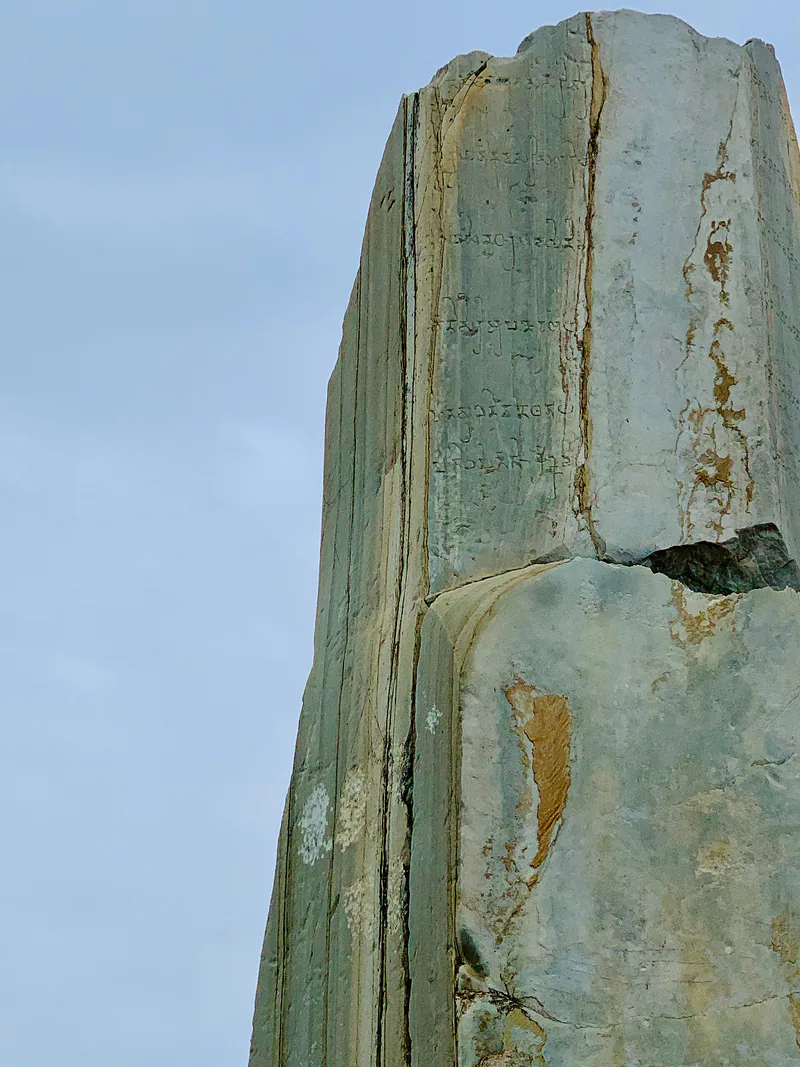
Other works widely accepted as his include the Vigrahavyavartani ("Dispeller of Disputes"), in which he answers critics from the logical school of Nyaya; the Yuktishashtika ("Sixty Verses on Reasoning"); the Shunyatasaptati ("Seventy Verses on Emptiness"); and the two works addressed to a king, which combine philosophy with ethical and political advice. Christian Lindtner's Nagarjuniana (1982) remains the reference study of the authentic corpus, although his criteria have been debated.
The opening dedication of the Mulamadhyamakakarika sets the tone. Nagarjuna praises the Buddha for teaching dependent origination as free of eight extremes — neither cessation nor arising, neither annihilation nor permanence, neither coming nor going, neither identity nor difference — and as the calming of conceptual proliferation (prapancha).
Emptiness and the Critique of Intrinsic Nature§
Nagarjuna's main target was the idea of svabhava, "own-being" or intrinsic nature. The Abhidharma schools of his day, especially the Sarvastivada, had analysed experience into ultimate elements (dharmas), each defined by an unchanging characteristic. Nagarjuna argued that this analysis undermined itself. If something truly had a nature of its own, it would depend on nothing; but then it could not arise, change, act or cease. Since things plainly do arise and cease in dependence on conditions, they cannot have intrinsic natures. That absence is what "emptiness" means.
The key verse comes in chapter twenty-four: whatever arises dependently is explained as emptiness; emptiness is a dependent designation; and this is the Middle Way. Emptiness is therefore not a hidden substance or an absolute behind appearances. It is simply the way things are — dependent, relational and impermanent — and it is itself empty. Nagarjuna warned that emptiness wrongly grasped is as dangerous as a snake seized by the wrong end, and that those who make emptiness into a view are incurable.
This position allowed Nagarjuna to answer the charge, raised already by his opponents, that Madhyamaka is nihilism. On the contrary, he argued, it is the belief in intrinsic natures that makes the Buddhist path impossible: if suffering had a fixed nature it could never cease, and if beings had fixed natures they could never become buddhas. Only because things are empty can the Four Noble Truths be true. In the Vigrahavyavartani he added that he himself put forward no thesis of his own to be refuted — a statement that later commentators interpreted in very different ways.
The Two Truths and the Tetralemma§
Two tools run through Madhyamaka argument. The first is the doctrine of the two truths. Conventional truth (samvriti-satya) is the world as ordinarily experienced and spoken of, in which persons, tables and karma function; ultimate truth (paramartha-satya) is the emptiness of all these. Nagarjuna insisted that the ultimate cannot be taught without relying on the conventional, and that nirvana cannot be reached without understanding the ultimate. In a famous passage of chapter twenty-five he goes further, saying that there is not the slightest difference between samsara and nirvana: the limit of the one is the limit of the other.
The second tool is the "tetralemma" (chatushkoti), the Indian logical practice of considering four possibilities: that something is, that it is not, that it both is and is not, and that it neither is nor is not. Nagarjuna frequently rejects all four — for example regarding whether the Buddha exists after death — not to embrace contradiction but to show that each option assumes intrinsic natures that cannot be found. His method is largely reductio ad absurdum: drawing out the unwanted consequences of an opponent's position rather than building a positive metaphysics.
Indian Madhyamaka After Nagarjuna§
Nagarjuna's disciple Aryadeva (third century) wrote the Chatuhshataka ("Four Hundred Verses"), applying the method to the views of rival schools and to ethical life. In the sixth century a dispute arose that defined the later tradition. Buddhapalita had commented on Nagarjuna by drawing out the absurd consequences (prasanga) of opponents' views; Bhaviveka criticised him, arguing that a Madhyamika should also state independent, formally valid arguments in the manner of the Indian logicians. Chandrakirti (seventh century), in his Prasannapada commentary and his Madhyamakavatara ("Entering the Middle Way"), defended Buddhapalita and rejected Bhaviveka's approach. Tibetan scholars later classified these positions as Prasangika and Svatantrika, labels that do not appear in Indian sources but became fundamental in Tibet.
Madhyamaka also became the framework for spiritual practice. Shantideva's Bodhicharyavatara (eighth century) devotes its ninth chapter to the wisdom of emptiness within a guide to the bodhisattva path. In the same century Shantarakshita and his student Kamalashila combined Madhyamaka with elements of Yogacara and Buddhist logic; both travelled to Tibet, and Kamalashila is remembered for the debate at Samye in which, according to Tibetan tradition, he defeated a Chinese Chan master. Madhyamaka texts formed a core of the curriculum at great monasteries such as Nalanda, from which they passed to Tibet.
Madhyamaka in Tibet, China and Modern Philosophy§
In Tibetan Buddhism all four major schools regard Madhyamaka as the highest philosophical view, but they disagree about how to interpret it. Tsongkhapa (1357–1419), founder of the Gelug school, made Chandrakirti's Prasangika the definitive reading and emphasised precise identification of the "object of negation"; Sakya and Nyingma scholars such as Gorampa (1429–1489) and Mipham (1846–1912) criticised his views, and the Jonang school developed a contrasting doctrine of "other-emptiness" (shentong). These debates continue in Tibetan monastic colleges today.
In China, the translator Kumarajiva (344–413) rendered the Mulamadhyamakakarika with a commentary, together with Nagarjuna's Twelve Gate Treatise and Aryadeva's Hundred Treatise, giving rise to the Sanlun or "Three Treatise" school, systematised by Jizang (549–623). Although Sanlun did not survive as a separate institution, its ideas fed into other schools: Zhiyi of Tiantai built his "threefold truth" of emptiness, conventional existence and the middle on Nagarjuna's verse on dependent origination, and the paradoxical style of Zen and Chan owes much to Madhyamaka dialectic. Within the wider Mahayana, Nagarjuna is honoured as a "second Buddha" and a patriarch of several lineages.
Modern Western readers have interpreted Nagarjuna through their own philosophical lenses. Nineteenth-century writers often saw him as a nihilist; T. R. V. Murti read him in Kantian terms as an absolutist; later scholars compared him with Wittgenstein, with scepticism and with anti-realist philosophy. Translations by Jay Garfield and by Mark Siderits and Shoryu Katsura, and studies such as Jan Westerhoff's, have made Madhyamaka a subject of contemporary philosophy. Comparison with Indian schools that affirm a permanent self, described in the six schools of Hindu philosophy, helps explain why his critique was so sharply debated in his own world.
Frequently asked questions§
What does Madhyamaka mean?§
Madhyamaka means "the Middle Way" or "middle-most". The school claims to steer between the extremes of eternalism, the belief that things have permanent essences, and nihilism, the belief that nothing exists at all, by teaching that things exist dependently and are empty of intrinsic nature.
Did Nagarjuna say that nothing exists?§
No. Nagarjuna denied that things exist intrinsically or independently, not that they exist in any way. Conventionally, persons, objects and actions function and karma operates; ultimately, none of them has a fixed nature. He explicitly rejected nihilism as a misunderstanding of emptiness.
What is the difference between Prasangika and Svatantrika?§
These Tibetan terms name two interpretations of Indian Madhyamaka. Svatantrika, associated with Bhaviveka, held that a Madhyamika may state independent formal arguments; Prasangika, associated with Buddhapalita and Chandrakirti, held that one should only reveal the contradictions in opponents' positions. The Gelug school regards Prasangika as the higher view.
When did Nagarjuna live?§
His dates are uncertain. Most scholars place him roughly between 150 and 250 CE, probably in south India under the Satavahana kings, but traditional sources disagree widely and may conflate several people of the same name.
Sources and further reading§
- The Fundamental Wisdom of the Middle Way: Nagarjuna's Mulamadhyamakakarika — Jay L. Garfield, 1995
- Nagarjuna's Middle Way: Mulamadhyamakakarika — Mark Siderits & Shoryu Katsura, 2013
- Nagarjuna's Madhyamaka: A Philosophical Introduction — Jan Westerhoff, 2009
- Nagarjuniana: Studies in the Writings and Philosophy of Nagarjuna — Christian Lindtner, 1982
- The Central Philosophy of Buddhism: A Study of the Madhyamika System — T. R. V. Murti, 1955
- Mahayana Buddhism: The Doctrinal Foundations — Paul Williams, 1989