The Heresiologists: How the Church Fathers Described the Gnostics
The heresiologists explained: Irenaeus, Tertullian, Hippolytus, Epiphanius and Plotinus on the Gnostics, what they preserved, and how far they can be trusted.

The heresiologists were early Christian writers, from the second to the fourth centuries, who composed catalogues and refutations of teachings they regarded as heresies, and until the twentieth century they were almost the only source of information about the ancient Gnostics. The most important are Irenaeus of Lyon, Tertullian, Hippolytus of Rome and Epiphanius of Salamis, alongside Clement of Alexandria and Origen, who argued with Gnostic teachers more as fellow intellectuals. Their works preserve myths, letters and fragments that would otherwise be lost, but they were written to discredit their opponents, and modern scholars read them with great care, especially since the discovery of the Nag Hammadi codices in 1945.
Why the Heresiologists Matter§
Before 1945 almost no Gnostic writing survived in its original form. A few Coptic codices had reached European collections in the eighteenth and nineteenth centuries — the Askew and Bruce codices, and the Berlin Codex acquired in 1896 but published only in 1955 — but for most of history, anyone who wanted to know what Valentinus or Basilides taught had to read their opponents. The heresiologists therefore shaped not only ancient Christianity's view of its rivals but also the modern idea of "Gnosticism" itself.
Heresiology was a new kind of literature. Earlier Greek writers had compiled accounts of philosophical schools; Christian authors adapted this format to sort teachers into a genealogy of error, contrasting them with a single apostolic tradition. Their aims were pastoral and polemical: to warn believers, to defend the authority of bishops and the emerging scriptural canon, and to show that the "heretics" were recent, divided and derived from human invention rather than from Christ. The study of these works as a discourse of identity-building, pioneered by scholars such as Alain Le Boulluec, has become central to the modern field described in What Is Gnosticism?.
Justin Martyr and Irenaeus of Lyon§
The earliest known catalogue of heresies was a Syntagma "against all the heresies" by Justin Martyr, the Christian philosopher executed in Rome around 165. Justin mentions it in his First Apology, but the work is lost. It probably already linked the heresies to Simon Magus, the Samaritan wonder-worker of Acts 8.
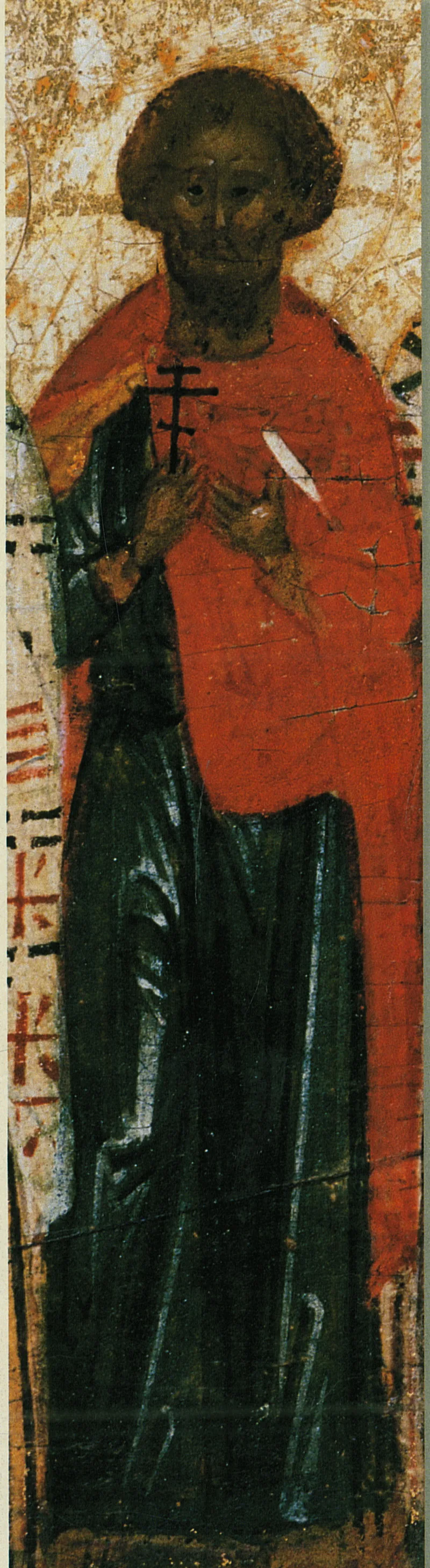
Irenaeus, bishop of Lyon in Gaul after 177, wrote the most influential work of the genre around 180. Its full title, Refutation and Overthrow of Knowledge Falsely So Called, echoes 1 Timothy 6:20, where Paul's disciple is warned against "oppositions of science falsely so called". The five books survive complete only in an early Latin translation, with Books IV and V also in Armenian and parts of the Greek preserved through later writers.
Book I is the most valuable for historians. It opens with a detailed summary of the system of the Valentinian teacher Ptolemy, with its Pleroma of thirty aeons and the fall of Sophia (see Valentinian Gnosticism), and describes the rituals of Marcus, a Valentinian whom Irenaeus portrays as a seducer and magician. It then presents a succession of teachers from Simon Magus through Menander, Saturninus, Basilides, Carpocrates, Cerinthus and Cerdo to Marcion. Its final chapters describe groups Irenaeus simply calls "Gnostics", including a myth of Barbelo, a group often labelled Ophites or Sethians, and others who honoured Cain and possessed a Gospel of Judas. Books II–V refute these teachings through argument and Scripture, defending the unity of God the creator and redeemer, the goodness of creation and the resurrection of the flesh.
Tertullian, Clement and Origen§
Tertullian of Carthage (c. 160–c. 220), the first great Latin Christian writer, attacked heresy in several works. His Prescription Against Heretics argued that heretics had no right to use the Scriptures at all, since these belonged to the apostolic churches. Against the Valentinians retold their myth largely from Irenaeus, with added sarcasm, and Against Marcion, in five books, became a major source for Marcion's edition of Luke and Paul.
The Alexandrians took a different approach. Clement of Alexandria (c. 150–c. 215) claimed the title of "true gnostic" for the mature Christian and contrasted it with the false gnosis of the sects. His Stromateis quote fragments of Valentinus, Basilides and Basilides' son Isidore, and his Excerpts from Theodotus preserve notes on a Valentinian teacher of the eastern school. Origen (c. 185–c. 254) answered, passage by passage, the commentary on the Gospel of John by the Valentinian Heracleon — the earliest known commentary on a Gospel — thereby preserving many of its fragments. In Against Celsus he also discussed a diagram of the heavens used by a group often called Ophites, a key piece of evidence for Gnostic cosmology.
Hippolytus and the Refutation of All Heresies§
The Refutation of All Heresies is a large Greek work in ten books whose central claim is that every heresy is a plagiarism of pagan philosophy, astrology or mystery cult. Its first book, a survey of Greek philosophers, was long known separately under the title Philosophumena and attributed to Origen. Most of the rest was found in 1842 in a manuscript brought from Mount Athos by the Greek scholar Minoides Mynas, and published in 1851.
Scholars soon attributed the work to Hippolytus, a Roman presbyter of the early third century who opposed Bishop Callistus and died in exile around 235. The attribution has been debated ever since, and some prefer to speak of an anonymous Roman author. Whatever its authorship, the Refutation preserves unique material: the Naassene sermon with its interpretation of the mysteries of Attis, the doctrines of groups called the Peratae and Sethians, the Book of Baruch by a teacher named Justin, a work attributed to Simon Magus called the Great Declaration, and an account of Basilides quite different from Irenaeus's.
Epiphanius and the Panarion§
Epiphanius (c. 315–403), bishop of Salamis in Cyprus, wrote the Panarion, or "Medicine Chest", around 374–377. He offered it as a box of antidotes against the bites of heretical serpents and arranged eighty heresies, a number taken from the eighty concubines of Song of Songs 6:8. His list begins with the "heresies" of the Greeks and Jews before treating Christian sects up to his own day.
Epiphanius is often credulous and fiercely hostile, but he quotes his sources at length. The Panarion preserves Ptolemy's Letter to Flora, a clear and moderate Valentinian explanation of the Law of Moses, as well as Greek passages of Irenaeus. In one notorious chapter he claims that as a young man in Egypt he encountered a sect he calls Gnostics or Borborites, whose members practised obscene rituals; most historians treat this account as heavily coloured by stock accusations of immorality.
Plotinus and the Philosophers Against the Gnostics§
Christians were not the only critics. Around 265, in Rome, the Platonist Plotinus wrote a treatise which his editor Porphyry entitled Against the Gnostics, now Ennead II.9. Plotinus objected that these teachers despised the beautiful cosmos, invented needless levels of being, and slandered the world-soul and its maker (compare the Demiurge). Porphyry's Life of Plotinus adds that Christians in the circle used apocalypses attributed to Zostrianos, Allogenes and others, and that Porphyry and Amelius wrote refutations. Treatises titled Zostrianos and Allogenes were later found at Nag Hammadi, confirming the report and linking these groups to Sethian circles.
How Reliable Are the Heresiologists?§
The discovery of the Nag Hammadi library made it possible to test the heresiologists against Gnostic writings for the first time. The results are mixed. Irenaeus's account of the Barbelo myth closely matches the opening of the Apocryphon of John, showing that he had access to genuine texts; his summary of Ptolemy agrees broadly with Valentinian sources. On the other hand, the heresiologists often imposed a false order on their opponents, inventing succession lists, attributing moral depravity without evidence and grouping diverse teachers under shared labels.
Modern scholars, notably Michael Williams and Karen King, have argued that the very category "Gnosticism" owes much to this polemical framework, since few ancient groups called themselves "Gnostics". Others defend the term as a useful name for a family of related myths. Either way, the heresiologists remain indispensable: read critically, they are witnesses both to the variety of early Christianity and to the process by which a mainstream church defined itself against its rivals, a process later formalised in the creeds and councils.
Frequently asked questions§
What is a heresiologist?§
A heresiologist is a writer who describes and refutes heresies. The term usually refers to early Christian authors such as Irenaeus, Hippolytus and Epiphanius, who compiled catalogues of teachings they regarded as departures from apostolic faith.
What was Irenaeus's Against Heresies?§
It is a five-book work written around 180 by Irenaeus, bishop of Lyon, to expose and refute the teachings of the Valentinians and other groups. It is the most important early source on Gnosticism and a key text for the development of Christian doctrine on creation, Scripture and tradition.
Can we trust what the Church Fathers said about the Gnostics?§
Partly. Comparison with the Nag Hammadi texts shows that some reports, especially Irenaeus's summary of the Barbelo myth, are accurate, while others exaggerate, oversimplify or repeat stock accusations. Historians use them alongside the original Gnostic writings.
Did Plotinus write against the Gnostics?§
Yes. His treatise known as Against the Gnostics, Ennead II.9, criticises teachers in his own circle who regarded the world as the product of an ignorant or fallen maker. It is the most important pagan philosophical response to Gnostic thought.
Sources and further reading§
- St. Irenaeus of Lyons: Against the Heresies, Book 1 — Dominic J. Unger (trans.), 1992
- The Panarion of Epiphanius of Salamis, Book I — Frank Williams (trans.), 1987
- Refutation of All Heresies — M. David Litwa (trans.), 2016
- Rethinking "Gnosticism": An Argument for Dismantling a Dubious Category — Michael A. Williams, 1996
- What Is Gnosticism? — Karen L. King, 2003
- The Gnostics: Myth, Ritual, and Diversity in Early Christianity — David Brakke, 2010
- Orthodoxy and Heresy in Earliest Christianity — Walter Bauer, 1971
- The Gnostic Scriptures — Bentley Layton, 1987