What Is Gnosticism? Gnosis, Aeons, Sophia and the Demiurge
What is Gnosticism? A scholarly guide to gnosis, the pleroma, aeons, Sophia, the demiurge and archons, the ancient schools, and the debate over the term.
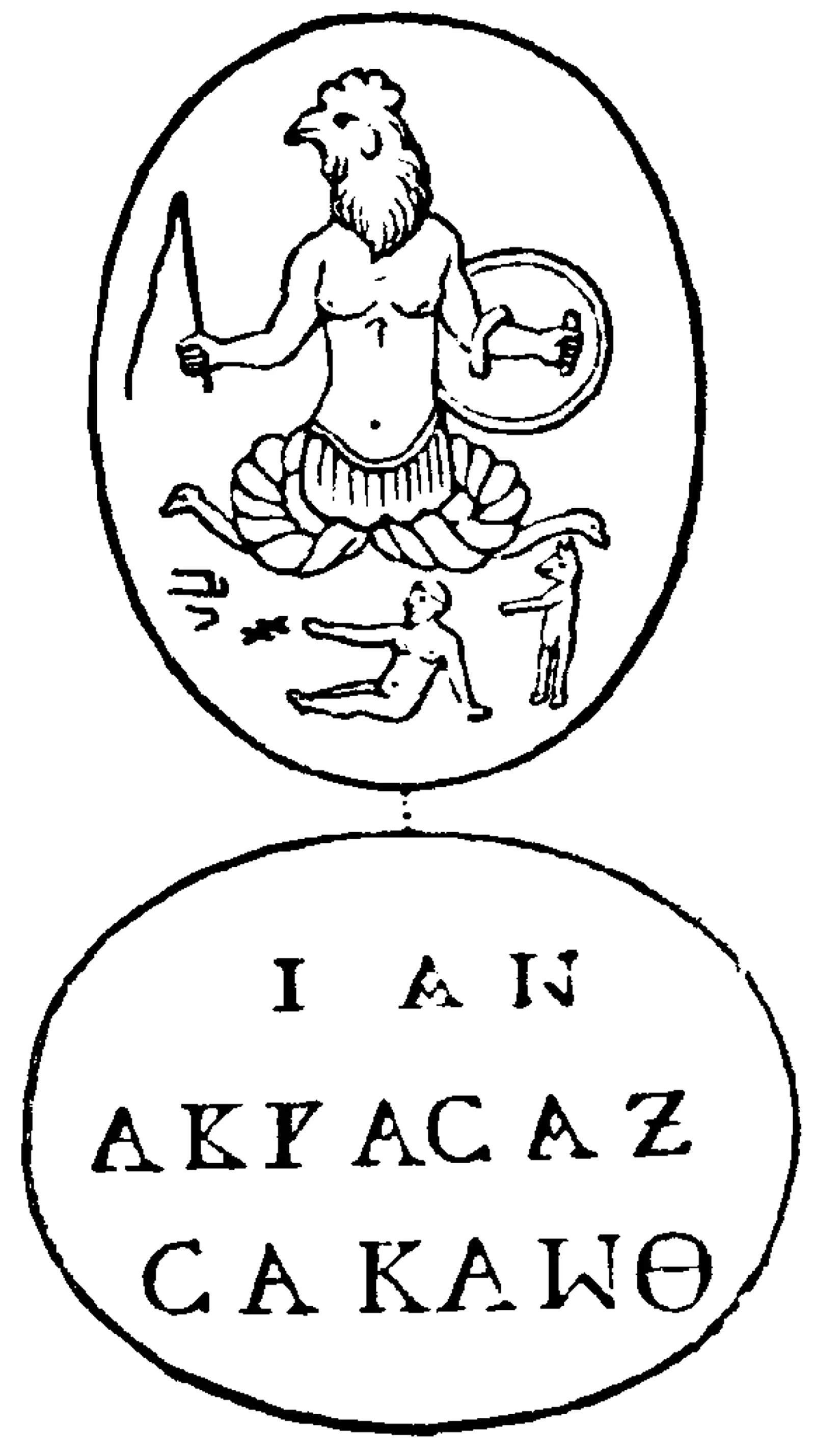
Gnosticism is the modern name for a cluster of religious movements of the second and third centuries CE that taught salvation through gnosis, a revealed, transforming knowledge of the true God and of the divine origin of the human self. Many of these groups told a myth in which a fallen divine being, Sophia, gave rise to an ignorant creator, the demiurge, who made the material world and rules it through archons. Today scholars debate whether "Gnosticism" names a single religion at all, or a convenient label for quite different early Christian, Jewish and Platonist currents.
The Meaning of Gnosis§
The Greek word gnōsis simply means "knowledge", and it was used widely in early Christianity in a positive sense. Paul writes about knowledge, Clement of Alexandria calls the mature Christian a "true gnostic", and several groups called themselves gnōstikoi, "people capable of knowledge". In the movements that modern scholars call Gnostic, however, the word took on a special weight. Gnosis was not the accumulation of facts but a recognition: the realisation that one's innermost self comes from a divine realm above the visible cosmos, that the world is not the work of the highest God, and that the soul can return to its source.
This knowledge was understood as revealed rather than discovered. It came through a redeemer figure, frequently identified with Christ, or through a heavenly revealer such as Seth, Barbelo or a luminous angel. It was also communicated through ritual: baptisms, anointings, prayers of ascent and the recitation of hymns. The emphasis on knowledge did not mean that faith, ethics and community life were unimportant, a caricature that goes back to the ancient polemicists; recent research has stressed how much Gnostic texts concern moral discipline, worship and the formation of a community.
The Gnostic Myth: Pleroma, Aeons, Sophia and the Archons§
No single myth was shared by everyone the label covers, but a recognisable pattern runs through many sources, especially the texts scholars call Sethian and Valentinian.
The Pleroma and the Aeons§
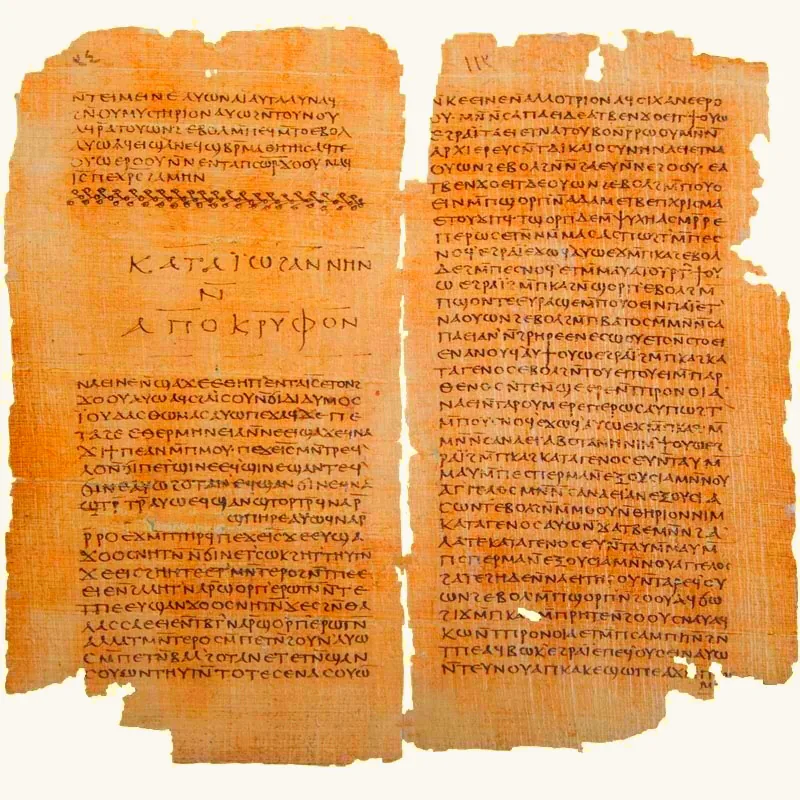
At the top of reality stands a God who is utterly transcendent, often described with strings of negative terms: invisible, unnameable, beyond being, beyond measure. From this source emanates a series of divine beings or attributes, the aeons (from Greek aiōn, "age" or "eternity"). Together they make up the pleroma, the "fullness" of the divine world. The aeons often come in male-female pairs and carry abstract names such as Mind, Truth, Word, Life, Thought or Grace, which suggests that the myth personifies aspects of the divine intellect.
The Fall of Sophia§
The youngest or lowest aeon is usually Sophia, "Wisdom". In the most common version, she acts without her partner or without the consent of the Father, desiring to know or to imitate the unknowable source. Her act produces something defective: an unformed, ignorant offspring that falls outside the pleroma. In Valentinian versions Sophia's passions are separated from her and become the raw material of the lower world; in Sethian versions her offspring is a lion-faced serpent named Yaldabaoth.
The Demiurge and the Archons§
This offspring becomes the demiurge, a term borrowed from Plato's Timaeus, where it names the divine craftsman of the cosmos. In Gnostic hands the craftsman is demoted. He is ignorant of the realm above him, arrogant, and often identified with the creator God of Genesis. He creates the planetary spheres and the powers who govern them, the archons ("rulers"), and with their help fashions the material world and the human body. The full history of this figure, from Plato through Marcion to Plotinus's rebuttal, is treated in our article on the demiurge.
Crucially, a spark of the higher divine power passes into humanity, sometimes unknown to the demiurge himself. The human being thus becomes a meeting point between the lower and the higher worlds. Salvation consists in awakening this spark through gnosis, escaping the control of the archons, and ascending at death through the planetary spheres to the pleroma.
The Ancient Heresiologists and Their Picture of the Gnostics§
Before the twentieth century, nearly everything known about these movements came from Christian writers who opposed them. Scholars call these authors heresiologists, writers who catalogued and refuted heresies.
- Irenaeus of Lyon wrote Against Heresies around 180 CE. He gives a detailed account of the Valentinian teacher Ptolemy's system, traces a genealogy of error back to Simon Magus, and describes groups he calls "Gnostics" whose myth closely resembles the later-discovered Apocryphon of John.
- Hippolytus of Rome (the attribution of the work is debated) compiled the Refutation of All Heresies in the early third century, arguing that each heresy was plagiarised from Greek philosophy. It preserves otherwise unknown systems, including the Naassenes and Basilides in an unusual form.
- Epiphanius of Salamis wrote the Panarion ("Medicine Chest") in the 370s, describing eighty heresies. He preserves Ptolemy's Letter to Flora intact but also includes lurid stories, some apparently based on hearsay, which modern historians treat with great caution.
Other important witnesses include Tertullian, Clement of Alexandria (whose Excerpts from Theodotus quote a Valentinian teacher at length), and Origen, who preserves fragments of Heracleon's commentary on John. A few original texts were known before 1945, notably the Pistis Sophia in the Askew Codex and the treatises of the Bruce Codex, but the discovery of the Nag Hammadi library changed the situation decisively by supplying dozens of works written by insiders.
The Main Gnostic Schools and Teachers§
The heresiologists name many teachers. Among the most significant for historians are:
- Simon Magus and Menander, whom Irenaeus presents as the founders of heresy; their historical teachings are very hard to recover.
- Saturninus of Antioch and Basilides of Alexandria, active in the early second century; Basilides wrote a large commentary on the gospel and his son Isidore continued his school.
- The Sethians or "Gnostics" proper, whose myth centres on Barbelo, the heavenly Adamas and the seed of Seth.
- Valentinus and his followers Ptolemy, Heracleon, Theodotus and Marcus, the most intellectually influential and church-integrated of the groups.
- Carpocrates and the Carpocratians, whom the polemicists accused of libertinism.
- Marcion of Sinope, who distinguished a just creator from a good, unknown God but did not share the elaborate aeon mythology and is often classed separately.
What united these figures, if anything, was a willingness to reinterpret Jewish scripture, especially the opening chapters of Genesis, in the light of Platonic philosophy and Christian revelation, often by inverting the roles of the characters. The serpent in Eden can become a teacher of knowledge; the creator's jealous claim to be the only God becomes proof of his ignorance.
Manichaeism and Mandaeism§
Two later religions are often discussed alongside the Gnostics because they share a dualistic view of the cosmos and a myth of light trapped in matter.
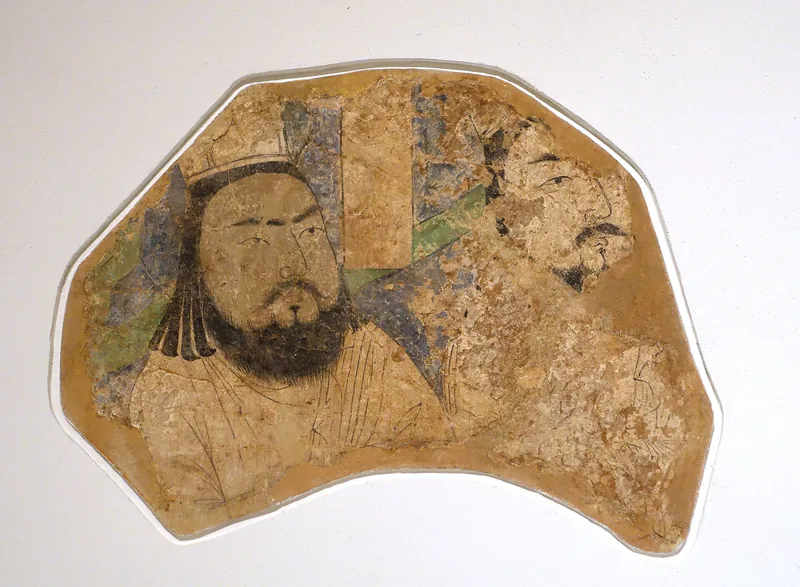
Manichaeism was founded by Mani (216–about 276 CE), who grew up in a Jewish-Christian baptist community in Mesopotamia and proclaimed himself the final apostle after Zoroaster, the Buddha and Jesus. His system describes an original conflict between a Kingdom of Light and a Kingdom of Darkness, in which particles of light became mixed with darkness and must be released through the disciplined lives of the "Elect". Manichaeism became a missionary world religion, reaching North Africa (Augustine of Hippo was a Manichaean "hearer" for about nine years before his conversion) and eventually Central Asia and China, where it survived for centuries.
Mandaeism is the only tradition of this broad family to survive continuously to the present. Its adherents, historically living in southern Iraq and south-western Iran and now largely in diaspora communities, revere John the Baptist and practise repeated baptism in flowing water. Their scriptures, such as the Ginza Rabba ("Great Treasure"), describe a world of light, a fallen creator figure and the ascent of the soul. The age of Mandaean origins is debated: some scholars place their roots in the Jordan valley in the first centuries CE, while others are more cautious.
Is "Gnosticism" a Coherent Category?§
The word "Gnosticism" is modern. It appears to have been coined in the seventeenth century by the Cambridge Platonist Henry More as a term of polemic, and it became an academic category in the nineteenth century. In the twentieth century the German History of Religions School proposed that Gnosticism was a pre-Christian religion, perhaps of Iranian origin, which had influenced early Christianity. The philosopher Hans Jonas, in The Gnostic Religion (1958), described a distinctive Gnostic "attitude" of alienation from the cosmos and compared it to modern existentialism. A conference at Messina in 1966 tried to produce an agreed definition, distinguishing "gnosis" in general from "Gnosticism" as the specific second-century systems.
These approaches have come under sustained criticism. In Rethinking "Gnosticism" (1996), Michael Williams argued that the category bundles together texts and groups with very different attitudes to the body, the world and ethics, and that common stereotypes (that Gnostics were either extreme ascetics or libertines, that they were elitist, that they rejected the world) do not fit the actual sources. He suggested replacing the term with a narrower descriptive category, "biblical demiurgical traditions". Karen King, in What Is Gnosticism? (2003), showed how the concept was shaped first by ancient heresiology and then by modern scholarly agendas, so that "Gnosticism" often functioned as the "other" against which orthodox Christianity was defined.
Not everyone has abandoned the word. David Brakke, in The Gnostics (2010), argues that the ancient term "Gnostics" can be applied to one specific school, roughly the people who produced the Sethian texts, while avoiding the broad "-ism". Many scholars continue to use "Gnosticism" as a shorthand while acknowledging its limits. The practical upshot is that careful writers now speak of particular texts, teachers and communities, and treat shared features as family resemblances rather than the doctrines of a single church.
Modern Gnostic Revivals and Reception§
Interest in the Gnostics revived in the nineteenth century. Jacques Matter published a critical history of Gnosticism in 1828, and in 1890 the French librarian Jules Doinel founded the Église Gnostique, the first of several modern Gnostic churches, which drew on Cathar and Valentinian themes (see our article on the Cathars and Bogomils). Esoteric movements absorbed the vocabulary: the Ecclesia Gnostica Catholica of Thelema, for which Aleister Crowley wrote a Gnostic Mass in 1913, is one example connected with Thelema and the Book of the Law.
Carl Jung found in the Gnostics an anticipation of his psychology of the unconscious; his privately printed Seven Sermons to the Dead (1916) adopts the persona of Basilides, and the Jung Institute acquired one Nag Hammadi codex in 1952. After the publication of the Nag Hammadi texts, Elaine Pagels's The Gnostic Gospels (1979) brought the material to a wide audience. Gnostic themes also run through modern literature and film, from Philip K. Dick's later novels to discussions of The Matrix. Contemporary Gnostic churches and study groups continue to practise sacramental and contemplative forms of the tradition, generally as new religious movements inspired by the ancient texts rather than as unbroken continuations of them.
Frequently asked questions§
What did the Gnostics believe?§
Most groups described as Gnostic taught that the highest God is distinct from the creator of the material world, that humans carry a spark of the higher divine nature, and that salvation comes through revealed knowledge of this origin. Details varied greatly between Sethians, Valentinians and other schools, especially on how negative the creator and the material world were.
Were the Gnostics Christians?§
Many of them considered themselves Christians, read the gospels and Paul, and honoured Jesus as the revealer of saving knowledge. Some texts, however, show little or no Christian content and may reflect Jewish or Platonist circles. Their opponents regarded them as heretics, which is why the question of identity is itself part of the scholarly debate.
What is the difference between gnosis and Gnosticism?§
Gnosis is a Greek word for knowledge and, in religious studies, can refer broadly to any tradition of salvation through esoteric knowledge. "Gnosticism" usually refers more narrowly to the specific movements of the second and third centuries with a demiurge myth. The 1966 Messina conference proposed this distinction, though it has been widely criticised since.
Does Gnosticism still exist today?§
The Mandaeans are an ancient community with a related worldview that has survived to the present. There are also modern Gnostic churches and groups, founded from the 1890s onward, that draw inspiration from ancient texts. Historians generally regard these as revivals rather than direct continuations of the ancient schools.
Sources and further reading§
- Against Heresies — Irenaeus of Lyon, c. 180 CE
- Panarion — Epiphanius of Salamis, c. 375 CE
- The Gnostic Religion — Hans Jonas, 1958
- Gnosis: The Nature and History of Gnosticism — Kurt Rudolph, 1977 (English 1983)
- The Gnostic Scriptures — Bentley Layton, 1987
- Rethinking "Gnosticism": An Argument for Dismantling a Dubious Category — Michael Allen Williams, 1996
- What Is Gnosticism? — Karen L. King, 2003
- The Gnostics: Myth, Ritual, and Diversity in Early Christianity — David Brakke, 2010
- The Gnostic Gospels — Elaine Pagels, 1979