Liber VI · Christianity · Chapter VIII: Monasticism
Christian Monasticism: Desert Fathers, Benedictines and Friars
A history of Christian monasticism: the Desert Fathers, Pachomius and Basil, the Rule of Saint Benedict, Cluny and Cîteaux, the friars, Mount Athos and today.

Christian monasticism is the way of life in which men and women withdraw, alone or in community, to devote themselves wholly to prayer and the service of God under vows. It began in the deserts of Egypt and Syria in the late third and fourth centuries, was given lasting form in the West by the Rule of Saint Benedict, and continues today in Catholic, Orthodox, Oriental and some Protestant churches, from Mount Athos to the Trappist abbeys.
The Desert Fathers and Mothers§
The word "monk" comes from the Greek monachos, "solitary." Ascetic practices — fasting, celibacy, prayer vigils — were part of Christianity from the start, but in the late third century some Christians began to leave towns for the deserts of Egypt. The most famous was Antony (c. 251–356), whose Life, written by Athanasius of Alexandria around 360, became one of the most influential books of late antiquity. It portrays Antony battling demons in the tombs and the desert, a theme explored further in Angels, Demons and Exorcism, and emerging serene and wise.
Hermits and small groups settled in places such as Nitria, Kellia and Scetis in Lower Egypt, and their teachings were collected as the Sayings of the Desert Fathers (Apophthegmata Patrum). Women, such as Amma Syncletica and Amma Sarah, are also remembered among them. Evagrius Ponticus (345–399) analysed the spiritual combat against eight "evil thoughts," later reduced in the West to the seven deadly sins. In Syria, ascetics such as Simeon the Stylite (d. 459), who lived for decades on top of a pillar, adopted even more dramatic forms of renunciation. The contemplative tradition that grew from the desert is traced in Christian Mystics.
Pachomius, Basil and Communal Monasticism§
The cenobitic life§
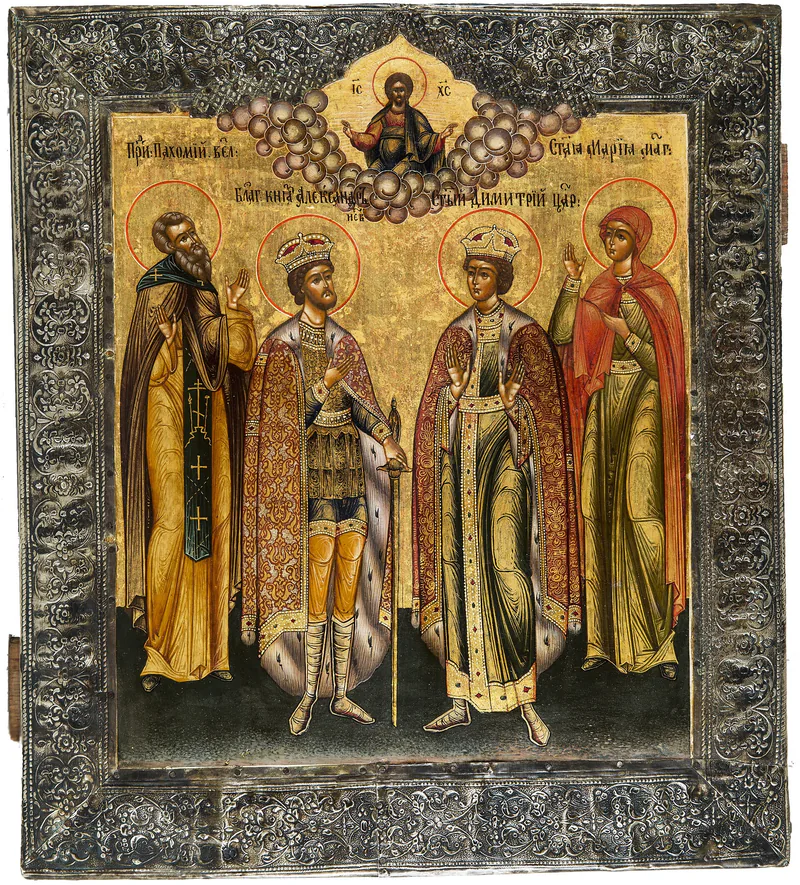
Alongside hermits, communal (cenobitic, from Greek koinos bios, "common life") monasticism developed. Pachomius (c. 292–348), a former soldier, founded a monastery at Tabennisi in Upper Egypt around the 320s and then a federation of communities governed by a written rule, with shared work, prayer and obedience to superiors. Monasteries for women were founded alongside them.
Basil and the Eastern tradition§
Basil of Caesarea (c. 330–379) wrote ascetic instructions, known as the Asketikon, that favoured community over solitude because, he argued, the commandment to love one's neighbour cannot be fulfilled alone. His guidance remains foundational for Orthodox monasticism. John Cassian (c. 360–435), who had lived among Egyptian monks, brought their teachings to southern Gaul in his Institutes and Conferences, which became a bridge between Eastern and Western monastic life.
The Rule of Saint Benedict§
Benedict of Nursia (c. 480–c. 547) is known chiefly through the Dialogues attributed to Pope Gregory the Great. After living as a hermit he founded monasteries, most famously Monte Cassino around 529. His Rule, written around 530 and drawing on an earlier text known as the Rule of the Master, is notable for its moderation and practical wisdom. It organises the day around the Divine Office — the cycle of psalms and prayers sung at set hours from night vigils to Compline — alongside manual work and lectio divina, the slow, prayerful reading of scripture. Benedictine monks make vows of stability, obedience and conversatio morum, conversion of life. The motto "pray and work" (ora et labora), often linked with Benedict, is a later summary rather than a phrase from the Rule itself.
From the Carolingian period onward the Rule of Benedict became the standard for Western monasteries. Irish monasticism had developed independently, with figures such as Columba, who founded Iona in 563, and Columbanus, who established monasteries in Gaul and Italy, but over time it too adopted the Benedictine pattern.
Medieval Reform: Cluny, Cîteaux and the Friars§
The abbey of Cluny in Burgundy, founded in 910, became the centre of a vast network of houses free from local lay control, renowned for its elaborate liturgy. Critics sought a simpler life. The Cistercians, founded at Cîteaux in 1098 and led to prominence by Bernard of Clairvaux, returned to strict observance of the Rule, manual labour and austere architecture; their abbeys spread across Europe. The Carthusians, founded by Bruno of Cologne in 1084, combined the hermit's solitude with community life. Women's houses flourished, and the Benedictine abbess Hildegard of Bingen (1098–1179) became one of the most remarkable writers of her age.

In the thirteenth century new orders of friars (from Latin frater, "brother") took religious life into the growing towns. Francis of Assisi (c. 1181–1226) founded the Friars Minor, devoted to radical poverty and preaching; Clare of Assisi founded the Poor Clares for women. Dominic de Guzmán founded the Order of Preachers (Dominicans), approved in 1216, to combat heresy by learned preaching, a context discussed in Cathars and Bogomils. Carmelites and Augustinian friars followed. Laywomen known as Beguines formed communities in the Low Countries without taking permanent vows.
Monasteries were centres of learning. Their scriptoria copied classical and Christian texts, and monastic libraries preserved much of the literature of antiquity. They were also landowners, farmers, brewers and hosts to pilgrims and the poor.
Orthodox Monasticism and Mount Athos§
In the Christian East, monasticism developed without separate "orders"; all monks follow the same basic tradition derived from the desert and from Basil. The monastery of Stoudios in Constantinople, reformed by Theodore the Studite (759–826), set influential patterns. On Mount Athos, a peninsula in northern Greece, Athanasius the Athonite founded the Great Lavra in 963, and the "Holy Mountain" has been a self-governing monastic republic ever since, with twenty ruling monasteries. It was there that the practice of Hesychasm flourished, as described in Eastern Orthodox Christianity. In Russia, monasteries such as the Holy Trinity Lavra founded by Sergius of Radonezh in the fourteenth century, and later the elders of Optina, made monks the spiritual guides of the nation. The Coptic monasteries of Saint Antony and Saint Macarius in Egypt continue the oldest monastic traditions of all.
Reformation, Revival and Monastic Life Today§
The Protestant Reformers rejected monastic vows as unbiblical, and monasteries were dissolved across Protestant Europe; in England Henry VIII closed every religious house between 1536 and 1541. Catholic orders were later suppressed during the French Revolution and in other secularising states. Yet the nineteenth and twentieth centuries brought revival: Benedictine and Cistercian houses were refounded, the reformed Cistercians of La Trappe (Trappists) spread worldwide, and the American Trappist Thomas Merton's autobiography The Seven Storey Mountain (1948) introduced monastic life to a wide readership. The Anglican Oxford Movement revived religious orders in the Church of England, and the ecumenical Community of Taizé, founded in France in 1940 by Roger Schutz, attracts young pilgrims from many churches. Monastic communities today are fewer than in the past in Europe but growing in parts of Africa and Asia.
Frequently asked questions§
Who founded Christian monasticism?§
No single founder can be named. Antony of Egypt is traditionally called the father of monks, while Pachomius is credited with founding communal monasticism in the fourth century. Ascetic Christians existed earlier, but these figures gave the movement its first lasting forms.
What is the Rule of Saint Benedict?§
It is a guide for monastic life written by Benedict of Nursia around 530. It sets out the daily round of prayer, work and reading, the role of the abbot, and the vows of stability, obedience and conversion of life, and became the standard rule for Western monasteries.
What is the difference between monks and friars?§
Monks live in an enclosed community, usually bound to one monastery, devoted mainly to prayer and work. Friars, such as Franciscans and Dominicans, belong to orders founded in the thirteenth century to live in poverty and serve in the world, especially through preaching.
Do Protestants have monks?§
Most Protestant churches abandoned monasticism at the Reformation, but some Anglican, Lutheran and ecumenical communities, such as Taizé, have revived forms of vowed religious life since the nineteenth century.
Sources and further reading§
- The Life of Antony — Athanasius of Alexandria, c. 360
- The Sayings of the Desert Fathers: The Alphabetical Collection — Benedicta Ward (trans.), 1975
- The Rule of Saint Benedict — Benedict of Nursia, c. 530
- The Desert a City — Derwas J. Chitty, 1966
- Medieval Monasticism: Forms of Religious Life in Western Europe in the Middle Ages — C. H. Lawrence, 1984
- The Love of Learning and the Desire for God — Jean Leclercq, 1957