Liber IX · Gnosticism · Chapter III: Christian Mystics
Christian Mystics: From the Desert Fathers to John of the Cross
A guide to the Christian mystics: Origen and the Desert Fathers, Bernard, Hildegard, Eckhart, the Beguines, Julian of Norwich, the Hesychasts, Teresa and John of the Cross.

The Christian mystics are men and women who sought, and described, a direct experience of God's presence through prayer, contemplation and ascetic discipline. From the third-century theologian Origen and the Desert Fathers of Egypt to the medieval visionaries, the Rhineland preachers, the English anchoress Julian of Norwich, the Byzantine Hesychasts and the Spanish Carmelites Teresa of Ávila and John of the Cross, they form a continuous tradition within the churches, not a sect outside them.
What Christian Mysticism Means§
The adjective mystikos in early Christianity referred to what is hidden: the concealed meaning of scripture and the hidden reality of the sacraments. The phrase "mystical theology" was given its lasting sense by the late fifth- or early sixth-century author known as Pseudo-Dionysius the Areopagite, for whom it meant the knowledge of God beyond all concepts, reached by "unknowing." The noun "mysticism" itself is a modern coinage, popular from the seventeenth century and especially after Evelyn Underhill's Mysticism (1911).
The historian Bernard McGinn has argued that the mystical element in Christianity concerns preparation for, consciousness of, and reaction to what mystics describe as the immediate presence of God. Most writers describe a path of three stages, inherited from Dionysian and earlier Greek sources: the purgative way of repentance and ascetic discipline, the illuminative way of growing understanding and virtue, and the unitive way of loving union. Unlike the Gnostics discussed in What Is Gnosticism?, orthodox mystics affirmed the goodness of creation and the role of the Church, though their language sometimes brought them under suspicion.
Early Foundations: Origen, the Desert and Evagrius§
Origen of Alexandria (c. 185–254) laid much of the groundwork. His commentary and homilies on the Song of Songs read its love poetry as the story of the soul's union with the divine Word, a reading that shaped mystical writing for a millennium and a half. Gregory of Nyssa (c. 335–395), in his Life of Moses, described the soul's endless ascent into the "luminous darkness" where God dwells, a theme later developed by Dionysius.
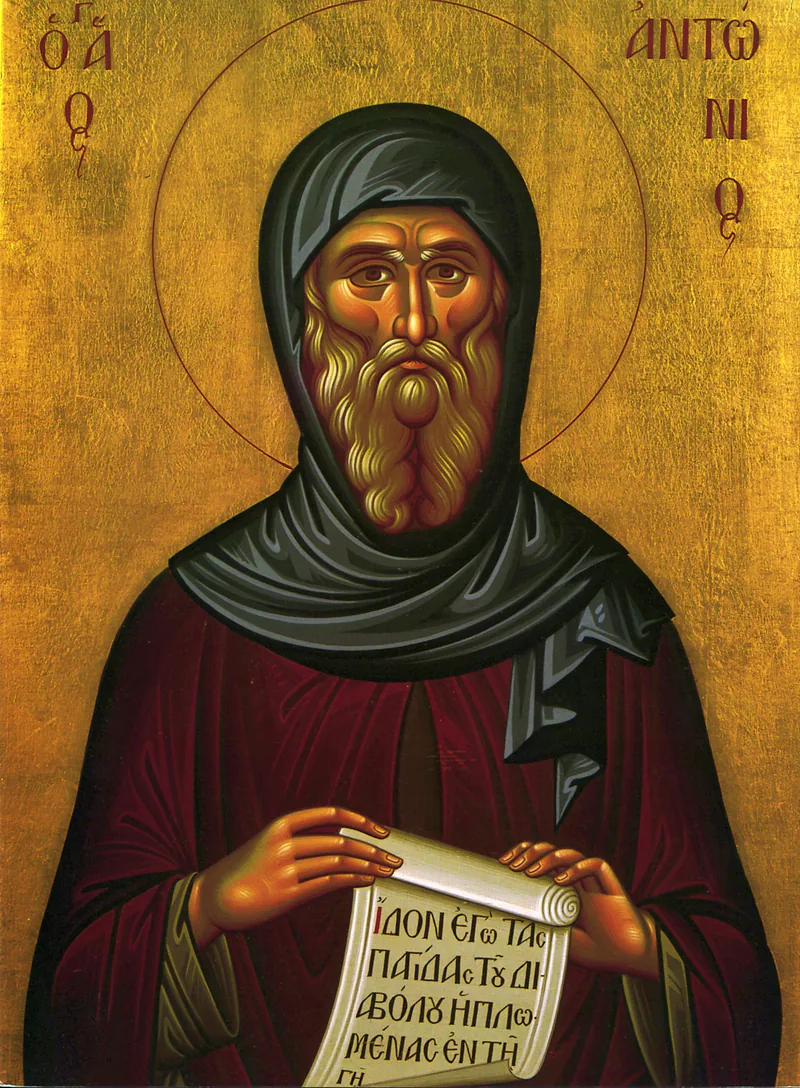
At the same time, monks and nuns withdrew into the deserts of Egypt, Palestine and Syria. Antony the Great (d. 356) became the model hermit through Athanasius's biography, and the sayings of the Desert Fathers and Mothers preserved their wisdom on prayer, humility and the struggle with "thoughts." Evagrius Ponticus (345–399) systematised this teaching, describing "pure prayer" free of images and analysing the eight evil thoughts that later became the seven deadly sins. In the West, Augustine's account in the Confessions of a shared moment of ascent with his mother Monica at Ostia became a model of mystical experience.
Medieval Mystics: Monks, Visionaries and the Rhineland§
The twelfth century brought a flowering of monastic mysticism. Bernard of Clairvaux (1090–1153), the Cistercian abbot, preached eighty-six sermons on the Song of Songs, celebrating the soul as the bride of Christ. The Benedictine abbess Hildegard of Bingen (1098–1179) recorded cosmic visions in the Scivias, composed music and wrote on medicine and natural history. The canons of Saint-Victor in Paris, especially Richard of Saint-Victor, analysed the stages of contemplation, and the Franciscan Bonaventure's Journey of the Mind into God (1259) mapped the ascent through creation to God.
Women wrote some of the most daring texts. The Beguines, laywomen living in religious communities in the Low Countries and Germany, produced the visionary poetry of Hadewijch and Mechthild of Magdeburg's Flowing Light of the Godhead. Marguerite Porete's Mirror of Simple Souls, describing the annihilation of the soul in divine love, was condemned, and she was burned in Paris in 1310. In the Rhineland the Dominican Meister Eckhart (c. 1260–1328) preached on the birth of God in the soul and on the "ground" where God and soul are one; some of his propositions were condemned in 1329. His followers Johannes Tauler and Henry Suso, and the Flemish John of Ruusbroec, carried his teaching in more cautious forms.
English Mystics and Late Medieval Devotion§
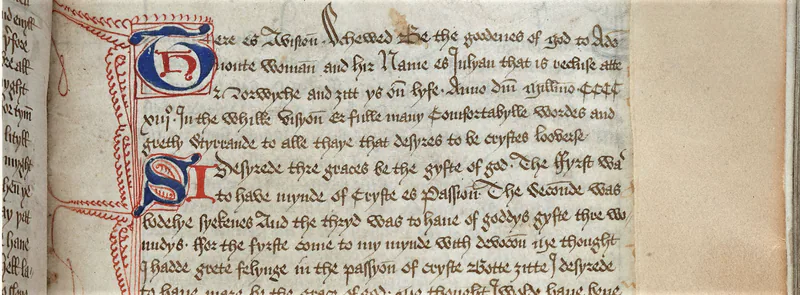
Fourteenth-century England produced a distinctive group of writers. Richard Rolle wrote of the "heat, sweetness and song" of divine love. The anonymous Cloud of Unknowing taught that God can be reached not by thought but by a "naked intent" of love directed into the cloud between the soul and God, a clear echo of Dionysius. Walter Hilton's Scale of Perfection offered a balanced guide to contemplation. Julian of Norwich (c. 1343–after 1416), an anchoress, recorded sixteen "showings" received in 1373 in her Revelations of Divine Love, the earliest surviving book in English known to be written by a woman, famous for its image of God's motherhood and its trust that "all shall be well."
On the Continent, Catherine of Siena (1347–1380) combined mystical experience with public influence, and the Devotio Moderna movement of the Low Countries produced The Imitation of Christ, usually attributed to Thomas à Kempis, which became one of the most widely read Christian books.
Eastern Orthodox Mysticism: Hesychasm and the Jesus Prayer§
Eastern Christianity developed its own contemplative tradition. Symeon the New Theologian (949–1022) wrote of seeing God as light. From the late thirteenth century, monks on Mount Athos practised hesychia, "stillness," repeating the Jesus Prayer ("Lord Jesus Christ, Son of God, have mercy on me") in rhythm with the breath and sometimes with a bowed posture, seeking a vision of the uncreated light that the apostles saw at Christ's Transfiguration on Mount Tabor.
When the scholar Barlaam of Calabria ridiculed these methods, Gregory Palamas (1296–1359) defended them, distinguishing God's unknowable essence from his uncreated energies, in which humans can truly participate. Councils in Constantinople between 1341 and 1351 upheld his teaching, which remains central to Orthodox theology. The Philokalia, an anthology of texts on prayer compiled by Nikodimos of the Holy Mountain and Makarios of Corinth and published in Venice in 1782, carried Hesychasm into Russia and later to Western readers, along with the nineteenth-century Russian Way of a Pilgrim.
The Spanish Mystics and the Early Modern Period§
In sixteenth-century Spain, under the watchful eye of the Inquisition, the Carmelite reformers Teresa of Ávila (1515–1582) and John of the Cross (1542–1591) produced the most systematic accounts of the mystical life. Teresa's Interior Castle (1577) describes the soul as a castle of seven dwelling places leading to spiritual marriage with God at its centre. John's poems and commentaries, including The Dark Night of the Soul, describe the painful purifications of sense and spirit through which the soul passes to union. Ignatius of Loyola's Spiritual Exercises offered a more active method of imaginative prayer.
The seventeenth century brought controversy. Quietism, associated with Miguel de Molinos, condemned in 1687, and with Madame Guyon in France, taught a passive abandonment to God that critics feared made moral effort and the sacraments unnecessary. Protestant Europe produced its own mystical currents, from the Lutheran shoemaker Jacob Boehme to the Quakers' "inner light." Comparisons with the Islamic mystics surveyed in Sufism have long fascinated scholars.
Frequently asked questions§
Who are the most famous Christian mystics?§
Frequently cited names include Origen, Evagrius, Pseudo-Dionysius, Bernard of Clairvaux, Hildegard of Bingen, Meister Eckhart, Julian of Norwich, Catherine of Siena, Gregory Palamas, Teresa of Ávila and John of the Cross. The author of the Cloud of Unknowing is also widely read, though anonymous.
What is the "dark night of the soul"?§
It is the title of a poem and commentary by John of the Cross, describing purifications in which the soul loses its consolations in prayer and feels abandoned by God. John presents this darkness as a sign of God's work, leading to deeper union. The phrase is now used loosely for any spiritual crisis.
Were Christian mystics considered heretics?§
Most were not; many are canonised saints and some, such as Teresa and John of the Cross, are Doctors of the Church. Some, however, were suspected or condemned, including Marguerite Porete, some of Meister Eckhart's propositions and the Quietists.
How is Christian mysticism different from Gnosticism?§
Gnostic movements generally taught that the material world was created by an inferior being and that salvation came through secret knowledge. Mainstream Christian mystics affirmed creation as good, worked within the Church and its sacraments, and emphasised love and grace over esoteric knowledge.
Sources and further reading§
- The Foundations of Mysticism — Bernard McGinn, 1991
- The Origins of the Christian Mystical Tradition: From Plato to Denys — Andrew Louth, 1981
- Mysticism: A Study in the Nature and Development of Spiritual Consciousness — Evelyn Underhill, 1911
- The Cloud of Unknowing — Anonymous, 14th c.
- Revelations of Divine Love — Julian of Norwich, c. 1395
- Interior Castle — Teresa of Ávila, 1577
- Dark Night of the Soul — John of the Cross, 16th c.
- The Philokalia — Nikodimos of the Holy Mountain & Makarios of Corinth (comp.), 1782