Liber VI · Christianity · Chapter I: Angels, Demons & Exorcism
Angels, Demons and Exorcism in Christian Tradition
Angels, demons and exorcism in Christianity: biblical angels, the nine choirs, the fall of Satan, desert demonology and the Roman Rite of exorcism.
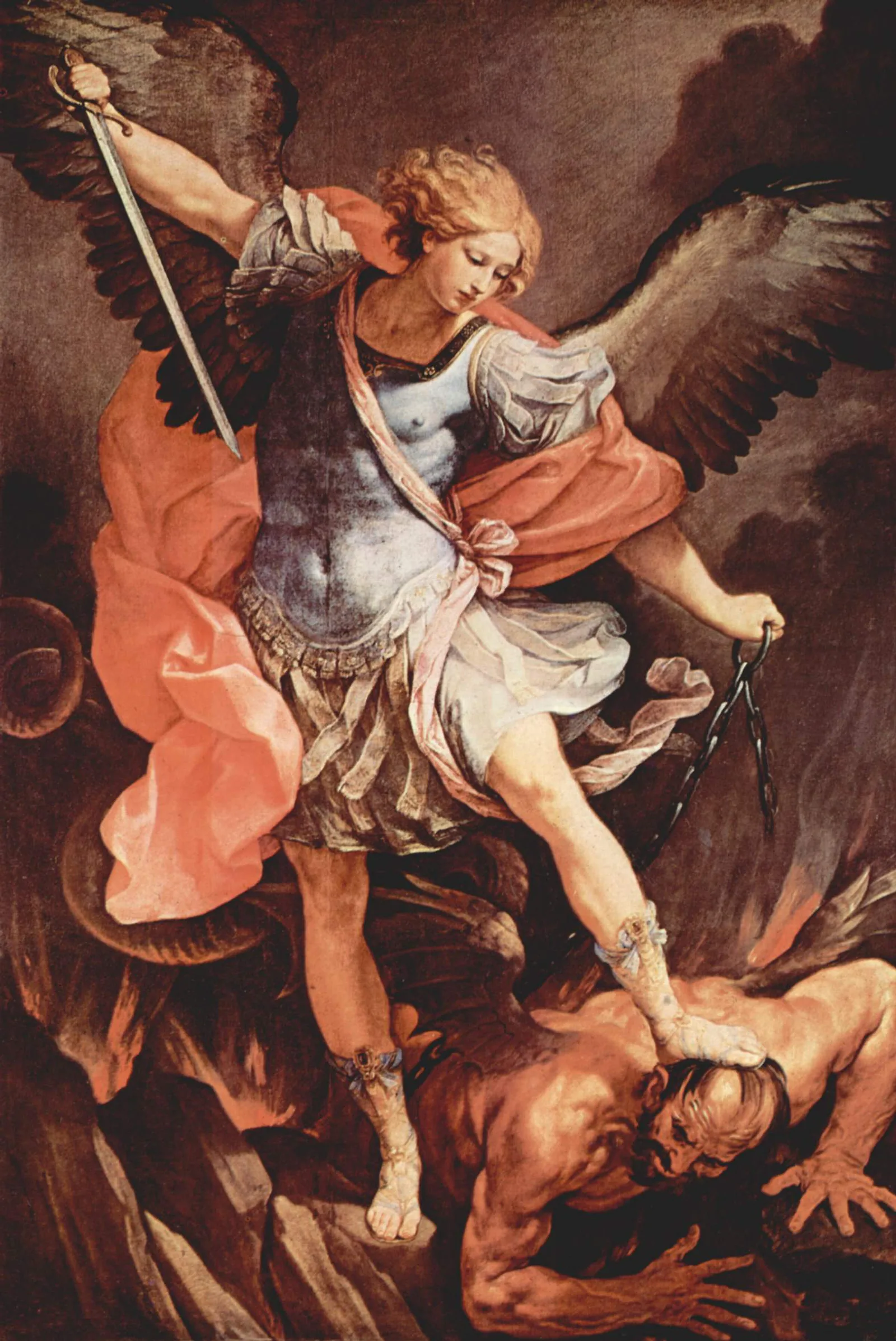
In Christian tradition angels are spiritual beings created by God to worship him and serve as messengers and guardians, while demons are angels who rebelled under Satan and seek to harm humanity. Exorcism is the rite of expelling demons in the name of Christ: it is part of every baptism in many churches, and in a solemn form it is performed by authorised priests for people believed to be possessed, after medical and psychological causes have been considered.
Angels in the Bible§
The Hebrew mal'akh and Greek angelos both mean "messenger." The Old Testament describes cherubim guarding Eden (Genesis 3), the six-winged seraphim of Isaiah's vision crying "Holy, holy, holy" (Isaiah 6), and the mysterious "angel of the Lord." The Book of Daniel is the first to give angels personal names: Gabriel interprets visions, and Michael is the prince who stands for Israel (Daniel 10). Raphael appears in Tobit, a book in Catholic and Orthodox Bibles. Jewish writings of the Second Temple period, such as 1 Enoch, developed elaborate angelologies, including the story of the fallen Watchers.
In the New Testament, Gabriel announces the births of John the Baptist and Jesus (Luke 1), angels minister to Jesus and announce his resurrection, and Michael leads the heavenly armies against the dragon in Revelation 12. Jesus' saying that children's angels behold the face of God (Matthew 18) underlies the belief in guardian angels.
Christian Angelology: The Nine Choirs§
The most influential Christian classification of angels comes from the Celestial Hierarchy of Pseudo-Dionysius the Areopagite, written around 500 and available in this library's texts catalogue. He arranged nine orders, drawn from scattered biblical names, in three triads:
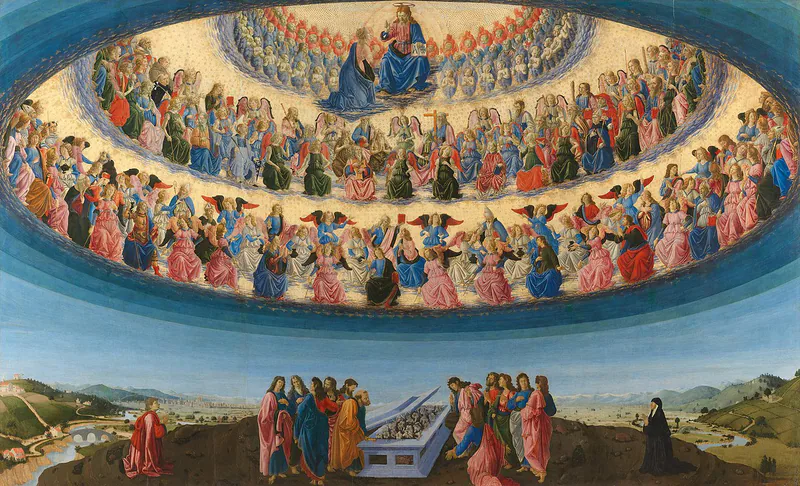
- First triad: seraphim, cherubim and thrones, nearest to God;
- Second triad: dominions, virtues and powers;
- Third triad: principalities, archangels and angels, closest to human affairs.
Gregory the Great used a slightly different order, but the Dionysian scheme prevailed. Medieval theologians, above all Thomas Aquinas, the "Angelic Doctor," analysed angels as pure intellects without bodies and debated how they know and move. Western church authorities were cautious about angel names: a Roman synod of 745 condemned the preacher Aldebert for invoking angels such as Uriel, and official Catholic practice has since honoured only Michael, Gabriel and Raphael by name. Popular devotion, Jewish tradition and the grimoires, however, kept many more names alive, a story told in Angels and Spirits.
Satan, the Fall of the Angels and Christian Demonology§
Satan ("the adversary") appears in the Hebrew Bible as an accuser in God's court, notably in Job. By the time of the New Testament he had become the prince of evil spirits, called the devil (Greek diabolos, "slanderer"), Beelzebul and the "god of this world." Christian writers combined passages such as Isaiah 14, on the fall of the "day star" (Latin Lucifer), with Revelation's war in heaven to form the story of an angel who fell through pride, drawing others with him. The Fourth Lateran Council (1215) stated that the devil and the demons were created good by God but became evil by their own choice. The long development of this figure is traced in The History of Satan and the Devil.
The Desert Fathers turned demonology into a practical science of the inner life. In Athanasius' Life of Antony, demons appear as beasts, soldiers and seductive women, and in the writings of Evagrius Ponticus they are linked to the eight "thoughts" such as gluttony, anger and acedia, the listlessness of the "noonday demon." Monastic literature, discussed in Christian Monasticism, treated spiritual combat as the monk's daily work. In the later Middle Ages scholastic theologians debated what demons could and could not do, ideas that fed into the demonology of the witch-hunting manuals.
Exorcism from the Gospels to the Middle Ages§
Jesus as exorcist§
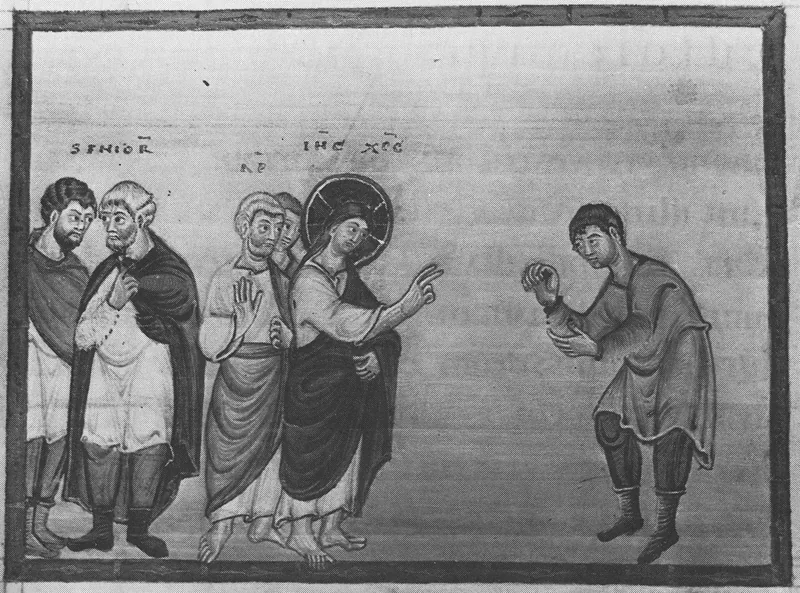
Exorcisms are among the best-attested activities of the historical Jesus. The Gospels describe him casting out an unclean spirit in the synagogue at Capernaum (Mark 1) and the "Legion" of demons from a man among the tombs of the Gerasenes (Mark 5). His followers continued to expel demons "in his name." The book of Acts tells of Jewish exorcists who tried to use the name of Jesus without belonging to him, and of the people of Ephesus burning their books of magic (Acts 19).
Exorcism in the early and medieval Church§
By the third century exorcists formed one of the minor orders of clergy in Rome, and exorcisms were part of the preparation for baptism, a feature that survives in the renunciation of Satan at baptism today. Saints' lives are full of deliverances from demons, and saints' shrines were places where the possessed sought cure. The formulas of exorcism — commands in the name of God, Christ and the saints, the sign of the cross, holy water and blessed salt — also passed into the learned magic of the Middle Ages. Historians such as Richard Kieckhefer have shown how clerics trained in exorcism wrote necromantic manuals that adapted the same adjurations to summon rather than expel spirits, as described in Necromancy in the Middle Ages and the Key of Solomon.
The Rite of Exorcism in Early Modern and Modern Times§
The sixteenth and seventeenth centuries saw a wave of reported possessions, often public and controversial, such as those at Loudun in France (1632–1634), which ended with the burning of the priest Urbain Grandier. In 1614 the Rituale Romanum issued under Pope Paul V included a standard rite for exorcising the possessed, warning priests not to believe too readily in possession and listing signs such as speaking unknown languages, revealing hidden things and displaying strength beyond one's age or condition. Protestant churches abolished the order of exorcist but practised prayer and fasting for the afflicted, and the Puritan clergy of England and New England were deeply involved in cases of possession.
The Catholic rite was revised in 1999. Under canon law a solemn exorcism may be performed only by a priest with the permission of the bishop, and current guidelines emphasise that most people who believe themselves possessed need medical or psychological help. Tragic cases, such as the death of the German student Anneliese Michel in 1976 after months of exorcisms, for which her parents and two priests were convicted of negligent homicide, have reinforced this caution. In Orthodox churches, prayers of exorcism attributed to Basil the Great are used, and Pentecostal and charismatic Protestants practise "deliverance ministry," which has spread widely in Africa, Latin America and Asia. Mental health professionals stress that symptoms attributed to possession can stem from treatable conditions, and that anyone in distress should be assessed by qualified clinicians.
Frequently asked questions§
How many archangels are there in Christianity?§
Catholic and Orthodox churches honour Michael, Gabriel and Raphael by name; Orthodox tradition and many writers also list Uriel and others, often seven in total. Only Michael is called an archangel in the Protestant Bible (Jude 9).
What are the nine orders of angels?§
In the scheme of Pseudo-Dionysius they are seraphim, cherubim and thrones; dominions, virtues and powers; and principalities, archangels and angels. This hierarchy became standard in medieval theology and art.
Does the Catholic Church still perform exorcisms?§
Yes. Each diocese may appoint priests as exorcists, who may perform the rite only with the bishop's permission and after medical and psychological causes have been examined. The current rite was issued in 1999.
Are demons fallen angels in Christian belief?§
Yes, in mainstream Christian teaching demons are angels who rebelled against God, led by Satan. The Fourth Lateran Council of 1215 affirmed that they were created good but became evil by their own will.
Sources and further reading§
- Satan: The Early Christian Tradition — Jeffrey Burton Russell, 1981
- The Devil Within: Possession and Exorcism in the Christian West — Brian P. Levack, 2013
- Possession and Exorcism in the New Testament and Early Christianity — Eric Sorensen, 2002
- Angels: A History — David Albert Jones, 2010
- A Dictionary of Angels, Including the Fallen Angels — Gustav Davidson, 1967
- Forbidden Rites: A Necromancer's Manual of the Fifteenth Century — Richard Kieckhefer, 1997