Liber XII · High Magick · Chapter II: Angels & Spirits
Angels and Spirits in Ceremonial Magic: A Historical Guide
Angels and spirits in ceremonial magic: angelic hierarchies, planetary intelligences, Olympic spirits, Dee's angels, elementals and the Holy Guardian Angel.
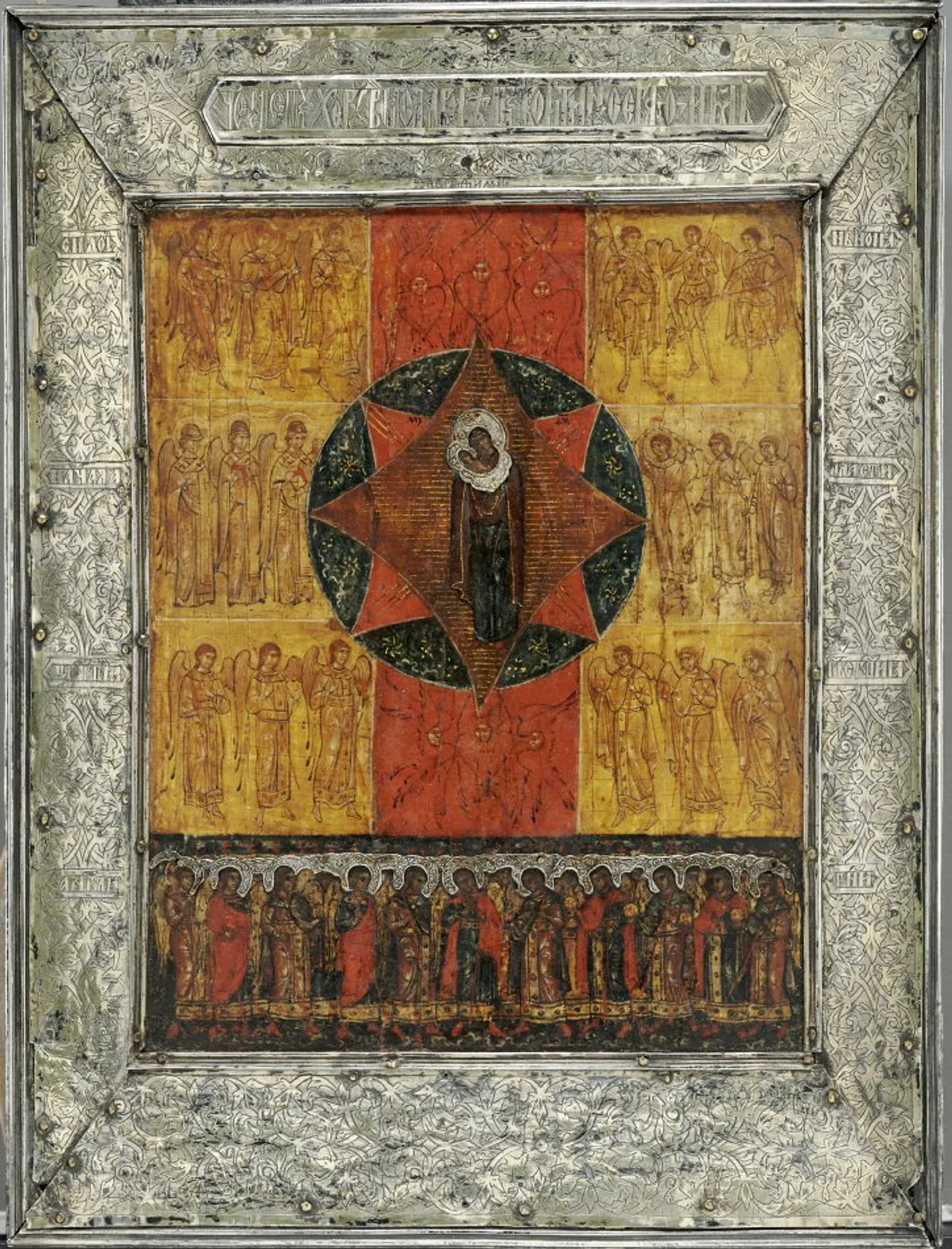
Ceremonial magic is populated by a vast company of non-human beings: angels and archangels, planetary intelligences and spirits, Olympic spirits, elementals, demons and the Holy Guardian Angel. These figures come from Jewish, Christian and Neoplatonic angelology, from medieval and Renaissance grimoires and from modern occult synthesis, and magicians have classified them in hierarchies that link each being to a planet, element, day, hour or divine name.
Angels in Jewish and Christian tradition§
The Hebrew Bible speaks of messengers (malʾakhim) of God, of cherubim and seraphim, and of a heavenly host, but names only a few angels late in its development: Michael and Gabriel appear in Daniel, and Raphael in the deuterocanonical book of Tobit. The Second Temple period expanded angelology enormously. 1 Enoch names archangels including Uriel and describes the fall of the Watchers, angels who taught forbidden arts to humans, a story with a long afterlife in magical lore.
Rabbinic and later Jewish mystical texts developed elaborate angelic hierarchies and lists of names, and the Merkavah and Hekhalot literature describes adepts invoking angels and divine names to ascend or to compel angelic princes. The Sefer Raziel, a medieval compilation with Latin versions under the name Liber Salomonis, transmitted angel names for times, seasons and heavens into Christian magic (Sepher Raziel).
The nine choirs of angels§
Christian angelology was decisively shaped by an anonymous author of around 500, writing as Dionysius the Areopagite, whose Celestial Hierarchy arranged angels into three triads: seraphim, cherubim and thrones; dominions, virtues and powers; principalities, archangels and angels. This Neoplatonic scheme of mediation, in which light descends rank by rank, was adopted by medieval theology and mapped by later writers onto the heavenly spheres. See Pseudo-Dionysius and Christian mysticism.
Renaissance occultists combined the nine choirs with the Kabbalistic sefirot. In Agrippa's scales, each sefirah has a divine name, an order of angels and a heavenly sphere, so that the angelic hierarchy became part of the system of correspondences.
Planetary angels, intelligences and spirits§
Medieval and Renaissance magic assigned angels to the seven planets and the days of the week. The Heptameron, attributed to Peter of Abano and printed in the sixteenth century, lists angels for each day and hour and the airy spirits subordinate to them (Heptameron). The most common series of planetary archangels, Michael, Gabriel, Raphael, Uriel and others, varies between sources.

Agrippa's Three Books of Occult Philosophy (1533) introduced a distinctive pairing for each planet: an intelligence, a benevolent governing power, and a spirit, a more material and potentially troublesome one, with names derived from the numerical values of the planetary magic squares. Saturn's intelligence, for example, is Agiel and its spirit Zazel. These became staples of later talismanic magic.
The Olympic spirits and other Renaissance hierarchies§
The anonymous Arbatel of Magic, printed in Basel in 1575, describes seven Olympic spirits who govern the universe under God in turns, each associated with a planet: Aratron (Saturn), Bethor (Jupiter), Phaleg (Mars), Och (the Sun), Hagith (Venus), Ophiel (Mercury) and Phul (the Moon). The Arbatel is notable for its pious, ethical tone and its emphasis on prayer (Arbatel).
The abbot Johannes Trithemius (1462–1516) wrote the Steganographia, which appears to describe sending messages through planetary and directional spirits; later scholars showed that much of it is an ingenious system of cryptography, though whether it is wholly cryptographic is still discussed (Steganographia). The Kabbalistic Shem ha-Mephorash, a name of God composed of 72 three-letter units derived from Exodus 14:19–21, generated 72 angel names that Renaissance and modern magicians set against the 72 spirits of the Ars Goetia.
John Dee and the Enochian angels§
The most detailed record of angel communication in the period comes from John Dee (1527–1608/9). From 1582 he worked with the scryer Edward Kelley, who reported seeing and hearing angels in a crystal or "shewstone". Dee's diaries record angels such as Uriel, Michael, Raphael and a host of new beings, along with a revealed angelic language, the Holy Table, the Sigillum Dei Aemeth and great tables of names later called the Enochian system. See Enochian magic and John Dee and the catalogue's Five Books of Mystery.
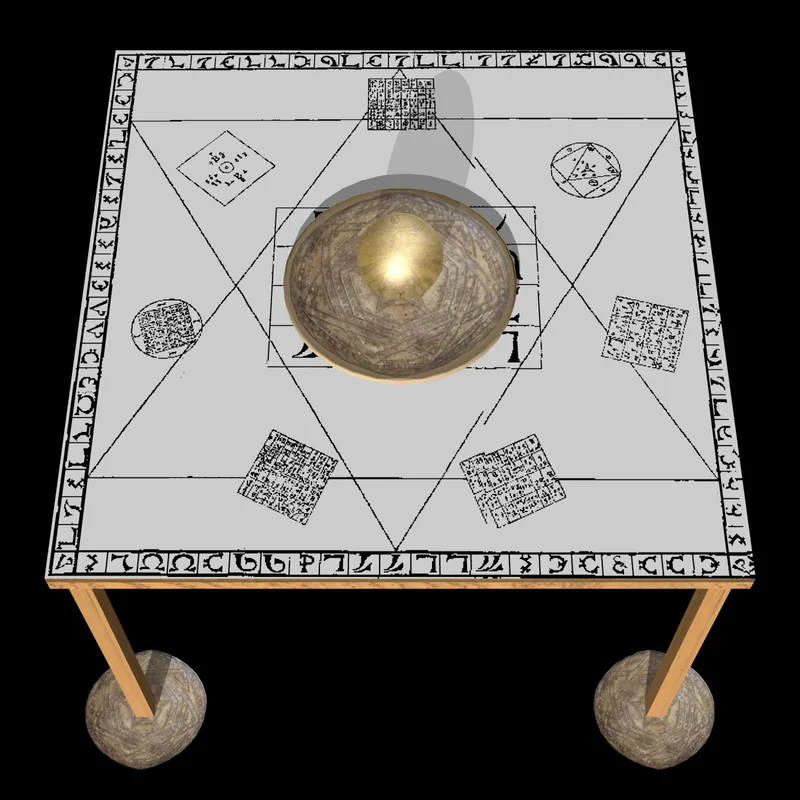
Dee understood his work as a pious inquiry into divine wisdom. The Golden Dawn later systematised his material, and it remains among the most elaborate angelic systems in Western magic.
Elementals: sylphs, gnomes, undines and salamanders§
Paracelsus, in a treatise usually called Liber de nymphis, sylphis, pygmaeis et salamandris, published after his death, described four kinds of beings inhabiting the elements: nymphs or undines (water), sylphs (air), pygmies or gnomes (earth) and salamanders (fire). They were neither angels nor humans, lived long lives but had no immortal soul. The French satirical novel Le Comte de Gabalis (1670) by the abbé de Montfaucon de Villars popularised these "elementary spirits", and the Golden Dawn later incorporated elemental beings, kings and rulers into its rituals of the four elements.
Demons and the goetic spirits§
Ceremonial magic has also dealt with fallen spirits. The grimoire tradition, from the Testament of Solomon to the seventeenth-century Lemegeton, describes demons with names, ranks, seals and offices who could be compelled by divine names. The best-known catalogue is the 72 spirits of the Ars Goetia. Their history and theological background are discussed in the guide to demonology.
The Holy Guardian Angel§
In the Book of Abramelin, a text known from German manuscripts and printed in 1725 and translated into English by S. L. MacGregor Mathers in 1898 from a French manuscript, a long period of retreat and prayer culminates in the appearance of the aspirant's Holy Guardian Angel, after which the magician gains authority over spirits (Book of Abramelin). Aleister Crowley made the "Knowledge and Conversation of the Holy Guardian Angel" the central goal of his system, and many modern magicians follow him, interpreting the Angel variously as an external being or as the practitioner's higher self.
Invocation, evocation and the ethics of spirit work§
Modern ceremonial magicians commonly distinguish invocation, calling a divine or angelic power into oneself or one's consciousness, from evocation, calling a spirit to appear outside the operator, traditionally in a triangle beyond the protective circle. The distinction is largely a nineteenth- and twentieth-century systematisation, but it echoes an older contrast between prayers addressed to God and the angels and conjurations used to compel lesser spirits. Older grimoires generally present angelic work as supplication and demonic work as command under divine authority. Renaissance writers such as Agrippa and the author of the Arbatel stressed that the magician's piety and purity of intention determined whether such work was holy or illicit, a theme that recurs in modern discussions of spirit work. The wider theory is set out in What Is Ceremonial Magic?.
Frequently asked questions§
What are the nine orders of angels?§
According to Pseudo-Dionysius, they are seraphim, cherubim and thrones; dominions, virtues and powers; principalities, archangels and angels. The scheme was adopted by medieval theology and later combined with Kabbalistic and astrological correspondences.
What are the Olympic spirits?§
They are seven spirits described in the Arbatel of Magic (1575), each ruling over the universe in turn and associated with one of the seven planets. Their names are Aratron, Bethor, Phaleg, Och, Hagith, Ophiel and Phul.
What is the Holy Guardian Angel?§
In the Book of Abramelin it is a personal angel whose appearance follows a long spiritual retreat. Crowley and later magicians treated attaining its "knowledge and conversation" as the central goal of the magical path, interpreting it in both external and psychological terms.
Sources and further reading§
- The Celestial Hierarchy — Pseudo-Dionysius the Areopagite, c. 500
- Three Books of Occult Philosophy — Heinrich Cornelius Agrippa, 1533
- Arguing with Angels: Enochian Magic and Modern Occulture — Egil Asprem, 2012
- The Queen's Conjurer: The Science and Magic of Dr. John Dee — Benjamin Woolley, 2001
- Trithemius and Magical Theology — Noel L. Brann, 1999
- A Dictionary of Angels — Gustav Davidson, 1967