What Is Christianity? Beliefs, History and Traditions
What is Christianity? An overview of Christian beliefs, the Bible, Jesus, the creeds, worship and the Orthodox, Catholic and Protestant traditions.

Christianity is the religion centred on Jesus of Nazareth, a Jewish teacher crucified in Roman Judaea around 30 CE, whom his followers proclaimed as the Messiah (Christ), the Son of God and the risen Lord. With roughly 2.3 billion adherents, somewhat under a third of humanity, it is the largest religion in the world, divided into three great families — Eastern Orthodox, Catholic and Protestant — together with the ancient Oriental churches and many independent movements.
The Origins of Christianity in Judaism and the Roman World§
Christianity did not begin as a new religion. Jesus and his first disciples were Galilean Jews, and the earliest believers worshipped in the Temple at Jerusalem, read the Hebrew scriptures and expected the God of Israel to restore his people. What set them apart was the conviction that Jesus, executed under the Roman prefect Pontius Pilate, had been raised from the dead and exalted to God's right hand. The story of these first years, and of the figures behind them, is told in our article on Jesus and the Apostles.
Within a generation the movement had crossed into the Gentile world. The apostle Paul, a Pharisee who became its most energetic missionary, founded communities in Asia Minor and Greece in the 40s and 50s and argued that non-Jews could join without circumcision or the full observance of the Mosaic law. After the destruction of the Jerusalem Temple by the Romans in 70 CE, the paths of the Christian churches and of rabbinic Judaism slowly diverged, though historians now stress that the "parting of the ways" was gradual and uneven, lasting in some places into the fourth century.
For nearly three centuries Christians were a minority, sometimes tolerated and sometimes persecuted, most severely under the emperors Decius (250) and Diocletian (from 303). The conversion of Constantine and the Edict of Milan in 313 brought toleration and imperial patronage; in 380 Theodosius I made Nicene Christianity the official faith of the empire. From that point the Church's story is intertwined with the politics of Rome, Byzantium and the kingdoms of medieval Europe, but also with Christian communities in Persia, India, Ethiopia, Armenia and Central Asia that lay beyond the empire's borders.
Core Christian Beliefs: God, Christ and Salvation§
Despite its many divisions, most of Christianity shares a recognisable core of belief, formulated in the creeds of the fourth and fifth centuries.
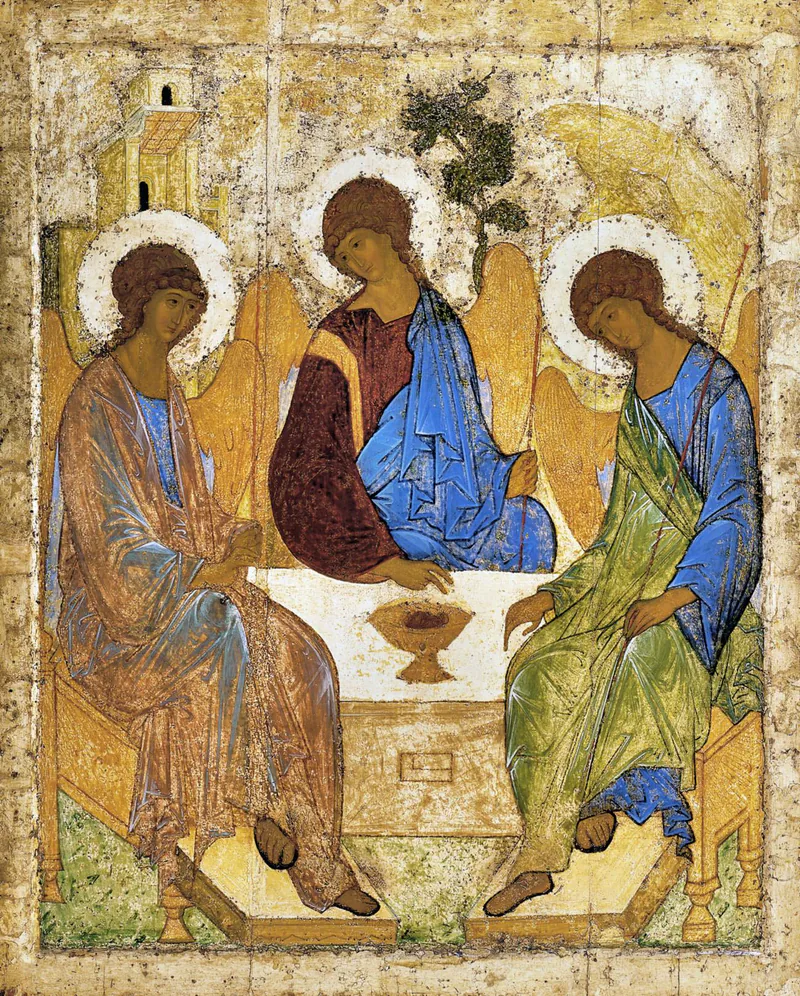
One God as Trinity§
Christians are monotheists who inherited Israel's confession that God is one. They also speak of God as Father, Son and Holy Spirit. The doctrine of the Trinity, defined at the councils of Nicaea (325) and Constantinople (381), holds that these are three "persons" sharing one divine being, rather than three gods or three masks of one person. The long arguments that produced this language are traced in Creeds, Councils and Doctrine.
Incarnation, cross and resurrection§
The second central belief is the incarnation: that the eternal Son of God became fully human in Jesus without ceasing to be divine. The Gospel of John opens with this claim, that the Word "was made flesh, and dwelt among us" (John 1). Christians hold that Jesus' death by crucifixion was not a defeat but the means by which God reconciled the world to himself, and that his resurrection on the third day, celebrated at Easter, is the foundation of the faith. Paul's summary in 1 Corinthians 15 is among the oldest written statements of this belief.
Grace, faith and the life to come§
Salvation in Christian teaching is God's gift of forgiveness, new life and final communion with him. Traditions explain how it is received in different ways: through faith, through baptism and the sacraments, through a life of love and discipline, or through some combination of these. Most Christians look forward to the return of Christ, the resurrection of the dead, judgement and the renewal of creation, though they interpret these hopes in very different ways.
Scripture, Creeds and Authority§
The Christian Bible has two parts. The Old Testament consists of the scriptures of Israel, in Catholic and Orthodox Bibles together with additional books preserved in the Greek Septuagint. The New Testament contains twenty-seven writings from the first and early second centuries: four Gospels, the Acts of the Apostles, letters attributed to Paul and other apostles, and the Book of Revelation. How these books were gathered, and why the churches still disagree about the edges of the list, is the subject of The Christian Bible and Its Canon.
Scripture is read within a tradition of interpretation. The Nicene Creed, recited weekly in many churches, and the Apostles' Creed, used especially in the Latin West, summarise the faith in a few lines. Churches differ over where final authority lies. Orthodox Christians speak of Holy Tradition, of which scripture and the ecumenical councils are the supreme expressions; Catholics recognise scripture and tradition interpreted by the teaching office of the bishops in communion with the pope; Protestants since the Reformation have held scripture alone to be the supreme norm, though most also honour the early creeds.
The Great Traditions: Orthodox, Catholic and Protestant§
The first major division came after the Council of Chalcedon (451), when the churches now called Oriental Orthodox — Coptic, Ethiopian, Eritrean, Armenian, Syriac and Malankara — rejected its definition of Christ's two natures. The Church of the East, which spread across Persia to India and China, had already parted company over the Council of Ephesus (431).
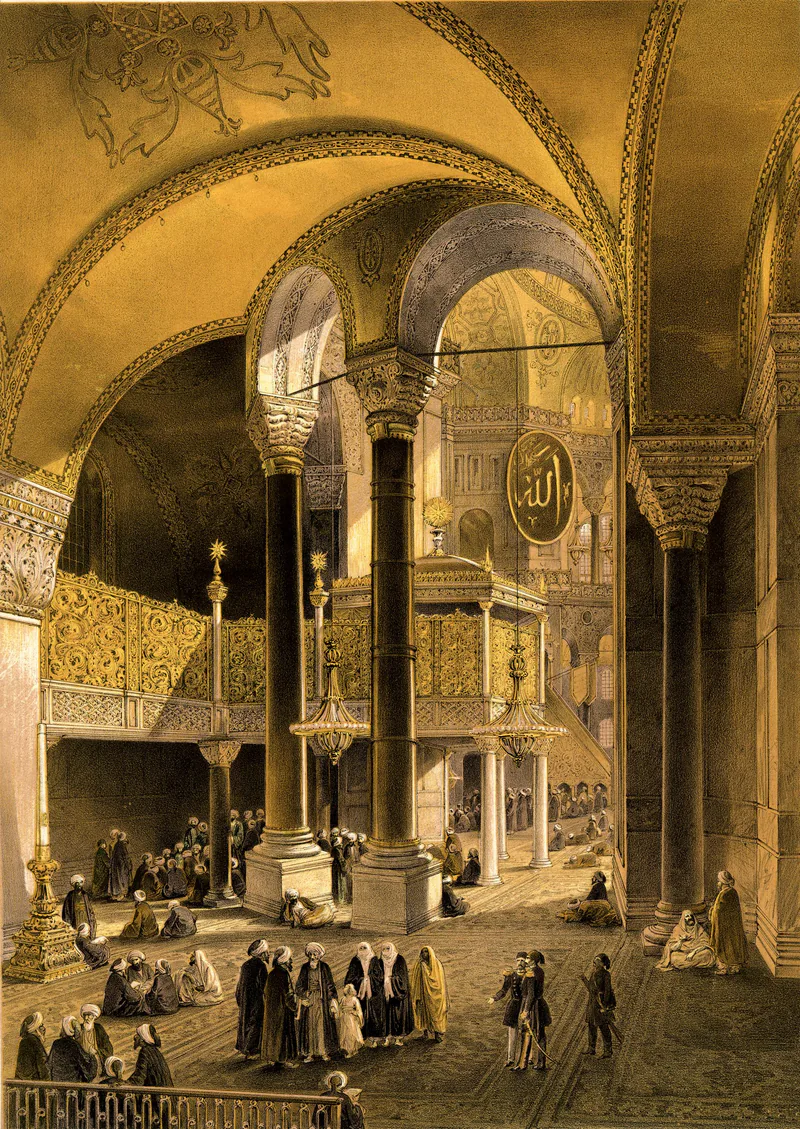
The second division separated the Greek-speaking East from the Latin West. Differences of language, theology and authority grew over centuries and are conventionally dated to the mutual excommunications of 1054, though the break hardened only after the crusaders sacked Constantinople in 1204. The Eastern churches form today's Eastern Orthodox Christianity, a communion of self-governing churches; the West developed into Roman Catholicism, centred on the bishop of Rome.
The third division came with the sixteenth-century Reformation, when Martin Luther, Huldrych Zwingli, John Calvin and others broke with Rome over justification, the sacraments and the authority of the papacy. Their heirs — Lutherans, Reformed and Presbyterians, Anglicans, Baptists, Methodists and, since the early twentieth century, Pentecostals — are described in Protestantism and the Reformation. Roughly half of the world's Christians are Catholic, somewhat over a third belong to Protestant and independent churches, and around a tenth are Orthodox, though counts vary with how groups are defined.
Christian Worship, Sacraments and the Calendar§
Christian worship has from the beginning centred on two rites: baptism in water, by which a person enters the Church, and the Eucharist or Lord's Supper, the shared bread and wine that recall Jesus' last meal with his disciples. Catholic and Orthodox Christians recognise seven sacraments or holy mysteries; most Protestants recognise two. Sunday, the day of the resurrection, became the principal day of worship, and the year is shaped by a cycle of feasts and fasts from Advent and Christmas through Lent, Holy Week and Easter to Pentecost. These forms are explored in Christian Sacraments and Liturgy.
Alongside public worship stand private and communal disciplines: prayer, fasting, almsgiving, pilgrimage and the monastic life described in Christian Monasticism. In Catholic and Orthodox piety the saints and the Virgin Mary play a large role as intercessors and models, a subject treated in Saints, Relics and the Virgin Mary.
Christianity, Mysticism and the Esoteric§
Christianity has nourished a long contemplative tradition, from the Desert Fathers and Pseudo-Dionysius to the medieval and early modern mystics surveyed in Christian Mystics. It also has a complicated relationship with the esoteric. In the second century the churches defined themselves partly against the movements scholars call Gnostic, discussed in What Is Gnosticism?. In the Middle Ages theologians condemned magic as commerce with demons, yet clerics wrote and copied many of the grimoires, and the names of God, angels and saints filled popular charms. The Renaissance produced Christian Kabbalah and Hermetic philosophy, and the Protestant world gave rise to Rosicrucianism and the theosophy of Jacob Boehme.
Within this library, the chapters on angels, demons and exorcism and on folk Christianity follow the places where official religion and the history of magic overlap. They are treated as history and as lived religion, not as a judgement on the faith of believers.
Christianity in the Modern World§
The modern centuries transformed the shape of Christianity. European missions, often entangled with colonial empires, carried the faith to the Americas, Africa, Asia and the Pacific, while churches in Europe faced the Enlightenment, historical criticism of the Bible, revolution and secularisation. Since the twentieth century the centre of gravity has shifted south: today more Christians live in sub-Saharan Africa and Latin America than in Europe, and Pentecostal and charismatic movements are among the fastest-growing forms of religion anywhere. Ecumenical dialogue, conflicts over sexuality and gender, and the place of religion in public life are among the questions the churches debate today.
Frequently asked questions§
What do Christians believe in simple terms?§
Most Christians believe in one God revealed as Father, Son and Holy Spirit; that Jesus Christ is both fully divine and fully human; that he died for the sins of the world and rose again; and that through him people are forgiven and receive eternal life. These beliefs are summarised in the Apostles' and Nicene Creeds.
When and where did Christianity begin?§
It began in Roman Judaea and Galilee in the first century CE, among the followers of Jesus of Nazareth, who was crucified around 30 CE. The movement spread through Jewish communities and then among Gentiles across the eastern Mediterranean within a few decades.
What are the main branches of Christianity?§
The main branches are Catholicism, Eastern Orthodoxy and Protestantism, alongside the Oriental Orthodox churches and the Church of the East. Protestantism itself contains many denominations, from Lutherans and Anglicans to Baptists and Pentecostals.
What is the holy book of Christianity?§
The Bible, consisting of the Old Testament and the New Testament. Catholic and Orthodox Bibles include several books in the Old Testament that most Protestant Bibles omit or print separately as the Apocrypha.
Sources and further reading§
- A History of Christianity: The First Three Thousand Years — Diarmaid MacCulloch, 2009
- The Story of Christianity — Justo L. González, 1984
- Christianity: An Introduction — Alister E. McGrath, 1997
- Early Christian Doctrines — J. N. D. Kelly, 1958
- The Rise of Christianity — Rodney Stark, 1996
- The Holy Bible (King James Version) — Anonymous, 1611