Liber VI · Christianity · Chapter II: The Bible & Its Canon
The Christian Bible and Its Canon: How Scripture Was Formed
How the Christian Bible was formed: the Old Testament and Septuagint, the 27 books of the New Testament, the Apocrypha debate and the canons of each church.

The Christian Bible is a collection of writings that the churches recognise as inspired scripture: the Old Testament, inherited from the Jewish scriptures, and the twenty-seven books of the New Testament. The word "canon," from a Greek term for a measuring rod, refers to this authoritative list, which took shape gradually between the first and fifth centuries and still differs slightly between Protestant, Catholic, Orthodox and Oriental churches.
The Old Testament and the Septuagint§
For Jesus and the first Christians, "the scriptures" meant the sacred writings of Israel: the Law (Torah), the Prophets and a still somewhat open group of other writings, including the Psalms. Many Jews of the Greek-speaking diaspora read these books in the Septuagint, a Greek translation begun in Alexandria in the third century BCE and completed over the following two centuries. Because the New Testament authors wrote in Greek, they often quoted the Septuagint, and it became the Old Testament of the early Church.
The Septuagint tradition contained books and additions not found in the Hebrew canon that rabbinic Judaism eventually fixed: Tobit, Judith, the Wisdom of Solomon, Sirach (Ecclesiasticus), Baruch, 1 and 2 Maccabees, and Greek additions to Esther and Daniel. Christians call these the deuterocanonical books ("second canon") or, in Protestant usage, the Apocrypha. Jerome, whose Latin translation known as the Vulgate (produced around 382–405) became the Bible of the Western Church, preferred the Hebrew text and expressed doubts about these books, but they remained in the Latin Bible and in Christian worship. The discovery of the Dead Sea Scrolls from 1947 onwards showed how varied the Hebrew text itself still was around the time of Jesus.
Writing the New Testament§
The New Testament is a small library written over about seventy years. Its oldest documents are the letters of Paul, written in the 50s CE to communities he had founded or hoped to visit. Scholars widely regard seven as certainly his — Romans, 1 and 2 Corinthians, Galatians, Philippians, 1 Thessalonians and Philemon — while the authorship of the others is debated.
The four Gospels came later. Most historians date Mark to around 65–75 CE, Matthew and Luke to roughly 80–90, and John to about 90–110, while acknowledging that these dates are approximate. Matthew and Luke appear to have used Mark, and probably a shared collection of sayings that scholars call Q, a hypothesis that remains debated. The Acts of the Apostles continues Luke's narrative into the early mission, and the collection ends with the general letters and the Book of Revelation, an apocalypse addressed to churches in Asia Minor.
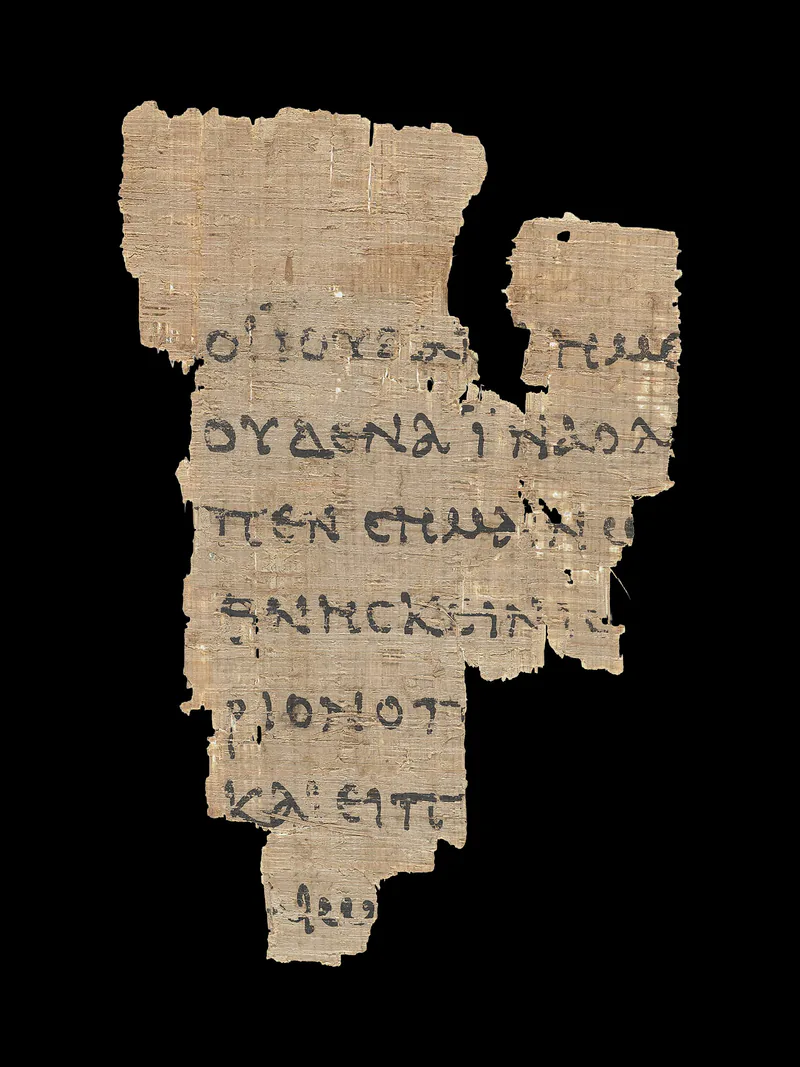
None of these texts survives in its original copy. The New Testament is known from thousands of Greek manuscripts, papyri and early translations. A small papyrus fragment of John held in Manchester (P52) is often dated to the second century, and the great parchment codices Sinaiticus and Vaticanus were copied in the fourth. Textual critics compare these witnesses to reconstruct the earliest recoverable wording, a discipline introduced for general readers in the works of Bruce Metzger and Bart Ehrman.
How the New Testament Canon Formed§
No council in the early Church sat down and voted the New Testament into existence. Recognition grew from use: books that were read aloud in worship, believed to come from the apostles or their companions, and consistent with the faith of the churches gradually acquired authority.
Early collections and challenges§
By the early second century collections of Paul's letters were circulating. Around the 140s the teacher Marcion, active in Rome, proposed a scripture consisting of an edited Gospel of Luke and ten Pauline letters, rejecting the Jewish scriptures altogether; his opponents' response helped crystallise the idea of a broader, defined collection. Around 180 Irenaeus of Lyon argued that there must be exactly four Gospels, no more and no fewer. The Muratorian Fragment, a Latin list traditionally dated to the late second century (some scholars argue for the fourth), names most of the present books together with others such as the Apocalypse of Peter.
Disputed books and the fourth-century lists§
Several books were long disputed. The church historian Eusebius of Caesarea, writing in the early fourth century, distinguished books universally accepted from those "spoken against": James, Jude, 2 Peter and 2 and 3 John. Hebrews was questioned in the West because its Pauline authorship was doubted, and Revelation was questioned in parts of the East. Other writings, such as the Shepherd of Hermas and the Didache, were read in some churches but did not ultimately enter the canon. Many other gospels and acts, some known from the Nag Hammadi Library, circulated among particular groups and were rejected by the emerging mainstream.
The first surviving list identical to today's twenty-seven books appears in the Festal Letter that Athanasius, bishop of Alexandria, sent to his churches in 367. Regional councils in North Africa, at Hippo in 393 and Carthage in 397, endorsed a similar list for the Latin West. In the Syriac-speaking churches, some of the shorter general letters and Revelation were accepted later still.
Protestant, Catholic and Orthodox Canons Compared§
The New Testament is essentially identical across the major churches. The differences lie in the Old Testament.
- Catholic Bibles contain seventy-three books. The Council of Trent in 1546 formally defined the deuterocanonical books as scripture, in response to the Reformers.
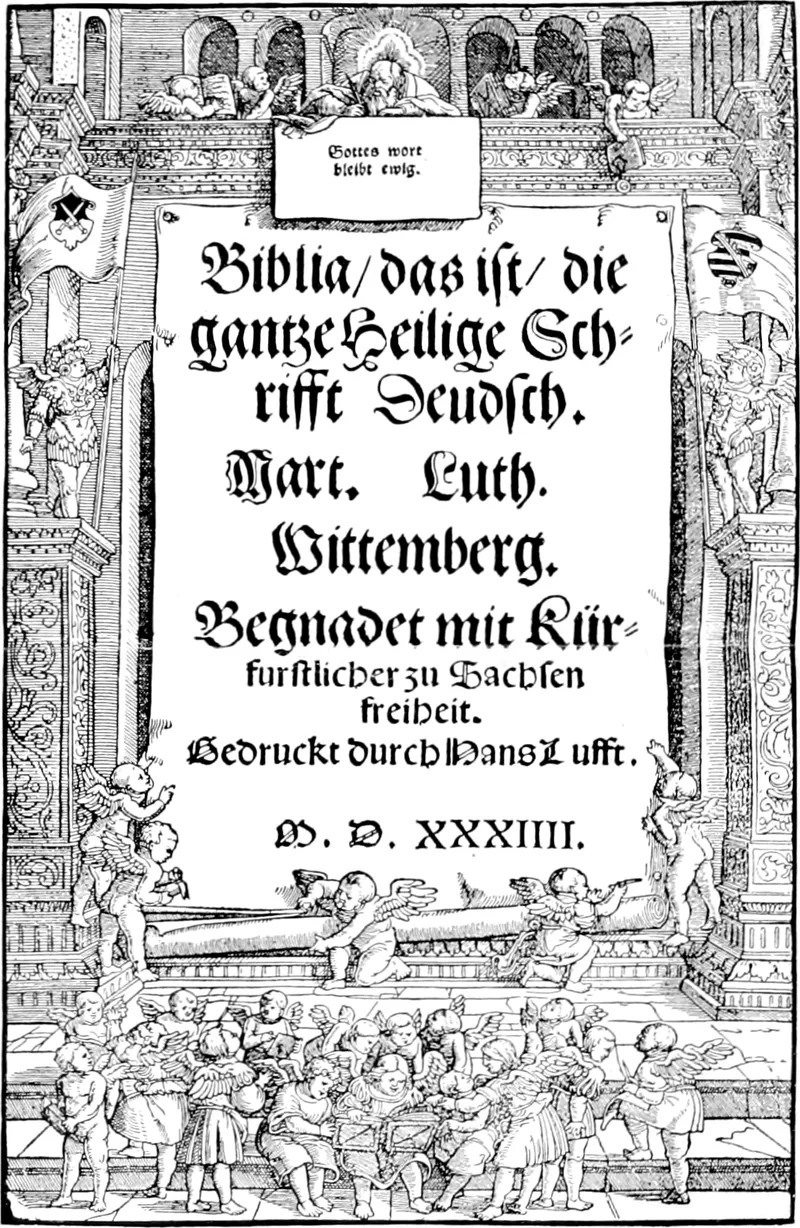
- Protestant Bibles contain sixty-six books. Martin Luther's German Bible of 1534 gathered the deuterocanonical books into a separate section, describing them as useful to read but not equal to scripture; the Church of England's Thirty-Nine Articles take a similar view, and later Reformed confessions such as the Westminster Confession (1646) exclude them. The King James Version of 1611 originally printed the Apocrypha between the Testaments.
- Eastern Orthodox Bibles follow the Septuagint and include further books, such as 1 Esdras, 3 Maccabees, the Prayer of Manasseh and Psalm 151; the exact status of some is discussed among Orthodox theologians.
- The Ethiopian Orthodox Tewahedo Church has the broadest canon, traditionally counted as eighty-one books, including 1 Enoch and Jubilees.
These differences mean that a question such as "how many books are in the Bible?" has several correct answers depending on the tradition.
Translation, Printing and the Shape of the Modern Bible§
Translation has been part of Christian scripture from the start: the Syriac Peshitta, the Coptic versions, the Gothic Bible of Ulfilas, the Armenian and Ethiopic versions, and the Old Church Slavonic translation associated with Cyril and Methodius all date to the first millennium. The chapter divisions now in use are generally credited to Stephen Langton in the early thirteenth century, and the New Testament verse numbers to the Paris printer Robert Estienne in 1551.
The printing press transformed the Bible's reach. The Gutenberg Bible, a Latin Vulgate printed at Mainz around 1455, was the first major book printed with movable type in Europe. Erasmus published a printed Greek New Testament in 1516, and vernacular translations followed: Luther's German, William Tyndale's English New Testament (1526), and in 1611 the Authorized or King James Version, whose language shaped English for centuries and which can be read in full in this library's scripture reading room. Modern critical editions and translations draw on manuscripts discovered since then.
Reading the Bible: Interpretation and Authority§
Christians have always interpreted the Bible within communities. Early and medieval readers distinguished a literal sense from spiritual senses — allegorical, moral and anagogical — a scheme that allowed the Song of Songs to be read as a poem of the soul's love for God, as the Christian mystics did. The Reformers insisted on the plain sense and on scripture's authority over church tradition, as described in Protestantism and the Reformation. From the eighteenth and nineteenth centuries historical criticism asked how the texts were composed and edited, a method now practised by scholars of every confession. In esoteric movements the Bible has also been read for hidden meanings, from Christian Kabbalah and gematria to the symbolic readings of the Theosophists.
Frequently asked questions§
Who decided which books went into the Bible?§
No single person or council did. The New Testament canon emerged through centuries of use in worship, guided by beliefs about apostolic origin and agreement with church teaching. Bishops such as Athanasius (367) and regional councils at Hippo (393) and Carthage (397) recorded lists that reflected a consensus already forming.
Why do Catholic and Protestant Bibles have different numbers of books?§
Catholic Bibles include seven deuterocanonical books, and additions to Esther and Daniel, that come from the Greek Septuagint tradition. The Reformers followed the shorter Hebrew canon of Judaism and treated these books as Apocrypha, useful but not authoritative.
What are the books that were left out of the Bible?§
Many early Christian writings were not included: some, such as the Didache and the Shepherd of Hermas, were respected but considered non-canonical; others, such as the Gospel of Thomas or the Gospel of Judas, belonged to groups outside the emerging mainstream. Scholars group them as "New Testament Apocrypha" or early Christian literature.
When was the New Testament written?§
Most of it was written between about 50 and 120 CE. Paul's letters come first, in the 50s; the Gospels are usually dated between about 65 and 110 CE.
Sources and further reading§
- The Canon of the New Testament: Its Origin, Development, and Significance — Bruce M. Metzger, 1987
- The Canon of Scripture — F. F. Bruce, 1988
- The Text of the New Testament — Bruce M. Metzger, 1964
- The New Testament: A Historical Introduction to the Early Christian Writings — Bart D. Ehrman, 1997
- Misquoting Jesus — Bart D. Ehrman, 2005
- The Holy Bible (King James Version) — Anonymous, 1611