Liber XIX · Judaism · Chapter I: Ancient Israel & the Temple
The Maccabees and the Hasmonean Revolt: History and Legacy
The Maccabean revolt against Antiochus IV: the desecration of the Temple, Judas Maccabee, the first Hanukkah, the Hasmonean kings and the Books of Maccabees.

The Maccabees were a priestly family from the village of Modein who led a Jewish revolt against the Seleucid king Antiochus IV Epiphanes after he outlawed the practice of Judaism and turned the Jerusalem Temple over to foreign worship in 167 BCE. Under Judas, called Maccabee ("the Hammer"), the rebels recaptured Jerusalem and rededicated the Temple in 164 BCE — the event remembered at Hanukkah — and his brothers went on to found the Hasmonean dynasty, the last independent Jewish state of antiquity, which lasted until the Roman conquest.
The Seleucid Empire and the Hellenistic Crisis in Judea§
After the conquests of Alexander the Great, Judea passed first under the Ptolemies of Egypt and then, after the battle of Panium around 200 BCE, under the Seleucid kings of Syria. The Seleucid ruler Antiochus III confirmed the right of the Jews to live by their "ancestral laws", and Jerusalem remained a small temple-state governed by its high priest. The wider world, however, was Greek in language and culture, and many Jews — especially among the priestly aristocracy — were drawn to Greek education, dress and civic life.
Tension came to a head in the reign of Antiochus IV Epiphanes (175–164 BCE). A priest named Jason obtained the high priesthood from the king by a payment and, according to 2 Maccabees, set up a Greek gymnasium in Jerusalem and enrolled its citizens as "Antiochenes". A few years later a rival, Menelaus, outbid him; since Menelaus was not of the traditional high-priestly line, his appointment shocked many. The high priesthood had become a royal favour sold to the highest bidder, and Jerusalem was divided between reformers and those who saw the reforms as betrayal of the covenant.
The Decrees of Antiochus IV and the Desecration of the Temple§
In 168 BCE Antiochus invaded Egypt but was forced to withdraw by a Roman envoy. Around the same time fighting broke out in Jerusalem between Jason's supporters and Menelaus, which the king treated as rebellion. His troops plundered the Temple treasury, and a fortified citadel, the Akra, was built in the city and garrisoned with soldiers and Hellenizing Jews.

In 167 BCE came the decrees that make this episode unique in ancient history. According to 1 Maccabees, the king forbade the Temple sacrifices, the Sabbath and festivals, circumcision and the keeping of the food laws; copies of the Torah were to be destroyed, and Jews were compelled to eat pork and sacrifice at local altars. In the month of Kislev an altar to Zeus Olympios — the "abomination of desolation" of the Book of Daniel (Daniel 11) — was set up on the altar of burnt offering. Women who had their sons circumcised were put to death with their infants.
Why a Hellenistic king, whose empire generally tolerated local cults, should have tried to suppress a religion is one of the great puzzles of the period. Elias Bickerman argued in 1937 that the initiative came from radical Jewish reformers around Menelaus who wished to strip Judaism of what they saw as later accretions. Victor Tcherikover held instead that the decrees were a political response to a popular revolt that had already begun. No explanation has won general agreement.
Mattathias, Judas Maccabee and the Revolt§
The story of resistance in 1 Maccabees opens at Modein, northwest of Jerusalem, where an aged priest named Mattathias refused the king's officer's demand to sacrifice. When another Jew came forward to do so, Mattathias killed him and the officer, tore down the altar and fled to the hills with his five sons — John, Simon, Judas, Eleazar and Jonathan. After a group of pious refugees allowed themselves to be killed rather than fight on the Sabbath, Mattathias and his followers resolved to defend themselves even on the holy day, a decision with lasting consequences for Jewish law. They were joined by the Hasidim ("pious ones"), a group devoted to the Torah.
Mattathias died in 166 BCE, and leadership passed to his third son Judas, whose byname Maccabee is usually explained from an Aramaic word for "hammer". Using guerrilla tactics in the hill country, Judas defeated a succession of Seleucid generals: Apollonius, Seron at the pass of Beth-horon, Gorgias at Emmaus and the regent Lysias near Beth-zur.
The Rededication of the Temple and the Origins of Hanukkah§
In late 164 BCE Judas entered Jerusalem. The rebels found the Temple courts overgrown and the sanctuary profaned. They chose priests who had kept faith, removed the stones of the defiled altar, built a new one of uncut stone, made new vessels and relit the lampstand. On the twenty-fifth of Kislev — according to 1 Maccabees, three years to the day after the first pagan sacrifice — the Temple was rededicated with sacrifices and eight days of celebration. 1 Maccabees says the assembly decreed that the days should be kept every year; 2 Maccabees compares the eight days to the festival of Sukkot, which had not been properly celebrated during the persecution.
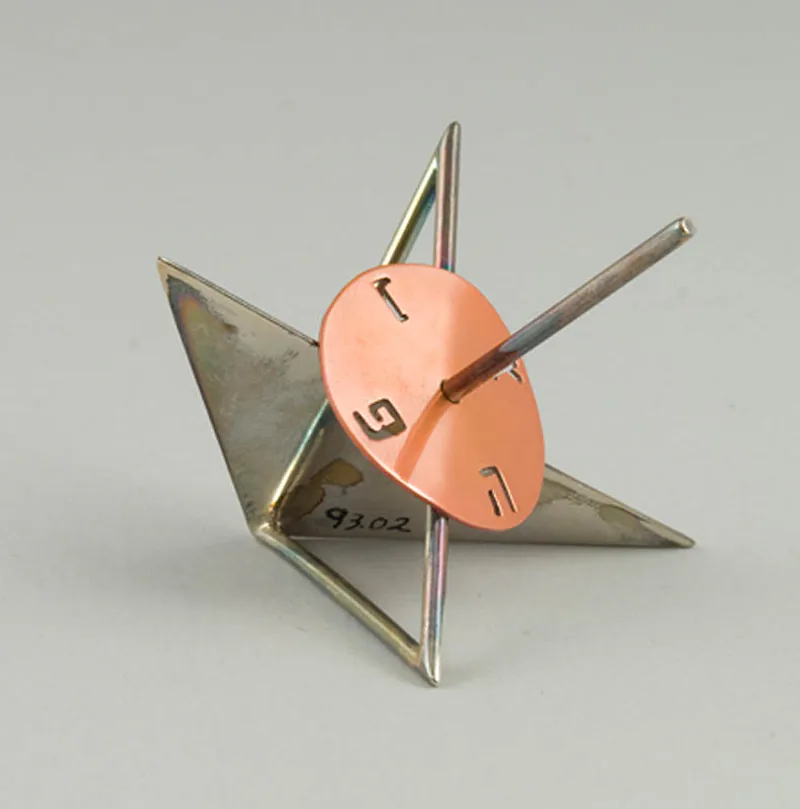
The name of the festival, Hanukkah, means "dedication". The best-known explanation of its eight days — a single jar of undefiled oil that burned miraculously for eight days — appears first in the Babylonian Talmud (Shabbat 21b), centuries after the events; the books of Maccabees do not mention it. The rabbis, writing after the failure of later revolts against Rome, tended to emphasise divine miracle over military victory, and the prayer Al ha-Nissim added to the liturgy at Hanukkah thanks God for delivering "the many into the hands of the few". The customs of the festival are described in the Sabbath and Jewish festivals.
Antiochus IV died on campaign in Persia in 164 BCE. In 162 BCE the Seleucid government, weakened by succession struggles, rescinded the decrees and restored to the Jews the right to live by their laws. Judas fought on, however — his brother Eleazar was killed at Beth-zechariah, crushed beneath a war elephant he had stabbed — and defeated the general Nicanor at Adasa in 161 BCE, a victory long commemorated as "Nicanor's Day". He also sent an embassy to Rome. He was killed in battle at Elasa in 160 BCE.
From Rebels to Rulers: The Hasmonean Dynasty§
Leadership passed to Jonathan, who exploited rivalries between claimants to the Seleucid throne and was appointed high priest by one of them, Alexander Balas, in 152 BCE. After Jonathan was treacherously killed, Simon, the last surviving brother, secured exemption from tribute in 142 BCE — "the yoke of the heathen was taken away from Israel", as 1 Maccabees puts it — and expelled the garrison of the Akra. In 140 BCE a great assembly confirmed Simon as high priest, commander and leader of the people "for ever, until there should arise a faithful prophet". The family name Hasmonean, used by Josephus and the rabbis, comes from an ancestor called Hasmon.
Simon's son John Hyrcanus I (134–104 BCE) enlarged the state, conquering Idumea to the south and requiring its people to be circumcised, and destroying the Samaritan temple on Mount Gerizim. His son Aristobulus I took the title of king, and Alexander Jannaeus (103–76 BCE) ruled a large territory but was bitterly opposed by the Pharisees. His widow Salome Alexandra (76–67 BCE), the only reigning queen in Second Temple history, made peace with the Pharisees and is remembered favourably in rabbinic tradition.
The union of high priesthood and kingship in a family that was not of the line of Zadok or of David troubled some contemporaries, and many scholars connect the withdrawal of the community behind the Dead Sea Scrolls, with its hostility to a "Wicked Priest" in Jerusalem, to these controversies. A civil war between Salome's sons Hyrcanus II and Aristobulus II gave Rome its opening: in 63 BCE Pompey captured Jerusalem and entered the Holy of Holies. The last Hasmonean ruler, Antigonus, was executed in 37 BCE when Herod, with Roman backing, took the city. The later history of the Temple is told in ancient Israel and the Temple.
The Books of Maccabees and the Memory of the Martyrs§
The main sources are two quite different books. 1 Maccabees, written in Hebrew around 100 BCE but preserved only in Greek, is a sober, biblical-style chronicle from 175 to 134 BCE that celebrates the Hasmonean family as God's chosen deliverers. 2 Maccabees, composed in Greek, is an abridgement of a five-volume history by one Jason of Cyrene; it covers a shorter period, emphasises miracles and the sanctity of the Temple, and contains the famous martyrdoms of the aged scribe Eleazar and of a mother and her seven sons, tortured to death for refusing pork. Their declaration that God will raise them up again is one of the earliest clear statements of belief in bodily resurrection. The visions of Daniel 7–12 are dated by most scholars to the persecution itself, before the rededication. Josephus retells the whole story in his Jewish Antiquities.
Because 1 and 2 Maccabees belonged to the Greek Bible but not to the Hebrew canon, they were preserved by Christians. The Catholic and Orthodox churches count them as Scripture, and the martyrs of 2 Maccabees are venerated as the "Holy Maccabees". Protestant Bibles place them among the Apocrypha (see the Christian Bible and its canon). In rabbinic literature the Hasmoneans are mentioned sparingly, though the mother of seven sons, named Hannah in later tradition, became a model of Jewish martyrdom. In modern times the Maccabees became symbols of Jewish courage and self-defence: Handel's oratorio Judas Maccabaeus (1747), Zionist sports clubs and youth movements, and the growing prominence of Hanukkah in the diaspora all drew on their story.
Frequently asked questions§
What does the name Maccabee mean?§
"Maccabee" was originally the byname of Judas, the third son of Mattathias, and is usually derived from an Aramaic or Hebrew word for "hammer", referring to his blows against the enemy. It was later applied to the whole family and to the martyrs of the persecution. The family itself is called Hasmonean after an ancestor named Hasmon.
Why are the Books of Maccabees not in the Hebrew Bible?§
They were written after the collection of Prophets was closed, and 2 Maccabees was composed in Greek. They circulated in the Greek-speaking diaspora as part of the Septuagint and were preserved by the Christian churches. Catholic and Orthodox Bibles include them; Jewish and most Protestant Bibles do not.
Is the miracle of the oil in the Books of Maccabees?§
No. The books of Maccabees describe the rededication of the Temple and eight days of celebration but say nothing about oil lasting eight days. The miracle story first appears in the Babylonian Talmud, compiled several centuries later.
Sources and further reading§
- I Maccabees: A New Translation with Introduction and Commentary — Jonathan A. Goldstein, 1976
- II Maccabees: A New Translation with Introduction and Commentary — Jonathan A. Goldstein, 1983
- The God of the Maccabees: Studies on the Meaning and Origin of the Maccabean Revolt — Elias J. Bickerman, 1979
- Hellenistic Civilization and the Jews — Victor Tcherikover, 1959
- Judaism and Hellenism — Martin Hengel, 1974
- Judas Maccabaeus: The Jewish Struggle Against the Seleucids — Bezalel Bar-Kochva, 1989
- Hanukkah in America: A History — Dianne Ashton, 2013