Liber XIX · Judaism · Chapter IX: Rabbinic Judaism & the Talmud
The Talmud and Rabbinic Judaism: Mishnah, Gemara and Midrash
How the rabbis rebuilt Judaism after 70 CE: the Oral Torah, the Mishnah, the Babylonian and Jerusalem Talmuds, midrash, and the Talmud's place in Jewish life.

Rabbinic Judaism is the form of Judaism created by the sages called rabbis after the destruction of the Jerusalem Temple in 70 CE, and the Talmud is its greatest work: a vast record of their legal debates and teachings, built on the Mishnah of about 200 CE and completed in Babylonia between the fifth and seventh centuries. Almost all later Jewish law, worship and thought rests on the Talmud, which Jews have studied continuously for some fifteen hundred years.
The Rise of the Rabbis after the Temple§
When the Romans destroyed the Second Temple, the sacrificial system that had been the centre of Jewish worship came to an end (see ancient Israel and the Temple). A famous Talmudic story tells how Rabban Yohanan ben Zakkai was smuggled out of besieged Jerusalem in a coffin and obtained from the Roman commander permission to establish a centre of learning at Yavneh. Whatever its historical basis, the story captures how the rabbis understood themselves: as the heirs of the Pharisees who rebuilt Judaism around study, prayer and the observance of the commandments.
Scholars divide the rabbinic period into generations. The Tannaim ("repeaters"), active until about 220 CE, produced the Mishnah and related works. The Amoraim ("speakers"), in the Land of Israel and in Babylonia from about 220 to 500, interpreted the Mishnah. They were followed by the anonymous editors of the Babylonian Talmud and then by the Geonim, the heads of the great Babylonian academies of Sura and Pumbedita, who until the eleventh century answered questions from Jewish communities across the world and spread the authority of the Babylonian Talmud.
At the core of rabbinic Judaism is the doctrine of the Oral Torah. The tractate Pirkei Avot ("Chapters of the Fathers") opens with a chain of transmission: Moses received the Torah at Sinai and handed it on to Joshua, Joshua to the elders, the elders to the prophets and the prophets to the men of the Great Assembly, and so down to the rabbis. The written Torah, on this view, can be understood only through the interpretive tradition that accompanies it.
The Mishnah: Structure and Content§
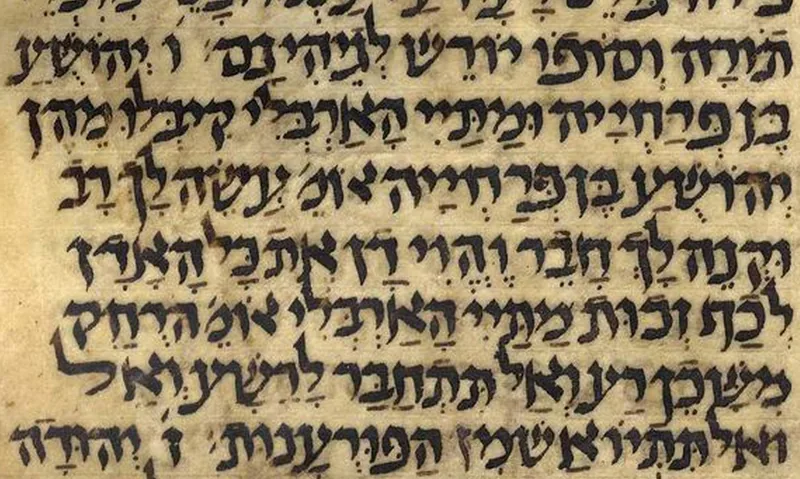
The Mishnah, compiled in Galilee under Rabbi Judah ha-Nasi ("the Prince") around 200 CE, is a concise code of law written in Mishnaic Hebrew. It is arranged in six orders, from which the Talmud is traditionally called Shas (an abbreviation of "six orders"):
- Zera'im (Seeds): agricultural laws and, first of all, the blessings and prayers.
- Mo'ed (Appointed Times): the Sabbath and festivals.
- Nashim (Women): marriage, divorce and vows.
- Nezikin (Damages): civil and criminal law, courts, and the ethical tractate Avot.
- Kodashim (Holy Things): sacrifices and the Temple service.
- Tohorot (Purities): ritual purity and impurity.
The Mishnah usually records the views of named sages and frequently preserves disagreements, especially between the schools of Hillel and Shammai in the first century. It devotes much space to the laws of the Temple, sacrifice and purity, which could no longer be practised, preserving them for study and for the hoped-for restoration. A parallel collection, the Tosefta ("supplement"), contains further tannaitic material.
The Babylonian and Jerusalem Talmuds§
The Amoraim studied the Mishnah line by line, and their discussions, called Gemara ("study" or "completion"), were combined with the Mishnah to form the Talmud. There are two Talmuds:
- The Jerusalem Talmud (Yerushalmi), more accurately the Talmud of the Land of Israel, was produced in the academies of Galilee, especially Tiberias, and is usually dated to around 400 CE. It is shorter, terser and less fully edited.
- The Babylonian Talmud (Bavli) was produced in the academies of Mesopotamia, then under the Sasanian Persian empire. Its final editing continued into the sixth or seventh century, and it is several times the length of the Yerushalmi. It covers thirty-seven tractates of the Mishnah and runs to some 2,700 double-sided folios in standard editions.
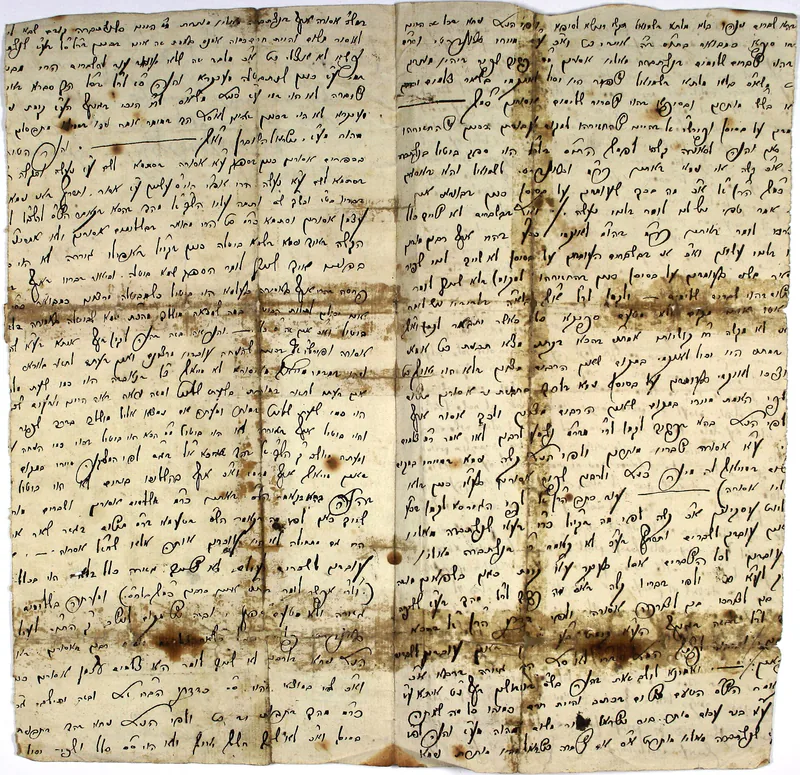
The Gemara is written mainly in Jewish Babylonian or Galilean Aramaic, interspersed with Hebrew. From the Geonic period the Babylonian Talmud became the authoritative one, and "the Talmud" without qualification means the Bavli. Its standard page layout — the Mishnah and Gemara in the centre, surrounded by the commentary of Rashi and the glosses of the Tosafists — goes back to Daniel Bomberg's first complete printed edition (Venice, 1520–23) and was fixed in the Romm edition of Vilna (1880–86). Talmud references still use Bomberg's folio numbers, as in "Berakhot 2a".
Halakha and Aggadah: How the Talmud Argues§
The Talmud is not a code but a record of debate. A typical passage quotes a Mishnah, raises a question, cites earlier teachings, tests them against one another with objections and answers, and often ends without a final decision. Opinions that were rejected are preserved with care. A well-known Talmudic passage relates that a heavenly voice declared of the disputes between Hillel and Shammai that "these and these are the words of the living God", while the law follows Hillel. In another, the story of the "oven of Akhnai", the majority of sages overrule Rabbi Eliezer even though miracles and a heavenly voice support him, citing the verse that the Torah "is not in heaven" (Deuteronomy 30:12): once given, the Torah is interpreted by human reasoning.
Roughly a third of the Babylonian Talmud consists of aggadah: non-legal material including stories of the sages, ethical teaching, biblical legends, medicine, astronomy, dream interpretation, and beliefs about angels and demons. Some of this material became the foundation of the Jewish folk beliefs discussed in Jewish magic and folklore. The Mishnah's restriction on expounding "the work of the chariot" in public also points to the esoteric traditions treated in Merkavah and Hekhalot mysticism.
Midrash and the Interpretation of Scripture§
Alongside the Mishnah and Talmud the rabbis produced midrash, interpretation that draws meaning from the words of scripture. Halakhic midrashim such as the Mekhilta on Exodus, Sifra on Leviticus and Sifre on Numbers and Deuteronomy derive laws from the biblical text by recognised rules of interpretation, traditionally counted as the thirteen principles of Rabbi Ishmael. Aggadic midrashim such as Genesis Rabbah and Leviticus Rabbah, compiled in the Land of Israel from about the fifth century, fill gaps in biblical stories, explain difficult verses and preach moral and theological lessons. Many of the best-known Jewish legends — Abraham smashing his father's idols, for example — come from midrash. Their relation to the biblical text is described further in the Hebrew Bible.
The Talmud in Jewish History§
From the early Middle Ages the Talmud became the curriculum of Jewish education and the foundation of Jewish law; the codes of Maimonides and Joseph Karo, discussed in Jewish law and ethics, are built on it. Some Jews rejected rabbinic authority: the Karaites, a movement that emerged in Babylonia and Persia in the eighth and ninth centuries, accepted only the written Bible, and small Karaite communities survive today.
The Talmud also became a target. After a disputation in Paris in 1240, in which a convert accused it of blasphemy against Christianity, wagonloads of Talmud manuscripts were burned in 1242, and in 1553 copies were burned in Rome on papal orders; later editions were censored. In modern times the Talmud has been studied in yeshivot, in universities by historians and philologists, and by ordinary Jews through programmes such as Daf Yomi ("a page a day"), begun in 1923, in which participants read the entire Babylonian Talmud in about seven and a half years. Translations into modern Hebrew and English, notably by Adin Steinsaltz, have opened it to many new readers.
Frequently asked questions§
What is the difference between the Mishnah and the Talmud?§
The Mishnah is the concise code of the Oral Torah edited around 200 CE. The Talmud consists of the Mishnah together with the Gemara, the later rabbis' extended discussion of it, so the Mishnah is the foundation on which the Talmud is built.
Why are there two Talmuds?§
Rabbinic academies flourished both in the Land of Israel and in Babylonia, and each produced its own commentary on the Mishnah. The Babylonian Talmud is longer, more fully edited and became the more authoritative of the two.
What language is the Talmud written in?§
The Mishnah is in Hebrew, while the Gemara is mostly in Aramaic, the everyday language of Jews in late antiquity, with frequent Hebrew quotations and passages.
Do all Jews follow the Talmud?§
Orthodox and Conservative Judaism regard the Talmud as authoritative for Jewish law, while Reform and other liberal movements treat it as a central but non-binding source. The small Karaite community rejects rabbinic tradition altogether.
Sources and further reading§
- The Essential Talmud — Adin Steinsaltz, 1976
- Introduction to the Talmud and Midrash — Hermann L. Strack & Günter Stemberger, 1991
- The Mishnah: A New Translation — Jacob Neusner, 1988
- The Cambridge Companion to the Talmud and Rabbinic Literature — Charlotte Elisheva Fonrobert & Martin S. Jaffee (eds.), 2007
- Talmudic Stories: Narrative Art, Composition, and Culture — Jeffrey L. Rubenstein, 1999
- From the Maccabees to the Mishnah — Shaye J. D. Cohen, 1987