Liber XIX · Judaism · Chapter IX: Rabbinic Judaism & the Talmud
Hillel and Shammai: The Great Debates of the Early Sages
Hillel and Shammai, sages of the first century BCE: their lives and legends, the disputes of their two schools, and why Jewish law follows the Hillelites.

Hillel and Shammai were two Jewish sages who taught in Jerusalem in the late first century BCE and early first century CE, during the reign of Herod the Great. Rabbinic tradition remembers them as the last and most famous of the "pairs" of leaders who handed down the Oral Torah, and their disciples formed two schools, the House of Hillel (Beit Hillel) and the House of Shammai (Beit Shammai), whose hundreds of disputes shaped Jewish law. Jewish law generally follows the House of Hillel, and Hillel's patience and humility made him a model of the ideal sage.
Who Were Hillel and Shammai?§
The Mishnah tractate Avot ("Fathers"), compiled around 200 CE, opens with a chain of tradition: Moses received the Torah at Sinai and handed it on through Joshua, the elders, the prophets and the Men of the Great Assembly to a series of five "pairs" of teachers in the Second Temple period. Hillel and Shammai are the last pair. Later rabbinic tradition described one member of each pair as nasi, president of the Sanhedrin, and the other as av beit din, head of the court; historians doubt that these offices existed in that form at the time and see the scheme as a later idealisation (see rabbinic Judaism and the Talmud).
Both men belonged to the world of the Pharisees, the movement that emphasised ancestral traditions alongside the written Torah and that later rabbis regarded as their predecessors. They taught a generation before the career of Jesus and two generations before the destruction of the Temple described in ancient Israel and the Temple. A strong tradition dates Hillel's leadership to about a hundred years before the destruction of the Temple, that is, from around 30 BCE.
Hillel the Elder: Life and Legends§
Hillel, called ha-Zaken, "the Elder", came from Babylonia. The Talmud preserves a famous story of his youth: too poor to pay the doorkeeper's fee, he climbed onto the roof of the house of study to listen through the skylight to the teachers Shemaiah and Avtalyon, and was found on a winter Sabbath morning half frozen under the snow. The sages warmed him, declaring that he was worthy of having the Sabbath desecrated for his sake. Another story tells how he rose to leadership when the sons of Bathyra, then heads of the community, could not decide whether the Passover sacrifice could be offered when the 14th of Nisan fell on a Sabbath; Hillel answered from scripture and from the traditions of his teachers, and they stepped aside for him.

Most tales stress his patience. A man bet that he could make Hillel angry and pestered him on the eve of the Sabbath with absurd questions — beginning with why Babylonians have round heads — and Hillel answered each calmly, so the man lost his bet. In the best-known story, a non-Jew came to Shammai asking to be taught the whole Torah while standing on one foot; Shammai drove him off with a builder's measuring rod. Hillel accepted him and said, in the Talmud's Aramaic: "What is hateful to you, do not do to your fellow. That is the whole Torah; the rest is commentary. Go and learn it." The negative form of this Golden Rule appears earlier in the Book of Tobit, but Hillel's version became the classic one in Jewish tradition.
Three sayings attributed to Hillel in Avot are among the most quoted lines of Jewish ethics: be among the disciples of Aaron, "loving peace and pursuing peace, loving people and bringing them near to the Torah"; "If I am not for myself, who is for me? And when I am for myself, what am I? And if not now, when?"; and "Do not judge your fellow until you have reached his place." Tradition also credits Hillel with seven rules of biblical interpretation (middot), such as reasoning from a lesser to a greater case, which later sages expanded to thirteen.
The Prozbul§
Hillel's most famous legal enactment (takkanah) was the prozbul. Deuteronomy 15 commands that debts be cancelled every seventh year; as that year approached, lenders refused to make loans, contrary to the Torah's intention (Deuteronomy 15 itself warns against this). Hillel instituted a document by which the lender transferred his debts to the court before the sabbatical year, so that they could be collected afterwards. The prozbul shows the rabbinic willingness to adapt law to protect its purpose, a theme discussed in halakha, Jewish law and ethics.
Shammai the Elder: Strictness and Integrity§
Shammai is usually portrayed as stern and exacting, the foil to Hillel's gentleness, though the sources are more nuanced. His own saying in Avot is: "Make your Torah study a fixed practice; say little and do much; and receive every person with a cheerful countenance" — a teaching hardly consistent with a reputation for harshness. Stories present him as rigorous in his own observance: he is said to have wanted to make his young son fast on Yom Kippur, and to have broken through the roof of the room where his daughter-in-law had given birth during the festival of Sukkot, so that the newborn would be under a sukkah.
Rabbinic tradition explains Shammai's impatience with the would-be convert as zeal for the integrity of the Torah rather than unkindness. Some modern scholars have linked the House of Shammai with a stricter, more nationalist outlook and the House of Hillel with a more flexible one, though such generalisations are debated.
The House of Hillel and the House of Shammai§
The disciples of the two masters, active until the late first century CE, disagreed on a vast range of questions; the rabbinic literature records more than three hundred disputes. In most cases the House of Shammai held the stricter view, though in a minority of cases it was more lenient. A few examples show their range:
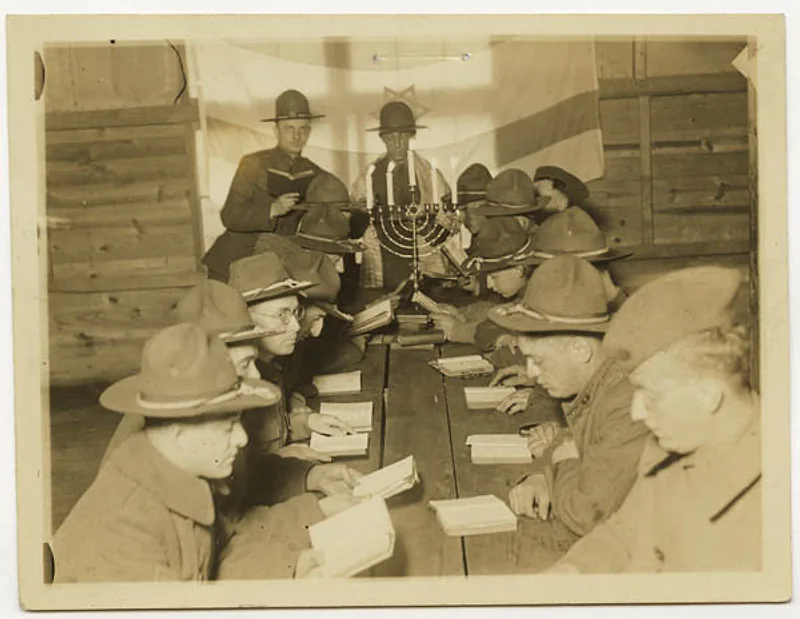
- Hanukkah lights. The House of Shammai held that one lights eight lights on the first night and decreases by one each night; the House of Hillel held that one begins with one light and adds one each night, because "one increases in holiness and does not decrease". The Hillelite practice is followed today (see the Sabbath and Jewish festivals).
- The Shema. The Shammaites taught that one should recline in the evening and stand in the morning, reading literally "when thou liest down, and when thou risest up"; the Hillelites held that one recites it in any posture.
- Divorce. In the Mishnah's account, the House of Shammai permitted divorce only for sexual misconduct, while the House of Hillel permitted it "even if she spoiled his dish"; Rabbi Akiva later went further. Scholars often compare this debate with the teaching on divorce attributed to Jesus in Matthew 19. Rabbinic sources also remember a day when the Shammaites, outnumbering the Hillelites, pushed through eighteen decrees separating Jews from gentiles; its historical background, perhaps the tensions before the revolt against Rome, is uncertain.
"These and These": Why the Law Follows Hillel§
After the destruction of the Temple, the sages gathered at Yavneh had to decide between the two schools. According to the Talmud, a heavenly voice (bat kol) declared: "Both these and those are the words of the living God, but the law follows the House of Hillel." Asked why, if both were the words of God, the Talmud answers that the Hillelites were gentle and humble, studied their own views and those of the Shammaites, and even cited the Shammaite opinion before their own.
This passage became a foundational text for the rabbinic acceptance of disagreement. Later teachers held that a dispute "for the sake of heaven", like that of Hillel and Shammai, will endure, while one born of personal ambition will not. The Mishnah deliberately records minority views, and the Talmud is built around argument rather than bare conclusions.
Hillel and Shammai in History and Scholarship§
Hillel's descendants, beginning with Gamaliel the Elder, became the dynasty of patriarchs who led the Jews of the Land of Israel until the office lapsed in the early fifth century; the family also claimed descent from King David. Hillel's prestige helped legitimise their rule, and some historians think that this dynastic interest shaped the stories told about him. Jacob Neusner's critical study of the traditions about the Pharisees, published in 1971, showed how much of the material was shaped and expanded by later generations, so that little can be said with certainty about the historical Hillel and Shammai beyond the existence of their schools and their main legal positions.
Their memory nonetheless remains central to Jewish culture. Hillel's sayings are taught to children, and Hillel International, the Jewish campus organisation founded in 1923, bears his name. The pairing of Hillel and Shammai has become shorthand in Jewish life for principled disagreement conducted with respect — an ideal of Judaism as a tradition of argument "for the sake of heaven".
Frequently asked questions§
What is Hillel's Golden Rule?§
When a non-Jew asked to learn the whole Torah while standing on one foot, Hillel replied: "What is hateful to you, do not do to your fellow. That is the whole Torah; the rest is commentary. Go and learn it." The story is told in the Babylonian Talmud, tractate Shabbat.
Why does Jewish law follow Hillel rather than Shammai?§
According to the Talmud, a heavenly voice declared that both schools spoke the words of the living God but that the law follows the House of Hillel, because its members were gentle and humble and taught their opponents' views alongside their own.
Did Hillel and Shammai know Jesus?§
Probably not personally. Hillel and Shammai were active in the late first century BCE and early first century CE, a generation before Jesus' ministry, but the debates of their schools continued during his lifetime and are often compared with his teachings.
Is there any historical evidence for Hillel and Shammai?§
The only sources are rabbinic texts compiled from around 200 CE onwards. Historians accept that both men and their schools existed, but they regard many of the stories as later legends shaped by the concerns of the rabbinic movement.
Sources and further reading§
- Hillel the Elder: The Emergence of Classical Judaism — Nahum N. Glatzer, 1956
- The Rabbinic Traditions about the Pharisees before 70 — Jacob Neusner, 1971
- The Sages: Their Concepts and Beliefs — Ephraim E. Urbach, 1975
- From Text to Tradition: A History of Second Temple and Rabbinic Judaism — Lawrence H. Schiffman, 1991
- Hillel and Jesus: Comparisons of Two Major Religious Leaders — James H. Charlesworth and Loren L. Johns (eds.), 1997
- Judaism: Practice and Belief, 63 BCE–66 CE — E. P. Sanders, 1992