Liber VI · Christianity · Chapter VI: Folk Christianity
Christmas: History of the Nativity Feast and Its Customs
Christmas history: the Nativity in the Gospels, why 25 December, Advent and Epiphany, cribs, carols, Christmas Eve folk customs and the Victorian Christmas.

Christmas is the Christian feast of the Nativity, the birth of Jesus Christ, celebrated on 25 December in most Western churches and on 7 January (25 December in the Julian calendar) in many Orthodox churches. The feast is first recorded at Rome in the fourth century, and around it grew a season running from Advent to Epiphany, rich in liturgy, carols, nativity scenes and folk customs. Its modern form owes much to the nineteenth century, when Victorian Britain and the United States reshaped it as a family festival.
The Nativity in the Gospels§
The Gospel of Mark, probably the earliest, begins with the adult Jesus, and the Gospel of John opens with a theological prologue on the Word made flesh. The birth stories come from Matthew and Luke, and they differ markedly. Matthew (Matthew 2) tells of Joseph's dreams, the star and the wise men from the east, King Herod's massacre of the infants of Bethlehem and the flight into Egypt. Luke (Luke 2) tells of the census that brought Joseph and Mary to Bethlehem, the child laid in a manger "because there was no room for them in the inn," and the angels' announcement to the shepherds.
Christian tradition harmonised the two accounts into a single story, adding details from later works such as the second-century Protevangelium of James, which describes a birth in a cave. Historical-critical scholars note the difficulty of reconciling Matthew's setting under Herod the Great, who died around 4 BCE, with Luke's census under Quirinius, usually dated to 6 CE, and many regard the narratives as theological reflections on Jesus' identity as the Davidic Messiah. Believers read them as testimony to the Incarnation, the doctrine that God became human, which gives Christmas its meaning for Christians.
Why 25 December? The Date of Christmas§
Early Christians focused on the death and resurrection of Jesus, commemorated at Easter, and seem to have shown little interest in his birthday. The first clear evidence of a Nativity feast on 25 December is a list in the Roman almanac known as the Chronograph of 354, which places the birth of Christ on that date in a list that appears to date from around 336. In much of the Greek East the birth of Christ was celebrated together with his baptism on 6 January, the feast of Epiphany or Theophany. The 25 December date spread east in the late fourth century; the Armenian Apostolic Church alone still keeps the Nativity on 6 January.
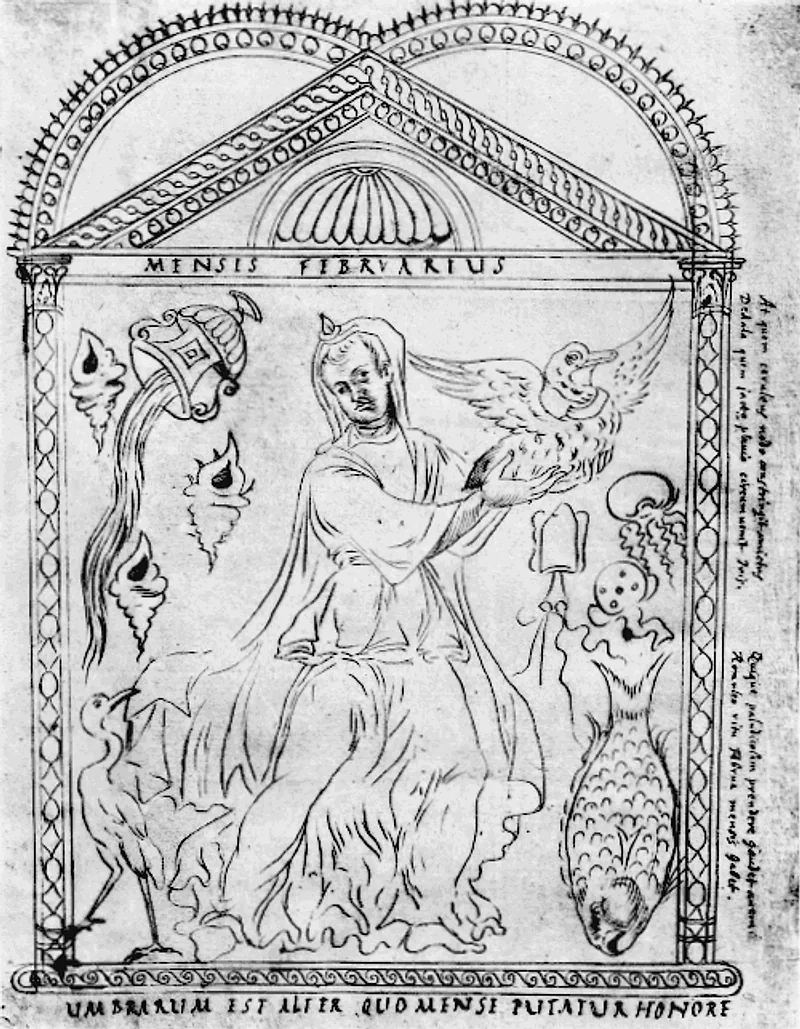
Two main explanations are offered. The "history of religions" theory holds that the Church in Rome set the feast against the Natalis Solis Invicti, the birthday of the Unconquered Sun, associated with the winter solstice and with the cult promoted by Emperor Aurelian in 274, and perhaps against the Saturnalia that preceded it. The "calculation" theory notes that some early Christian writers dated the conception and death of Jesus to 25 March; nine months after the conception falls on 25 December. Many historians think both factors may have played a part. The relationship between Christmas and the pagan midwinter, including the Germanic Yule, is examined in Yule. The Orthodox churches that keep the Julian calendar, including the Russian, Serbian and Georgian churches, celebrate Christmas on 7 January in the modern civil calendar.
Advent, the Christmas Liturgy and Epiphany§
From the fifth and sixth centuries a period of preparation called Advent developed, at first a fast of several weeks in Gaul and Spain, later fixed in Rome as the four Sundays before Christmas. The Orthodox churches keep a forty-day Nativity Fast from 15 November. Advent wreaths and calendars are much later, mainly German Protestant inventions of the nineteenth century.
Roman custom gave Christmas three Masses: at midnight, at dawn and during the day, a practice already known to Pope Gregory the Great around 600. The Council of Tours in 567 is often cited as proclaiming the twelve days from Christmas to Epiphany a festal season. Epiphany on 6 January celebrates in the West chiefly the visit of the Magi, and in the East the baptism of Christ in the Jordan, marked by the Great Blessing of the Waters, in which priests bless rivers, lakes and the sea. The Christmas season was traditionally closed by Candlemas on 2 February, the feast of the Presentation of Christ in the Temple. The liturgical background is described in Christian Sacraments and Liturgy.
Nativity Scenes, Carols and the Saints of Christmas§
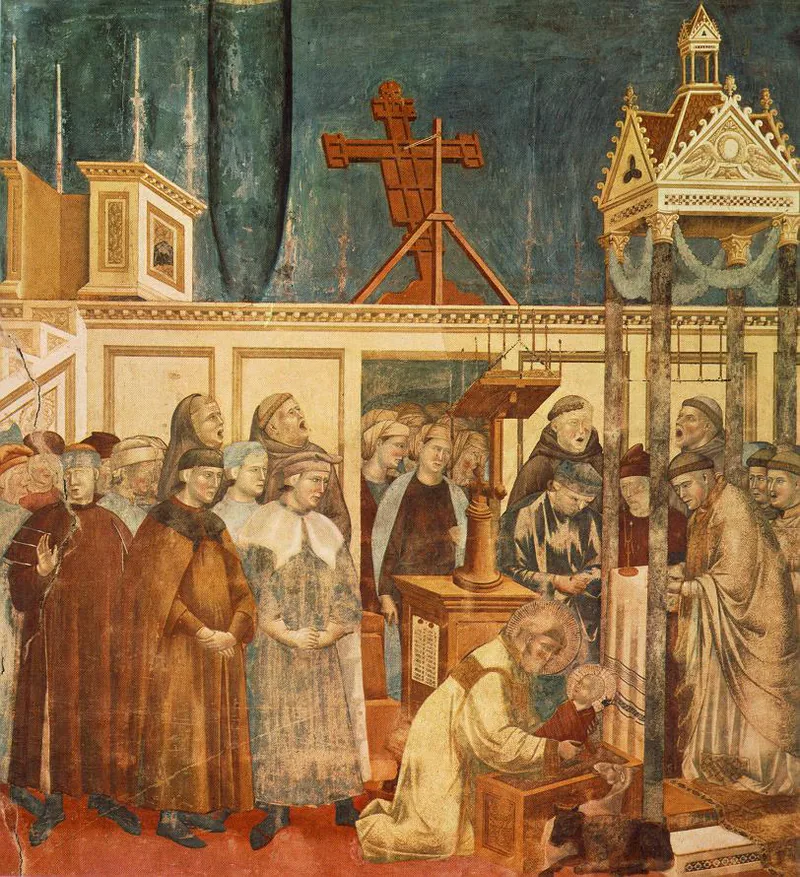
In 1223, according to his early biographer Thomas of Celano, Francis of Assisi arranged a manger with a live ox and donkey in a cave at Greccio and had Mass celebrated there, so that the people could see the poverty of Christ's birth. Nativity scenes (presepi, crèches, cribs) spread through Franciscan preaching and became elaborate art forms, from the Neapolitan presepe of the eighteenth century to the clay santons of Provence and the belenes of Spain and Latin America.
Christmas music has a long history, from Latin hymns such as Ambrose's Veni redemptor gentium to the vernacular carols of late medieval England. "Silent Night" (Stille Nacht) was first sung at Oberndorf in Austria on Christmas Eve 1818. The service of Nine Lessons and Carols, devised for Truro in 1880 and adapted at King's College, Cambridge, in 1918, made the English carol tradition known worldwide through broadcasting.
Several saints became attached to the season. Saint Nicholas, a fourth-century bishop of Myra in Asia Minor whose relics were taken to Bari in 1087, was honoured on 6 December as a secret gift-giver to children, and Dutch Sinterklaas lies behind the American Santa Claus. Saint Lucy's day on 13 December became a festival of light in Sweden. Luther and other Protestants, rejecting the cult of saints, encouraged the Christkind, the Christ Child, as gift-bringer at Christmas itself. On saints and their cults generally, see Saints, Relics and the Virgin Mary.
Christmas Eve and Folk Custom in Christian Lands§
In much of Catholic and Orthodox Europe, Christmas Eve was the heart of the feast, a day of fasting that ended with a special meal when the first star appeared. In Poland the Wigilia supper begins with the sharing of the opłatek, a thin wafer stamped with Nativity scenes, and a place is often set for an unexpected guest. Ukrainian families serve the Holy Supper (Sviata Vecheria) of twelve meatless dishes, honouring the apostles, with a sheaf of grain, the didukh, in the corner. Serbian households burn the badnjak, an oak branch, on the hearth. Straw beneath the tablecloth recalls the manger.
Folk belief surrounded the night with wonders: animals were said to kneel or speak at midnight, water to turn to wine, and the future to be readable in signs. Young women in many regions practised love divination on Christmas Eve or New Year's Eve, and carollers went from house to house singing songs of blessing for food and coins, a custom known in Slavic lands as koliada. At Epiphany, Catholic households in central Europe still chalk the year and the letters C+M+B over their doors, read both as the initials of the Magi (Caspar, Melchior, Balthasar) and as Christus mansionem benedicat, "May Christ bless this house." In Mexico the nine nights of Las Posadas re-enact Mary and Joseph's search for lodging, and in the Philippines the dawn Masses of Simbang Gabi precede the feast. These practices belong to the wider world described in Folk Christianity.
Puritans, Victorians and the Modern Christmas§
Christmas was not always welcome. Many Reformed Protestants objected that it lacked scriptural warrant and encouraged drunkenness and disorder. The English Parliament suppressed its observance in the 1640s, provoking riots, and the Massachusetts Bay Colony fined celebrants between 1659 and 1681. In Scotland the Kirk discouraged Christmas for centuries, and it did not become a public holiday there until 1958.
The nineteenth century transformed the feast. The decorated tree, recorded in German-speaking lands from the sixteenth century, was popularised in Britain after an 1848 engraving of Queen Victoria and Prince Albert's family tree, and in America by German immigrants. Clement Clarke Moore's poem "A Visit from St. Nicholas" (1823), Charles Dickens's A Christmas Carol (1843), the first commercial Christmas cards (1843) and Thomas Nast's drawings of Santa Claus helped make Christmas a domestic festival of children, family, charity and gifts. Historians such as Stephen Nissenbaum have shown how this reinvention tamed an older, rowdier holiday. Today Christmas is both the second great feast of the Christian year, after Easter, and a global cultural and commercial holiday, a double identity that churches continue to discuss.
Frequently asked questions§
Was Jesus born on 25 December?§
The Gospels give no date, and historians do not know the day or even the season of Jesus' birth. The 25 December date is first recorded in Rome in the fourth century and was chosen for symbolic or calendrical reasons.
Why do some Orthodox Christians celebrate Christmas on 7 January?§
They also celebrate on 25 December, but according to the older Julian calendar, which currently runs thirteen days behind the Gregorian calendar. The Armenian Apostolic Church keeps the Nativity on 6 January together with Epiphany.
Is Christmas a pagan festival?§
Christmas is a Christian feast of the birth of Christ, but it falls near the winter solstice and absorbed some customs from midwinter celebrations. How much was borrowed is debated, and many familiar customs are medieval or modern rather than ancient.
What are the Twelve Days of Christmas?§
They are the days from Christmas (25 December) to the eve of Epiphany (5 January), treated as a single festive season since at least the sixth century. Twelfth Night, on 5 or 6 January depending on local reckoning, traditionally ended the celebrations.
Sources and further reading§
- The Birth of the Messiah — Raymond E. Brown, 1977
- The Origins of the Liturgical Year — Thomas J. Talley, 1986
- The Origins of Feasts, Fasts and Seasons in Early Christianity — Paul F. Bradshaw and Maxwell E. Johnson, 2011
- Christmas in Ritual and Tradition, Christian and Pagan — Clement A. Miles, 1912
- The Stations of the Sun: A History of the Ritual Year in Britain — Ronald Hutton, 1996
- The Battle for Christmas — Stephen Nissenbaum, 1996
- Christmas: A Biography — Judith Flanders, 2017