Liber XXXVI · Zoroastrianism · Chapter IV: The Magi
The Magi: Priests of Ancient Persia and the Origin of Magic
Who were the Magi? The priests of ancient Persia in Herodotus and Persian records, how their name became the word magic, and the Magi of Matthew.

The Magi were the hereditary priests of ancient Iran, who performed sacrifices and rituals for the Median and Persian kings and became the custodians of Zoroastrian worship. Greek writers regarded them as experts in religion, dream interpretation and astrology, and their title — Greek magos, plural magoi — gave European languages the word "magic". In Christian tradition the Magi are best known as the wise men from the East who, in the Gospel of Matthew, followed a star to honour the infant Jesus.
Who Were the Magi? The Median Tribe and the Persian Priesthood§
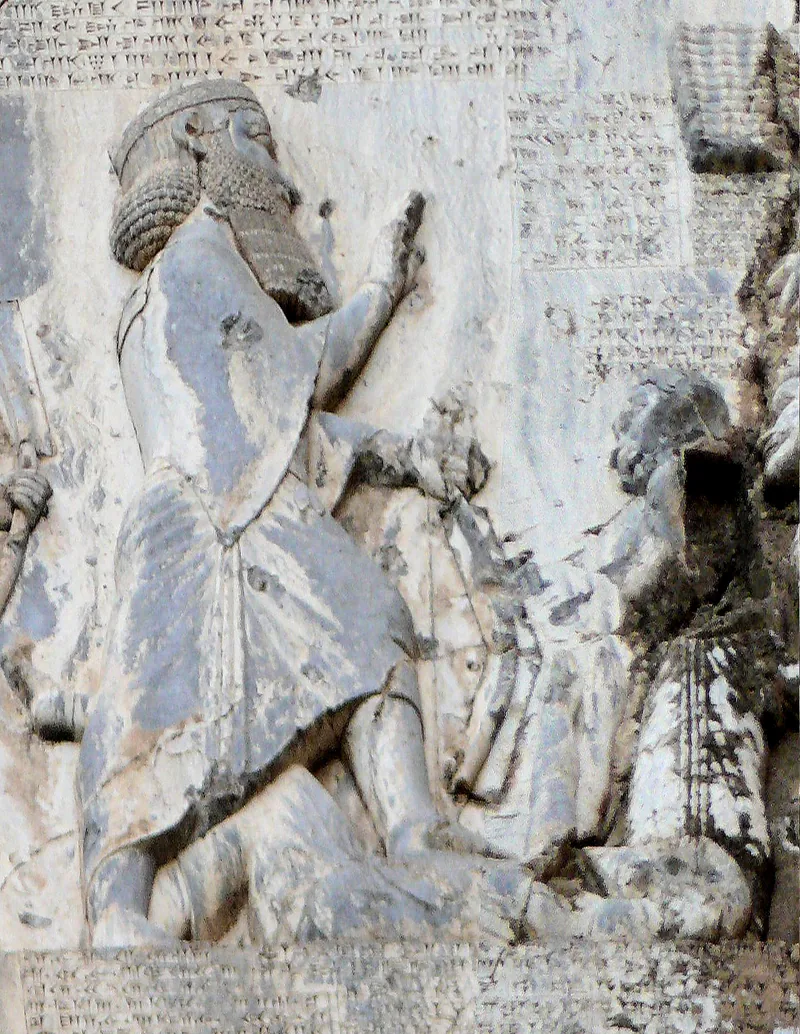
The Old Persian word magu- appears in the great inscription of Darius I at Bisitun (Behistun), carved around 520 BCE, which tells how a Magus named Gaumata seized the throne in 522 BCE by impersonating Bardiya, the brother of Cambyses, until Darius and his allies killed him. Whatever the truth of Darius's account, it shows that Magi held positions of influence at court. The Persepolis Fortification Tablets, administrative records in Elamite from the reign of Darius, list makuš (magi) receiving rations of grain, wine and animals for religious ceremonies, and the same archive records offerings to Ahura Mazda alongside other Iranian and Elamite gods, which suggests that the Magi served a broad Iranian religion rather than an exclusively Zoroastrian one.
The Greek historian Herodotus, writing in the fifth century BCE, describes the Magi as one of the six tribes of the Medes. According to him, no Persian sacrifice could take place without a Magus present to chant a song about the birth of the gods; the Magi interpreted dreams for the Median king Astyages; they killed ants, snakes and other noxious creatures as a pious duty; and they exposed their dead to birds and dogs before burial. Several of these practices correspond closely to later Zoroastrian custom — the duty to destroy creatures of Ahriman and the exposure of the dead described in Zoroastrian fire temples and ritual. How and when the Magi adopted the teaching of Zarathustra, who came from eastern Iran, is a matter of debate; by the Sasanian period the priesthood was fully Zoroastrian, and the Middle Persian title for a priest, mow or mowbed (modern mobed, from "chief of the Magi"), preserves their name.
The Magi in Greek and Roman Eyes§
Greek writers were fascinated by the Magi. Xenophon portrayed them as the religious advisers of Cyrus the Great, and Plato's Alcibiades I says that Persian princes were taught the Magian lore of Zoroaster, which it explains as the worship of the gods. The geographer Strabo, around the turn of the era, described Magi in Cappadocia tending ever-burning fires in fire temples, chanting while holding bundles of rods — the barsom still used in Zoroastrian ritual — and covering their mouths with felt flaps so as not to pollute the fire with their breath, exactly as Zoroastrian priests do today with the padan. Diogenes Laertius and others credited them with philosophical doctrines, including belief in two principles, good and evil, a reflection of the teaching described in Ahura Mazda and cosmic dualism.
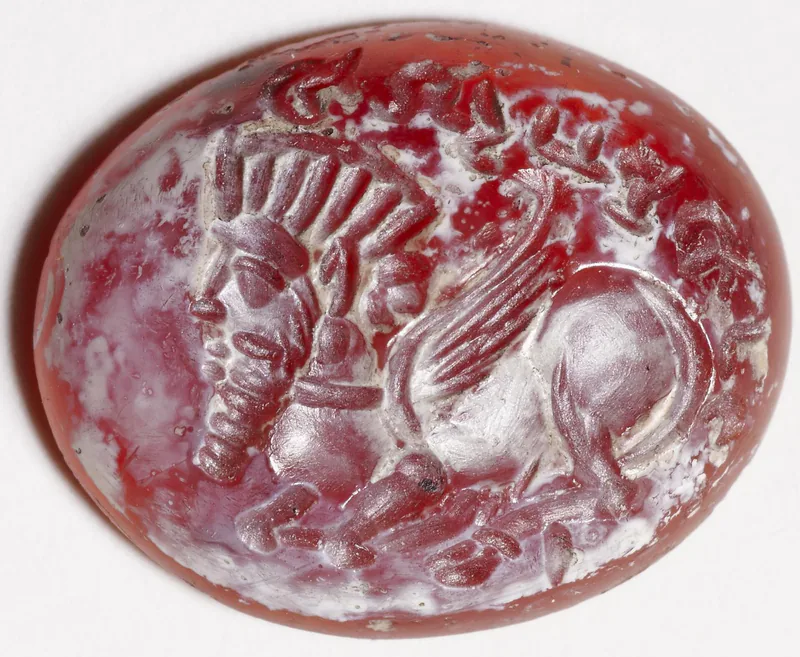
From Magos to Magic: How a Priestly Title Became a Word for Sorcery§
In Greek the term magos soon took on a second, less respectful meaning. By the fifth century BCE it could describe a wandering ritual expert or charlatan who claimed to control the gods by spells. The philosopher Heraclitus is reported to have threatened night-wanderers, magi and bacchants with punishment after death; Sophocles has Oedipus insult the prophet Tiresias as a scheming magos; and the Hippocratic treatise On the Sacred Disease attacks magi, purifiers, begging priests and charlatans who claimed to cure epilepsy with charms. From magos came mageia, the art of the Magi, and through Latin magia the English word "magic". The development is explored further in Greco-Roman magic and in What Is Magic?
The ambiguity never disappeared. For some ancient writers the Magi were sages possessing the oldest religious wisdom; for others they were sorcerers. The New Testament reflects both senses: the honoured Magi of Matthew's Gospel, and Simon Magus in Acts 8 and the magos Elymas in Acts 13, condemned as practitioners of sorcery.
The Hellenized Magi: Zoroaster and Ostanes as Masters of Secret Lore§
In the Hellenistic and Roman periods a substantial literature circulated in Greek under the names of Persian Magi, above all Zoroaster and Ostanes. These books, almost entirely lost and known through quotations, dealt with astrology, the properties of stones and plants, alchemy and magic; the Belgian scholars Joseph Bidez and Franz Cumont collected the fragments in Les Mages hellénisés (1938). Pliny the Elder, in the thirtieth book of his Natural History, presents magic as an art invented by Zoroaster in Persia and spread to Greece by Ostanes, who accompanied Xerxes on his invasion of Greece and supposedly taught the philosopher Democritus. Ostanes also appears as an authority in the Greek alchemical writings of late antiquity, while Zoroaster was named as the source of astrological works and, much later, of the Chaldean Oracles (see the Chaldean Oracles).
Modern scholars, notably Albert de Jong, have shown that Greek and Latin descriptions of the Magi mix genuine knowledge of Iranian religion with Greek fantasies about the exotic East. The "Hellenized Magi" of these books tell us more about Greek ideas of wisdom and magic than about Zoroastrian priests, who transmitted their own tradition orally in Avestan and Middle Persian.
The Magi of Matthew's Gospel§
The most famous Magi appear in Matthew 2, where "there came wise men from the east to Jerusalem", asking where the newborn king of the Jews was, for they had seen his star. Guided by the star to Bethlehem, they worshipped the child and offered gold, frankincense and myrrh, then returned home by another way after a warning in a dream. The Gospel does not say how many they were, nor that they were kings; the number three was inferred from the three gifts, and the idea that they were kings grew from reading prophecies such as Psalm 72, in which the kings of Tarshish, Sheba and Seba bring gifts. The names Caspar, Melchior and Balthasar are first found in sources of about the sixth century.
Early Christian art usually showed them in Persian dress with Phrygian caps, as in the sixth-century mosaics of Sant'Apollinare Nuovo in Ravenna. A ninth-century letter preserves a story that Persian soldiers in 614 spared the Church of the Nativity in Bethlehem because its mosaic of the Magi depicted them in Persian costume. Their supposed relics were taken from Milan to Cologne in 1164, where they rest in the Shrine of the Three Kings. A Syriac apocryphon known as the Revelation of the Magi, preserved in an eighth-century chronicle, tells the story from the Magi's own point of view. Scholars debate whether Matthew's Magi were imagined as Zoroastrian priests, Babylonian astrologers or simply wise men of the East; the story's astrological element has long attracted interest (see astrology).
The Magus in Medieval and Renaissance Thought§
In medieval Europe "magus" could mean both the wise man of the Gospel and the necromancer condemned by the Church. In the Renaissance, humanists such as Marsilio Ficino and Giovanni Pico della Mirandola revived the honourable sense, presenting the magus as a sage who understood the hidden harmonies of nature, and placing Zoroaster at the head of a line of ancient theologians beside Hermes Trismegistus. Pico distinguished this natural magic, which he praised as the highest part of natural philosophy, from demonic sorcery. This ideal of the learned magus shaped Agrippa's Three Books of Occult Philosophy and much of later Western esotericism, a long way from the ritual priests of the Median court. The religion the historical Magi served is introduced in What Is Zoroastrianism?
Frequently asked questions§
Were the Magi Zoroastrians?§
The Magi were the priestly class of western Iran and became the priests of Zoroastrianism. In the Achaemenid period they also served other Iranian gods, and scholars debate when the priesthood as a whole adopted Zarathustra's teaching; by the Sasanian period it was fully Zoroastrian.
Does the word "magic" come from the Magi?§
Yes. The Greek magos, borrowed from Old Persian magu-, gave rise to mageia, "the art of the Magi", and from there to Latin magia and English "magic". By the fifth century BCE the Greek word could already mean sorcery.
How many Magi visited Jesus?§
Matthew's Gospel does not give a number. Western tradition settled on three because of the three gifts of gold, frankincense and myrrh, while some Eastern Christian traditions spoke of twelve.
Sources and further reading§
- Traditions of the Magi: Zoroastrianism in Greek and Latin Literature — Albert de Jong, 1997
- Les Mages hellénisés — Joseph Bidez & Franz Cumont, 1938
- The Histories — Herodotus, c. 430 BCE
- A History of Zoroastrianism, Volume II: Under the Achaemenians — Mary Boyce, 1982
- Revelation of the Magi: The Lost Tale of the Wise Men's Journey to Bethlehem — Brent Landau, 2010
- Magic in the Ancient World — Fritz Graf, 1997