Liber III · Black & White Magic
What Is Magic? Definitions, History and Major Traditions
What is magic? An overview of how magic has been defined, its history from antiquity to modern occultism, and the meaning of black, white and natural magic.

Magic, in the sense used by historians of religion, is the attempt to influence events, people or the natural world through ritual, symbols, words of power and appeals to hidden forces or spiritual beings, rather than through ordinary physical means. What counts as magic has always depended on who is speaking: the same act could be called prayer, medicine, sorcery or superstition, and for most of history "magic" was a label applied to other people's rituals before it became a self-description of modern occultists.
The Word and Its Many Meanings§
"Magic" reached English through Latin magia from Greek mageia. The Greeks borrowed it from Old Persian, where the magu- were a priestly class. By the fifth century BCE, Greek writers were using magos for itinerant ritual experts who sold purifications and spells, often with contempt, and the term sat alongside goēteia, sorcery, and pharmakeia, the use of drugs and charms. The history of these terms is traced in What Is Ancient Magic?
From the start, therefore, magic was defined in contrast to approved religion. It was private rather than public, secret rather than open, self-interested rather than communal, foreign rather than native. Those contrasts have persisted, which is why scholars often warn that "magic" is less a neutral description than a boundary marker. Their arguments are surveyed in Theories of Magic.
Modern English adds another layer: "magic" also refers to stage conjuring, the art of illusion. Partly to avoid this confusion, and partly to mark a philosophical programme, Aleister Crowley adopted the older spelling "magick" in the early twentieth century and defined it as "the Science and Art of causing Change to occur in conformity with Will". The spelling is now common among Thelemites, chaos magicians and many contemporary occultists.
Magic in Antiquity§
The ancient Near East and Mediterranean produced a rich record of ritual practice for healing, protection, love, cursing and divination. In Egypt, heka was a divine power used openly by priests; in Mesopotamia, exorcists recited incantations against demons and witches; in Greece and Rome, people commissioned lead curse tablets and amulets, and the Greek Magical Papyri preserved handbooks of spells. Late antique Platonists developed theurgy, a philosophical ritual path to the gods, and contrasted it with base sorcery. These worlds are covered in Greco-Roman Magic and Mesopotamian Magic.
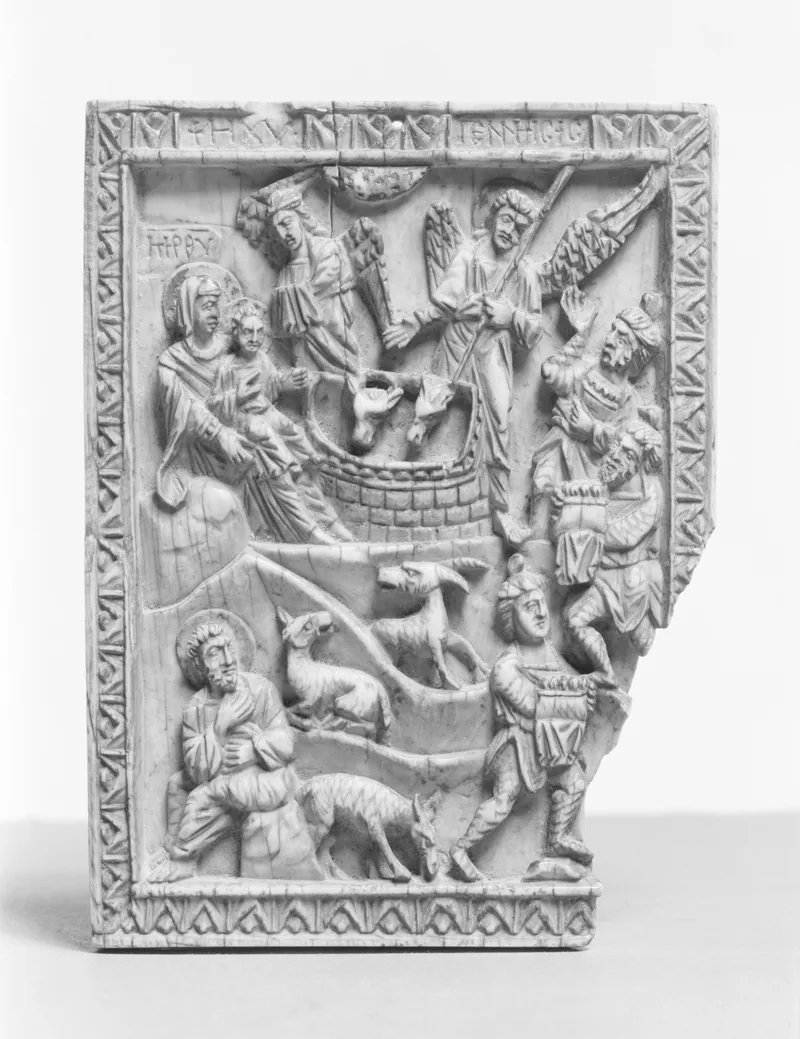
Early Christian writers, above all Augustine of Hippo, transformed the debate by arguing that all magic depended on pacts with demons. A charm or sign could only work, he reasoned, because a demon recognised it as a signal. This theory made magic a matter of religious allegiance as well as of harm, and it shaped European attitudes for more than a thousand years.
Medieval and Renaissance Magic§
Medieval Europe knew many forms of magic. Richard Kieckhefer distinguished a "common tradition" of charms, herbal remedies, protective prayers and simple divination, shared by clergy and laity, from the learned ritual magic of clerics who conjured angels and demons with books such as the Key of Solomon and the Sworn Book of Honorius. The latter, called nigromantia or necromancy, is described in Necromancy in the Middle Ages.
Translations from Arabic in the twelfth and thirteenth centuries brought astrological image magic, the Picatrix and new theories of occult causation. Theologians responded by distinguishing natural magic, which used the hidden virtues of stones, plants and stars, from demonic magic. In the Renaissance, Marsilio Ficino, Giovanni Pico della Mirandola and Cornelius Agrippa defended an elevated magic rooted in Neoplatonism, Hermetism and Kabbalah; Agrippa's Three Books of Occult Philosophy (1533), discussed in Agrippa's Three Books of Occult Philosophy, became the encyclopedia of Western magic. John Dee's angelic conversations, recorded in his diaries and described in Enochian Magic, show how such ideals could be pursued in practice.
The same period saw the great witch hunts, in which the crime of witchcraft combined harmful magic with the demonic pact and the sabbath. Tens of thousands of people were executed, as described in The European Witch Trials.
Black, White, High and Low Magic§
Several pairs of terms recur in the history of magic. Black and white magic distinguish harmful or demonic from beneficial or holy practice; their history is traced in Black Magic: A History and White Magic: A History. Theurgy and goetia express a similar contrast between divine work and sorcery. Natural and demonic magic separate operations through physical sympathies from operations through spirits.
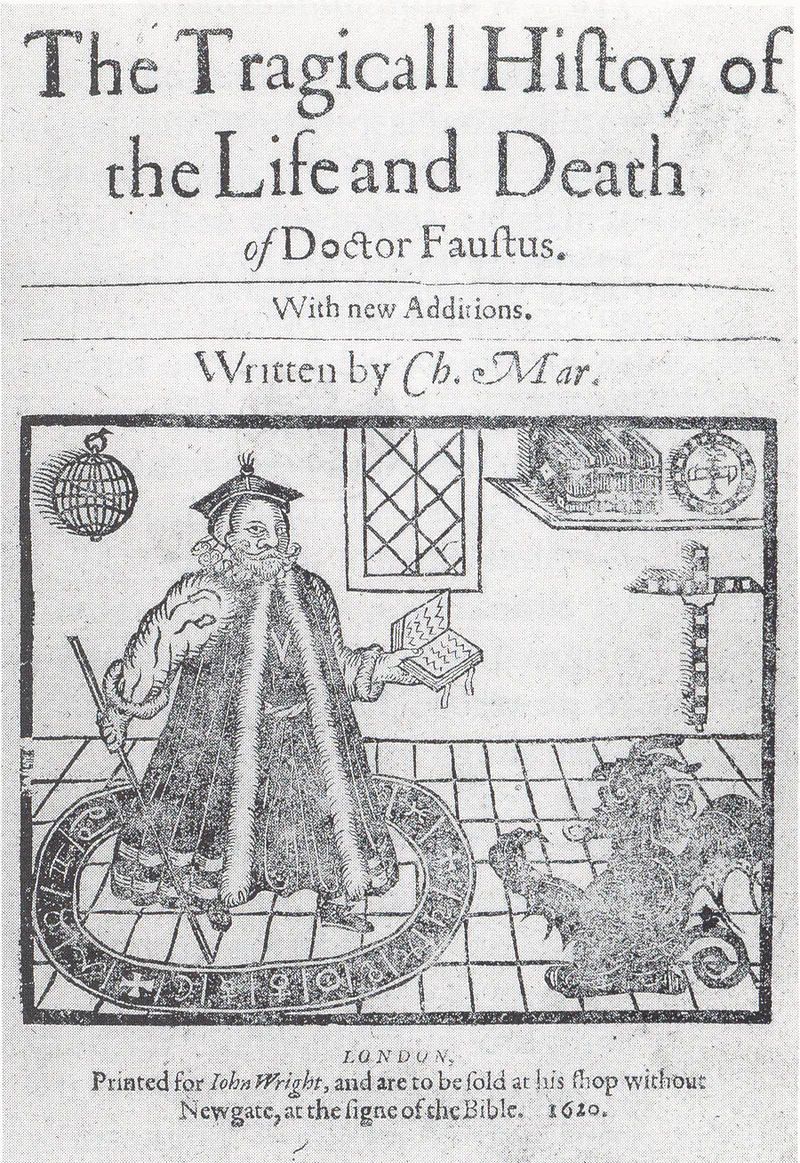
High and low magic, a distinction popular among nineteenth- and twentieth-century occultists, contrast learned ceremonial magic aimed at spiritual attainment with practical folk magic aimed at everyday results; see Folk Magic. Historians treat these pairs with caution, because they usually reflect the speaker's values. One person's healing charm was another's diabolical superstition, and the "white" magic of a Renaissance philosopher could look black to an inquisitor.
Magic in the Modern Occult Revival§
From the mid-nineteenth century, magic was redefined by people who embraced it. Éliphas Lévi, whose career is described in Éliphas Lévi, presented "high magic" as a synthesis of Kabbalah, tarot and a universal "astral light" governed by the trained will. The Hermetic Order of the Golden Dawn, founded in London in 1888, organised ceremonial magic into a graded system of initiation. Aleister Crowley built on it to create Thelema.
In the twentieth century, Gerald Gardner's Wicca made magic part of a modern pagan religion, Satanists and left-hand path groups reinterpreted it as self-deification, and chaos magicians treated belief itself as a tool. Other modern currents explored the relationship between magic and sexuality, discussed in Sex Magick, or translated magical ideas into psychological and self-help language, as in the New Thought movement. Most modern practitioners describe magic in psychological, spiritual or energetic terms rather than as a literal compulsion of demons.
How Scholars Approach Magic Today§
Nineteenth-century anthropologists such as Edward Tylor and James Frazer saw magic as a mistaken, primitive science. Twentieth-century scholars challenged this, studying magic as meaningful social action, performative speech or a way of managing uncertainty. More recently, historians such as Wouter Hanegraaff, Randall Styers and Bernd-Christian Otto have argued that "magic" is above all a polemical category, invented to separate acceptable from unacceptable religion, and that its meaning must be reconstructed in each historical context.
This does not mean that the word is useless. It remains a convenient way to gather a family of related practices, from amulets and curses to ritual invocation, and it is the term practitioners themselves now use. The rest of this section of the library explores these practices one by one, including protective magic, maleficium and curses and necromancy.
Frequently asked questions§
What is the simplest definition of magic?§
A common working definition is the use of ritual, symbols and words believed to have power in order to influence events, people or nature by non-ordinary means. Scholars add that the boundary between magic, religion and science is culturally drawn and has shifted over time.
What is the difference between magic and magick?§
"Magick" is an older spelling revived by Aleister Crowley to distinguish ritual and spiritual practice from stage conjuring and to express his own definition of magick as change in conformity with will. Many modern occultists use it; historians generally use "magic".
Is magic the same as witchcraft?§
Not historically. In early modern Europe "witchcraft" meant harmful magic performed through a pact with the devil, a crime that many accused people never committed. Magic was a much broader category that included learned ceremonial practice, healing charms and divination.
Do scholars think magic works?§
Historians and anthropologists generally set aside the question of efficacy and ask instead what magic meant to people, how it functioned socially and why it was condemned or valued. Some psychologists and anthropologists study the placebo effect, ritual and expectation as factors in reported results.
Sources and further reading§
- Magic in the Middle Ages — Richard Kieckhefer, 1989
- Magic in the Ancient World — Fritz Graf, 1997
- Religion and the Decline of Magic — Keith Thomas, 1971
- Magic in Western Culture: From Antiquity to the Enlightenment — Brian P. Copenhaver, 2015
- Esotericism and the Academy: Rejected Knowledge in Western Culture — Wouter J. Hanegraaff, 2012
- Making Magic: Religion, Magic, and Science in the Modern World — Randall Styers, 2004
- The Place of Enchantment: British Occultism and the Culture of the Modern — Alex Owen, 2004
- Magick in Theory and Practice — Aleister Crowley, 1929
- Three Books of Occult Philosophy — Heinrich Cornelius Agrippa, 1533
- The Cambridge History of Magic and Witchcraft in the West — David J. Collins (ed.), 2015