Liber XXIV · Satanism · Chapter III: Left-Hand Path
The Left-Hand Path: From Tantric Vamachara to Modern Occultism
The left-hand path explained: its origins in tantric vamachara, its use for black magic by Theosophists, and its reclaiming by Setians and Satanists.

The left-hand path is a term with two very different histories. In Indian tantra, vāmamārga or vāmācāra, the "left-hand way", denoted lineages that used ritually transgressive substances and acts, in contrast to the conventional "right-hand" practice. In Western occultism the phrase was adopted in the late nineteenth century as a label for black magic and selfish spirituality, and from the 1970s it was reclaimed by Setians, Satanists and other esotericists as the name of a path of self-deification, individual sovereignty and antinomian initiation.
Vāmācāra: The Left-Hand Way in Tantra§
In South Asia the right hand is associated with purity and auspicious action, the left with impurity. Tantric traditions, which developed in Shaiva, Shakta and Buddhist forms from around the middle of the first millennium CE, distinguished between "right-hand" (dakṣiṇa) and "left-hand" (vāma) modes of practice. Left-hand practitioners, especially in Kaula lineages devoted to fierce goddesses, deliberately used substances and acts that orthodox Brahmanical norms forbade, summarised in later texts as the "five Ms" (pañcamakāra): wine, meat, fish, parched grain or gesture, and ritual union.
The purpose was not hedonism but the transcendence of dualities such as pure and impure, and the realisation that the divine pervades everything. Many tantric authorities, including commentators in the tradition of Abhinavagupta in tenth- and eleventh-century Kashmir, interpreted these elements in highly internalised or symbolic ways, and right-hand schools substituted permissible items. The wider context is set out in Tantra: History and Practice and Kundalini Yoga. Scholars stress that the Indian left-hand way bears little resemblance to its later Western namesake.
The Phrase Enters Western Occultism§
Western awareness of vāmācāra came through orientalist scholarship and missionaries in the nineteenth century, who often presented it as degenerate. The Theosophical Society, founded in 1875, took up "left-hand path" as a moral category. In Theosophical and related writing, the right-hand path was the way of selfless service, spiritual evolution and the White Brotherhood of masters; the left-hand path was the way of the "Brothers of the Shadow", sorcerers who sought power for themselves.
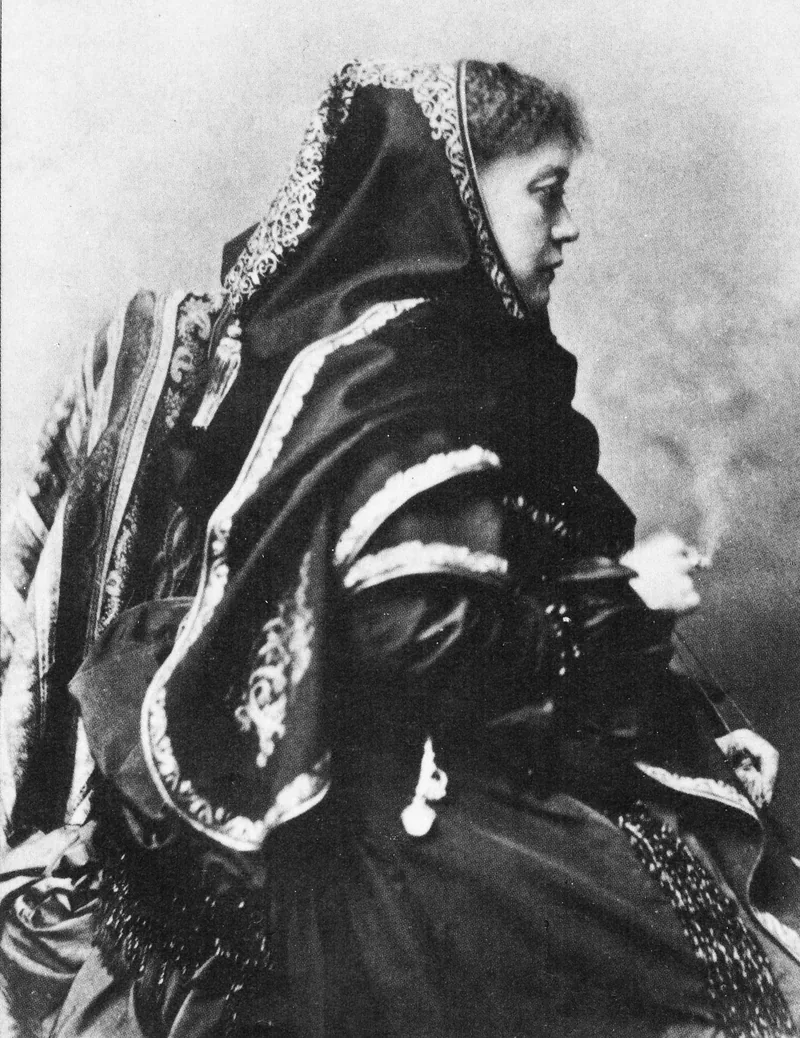
This dichotomy spread widely. Dion Fortune and other twentieth-century occultists equated the left-hand path with black magic, and Aleister Crowley, although himself denounced as a black magician, wrote of "Black Brothers" who refuse to surrender the ego at the abyss of spiritual attainment. In these usages the left-hand path was always someone else's path. The parallel history of the term "black magic" is traced in Black Magic: A History.
Reclaiming the Left-Hand Path: Satanism and the Temple of Set§
The decisive reversal came with organised Satanism. Anton LaVey's Church of Satan, founded in 1966, celebrated carnality, individualism and self-interest, implicitly embracing what Theosophists had condemned. But it was Michael Aquino, a former Church of Satan priest, who made the left-hand path a central concept. In 1975 he founded the Temple of Set, whose members seek Xeper, "coming into being", through the conscious development of the individual psyche, which they see as a gift of the god Set, the principle of isolate intelligence. The history of this movement is told in The Temple of Set and the Left-Hand Path.
In Setian thought the right-hand path seeks the dissolution of the self in God, nature or the cosmos, whereas the left-hand path seeks the preservation, strengthening and eventual divinisation of the individual consciousness. This reframing turned an accusation into a philosophy, and it has been adopted by many later groups.
Other Modern Left-Hand Path Currents§
Several other organisations and authors have shaped the modern left-hand path. Kenneth Grant's Typhonian tradition explored the "Nightside" of the Tree of Life, the realm of the qliphoth or shells, in books such as Nightside of Eden (1977). Stephen Flowers, a former Setian who also writes as Edred Thorsson, offered a historical and philosophical survey in Lords of the Left-Hand Path (1997), which surveyed figures from ancient Egypt to the twentieth century under this lens, though historians regard many of its inclusions as retrospective.
In Sweden, Thomas Karlsson founded Dragon Rouge around 1989 as an initiatory order combining the left-hand path with Qabalah, Nordic mythology, tantra and the qliphoth. The scholar Kennet Granholm has studied it in detail. More radical networks, such as the Order of Nine Angles, also claim the label, but their association with extremism has made them highly controversial, and most left-hand path practitioners repudiate them. Theistic Satanists and Luciferians, described in Theistic Satanism and Luciferianism, often consider themselves left-hand path as well.
Key Ideas: Self-Deification and Antinomianism§
Despite their diversity, modern left-hand path movements share several recurring themes. First, self-deification: the aim of becoming a god-like, autonomous being, rather than merging into a greater whole. Second, antinomianism: the deliberate breaking of moral and religious taboos as a means of liberation from conditioning, usually understood symbolically or psychologically. Third, the embrace of darkness as a source of power and knowledge, expressed through imagery of Set, Satan, Lilith, the qliphoth or the "dark goddess". Fourth, a strong emphasis on individual responsibility, since there is no external saviour.
These themes link the left-hand path to Nietzsche, to Romantic Satanism, to Crowley's Thelema and to modern psychology. Writers often present it as an elite path for the few, a claim critics see as self-flattering. The relationship between left-hand path ideas and Satanism more broadly is explained in What Is Satanism?
Debates and Criticisms§
The Western left-hand path has been criticised on several fronts. Indologists object that it borrows a Sanskrit term while ignoring the actual meaning of vāmācāra, which aimed at non-dual liberation rather than the preservation of the ego; Hugh Urban has analysed how Western esotericists constructed an image of tantra suited to their own purposes. Right-hand path occultists continue to regard it as spiritually dangerous egotism. Ethical critics point to the presence of extremist groups on its fringes.
Defenders reply that the term has acquired an independent Western meaning, that self-development is a legitimate spiritual aim and that most practitioners are law-abiding individualists. Scholars such as Kennet Granholm argue that the left-hand path is best understood as a discourse: a set of ideas and terms that groups use to define themselves against mainstream religion and the "right-hand" esoteric establishment.
Frequently asked questions§
What is the difference between the left-hand path and the right-hand path?§
In modern Western usage, the right-hand path seeks union with God or the cosmos and the transcendence of the ego, while the left-hand path seeks the strengthening and divinisation of the individual self. In tantra, the distinction instead concerned whether ritual used normally forbidden substances and acts.
Is the left-hand path the same as Satanism?§
Not exactly. Many Satanists consider themselves left-hand path practitioners, but the category also includes Setians, Dragon Rouge members, Typhonian magicians and others who do not identify as Satanists.
Is the left-hand path evil?§
Its critics have long described it as black magic, but practitioners understand it as a path of self-development and individual sovereignty. Like any religious label, it covers people with a wide range of ethics, and most groups reject harm to others.
Where does the term left-hand path come from?§
It translates the Sanskrit vāmamārga or vāmācāra, used in Indian tantric traditions. Western occultists, especially Theosophists, adopted it in the late nineteenth century as a term for black magic before later groups reclaimed it.
Sources and further reading§
- Dark Enlightenment: The Historical, Sociological, and Discursive Contexts of Contemporary Esoteric Magic — Kennet Granholm, 2014
- Lords of the Left-Hand Path: A History of Spiritual Dissent — Stephen E. Flowers, 1997
- Tantra: Sex, Secrecy, Politics, and Power in the Study of Religion — Hugh B. Urban, 2003
- The Church of Satan — Michael A. Aquino, 2002
- Nightside of Eden — Kenneth Grant, 1977
- Qabalah, Qliphoth and Goetic Magic — Thomas Karlsson, 2004
- The Devil's Party: Satanism in Modernity — Per Faxneld and Jesper Aagaard Petersen (eds), 2013
- Tantra in Practice — David Gordon White (ed.), 2000
- Kiss of the Yoginī: "Tantric Sex" in Its South Asian Contexts — David Gordon White, 2003
- The Satanic Bible — Anton Szandor LaVey, 1969