Liber XIX · Judaism · Chapter IV: Jewish Folklore & Magic
Lilith in Jewish Folklore: From Night Demon to First Eve
Lilith in Jewish folklore: her Mesopotamian roots, the Talmud and incantation bowls, the Alphabet of Ben Sira, childbirth amulets and her modern revival.

Lilith is a female night demon of Jewish folklore, feared above all as a threat to newborn children and women in childbirth and as a seducer of sleeping men. She appears only once, and obscurely, in the Hebrew Bible, but grew through the Talmud, the Aramaic incantation bowls and the medieval Alphabet of Ben Sira — which first made her Adam's rebellious first wife — into one of the best-known figures of Jewish demonology.
Lilith's Origins in Mesopotamian Demonology§
Most scholars trace Lilith to a class of Mesopotamian demons known in Akkadian as lilû (male), lilītu (female) and ardat lilî, "the maiden of the lilû". These were spirits of the wind and the night, often described as restless beings who had died young or unmarried and who preyed on the living, especially on men, whom they visited at night, and on young couples. Their name was probably connected with a Sumerian word for wind or air, though a link with the Hebrew word laylah, "night", was naturally made by later Hebrew speakers and shaped how they understood her.
A Sumerian poem about Gilgamesh and the huluppu tree mentions a "maiden" spirit who made her home in the trunk of a tree planted by the goddess Inanna; some translators have called her Lilith, though the identification is debated. The famous terracotta "Burney Relief" (c. 1800 BCE) in the British Museum, showing a winged, bird-footed goddess, was long popularly labelled "Lilith", but most specialists now identify the figure as a goddess such as Ishtar or Ereshkigal. Lilith's later role as a killer of infants also overlaps with the Mesopotamian demoness Lamashtu, described in Lamashtu and Pazuzu, against whom pregnant women wore protective plaques.
Lilith in the Hebrew Bible and the Dead Sea Scrolls§
The only biblical mention of Lilith is in Isaiah 34, a prophecy of the devastation of Edom. The ruined land will become a haunt of wild animals and desert creatures, and "there shall lilit rest". The context lists jackals, ostriches, wild goats and birds, and translators have long disagreed about whether lilit here is a demon or an animal. The King James Version renders it "the screech owl"; the Latin Vulgate chose lamia, a child-devouring monster of Greek legend; many modern translations prefer "night monster" or simply "Lilith".
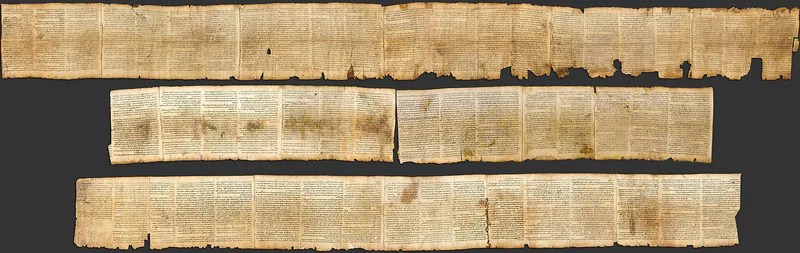
Among the Dead Sea Scrolls, a collection of protective hymns known as the Songs of the Sage (4Q510–511), composed to frighten away evil spirits, lists "liliths" among the demons — evidence that by the late Second Temple period the word named a class of malevolent beings in Jewish belief. The scrolls are discussed more fully in the Dead Sea Scrolls.
Lilith in the Talmud and the Incantation Bowls§
The Babylonian Talmud mentions Lilith only in passing, but its remarks show a settled popular image. She has long hair, which the Talmud cites when discussing a woman who "grows her hair like Lilith"; she has wings; and a man is warned not to sleep alone in a house, lest Lilith seize him. Another passage speaks of the spirits and demons that Adam fathered during the long years after his expulsion from Eden — an idea that medieval writers later connected with Lilith. A miscarried foetus with a Lilith-like form is also discussed as a matter of ritual law, suggesting that she was associated with difficult births.
The richest ancient evidence comes from the Aramaic incantation bowls buried under the floors of houses in Sasanian Mesopotamia between about the fifth and seventh centuries CE (see Jewish incantation bowls). Many are aimed at "liliths", male and female, who harm children, cause miscarriage and haunt marriage beds. A recurring formula treats the demon as an unwanted wife and serves her with a get, a bill of divorce, modelled on the Jewish legal document, ordering her to leave the house. Some bowls show a drawing of a bound demoness with wild hair at the centre. The bowls show Lilith not yet as a single named individual with a biography but as a type of night demon, sometimes led by a "Lilith" with a personal name.
The Alphabet of Ben Sira and the First Wife of Adam§
The story most people now associate with Lilith — that she was Adam's first wife — appears first in the Alphabet of Ben Sira, an anonymous Hebrew work usually dated between the eighth and tenth centuries. The book is a mixture of proverbs and stories, often irreverent and satirical in tone, framed around the boyhood of the sage Ben Sira at the court of Nebuchadnezzar. Scholars disagree on how seriously it was meant, but its tale of Lilith was widely copied.
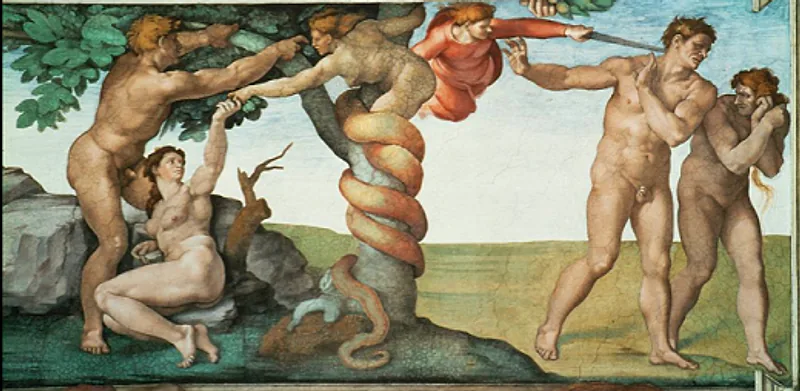
In the story, the king's son falls ill and Ben Sira writes an amulet bearing the names of three angels. Asked to explain, he tells how God created Lilith from the earth, like Adam, as his partner. The two quarrelled at once because Lilith refused to lie beneath Adam, saying that they were equals, both made from the earth. When Adam would not yield, she pronounced the Ineffable Name of God and flew away. At Adam's complaint God sent three angels, Senoy, Sansenoy and Semangelof, who found her by the Red Sea and threatened that a hundred of her children would die every day if she did not return. She refused, declaring that she had been created to harm newborns — boys until the eighth day, girls until the twentieth — but swore that she would not harm any child protected by an amulet bearing the angels' names or images.
The tale explained several things at once: the apparent duplication of the creation of woman in Genesis 1 and Genesis 2, the origin of the demon that threatened infants, and the authority of the amulet. Scholars have also noted its close parallels with Christian charms of the Byzantine and Near Eastern world, in which saints such as Sisinnios pursue a child-stealing demoness, often called Gello or Gylou, and force her to reveal her secret names — an indication that the motif circulated across religious boundaries.
Amulets Against Lilith and the Protection of Childbirth§
From the Middle Ages into the twentieth century, Lilith was chiefly a figure of household protective magic, described in Jewish magic and folklore. In Ashkenazi and Sephardi communities alike, the room of a woman in labour and her newborn was guarded by amulets, known in Yiddish as kimpet-tsetl, "childbed notes". They typically included Psalm 121, the names of the three angels, sometimes simple drawings of them, and the formula "Adam and Eve — out, Lilith!" A printed version of such an amulet appears in the kabbalistic compendium Sefer Raziel ha-Malakh, first published in Amsterdam in 1701, which helped standardise the design.
Other customs were added. Chalk circles were drawn around the bed, and the walls marked with protective verses; the night before a boy's circumcision, relatives and neighbours kept watch with study and prayer (the Wachnacht) because the infant was thought especially vulnerable. Folk explanations attributed a baby's laughter in sleep to Lilith playing with it, and some advised tapping the child's nose to drive her away. Men were warned about nocturnal emissions, which were believed to give Lilith the material for demonic offspring. These customs belong to the wider tradition of angelic amulets in Jewish and Christian folk practice. Rabbinic authorities varied in their attitude: some tolerated or even composed such amulets, while rationalists such as Maimonides rejected belief in demons as superstition.
Lilith in Kabbalah and Modern Culture§
In medieval Kabbalah, Lilith acquired a cosmic role. Thirteenth-century Castilian kabbalists, notably Isaac ha-Kohen in his treatise on the "left emanation", described two Liliths, and the Zohar presents Lilith as the consort of Samael, the angel of death and lord of the demonic realm. She becomes the dark counterpart of the Shekhinah, the female presence of God, a seductress who rules the "other side" (sitra ahra). In some later traditions she was even said to be one of the four queens of demons, together with Naamah, Agrat bat Mahlat and Mahalath. These developments belong more to mystical speculation than to everyday folk belief, but they fed back into the amulet tradition.
In modern times Lilith left the nursery for the arts. Goethe gave her a cameo in the Walpurgis Night scene of Faust; Dante Gabriel Rossetti painted Lady Lilith (1866–68) and wrote a sonnet about her; John Collier's Lilith (1887) shows her entwined with a serpent; George MacDonald wrote the fantasy novel Lilith (1895). From the 1970s Jewish feminists reinterpreted the figure. Judith Plaskow's short midrash "The Coming of Lilith" (written in 1972) imagines Lilith and Eve becoming allies, and Lilith magazine, founded in 1976, took her name as a symbol of a woman who insists on equality. Some contemporary pagan and occult writers have also adopted her as a goddess or dark feminine archetype — a modern reading that should be distinguished from the demon of the Jewish sources.
Frequently asked questions§
Is Lilith in the Bible?§
The word lilit appears once, in Isaiah 34:14, in a list of creatures inhabiting the ruins of Edom. Translators disagree whether it names a demon or an animal; the King James Version has "screech owl". The Bible does not mention Lilith as Adam's wife.
Where does the story of Lilith as Adam's first wife come from?§
It comes from the Alphabet of Ben Sira, a Hebrew work usually dated between the eighth and tenth centuries. Earlier rabbinic sources discuss a "first Eve" and mention Lilith as a demon, but the full story of her equality, her flight and the three angels appears there first.
Why did Jews use amulets against Lilith?§
Lilith was believed to threaten women in childbirth and newborn infants. Following the Alphabet of Ben Sira, families hung amulets bearing the names of the angels Senoy, Sansenoy and Semangelof, often with Psalm 121, around the birth room as protection.
Is Lilith a goddess?§
In Jewish tradition she is a demon, never a goddess. Some modern feminist, pagan and occult writers have reinterpreted her as a divine or archetypal feminine figure, but that is a recent development rather than an ancient belief.
Sources and further reading§
- The Hebrew Goddess — Raphael Patai, 1967
- Jewish Magic and Superstition — Joshua Trachtenberg, 1939
- Amulets and Magic Bowls: Aramaic Incantations of Late Antiquity — Joseph Naveh and Shaul Shaked, 1985
- Aramaic Incantation Texts from Nippur — James A. Montgomery, 1913
- Rabbinic Fantasies: Imaginative Narratives from Classical Hebrew Literature — David Stern and Mark Jay Mirsky (eds.), 1990
- Lilith's Cave: Jewish Tales of the Supernatural — Howard Schwartz, 1988
- Tree of Souls: The Mythology of Judaism — Howard Schwartz, 2004