Liber XX · Kabbalah · Chapter IX: The Sefirot
The Shekhinah: Divine Presence and the Feminine in Kabbalah
The Shekhinah explained: God's indwelling presence in rabbinic Judaism, its feminine image in the Bahir and Zohar, Malkhut, exile and the Sabbath bride.

The Shekhinah (also spelled Shekinah) is the Hebrew term for the indwelling presence of God in the world. In rabbinic literature it is simply a way of speaking about God's nearness, especially among the people of Israel; in medieval Kabbalah it becomes the tenth sefirah, Malkhut, imagined as a feminine aspect of the divine: bride, queen, mother and the moon. The history of the Shekhinah is therefore the history of how Jewish mysticism came to speak of a feminine dimension within the one God.
The Meaning of Shekhinah: Dwelling and Presence§
The noun Shekhinah does not occur in the Hebrew Bible, but the root from which it derives is everywhere. In Exodus 25:8 God commands, "let them make me a sanctuary; that I may dwell among them", using the verb shakhan, and the portable sanctuary is called the mishkan, the "dwelling". The cloud and glory that fill the Tabernacle and later the Temple of Solomon, described in the Hebrew Bible, are the biblical background to the idea of a divine presence that dwells in a particular place without being confined by it.
In the Aramaic Targums, the ancient translations read in the synagogue, the word Shekhinta often replaces direct statements that God was seen or was present, softening anthropomorphism: instead of "God dwelt", the Targum says that God caused his Shekhinah to dwell. The term thus served from the start as a reverent way of speaking about divine presence while preserving God's transcendence.
The Shekhinah in Rabbinic Literature§
In the Mishnah, Talmud and Midrash the Shekhinah is a common name for God as present and active. The Mishnah teaches in Pirkei Avot that when even two people sit together and exchange words of Torah, the Shekhinah rests between them, and later sayings extend this to ten who pray together. The Talmud says that the Shekhinah rests on a person only through joy, not through sadness or idleness; that it stands at the head of the sick; and that it departed from the Second Temple because of sin.
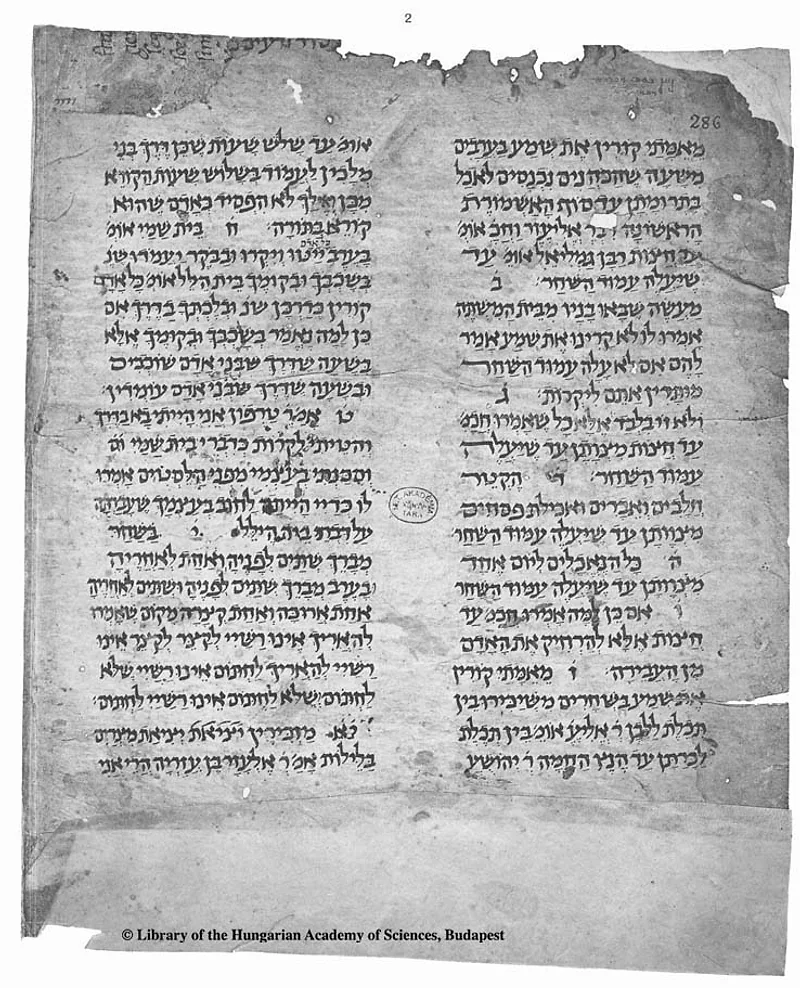
The most influential rabbinic teaching is that the Shekhinah went into exile with Israel. The Babylonian Talmud (Megillah 29a) states that wherever Israel was exiled, the Shekhinah went with them, to Egypt, to Babylon and beyond, and will return with them at the redemption. In these sources the Shekhinah is not a separate being or a feminine principle; the grammatical feminine of the noun carries no special theological weight, and the Shekhinah is interchangeable with "the Holy One, blessed be He". Medieval rationalists such as Saadia Gaon and Maimonides went further and interpreted the Shekhinah as a created light or glory, distinct from God's essence, in order to avoid any suggestion of corporeality.
The Shekhinah Becomes Feminine: The Bahir and Early Kabbalah§
The decisive change appears in the Sefer ha-Bahir, the earliest text of medieval Kabbalah, which surfaced in Provence in the late twelfth century. The Bahir speaks of the Shekhinah in parables of a king and his daughter, a princess who is given in marriage, and as a feminine power at the lowest rung of the divine powers, the "tenth" through which the other nine act in the world. It distinguishes an upper and a lower Shekhinah, foreshadowing the later identification of the upper with the sefirah Binah, the supernal mother, and the lower with Malkhut.
Gershom Scholem regarded this feminine Shekhinah as one of the most important innovations of Kabbalah, with no clear precedent in rabbinic Judaism, and speculated about Gnostic influences. In Mirror of His Beauty (2002), Peter Schäfer proposed that the Christian veneration of the Virgin Mary, which flourished in the same twelfth-century Europe, may have contributed to the new image; Arthur Green made a related argument about the Song of Songs and Marian devotion. Others stress internal Jewish sources, such as the rabbinic personification of the community of Israel (Knesset Yisrael) as God's bride and of the Sabbath as a queen.
Malkhut in the Zohar: Bride, Queen, Moon and Community of Israel§
In the Zohar, the Shekhinah is identified with Malkhut, "Kingship", the tenth of the ten sefirot. She receives the flow of divine life from the sefirot above, especially from Tiferet, called "the Holy One, blessed be He", and transmits it to the worlds below. Having no light of her own, she is compared to the moon, which waxes and wanes. The Zohar gives her a rich cluster of symbols: the Matronita (Lady or Queen), the bride of the Song of Songs, the sea into which all rivers flow, the apple orchard, the Oral Torah, King David, Rachel and the community of Israel.
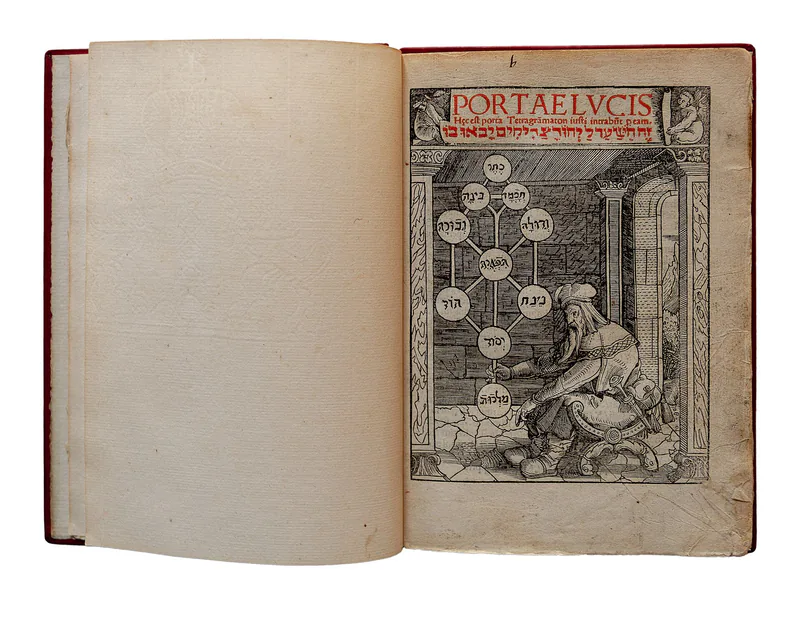
The central drama of Zoharic theology is the relationship between Tiferet and Malkhut. When Israel lives according to the Torah, the divine male and female are united, blessing flows into the world and the Shekhinah shines. Sin separates them, and the Shekhinah is exposed to the forces of the "Other Side", the realm of evil. The Shekhinah also has a stern aspect: as the channel of judgement she is sometimes associated with the attribute of severity. Elliot Wolfson has argued that despite this rich feminine imagery, Zoharic thought remains strongly androcentric, ultimately absorbing the feminine into the masculine.
Exile and Union: The Shekhinah in Prayer and Ritual§
From the Zohar onward, many acts of Jewish devotion came to be understood as serving the Shekhinah. The kabbalists of sixteenth-century Safed developed the most influential practices. On Friday afternoons they went out into the fields to greet the Sabbath as bride and queen, a custom reflected in Solomon Alkabetz's hymn Lekha Dodi ("Come, my beloved, to meet the bride"), now sung in synagogues throughout the world; see Jewish festivals and the Sabbath. Joseph Karo recorded that a heavenly voice, which he identified with the Mishnah and the Shekhinah, spoke through him during an all-night Shavuot vigil.
In Lurianic Kabbalah, the exile of the Shekhinah became a central theme. The midnight rite of Tikkun Hatzot includes a "Tikkun Rachel" mourning the Shekhinah in exile and the destruction of the Temple, sometimes recited sitting on the ground, followed by a "Tikkun Leah" expressing hope of redemption. From the seventeenth and eighteenth centuries many prayer books introduced commandments with the formula "for the sake of the unification of the Holy One, blessed be He, and His Shekhinah". Some halakhic authorities, notably Ezekiel Landau of Prague, criticised its recitation by ordinary worshippers, but it remains widespread in Hasidic and Sephardi liturgy.
Scholarly Debates on the Feminine Divine§
Beyond the question of origins, scholars disagree about how to interpret the Shekhinah. Raphael Patai's The Hebrew Goddess (1967) placed her in a long line of feminine divine figures from the ancient goddess Asherah through Wisdom to the Matronit of the Zohar, a bold thesis that many historians regard as overstated in its continuities. Moshe Idel, in Kabbalah and Eros (2005), emphasised the erotic and theurgical dimension of kabbalistic language about divine union and its roots in rabbinic sources. Wolfson's work stresses the phallocentric structure of the symbolism, while other scholars find in it genuine resources for imagining God beyond exclusively male terms. These debates show that the Shekhinah is not a fixed doctrine but a symbol whose meaning shifts with each reader.
The Shekhinah in Modern Judaism and Western Esotericism§
In the twentieth century the Shekhinah took on new life. Jewish feminist theologians and the Jewish Renewal movement adopted the name in prayer and poetry as a way of addressing God in feminine terms, sometimes drawing directly on kabbalistic imagery. In mainstream Jewish usage the word continues to mean the divine presence, as in the traditional consolation of mourners and the hope that the Shekhinah will return to Zion.
Western esotericism absorbed the Shekhinah through Christian and Hermetic Qabalah, where Malkuth is described as the Bride, the Queen and the gate to the higher sefirot. Writers such as Dion Fortune, in The Mystical Qabalah (1935), presented Malkuth in these terms, though usually without the rabbinic and liturgical context that gives the Shekhinah its meaning in Judaism. For the broader comparison, see what Kabbalah is.
Frequently asked questions§
What does Shekhinah mean?§
Shekhinah means "dwelling" or "presence" and comes from the Hebrew verb shakhan, "to dwell". In Jewish tradition it refers to God's presence in the world, among the people of Israel, in the Temple and in prayer and study.
Is the Shekhinah a goddess?§
No, not in Jewish understanding. In rabbinic Judaism the Shekhinah is God's own presence. In Kabbalah she is a feminine aspect or sefirah within the one God, not a separate deity. Some modern writers have described her as a goddess, but this is a modern interpretation.
What is the connection between the Shekhinah and the Sabbath?§
Kabbalists identified the Sabbath with the Shekhinah as bride and queen, and the Sabbath as the time of union between the Holy One and the Shekhinah. The hymn Lekha Dodi, written in sixteenth-century Safed, welcomes the Sabbath bride in this spirit.
Which sefirah is the Shekhinah?§
In classical Kabbalah the Shekhinah is identified with Malkhut, the tenth sefirah, at the base of the Tree of Life. Some texts also speak of an "upper Shekhinah" identified with Binah, the third sefirah.
Sources and further reading§
- On the Mystical Shape of the Godhead: Basic Concepts in the Kabbalah — Gershom Scholem, 1991
- Mirror of His Beauty: Feminine Images of God from the Bible to the Early Kabbalah — Peter Schäfer, 2002
- The Hebrew Goddess — Raphael Patai, 1967
- Kabbalah and Eros — Moshe Idel, 2005
- Through a Speculum That Shines: Vision and Imagination in Medieval Jewish Mysticism — Elliot R. Wolfson, 1994
- The Wisdom of the Zohar: An Anthology of Texts — Isaiah Tishby, 1989
- Origins of the Kabbalah — Gershom Scholem, 1987
- The Mystical Qabalah — Dion Fortune, 1935