Liber XV · History & Scholarship
What Is Western Esotericism? Currents, History and Study
What is Western esotericism? An introduction to its currents, from Hermeticism and alchemy to Theosophy, the origin of the term and its academic study.

Western esotericism is the scholarly name for a family of related currents in Western religious and intellectual history, including Hermeticism, Neoplatonic theurgy, astrology, alchemy, ritual magic, Christian Kabbalah, Rosicrucianism, Christian theosophy, occultism and Theosophy, that emphasise hidden knowledge, a living and interconnected cosmos and the inner transformation of the knower. Since the late twentieth century it has been studied as an academic field in its own right, with university chairs, journals and societies.
The words esoteric and esotericism§
The adjective esōterikos, "belonging to the inner circle", appears in Greek from the second century CE, when the satirist Lucian used it of Aristotle's teachings intended for close students as opposed to his public, "exoteric" writings. In early Christianity and late antique philosophy, the contrast between inner and outer teaching was applied to Pythagorean and Platonic schools and to scriptural interpretation.
The noun is much younger. The French ésotérisme is usually traced to the historian Jacques Matter's Histoire critique du gnosticisme (1828), and it was popularised later in the nineteenth century by occultists such as Eliphas Lévi. In English, "esotericism" and "esoteric" were spread widely by the Theosophical Society; A. P. Sinnett's Esoteric Buddhism (1883) is an early example. Its close relative, "occultism", appeared in French in the 1840s and was likewise popularised by Lévi and his successors. The distinction between the terms is explored in defining esotericism.
The currents of Western esotericism§
Scholars generally include the following currents in the field, while debating its boundaries:
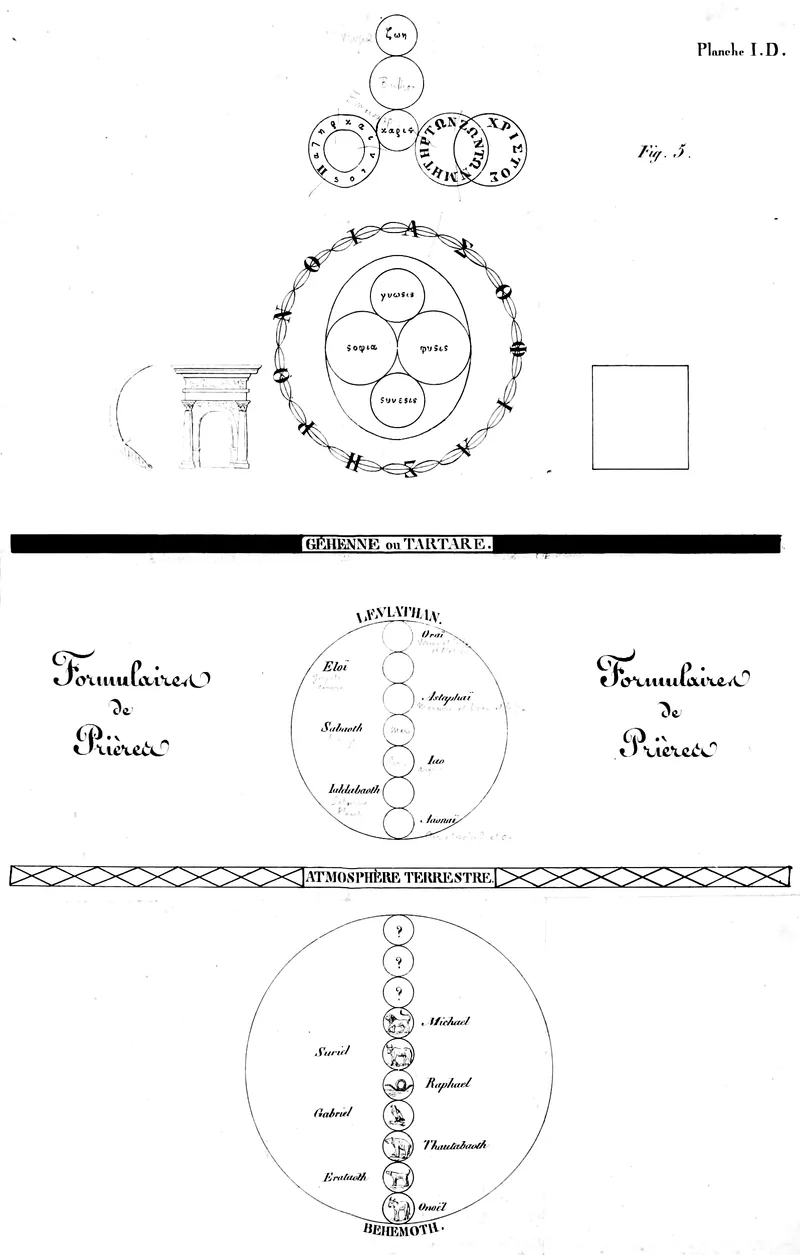
- Hermeticism — the writings attributed to Hermes Trismegistus and their reception; see What Is Hermeticism?.
- Neoplatonism and theurgy — the late antique philosophy of Plotinus, Iamblichus and Proclus.
- Gnosticism — the ancient movements of salvation through knowledge, and their modern revival; see What Is Gnosticism?.
- Astrology, alchemy and magic — the "occult sciences" of the Middle Ages and early modern period; see What Is Alchemy? and What Is Ceremonial Magic?.
- Christian Kabbalah — the Renaissance adaptation of Jewish Kabbalah by Pico, Reuchlin and their successors.
- Rosicrucianism and esoteric Freemasonry — from the manifestos of 1614–1616 to the high-degree lodges of the eighteenth century.
- Christian theosophy — the visionary theology of Jacob Boehme and his followers.
- Mesmerism, spiritualism and occultism — nineteenth-century movements including the work of Lévi and the Golden Dawn.
- Theosophy, Anthroposophy and the New Age — the modern syntheses of Blavatsky, Steiner and their successors.
Jewish Kabbalah, Islamic esotericism and Sufism are related but distinct fields with their own scholarly traditions, and specialists often prefer to study them on their own terms.
Common themes and approaches§
Though diverse, these currents share family resemblances. They often see the cosmos as alive and interconnected, linked by hidden correspondences between heaven and earth or between the universe and the human being. They value gnosis, a direct, transformative knowledge of the divine and of the self, over faith or reason alone. They use imagination, symbols, images and intermediary beings such as angels and spirits as means of access to higher realities. And many appeal to an ancient wisdom or prisca theologia, transmitted through a chain of sages from Hermes, Zoroaster or Moses to the present.
These themes form the basis of Antoine Faivre's famous definition, discussed in defining esotericism, and of the theme of correspondences.
Esotericism is not only a matter of ideas. Many of its currents involve practices: ritual and ceremonial magic, alchemy in the laboratory, astrological calculation, meditation and visualisation, initiation into secret societies, divination and healing. Scholars therefore study esoteric texts alongside the communities, rituals, images and material objects through which they were lived, from Renaissance talismans and alchemical apparatus to Masonic lodge rooms and Theosophical lecture halls.
A brief history of the field's subject matter§
The materials of Western esotericism stretch across two thousand years. Late antiquity produced the Hermetica, the Chaldean Oracles, Gnostic texts and theurgy. The Middle Ages transmitted astrology, alchemy and magic through Arabic and Latin translation. The Renaissance, with Marsilio Ficino's translations of Plato and the Hermetica (1460s–1480s), created a self-conscious tradition of "ancient wisdom" that many scholars regard as the starting point of Western esotericism in the strict sense.

The seventeenth century brought Rosicrucianism, Paracelsianism and Christian theosophy; the eighteenth, Masonic high degrees, Swedenborg and mesmerism; the nineteenth, spiritualism, occultism, the Theosophical Society (1875) and the Golden Dawn (1888); and the twentieth, Thelema, Anthroposophy, Traditionalism, modern Paganism and the New Age. These periods are surveyed in periods and movements, and its key figures in biographies.
Esotericism as an academic field§
For much of the twentieth century, esoteric currents were studied only in passing by historians of science, philosophy, art and religion. Important pioneers included Frances Yates, whose Giordano Bruno and the Hermetic Tradition (1964) argued for the centrality of Hermeticism in the Renaissance, and D. P. Walker, as well as the Jewish mysticism scholar Gershom Scholem.
A dedicated field emerged in France. In 1965 François Secret was appointed to a chair on Christian esotericism at the École pratique des hautes études in Paris; in 1979 Antoine Faivre took over a chair in the history of esoteric and mystical currents in modern and contemporary Europe. In 1999 the University of Amsterdam created a chair in the History of Hermetic Philosophy and Related Currents, held by Wouter Hanegraaff, and in 2005 the University of Exeter established a centre under Nicholas Goodrick-Clarke. The European Society for the Study of Western Esotericism (ESSWE) was founded in 2005, and the journal Aries is its main scholarly venue. See historians and scholars of esotericism.
Why "Western"?§
The adjective "Western" was adopted to distinguish these European and Mediterranean currents from the use of "esoteric" as a universal term for the inner core of all religions, an idea associated with the Traditionalist René Guénon and the religionist approach. It also limited the field to a historically connected body of material. In recent years scholars have questioned the label, noting that the currents always interacted with Jewish, Islamic and Asian traditions and that modern esotericism is global. Many now speak simply of "esotericism", while recognising the historical specificity of the material.
Frequently asked questions§
What does "esoteric" mean?§
It comes from a Greek word meaning "inner" and originally described teachings reserved for an inner circle of students. Today it refers both to hidden or specialised knowledge in general and, in scholarship, to a specific family of currents in Western religious history.
Is Western esotericism a religion?§
No. It is a scholarly category for many different currents and movements, some religious, some philosophical and some practical. Individual movements within it, such as Theosophy or Thelema, can be religions, but esotericism as a whole is not one.
Is esotericism the same as the occult?§
The terms overlap but are not identical. "Occult" historically referred to hidden qualities and to sciences such as astrology, alchemy and magic, and "occultism" to a nineteenth-century movement, whereas "esotericism" is the broader academic term covering the whole field.
Where can one study Western esotericism?§
Academic programmes and research centres exist at the École pratique des hautes études in Paris and the University of Amsterdam, and courses are offered at several other universities. The European Society for the Study of Western Esotericism and the Association for the Study of Esotericism support research and conferences.
Sources and further reading§
- Access to Western Esotericism — Antoine Faivre, 1994
- Western Esotericism: A Guide for the Perplexed — Wouter J. Hanegraaff, 2013
- The Western Esoteric Traditions: A Historical Introduction — Nicholas Goodrick-Clarke, 2008
- Esotericism and the Academy — Wouter J. Hanegraaff, 2012
- Dictionary of Gnosis & Western Esotericism — Wouter J. Hanegraaff, 2005
- Western Esotericism: A Brief History of Secret Knowledge — Kocku von Stuckrad, 2005