Liber XV · History & Scholarship · Chapter I: Biographies
Key Figures of Western Esotericism: A Biographical Guide
A biographical guide to key figures of Western esotericism, from Plotinus and Ficino to Agrippa, Dee, Boehme, Swedenborg, Lévi, Blavatsky and Crowley.

The history of Western esotericism is carried by a small number of remarkable individuals whose writings and lives shaped every later current: late antique philosophers such as Plotinus and Iamblichus, Renaissance magi such as Marsilio Ficino, Pico della Mirandola, Cornelius Agrippa and John Dee, visionaries such as Jacob Boehme and Emanuel Swedenborg, and modern occultists including Eliphas Lévi, Helena Blavatsky, Aleister Crowley and Rudolf Steiner. This guide introduces them in historical order and explains how historians approach their often legend-filled biographies.
Writing the lives of esotericists§
Esoteric biography poses particular challenges. Many authorities, such as Hermes Trismegistus, Zoroaster or Christian Rosenkreutz, are legendary. Real figures, from Nicolas Flamel to the Comte de Saint-Germain, attracted legends of immortality, transmutation and hidden mastery. Esotericists often presented their own lives as initiatory narratives, and their followers wrote hagiography. Historians therefore read autobiographical claims critically, distinguish documented facts from later embellishment and attend to the social context of each figure. The scholars who developed these methods are introduced in historians and scholars.
Founders in late antiquity§
The founding authorities of Western esotericism belong to the Greco-Roman world. Hermes Trismegistus is a legendary sage to whom the Hermetic writings were attributed; see What Is Hermeticism?. Plotinus (204/5–270) taught the emanation of all things from the One, and Iamblichus (c. 245–c. 325) and Proclus (412–485) made theurgic ritual central to Platonic philosophy; see Neoplatonism and theurgy. Zosimos of Panopolis (fl. c. 300) is the first alchemist whose writings survive in quantity, and the Gnostic teachers Basilides and Valentinus (second century) developed myths of salvation by knowledge; see What Is Gnosticism?. The philosopher Hypatia of Alexandria (d. 415), mathematician and teacher of Platonic philosophy, became a lasting symbol of the late pagan intellectual world.

Renaissance magi§
The Renaissance created the self-conscious tradition of esoteric learning:
- Marsilio Ficino (1433–1499) translated Plato, Plotinus and the Hermetica and wrote on astral magic in De vita (1489).
- Giovanni Pico della Mirandola (1463–1494) proposed 900 theses in 1486 and championed magic and Kabbalah as confirmations of Christianity.
- Johannes Reuchlin (1455–1522) wrote De verbo mirifico (1494) and De arte cabalistica (1517), founding works of Christian Kabbalah.
- Johannes Trithemius (1462–1516), abbot of Sponheim, wrote on angel magic and cryptography.
- Heinrich Cornelius Agrippa (1486–1535) produced the most comprehensive synthesis of Renaissance magic; see Agrippa's Three Books of Occult Philosophy.
- Paracelsus (1493/4–1541) united alchemy, medicine and nature mysticism.
- John Dee (1527–1608/9), mathematician and adviser at Elizabeth I's court, recorded angelic conversations with Edward Kelley; see Enochian magic and John Dee.
- Giordano Bruno (1548–1600), philosopher of an infinite universe and writer on memory and magic, was burned in Rome for heresy.
Theosophers, Rosicrucians and illuminists§
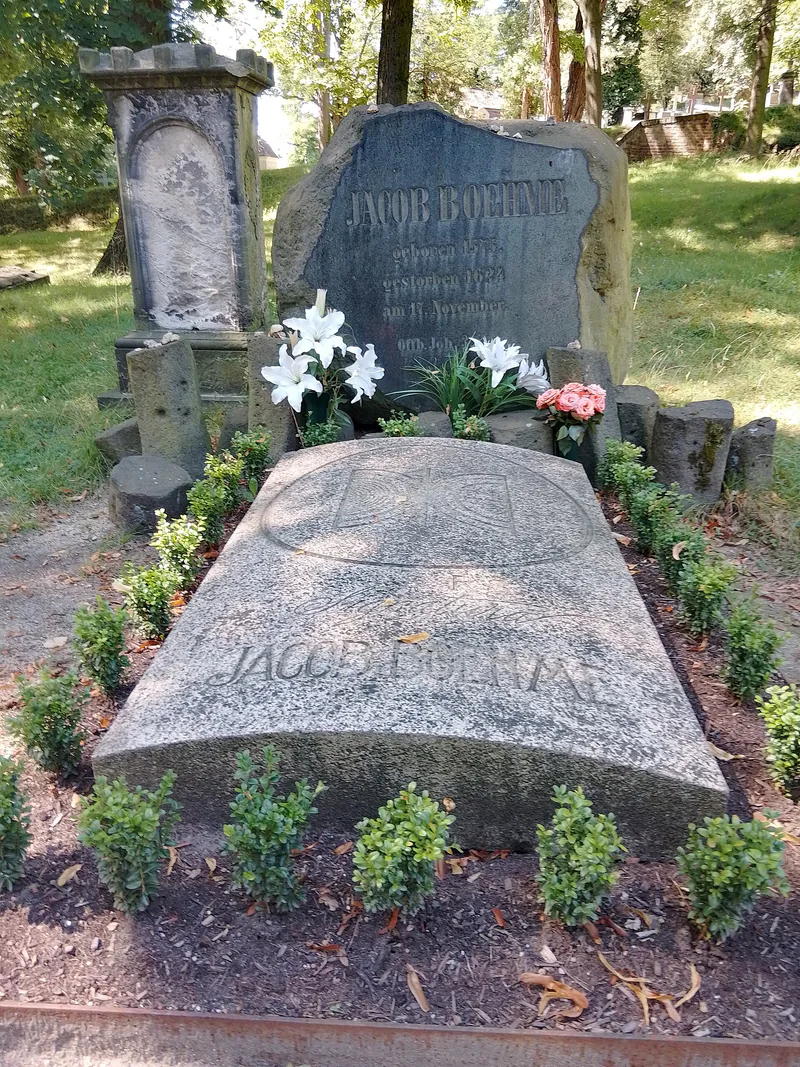
The seventeenth and eighteenth centuries produced a different kind of esotericist, more visionary and religious. Jacob Boehme (1575–1624), a shoemaker of Görlitz, wrote profound and difficult works on the divine nature that founded Christian theosophy; see Jacob Boehme. The Lutheran theologian Johann Valentin Andreae (1586–1654) is widely believed to have been involved in the Rosicrucian manifestos and wrote The Chymical Wedding of Christian Rosenkreutz (1616). The English physician Robert Fludd (1574–1637) defended the Rosicrucians and illustrated the macrocosm and microcosm in elaborate engravings. The antiquary Elias Ashmole (1617–1692) collected and published English alchemical poetry in the Theatrum Chemicum Britannicum (1652) and is one of the earliest recorded gentlemen initiated into a Masonic lodge, in 1646; the collection he gave to Oxford, much of it acquired from the Tradescant family, founded the Ashmolean Museum.
Emanuel Swedenborg (1688–1772), a Swedish scientist, turned in middle life to visionary accounts of heaven, hell and the spiritual meaning of Scripture, inspiring a church and a vast cultural influence. In France, Martinès de Pasqually (d. 1774) and his pupil Louis-Claude de Saint-Martin (1743–1803), the "Unknown Philosopher", created the theurgic and mystical illuminism later called Martinism. The physician Franz Anton Mesmer (1734–1815) proposed the theory of "animal magnetism", which became a major source of nineteenth-century spiritualism and occultism. The Sicilian adventurer known as Count Alessandro di Cagliostro (1743–1795), usually identified with Giuseppe Balsamo, founded an "Egyptian Rite" of Freemasonry and died in a papal prison, his life soon overgrown with legend.
Nineteenth-century occultists§
The modern occult revival centred on a few powerful personalities:
- Eliphas Lévi (Alphonse-Louis Constant, 1810–1875) created the modern idea of "high magic" and linked Kabbalah and tarot; see Eliphas Lévi.
- Helena Petrovna Blavatsky (1831–1891) co-founded the Theosophical Society in New York in 1875 with Henry Steel Olcott and William Quan Judge and wrote Isis Unveiled (1877) and The Secret Doctrine (1888).
- Papus (Gérard Encausse, 1865–1916) organised the French occult revival and the Martinist Order.
- S. L. MacGregor Mathers (1854–1918) co-founded the Hermetic Order of the Golden Dawn, wrote its rituals and translated grimoires.
- Anna Kingsford (1846–1888), physician and mystic, led the Hermetic Society and campaigned against vivisection.
- Paschal Beverly Randolph (1825–1875), an African American physician, spiritualist and author, taught a system of sexual magic and the use of magic mirrors that influenced later occult orders.
- Andrew Jackson Davis (1826–1910), the "Poughkeepsie Seer", gave trance lectures that helped shape the philosophy of American spiritualism.
Twentieth-century esotericists§
The twentieth century saw esotericism spread into mass culture and new religious movements. Aleister Crowley (1875–1947) founded the religion of Thelema; see Aleister Crowley. Rudolf Steiner (1861–1925), once a leading Theosophist, founded Anthroposophy in 1912–1913, with lasting influence on education and agriculture. G. I. Gurdjieff (c. 1866–1949) taught the "Fourth Way" of self-observation and sacred dance, spread further by P. D. Ouspensky. Dion Fortune (1890–1946) combined magic, psychology and Christian mysticism, and René Guénon (1886–1951) founded Traditionalism. C. G. Jung (1875–1961) reinterpreted alchemy and Gnosticism psychologically, while Gerald Gardner (1884–1964) launched modern Wicca; see Wicca and Gerald Gardner. Alice Bailey (1880–1949) developed a Theosophical teaching transmitted, she said, from a Tibetan master, which influenced the later New Age; the artist Austin Osman Spare (1886–1956) created the sigil method later adopted by chaos magick; and Israel Regardie (1907–1985) published the Golden Dawn rituals and linked magic to psychotherapy.
Women in the history of esotericism§
Older histories underrepresented women, but they were central to many currents: from Maria the Jewess in ancient alchemy and the visionary Jane Lead (1624–1704), leader of the Philadelphian Society, to the Victorian spiritualist mediums, Blavatsky and Annie Besant in Theosophy, Moina Mathers and Florence Farr in the Golden Dawn, Alice Bailey and Dion Fortune. Scholars such as Alex Owen have shown how esoteric movements offered women religious authority unavailable in mainstream churches. The broad periods in which all these figures worked are surveyed in periods and movements.
Frequently asked questions§
Who is the most important figure in Western esotericism?§
There is no single answer, but Marsilio Ficino is often singled out because his translations of Plato and the Hermetica created the Renaissance tradition of ancient wisdom. For the modern period, Eliphas Lévi, Helena Blavatsky and Aleister Crowley are among the most influential.
Was Christian Rosenkreutz a real person?§
No historical evidence supports his existence. He is the legendary founder described in the Rosicrucian manifestos of 1614–1616, and most scholars regard him as a literary creation of a circle around Johann Valentin Andreae.
Why are esoteric biographies often unreliable?§
Esoteric figures frequently used pseudonyms, made claims about secret masters or initiations, and attracted legends after their deaths. Historians therefore rely on contemporary documents and treat autobiographical claims and later hagiographies with caution.
Sources and further reading§
- The Western Esoteric Traditions: A Historical Introduction — Nicholas Goodrick-Clarke, 2008
- Dictionary of Gnosis & Western Esotericism — Wouter J. Hanegraaff, 2005
- Giordano Bruno and the Hermetic Tradition — Frances A. Yates, 1964
- The Queen's Conjurer: The Science and Magic of Dr. John Dee — Benjamin Woolley, 2001
- Paracelsus: Medicine, Magic and Mission at the End of Time — Charles Webster, 2008
- The Place of Enchantment: British Occultism and the Culture of the Modern — Alex Owen, 2004