Liber XV · History & Scholarship · Chapter I: Biographies
Henry Corbin: Islamic Mysticism and the Imaginal World
Henry Corbin (1903–1978), French scholar of Suhrawardi, Ibn Arabi and Iranian Shi'ism: his life, the mundus imaginalis, Eranos and his legacy.

Henry Corbin (1903–1978) was a French philosopher and scholar of Islam who revealed the mystical philosophy of Iran to Western readers and coined the term mundus imaginalis, the "imaginal world". Through his editions and studies of Suhrawardi, Ibn Arabi, Mulla Sadra and Shi'i esotericism, his lectures at the École Pratique des Hautes Études and the Eranos conferences, and his comparisons with Swedenborg and Christian theosophy, he became one of the most influential and most debated figures in the twentieth-century study of esotericism.
Early life and the encounter with Suhrawardi§
Henry Corbin was born in Paris on 14 April 1903. Raised a Catholic, he studied philosophy, including medieval scholasticism under Étienne Gilson, and took a degree in philosophy in 1925. He also learned Arabic, Persian and Turkish at the School of Oriental Languages and in 1928 began working at the Bibliothèque nationale, cataloguing oriental manuscripts. In the same years he moved from Catholicism to a liberal Protestantism, and he remained interested in Protestant hermeneutics throughout his life.
The decisive event, as Corbin later told it, came when the great Islamicist Louis Massignon handed him a lithographed edition of the Hikmat al-ishraq, the Philosophy of Illumination of the twelfth-century Persian thinker Shihab al-Din Yahya Suhrawardi. Massignon reportedly told him that there was something in this book for him. Corbin found in Suhrawardi's "Oriental theosophy" of lights and angels a philosophy that united rational thought with visionary experience, and he spent the next fifty years editing, translating and interpreting it.
Heidegger, Istanbul and Tehran§
Corbin was also a student of contemporary German philosophy. He visited Martin Heidegger at Freiburg in the 1930s, and in 1938 he published Qu'est-ce que la métaphysique?, the first collection of Heidegger's writings in French. Corbin later explained that Heidegger's hermeneutics had given him a method for reading mystical texts as the expression of a mode of being, rather than as historical documents only.
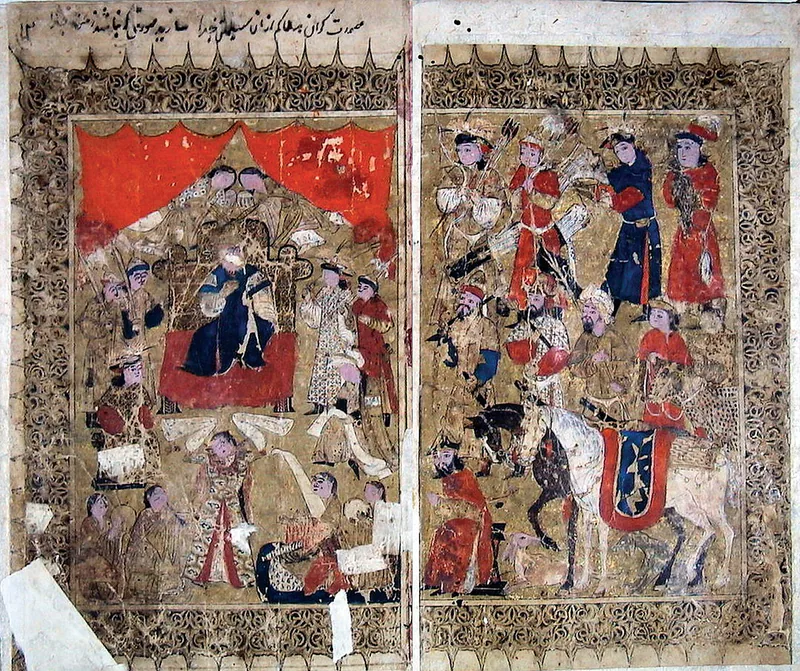
In 1939 the Bibliothèque nationale sent him to Istanbul to photograph manuscripts of Suhrawardi. The outbreak of the Second World War kept him there until 1945, an enforced stay that he used to study the rich manuscript collections of the city. In 1946 he went to Tehran, where he founded the department of Iranology in the new Franco-Iranian Institute and launched the Bibliothèque iranienne, a series of critical editions of Persian and Arabic philosophical texts. He worked closely with Iranian scholars, including the philosopher Sayyid Jalal al-Din Ashtiyani and the young Seyyed Hossein Nasr, and held long conversations on Shi'i doctrine with the theologian Allameh Tabatabai.
Paris, Eranos and the Iranian school§
In 1954 Corbin succeeded Massignon as director of studies for Islam and the religions of Arabia in the religious sciences section of the École Pratique des Hautes Études in Paris, the institution that also housed the later chair in the history of esotericism. For more than two decades he divided his year among Paris, Tehran and the summer lectures of the Eranos conferences at Ascona, where he spoke from 1949 onward alongside C. G. Jung, Gershom Scholem and Mircea Eliade.
His major books include Avicenna and the Visionary Recital (1954), Creative Imagination in the Sufism of Ibn Arabi (1958), Spiritual Body and Celestial Earth (1960), a History of Islamic Philosophy (1964), the four-volume En islam iranien (1971–1972) and The Man of Light in Iranian Sufism (1971). Together they presented a continuous Iranian spiritual history running from Zoroastrian angelology through Avicenna, Suhrawardi and Ibn Arabi to the school of Isfahan and Mulla Sadra. Corbin argued that Islamic philosophy had not ended with Averroes, as Western textbooks assumed, but had flourished in Iran for centuries afterwards, a claim that has since been widely accepted.
The imaginal world and creative imagination§
Corbin's best-known idea is the mundus imaginalis, his Latin rendering of the Arabic 'alam al-mithal, the world of image-forms. In Suhrawardi and later Iranian thinkers this was an intermediate realm between the purely intelligible world and the physical world, where spirits take bodies and bodies become spiritual. Visionary experiences, the events of the afterlife and the true meaning of prophetic narratives all occur there. To distinguish this realm from mere fantasy, Corbin coined the word "imaginal", contrasting it with the "imaginary", which in modern usage means the unreal.
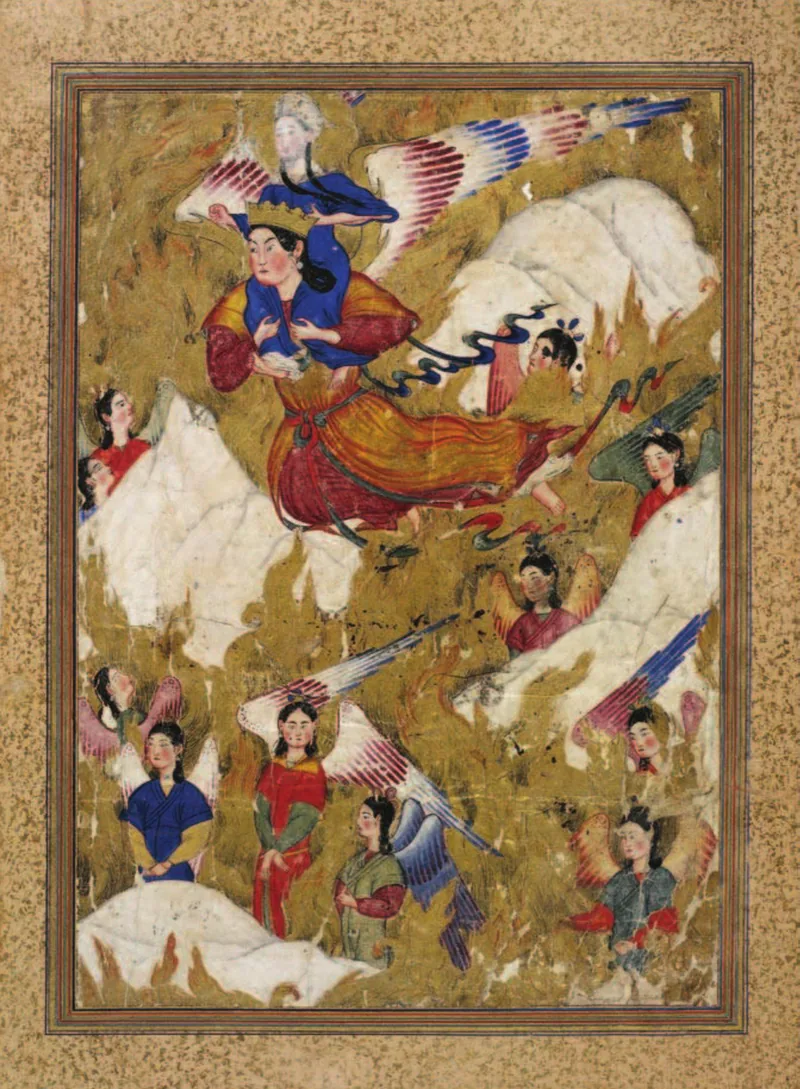
The faculty that perceives this world is the creative or active imagination, which Corbin found described by Ibn Arabi as a divine power in the human soul. Linked with it was ta'wil, spiritual exegesis: leading a text or event back to its hidden origin. Corbin also spoke of "hierohistory", the history of souls and revelations that unfolds in the imaginal world rather than in chronological time, and of the "land of nowhere", Suhrawardi's Na-koja-abad, which lies not elsewhere in space but inward.
Corbin and Western esotericism§
Corbin never confined his interest to Islam. He compared Ismaili and Shi'i hermeneutics with Emanuel Swedenborg in a well-known study of comparative spiritual hermeneutics, collected in English as Swedenborg and Esoteric Islam, and he was drawn to Jacob Boehme, the Grail romances and the Templar legends as expressions of a Western spiritual chivalry. In 1974 he founded the Université Saint-Jean de Jérusalem, a private study circle on comparative spirituality in the Abrahamic religions, which brought together scholars such as Gilbert Durand and Antoine Faivre.
His influence on the academic field was considerable. Faivre's third characteristic of esotericism, "imagination and mediations", draws heavily on Corbin's idea of the creative imagination; see Faivre's six characteristics. Outside the academy, the American psychologist James Hillman built his archetypal psychology partly on Corbin's notion of the imaginal, and writers on visionary experience, art and religion have used the word ever since.
Criticism and legacy§
Corbin died in Paris on 7 October 1978. His wife Stella Corbin, who had shared his work for decades, devoted herself to publishing his remaining manuscripts. His editions of Suhrawardi and other thinkers remain indispensable, and his recovery of later Islamic philosophy changed the field.
His interpretations, however, have been strongly criticised. Steven Wasserstrom's Religion after Religion (1999) argued that Corbin, Eliade and Scholem shared a private theology that placed myth and symbol above history, and questioned Corbin's sympathy for the Pahlavi monarchy's cultural nationalism. Wouter Hanegraaff has cited him as a classic representative of "religionism", the approach that treats spiritual traditions as expressions of timeless truth and blurs scholarship with commitment. Specialists in Islamic philosophy have also pointed out that Corbin's Suhrawardi is more of a visionary and less of a logician than the texts suggest. Admirers such as Tom Cheetham read him instead as a philosopher of the spiritual imagination whose ideas remain alive. Both readings agree that Corbin made Iranian mystical philosophy a permanent part of the Western conversation about esotericism, alongside the Traditionalists with whom he is sometimes, inaccurately, grouped.
Frequently asked questions§
What is the mundus imaginalis?§
The mundus imaginalis is Corbin's term for the Arabic 'alam al-mithal, an intermediate world of images between the spiritual and the physical, described by Suhrawardi and later Iranian philosophers. Corbin called it "imaginal" to distinguish it from the merely imaginary.
Was Henry Corbin a Muslim?§
No. Corbin remained a Protestant Christian, although he wrote with deep sympathy for Shi'i Islam and often described himself as a philosopher rather than a neutral orientalist. He differed in this from René Guénon, who converted to Islam.
How did Corbin influence the study of esotericism?§
He gave scholars the concept of the creative imagination and the imaginal world, which Antoine Faivre adopted in his definition of esotericism. He also helped found the comparative, Eranos-style approach that later historians both drew on and criticised.
What is Corbin's most important book?§
Many readers begin with Creative Imagination in the Sufism of Ibn Arabi, later reissued in English as Alone with the Alone. Specialists value above all En islam iranien and his critical editions of Suhrawardi.
Sources and further reading§
- Avicenna and the Visionary Recital — Henry Corbin, 1960
- Creative Imagination in the Sufism of Ibn 'Arabi — Henry Corbin, 1969
- Spiritual Body and Celestial Earth: From Mazdean Iran to Shi'ite Iran — Henry Corbin, 1977
- The Man of Light in Iranian Sufism — Henry Corbin, 1978
- History of Islamic Philosophy — Henry Corbin, 1993
- Swedenborg and Esoteric Islam — Henry Corbin, 1995
- Religion after Religion: Gershom Scholem, Mircea Eliade, and Henry Corbin at Eranos — Steven M. Wasserstrom, 1999
- The World Turned Inside Out: Henry Corbin and Islamic Mysticism — Tom Cheetham, 2003