Liber XV · History & Scholarship · Chapter I: Biographies
Nicholas Goodrick-Clarke: Historian of Occultism and Ariosophy
Nicholas Goodrick-Clarke (1953–2012), historian of Ariosophy and esoteric Nazism, founder of Exeter's esotericism centre and author of key textbooks.

Nicholas Goodrick-Clarke (1953–2012) was a British historian who wrote the standard scholarly account of the occult background of Nazism and founded the first centre for the academic study of Western esotericism in the United Kingdom, at the University of Exeter. His books The Occult Roots of Nazism (1985), Black Sun (2002) and The Western Esoteric Traditions (2008) set a model for treating occult movements, including dangerous ones, with archival rigour rather than sensationalism.
Life and education§
Goodrick-Clarke was born in 1953 and studied at the University of Bristol before going to Oxford, where he wrote a doctoral thesis on the Ariosophists of Austria and Germany, completed in the early 1980s. The subject placed him at the meeting point of two fields that rarely spoke to each other: the political history of German nationalism and the history of occultism. He brought to both a patient reading of obscure periodicals, membership lists, letters and police files.
For many years after his doctorate he wrote and edited largely outside a permanent university post, before joining the University of Exeter, where he spent the last years of his career. He was married to Clare Goodrick-Clarke, a scholar of alchemy and esoteric medicine, with whom he wrote a study of the theosophist and Gnostic scholar G. R. S. Mead. He died in 2012, in the same year that Wouter Hanegraaff's Esotericism and the Academy appeared; the coincidence is noted in our article on Hanegraaff's book.
The Occult Roots of Nazism§
Before 1985 the "occult Nazism" theme was dominated by popular writing. Louis Pauwels and Jacques Bergier's The Morning of the Magicians (1960) and Trevor Ravenscroft's The Spear of Destiny (1973) presented Hitler as the instrument of secret societies and black magicians, often on the basis of invented or unverifiable claims. Goodrick-Clarke's The Occult Roots of Nazism replaced this literature with documented history.
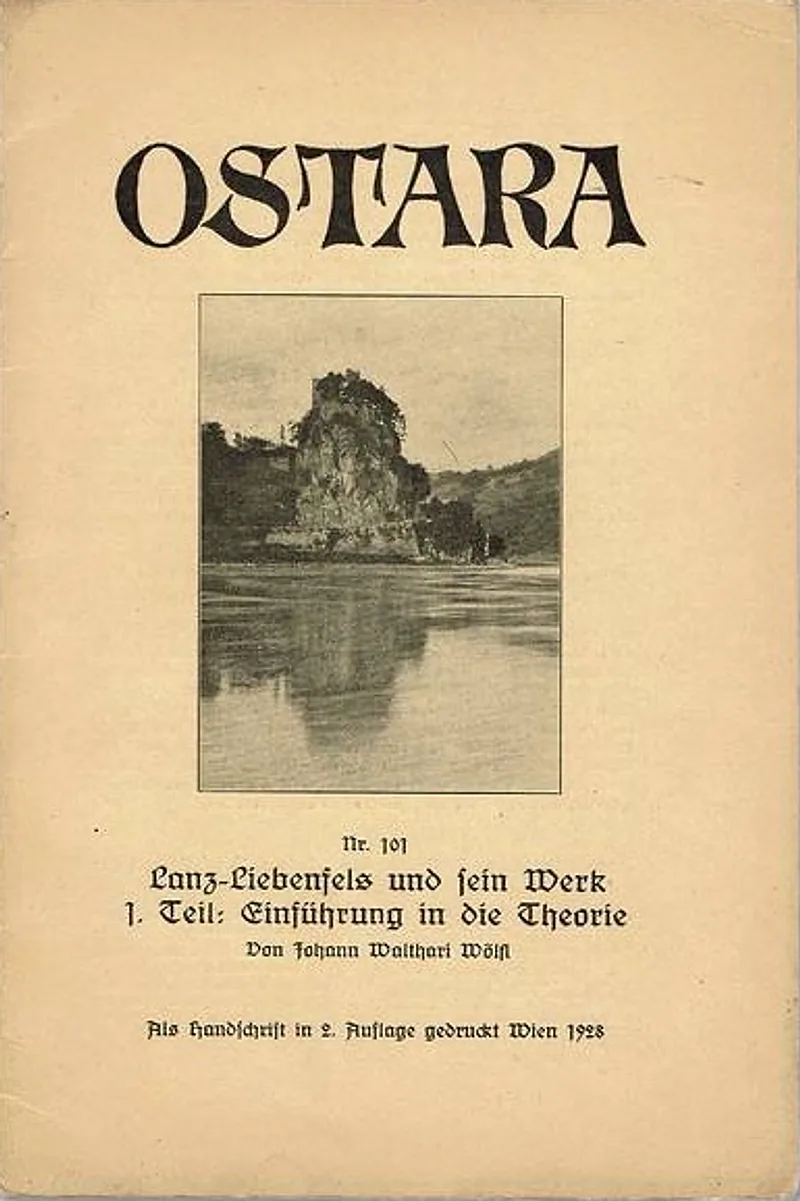
The book reconstructed the milieu of Ariosophy in Vienna and Germany between about 1890 and 1935. It examined Guido von List, who combined Theosophy, runic speculation and Germanic nationalism into a myth of a priestly "Armanen" elite; Jörg Lanz von Liebenfels, whose Ordo Novi Templi and journal Ostara preached a racial gnosis; Rudolf von Sebottendorf and the Thule Society in Munich, from whose circles the early Nazi party drew members; and Karl Maria Wiligut, the self-proclaimed heir of an ancient Germanic tradition who advised Heinrich Himmler in the SS. Goodrick-Clarke showed that Ariosophy anticipated many Nazi symbols and fantasies, but he concluded that its influence on Nazi policy was mainly indirect, a matter of shared mythology rather than secret control.
The book was first published in 1985 and reissued in the United States in 1992 with the subtitle Secret Aryan Cults and Their Influence on Nazi Ideology. It has remained in print, been widely translated and become required reading for anyone studying German occultism. Later historians such as Eric Kurlander have argued that supernatural thinking ran more broadly through Nazi culture than Goodrick-Clarke allowed, but they build on his documentation.
Savitri Devi, Black Sun and esoteric racism after 1945§
Goodrick-Clarke followed the story into the postwar period. Hitler's Priestess (1998) was a biography of Savitri Devi, born Maximiani Portas in Lyon, who settled in India, combined Hindu ideas of cosmic cycles with National Socialism, and portrayed Hitler as an avatar fighting the dark age. The book showed how her writings became a source for neo-Nazi mysticism.
Black Sun (2002) surveyed a wider landscape of what he called esoteric Nazism and Aryan cults: the Chilean diplomat Miguel Serrano's "esoteric Hitlerism", myths of Nazi flying saucers and polar refuges, racist forms of Odinism, Christian Identity and other movements in Europe and North America. Its title referred to the twelve-spoked sun wheel set in the floor of the SS castle at Wewelsburg, adopted as an emblem by later groups. Goodrick-Clarke treated these movements as a serious subject of study precisely because they were dangerous, and he analysed how myths of lost Aryan wisdom offered identity and meaning to people who felt displaced by modern multicultural societies.
Exeter and the Centre for the Study of Esotericism§
In 2005 Goodrick-Clarke founded the Exeter Centre for the Study of Esotericism and became professor of Western esotericism at the University of Exeter, the first such post in Britain. It joined the Paris chair and the Amsterdam chair as one of the few institutional homes of the field. The centre offered a master's degree in Western esotericism, taught largely by distance learning, and supervised doctoral students, many of whom went on to teach and publish in the field. It drew students from many countries and backgrounds, including practitioners who wanted to study their own traditions historically.

He was also active in the international networks that consolidated the discipline in those years, including the European Society for the Study of Western Esotericism, founded in 2005. After his death the Exeter centre did not long survive as a separate programme, but its graduates remain an important part of the English-language field.
The Western Esoteric Traditions and his editions§
Goodrick-Clarke's The Western Esoteric Traditions: A Historical Introduction (2008) is a compact survey from the Hermetica and Neoplatonism through Renaissance magic, Rosicrucianism, Christian theosophy, Swedenborg, mesmerism, Theosophy and the modern occult revival. It quickly became a standard textbook alongside Antoine Faivre's Access to Western Esotericism and Hanegraaff's Western Esotericism: A Guide for the Perplexed.
He also edited and introduced anthologies of primary sources. His Paracelsus: Essential Readings (1990) made the Swiss physician's ideas accessible in English, and he oversaw the Western Esoteric Masters series, which included his own volume on Helena Blavatsky (2004) and volumes on figures such as Boehme, Swedenborg and Fludd by other editors. He translated Ernst Benz's biography of Emanuel Swedenborg into English (2002). With Clare Goodrick-Clarke he wrote G. R. S. Mead and the Gnostic Quest (2005), on the Theosophical scholar who translated the Hermetica and early Gnostic texts.
Method and legacy§
Goodrick-Clarke's work combined two commitments that are now basic to the field. First, esoteric movements must be studied as history, with the same source criticism used for any other subject; occult claims of ancient lineage and secret masters are themselves historical data to be explained. Second, the study of esotericism matters beyond its own boundaries, because esoteric ideas have shaped politics, art, medicine and identity. His books on Ariosophy and esoteric Nazism showed that the history of the occult is not only a history of harmless curiosities but also of myths that can feed racism and violence.
He was respected for his fairness toward the people he studied, including those whose ideas he found abhorrent, and for writing clearly enough to reach readers outside universities. Our guides to the historians of esotericism and Western esotericism place him among the founding generation of the discipline.
Frequently asked questions§
What is The Occult Roots of Nazism about?§
It is a history of Ariosophy, the racist occult movement of Austria and Germany between about 1890 and 1935, centred on Guido von List, Jörg Lanz von Liebenfels, the Thule Society and Karl Maria Wiligut. Goodrick-Clarke showed how these groups anticipated Nazi myths and symbols while arguing that their direct political influence was limited.
Did the Nazis practise occultism?§
Goodrick-Clarke found that some Nazi leaders, notably Himmler, were attracted to Germanic mysticism and that Ariosophy shaped Nazi symbolism, but that the party as a whole was not run by occult societies. The popular image of a black-magical Nazi elite comes mostly from postwar sensational literature.
What was the Exeter Centre for the Study of Esotericism?§
It was a research and teaching centre at the University of Exeter, founded by Goodrick-Clarke in 2005. It offered a master's degree and doctoral supervision in Western esotericism, the first such programme in the United Kingdom.
Sources and further reading§
- The Occult Roots of Nazism: Secret Aryan Cults and Their Influence on Nazi Ideology — Nicholas Goodrick-Clarke, 1985
- Hitler's Priestess: Savitri Devi, the Hindu-Aryan Myth, and Neo-Nazism — Nicholas Goodrick-Clarke, 1998
- Black Sun: Aryan Cults, Esoteric Nazism, and the Politics of Identity — Nicholas Goodrick-Clarke, 2002
- The Western Esoteric Traditions: A Historical Introduction — Nicholas Goodrick-Clarke, 2008
- Paracelsus: Essential Readings — Nicholas Goodrick-Clarke (ed.), 1990
- G. R. S. Mead and the Gnostic Quest — Clare Goodrick-Clarke and Nicholas Goodrick-Clarke, 2005
- The Morning of the Magicians — Louis Pauwels and Jacques Bergier, 1960
- Hitler's Monsters: A Supernatural History of the Third Reich — Eric Kurlander, 2017