Liber XXII · Occultism · Chapter IV: German Occultism
German Occultism: From the Romantics to Ariosophy and Beyond
German occultism from Romantic nature philosophy, Kerner and Scheible's grimoires to Theosophy, Steiner, Ariosophy, the Thule Society and Nazi persecution.

German occultism is the history of magic, spirit-seeing and esoteric philosophy in the German-speaking lands from the Romantic era to the mid-twentieth century. It grew from the deep soil of Paracelsus, Jacob Böhme and the Rosicrucians, flowered in the Romantic study of the "night side" of nature and in the grimoire editions of the 1840s, and became a mass movement of Theosophy, Anthroposophy, astrology and psychical research around 1900. One small branch, the racist "Ariosophy" of Guido von List and Lanz von Liebenfels, has attracted disproportionate attention because of its contacts with the early Nazi movement, a subject surrounded by myth.
Paracelsus, Böhme and the Rosicrucian Inheritance§
German-speaking Europe had a long native tradition of esoteric thought. The Swiss physician Paracelsus (c. 1493–1541) taught a medicine of hidden virtues and astral influences; the Görlitz shoemaker Jacob Böhme (1575–1624) wrote visionary theosophy about the birth of God and nature; and the anonymous Rosicrucian manifestos, printed at Kassel in 1614 and 1615, announced a secret brotherhood of reformers. In the eighteenth century the Order of the Gold- und Rosenkreuz organised Rosicrucian alchemy within a graded Masonic system, while Pietist circles kept Böhme's writings alive. These traditions gave German occultism a theological and philosophical depth that later movements constantly drew on.
Romantic Nature Philosophy and the Night Side of Nature§
The decisive modern impulse came with Romanticism. Philosophers of nature (Naturphilosophie) such as F. W. J. Schelling saw the universe as a living whole in which spirit and matter were two aspects of one reality. The physician and natural philosopher Gotthilf Heinrich Schubert, in Ansichten von der Nachtseite der Naturwissenschaft (1808), explored dreams, presentiment, magnetic sleep and the "night side" of natural science. Animal magnetism, imported from France, was taken up in German universities and by the Prussian state, which supported a magnetic clinic in Berlin in the 1810s (see mesmerism and animal magnetism).
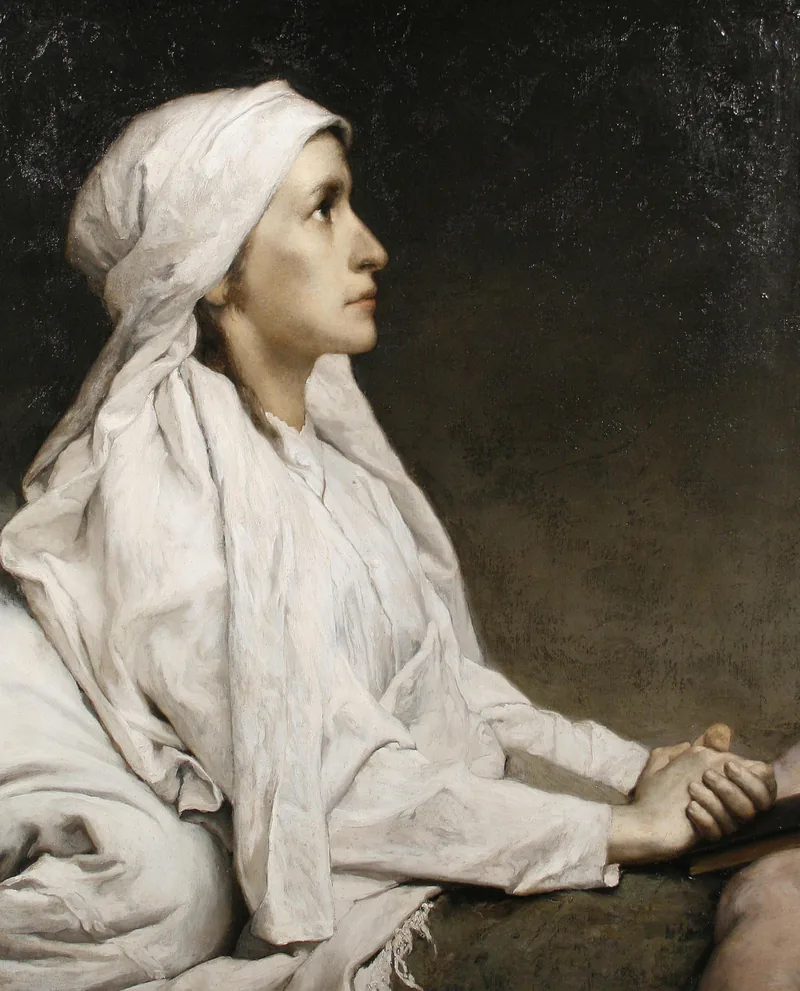
The most famous product of this milieu was Justinus Kerner's Die Seherin von Prevorst (1829), an account of Friederike Hauffe, a young woman who, while under Kerner's magnetic care at Weinsberg, reported visions of spirits, an inner sun and the circles of the soul. The book became a classic of what we would now call psychical literature and was read by Spiritualists and occultists for a century. Joseph Ennemoser's history of magic (1844) and the chemist Karl von Reichenbach's experiments with sensitive subjects, who claimed to perceive a luminous force he named "Od", continued the project of a scientific magic.
Grimoires and Popular Magic: Scheible and the Faust Books§
Germany also supplied much of Europe's printed folk magic. Between 1845 and 1849 the Stuttgart publisher Johann Scheible issued Das Kloster, a twelve-volume collection of Faust legends, chapbooks and grimoires, including texts such as Doctor Faust's Fourfold Harrowing of Hell and Theosophia Pneumatica. In 1849 he printed The Sixth and Seventh Books of Moses, a compilation of seals and conjurations which, after its English translation in New York in 1880, entered American folk magic and hoodoo. These books made the image of the German magician, and of Faust as his patron, part of popular occult culture.
Theosophy, Anthroposophy and the Occult Boom around 1900§
From the 1880s German occultism became a public movement. The philosopher Carl du Prel argued in Philosophie der Mystik (1885) that the unconscious soul possessed transcendental faculties revealed in dreams and trance. The colonial official Wilhelm Hübbe-Schleiden founded a German branch of the Theosophical Society in 1884 and the journal Sphinx in 1886, and Franz Hartmann, a German-American physician who had lived at Adyar, spread Theosophy through his journal Lotusblüthen (1892–1900).

In 1902 Rudolf Steiner became general secretary of the German section of the Theosophical Society. His break with Adyar in 1912–1913 produced Anthroposophy, the most durable of all German esoteric movements. In the same years Theodor Reuss and Carl Kellner developed the Ordo Templi Orientis, later reshaped by Crowley (see Thelemic orders), and the novelist Gustav Meyrink, whose Der Golem (1915) was a bestseller, gave occult themes literary prestige. The historian Corinna Treitel has shown that occultism in Wilhelmine and Weimar Germany was a broad middle-class pursuit, closely tied to debates in psychology, medicine and life reform.
Ariosophy: Guido von List and Lanz von Liebenfels§
A distinct and darker current emerged in Vienna. Guido von List (1848–1919), a writer of Romantic nationalist fiction, claimed to have rediscovered the wisdom of an ancient Germanic priesthood, the "Armanen", whose secrets were encoded in eighteen runes. His Das Geheimnis der Runen (1908) invented the Armanen rune row, which remains in use in some modern esoteric circles though it has no basis in the historical runes. A society in his name was founded in 1908. Jörg Lanz von Liebenfels (1874–1954), a former Cistercian novice, published the journal Ostara from 1905 and founded the Ordo Novi Templi, teaching a "theozoology" that divided humanity into god-like Aryans and bestial lower races.
The historian Nicholas Goodrick-Clarke named this blend of Theosophy and racial nationalism "Ariosophy". After the First World War, Rudolf von Sebottendorf founded the Thule Society in Munich in 1918 as a cover for a branch of the antisemitic Germanenorden. Some early members of the party that became the Nazi party moved in Thule circles, and the swastika was among its emblems. Goodrick-Clarke concluded, however, that the Ariosophists were a symptom of völkisch ideas rather than a hidden source of Nazi policy. Popular books claiming that the Third Reich was run by occult adepts are not supported by the evidence. For the wider question see Heathenry and the runes.
Weimar Astrology, Nazi Suppression and the Postwar Era§
The Weimar Republic saw a boom in astrology, graphology and occult publishing. Alfred Witte's Hamburg School developed a new "Uranian" astrology, and occult orders such as the Fraternitas Saturni, founded in 1928 by Eugen Grosche, continued the magical tradition. The physician Albert von Schrenck-Notzing made Munich a centre of psychical research.
The Nazi regime proved hostile. It dissolved most lodges and occult societies in the mid-1930s, and after Rudolf Hess's flight to Britain in May 1941 the Gestapo arrested hundreds of astrologers, Anthroposophists and occultists. Some individuals with esoteric interests, notably Heinrich Himmler and his adviser Karl Maria Wiligut, pursued their own racial mysticism within the SS, a selective appropriation that historians such as Eric Kurlander and Peter Staudenmaier continue to debate. After 1945 the occult revived on a smaller scale, and Hans Bender's institute at Freiburg, founded in 1950, made Germany a centre of academic parapsychology.
Frequently asked questions§
What was Ariosophy?§
Ariosophy was an esoteric movement of early twentieth-century Austria and Germany that combined Theosophical ideas of cosmic cycles and root races with racial nationalism. Its main figures were Guido von List and Jörg Lanz von Liebenfels. The term was popularised in scholarship by Nicholas Goodrick-Clarke.
Were the Nazis occultists?§
Not in any organised sense. Some early Nazi activists had contact with the Thule Society, and Himmler cultivated a racial mysticism in the SS, but the regime as a whole banned occult groups and persecuted astrologers and Anthroposophists. Most sensational claims about "Nazi occultism" derive from popular books of the 1960s and later.
Who was the Seeress of Prevorst?§
She was Friederike Hauffe (1801–1829), a woman from Württemberg whose trances, visions and reported spirit encounters were recorded by her physician, the poet Justinus Kerner. His book of 1829 became one of the most widely read case histories of nineteenth-century occultism.
Sources and further reading§
- Ansichten von der Nachtseite der Naturwissenschaft — Gotthilf Heinrich Schubert, 1808
- Die Seherin von Prevorst — Justinus Kerner, 1829
- Philosophie der Mystik — Carl du Prel, 1885
- Das Geheimnis der Runen — Guido von List, 1908
- Der Golem — Gustav Meyrink, 1915
- Urania's Children: The Strange World of the Astrologers — Ellic Howe, 1967
- The Occult Roots of Nazism — Nicholas Goodrick-Clarke, 1985
- A Science for the Soul: Occultism and the Genesis of the German Modern — Corinna Treitel, 2004
- Between Occultism and Nazism: Anthroposophy and the Politics of Race in the Fascist Era — Peter Staudenmaier, 2014
- Hitler's Monsters: A Supernatural History of the Third Reich — Eric Kurlander, 2017