Liber II · Ancient Magic · Chapter IV: Folk Magic
Folk Magic: Cunning Folk, Charms and Everyday Ritual in History
Folk magic explained: healing charms, cunning folk, Pennsylvania powwow, Scandinavian black books and Italian benandanti, from the Middle Ages to today.

Folk magic is the practical, everyday magic of ordinary people: spoken charms for burns and toothache, rituals to find lost property or recover stolen goods, protection for cattle and houses, love divination, and counter-measures against witchcraft. Unlike the learned ceremonial magic of grimoires, it was usually transmitted orally or in small handwritten books, was often framed in Christian language, and was practised by local specialists such as cunning folk, charmers and wise women as well as by households themselves.
What Makes Magic "Folk" Magic?§
Historians use "folk magic" or "popular magic" to distinguish vernacular practice from the learned magic of clerics, physicians and philosophers. Richard Kieckhefer described a "common tradition" of medieval magic, shared by clergy and laity alike, that included herbal lore, protective prayers, charms and simple divination, as opposed to the specialised demonic necromancy of a clerical underworld. The boundary was porous: printed books carried learned material into villages, and folk charms were copied into the manuscripts of educated men.
Folk magic is also strongly tied to place. It drew on local saints, holy wells, plants, animals and landscape features, and it changed slowly over generations. Yet similar techniques, such as measuring a sick person with thread or "charming" a wound with a narrative verse, appear across Europe, suggesting shared roots in late antique and medieval Christianity.
Charms and Healing Formulas§
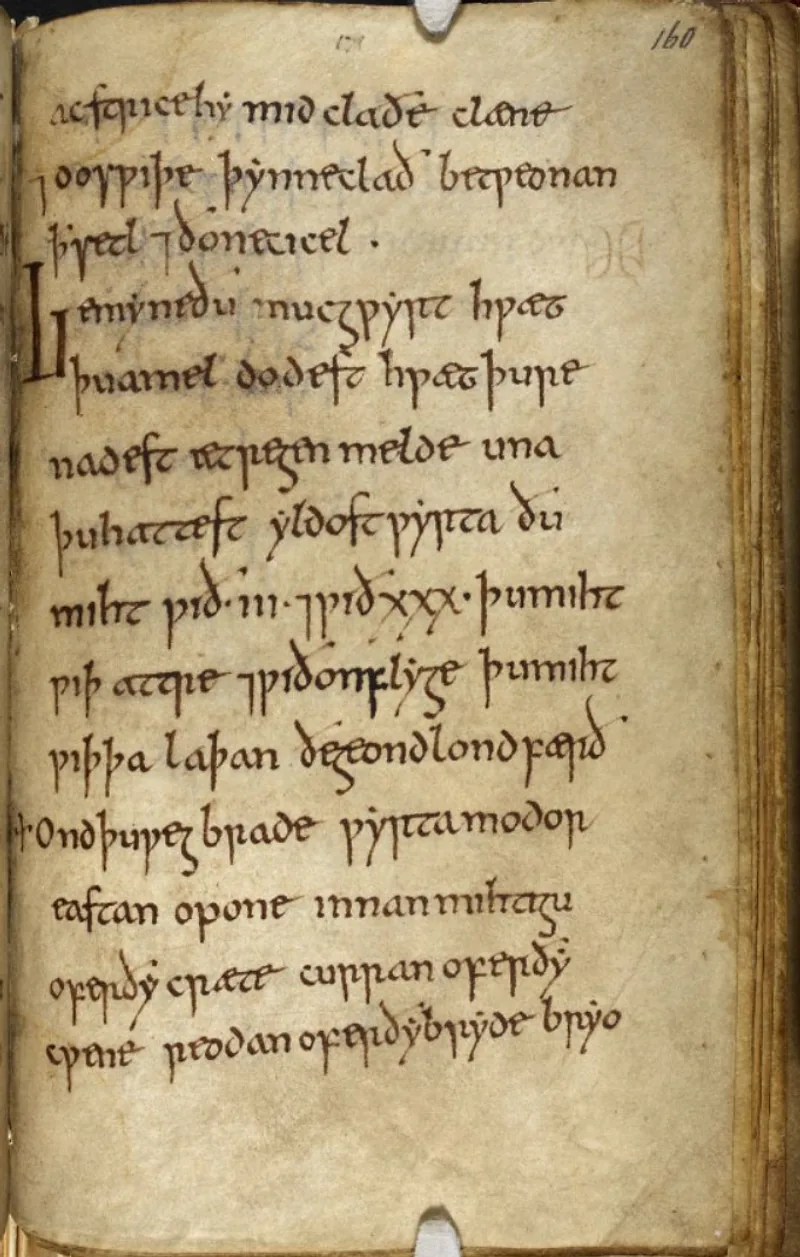
The verbal charm is the backbone of European folk magic. Some of the oldest written examples are the two Merseburg Charms, Old High German verses preserved in a tenth-century manuscript; the second heals a horse's sprained foot by recalling how Wodan healed Balder's foal, "bone to bone, blood to blood". Old English collections such as the Lacnunga and the Leechbooks contain remedies against "elf-shot" and sudden stitches, and the Æcerbot field ritual, which blends Christian prayers with older agricultural rites to restore barren land.
Later medieval and early modern charms often take the form of a short story about Christ or a saint followed by a command: Christ met Peter suffering from toothache and cured him, so may this sufferer be cured. Such narrative charms, known to folklorists as historiolae, were used against bleeding, burns, fever and worms. They were spoken under the breath, written on paper and worn, or combined with gestures such as making the sign of the cross over the affected part.
Cunning Folk and Village Specialists§
In England, cunning men and women were consulted for healing, finding stolen goods, identifying thieves, telling fortunes and detecting or reversing witchcraft. Owen Davies has estimated that thousands were active across England in the early modern period, and some practised well into the nineteenth century. Their methods ranged from astrology and books of conjuration to the sieve and shears, a divination technique for naming a thief. Similar figures existed elsewhere: the Braucher of German-speaking lands, the klok gumma ("wise woman") of Sweden, the fairy doctors of Ireland and the curanderos of the Hispanic world.
Cunning folk occupied an ambiguous position. Clergy and demonologists regarded them as no better than witches, since their power could only come from the devil; laws such as England's Witchcraft Act of 1563 penalised some of their activities. Yet relatively few were prosecuted, and communities often valued them as defenders against the very witches feared in the European witch trials. Their counter-magic is described in Maleficium, Curses and Protective Magic.
Black Books, Powwow and Printed Charm Books§
Printing made folk magic more textual. In Scandinavia, handwritten "black books" (svartebøker in Norway, svartkonstböcker in Sweden) of the eighteenth and nineteenth centuries collected healing charms, protective formulas and occasional conjurations. In Germany, small chapbooks such as the Romanus-Büchlein circulated widely; its contents can be explored in the catalogue entry for the Romanus-Büchlein. The pseudo-Albertus Egyptian Secrets and the Sixth and Seventh Books of Moses became bestsellers in Europe and the Americas.

German-speaking immigrants carried this culture to Pennsylvania, where it became known as powwow or Braucherei. John George Hohman's Der lange verborgene Freund (1820), translated as The Long Lost Friend, gathered charms for fire, theft, wounds and livestock and remained in print for generations. In the American South, African American conjure, described in Hoodoo and Rootwork, absorbed some of this German material along with African, Native American and Anglo-American practice. In the Ozarks and Appalachia, folklorists such as Vance Randolph recorded charms, "water witching" and signs for planting and healing.
Folk Magic in Southern and Eastern Europe§
In the Friuli region of north-eastern Italy, inquisition records of the late sixteenth and seventeenth centuries describe the benandanti, people born with a caul who claimed to leave their bodies at night to fight witches for the fertility of the crops. Carlo Ginzburg's study of these trials (1966) argued that they preserved an older agrarian cult that inquisitors gradually reinterpreted as witchcraft. In southern Italy, the anthropologist Ernesto de Martino documented the fattura (spell), the evil eye and the ritual music of tarantism in the 1950s.
In Russia and Ukraine, zagovory, spoken incantations combining Orthodox imagery with invocations of the natural world, were recorded in their thousands by nineteenth-century folklorists. Across the Balkans and the eastern Mediterranean, women specialists diagnosed and removed the evil eye with oil, water and prayer, practices that continue today.
Religion, Reform and the Decline of Magic§
Medieval clergy often tolerated or practised charms that used Christian prayers, while condemning those that used unknown words or appeals to demons. The Protestant Reformation took a harder line, attacking not only folk charms but also Catholic sacramentals as "popish magic". Keith Thomas's Religion and the Decline of Magic (1971) argued that a combination of Protestant theology, new science, better insurance and changing attitudes to misfortune gradually reduced reliance on magic in England. Later historians have qualified this: Owen Davies, Ronald Hutton and others have shown that cunning folk, charmers and protective customs survived vigorously into the nineteenth and twentieth centuries.
The Modern Revival of Folk Magic§
From the late twentieth century, interest in folk magic grew among practitioners of traditional witchcraft, modern pagans, heritage revivalists and people exploring their ancestors' practices. Pennsylvania powwow, Scandinavian trolldom, Appalachian folk healing and Italian folk magic now have published literatures and online communities. Historians encourage caution: modern practice often reconstructs and adapts sources rather than continuing them unbroken. Still, the revival has brought renewed attention to the archives, charm books and oral testimony through which ordinary people's magic can be recovered. The wider debate on what magic is and why people practise it is outlined in What Is Magic?
Frequently asked questions§
What is the difference between folk magic and witchcraft?§
Historically "witchcraft" meant harmful magic attributed to witches, whereas folk magic included healing, protection and counter-witchcraft performed by people who saw themselves as opponents of witches. Modern usage often merges the two, especially in contemporary traditional witchcraft.
Were cunning folk persecuted as witches?§
Some were, but proportionally few. Courts usually treated them under lesser statutes, and many communities valued their services. Clerical writers, however, consistently argued that their powers were diabolical.
Is folk magic Christian?§
Much European and American folk magic was deeply Christian in language, invoking Christ, Mary, the saints and biblical verses. Practitioners rarely saw any conflict between their charms and their faith, even when church authorities disagreed.
What is powwow?§
Powwow, or Braucherei, is a Pennsylvania German tradition of healing and protective charms, prayers and gestures. It is unrelated to Native American powwows despite the shared English name, and its best-known text is Hohman's Long Lost Friend of 1820.
Sources and further reading§
- Religion and the Decline of Magic — Keith Thomas, 1971
- Cunning-Folk: Popular Magic in English History — Owen Davies, 2003
- Grimoires: A History of Magic Books — Owen Davies, 2009
- The Night Battles: Witchcraft and Agrarian Cults in the Sixteenth and Seventeenth Centuries — Carlo Ginzburg, 1966
- Magic in the Middle Ages — Richard Kieckhefer, 1989
- The Long Lost Friend — John George Hohman, 1820
- Ozark Superstitions — Vance Randolph, 1947
- Charms, Charmers and Charming: International Research on Verbal Magic — Jonathan Roper (ed.), 2009
- The Witch: A History of Fear, from Ancient Times to the Present — Ronald Hutton, 2017