Liber II · Ancient Magic · Chapter IV: Folk Magic
Biddy Early: The Wise Woman of Clare and Her Blue Bottle
Biddy Early (c. 1798–1874), the wise woman of Feakle, County Clare: her life, fairy bottle, cures, clashes with priests and her legend in Lady Gregory.

Biddy Early (c. 1798–1874) was an Irish folk healer, or "wise woman", of Feakle in east County Clare, famous throughout the west of Ireland for cures she was believed to work with the help of the fairies and a mysterious bottle into which she gazed. Married four times, at odds with the Catholic clergy yet reconciled with them at her death, she became the subject of a large body of stories collected by Lady Gregory and W. B. Yeats, and she remains the best-known Irish example of the bean feasa, the woman of knowledge.
Life of Biddy Early: Clare, Poverty and Four Marriages§
Most details of Biddy Early's life come from oral tradition, later gathered by writers such as Meda Ryan and Edmund Lenihan, and from a few documentary records. She is usually said to have been born around 1798 at Faha, near Feakle, in a poor farming family; tradition gives her baptismal name as Bridget Connors and says she later took her mother's maiden name, Early. Her mother is remembered as a herbalist from whom she learned plant cures. Both parents are said to have died when she was in her teens, leaving her to make her way as a servant.
She married four times. Her first husband, Pat Malley, was considerably older than her; after his death she married his son by an earlier marriage, John Malley. Her third husband, Tom Flannery, was a younger labourer, and her fourth, Thomas Meaney, whom she married late in life around 1869, was much younger again and died within a short time. These marriages, unusual in a society that frowned on remarriage to younger men, added to her notoriety and were often retold as evidence of her strange power.
She lived for most of her working life in a cottage at Kilbarron, above a small lake near Feakle, in the hilly country between Lough Derg and the plains of Clare. It was there that people sought her out.
The Blue Bottle and the Fairies§
The object most associated with Biddy Early is her bottle, described in different stories as blue or dark, containing a liquid that she shook or gazed into to see the cause of a sickness, the whereabouts of a lost animal or the future of the person before her. How she came by it is told in several versions. In some, the fairies gave it to her; in others, it came from her dead son, or from a deceased husband who appeared to her from the otherworld; in still others, she received it in return for a kindness to a mysterious stranger.
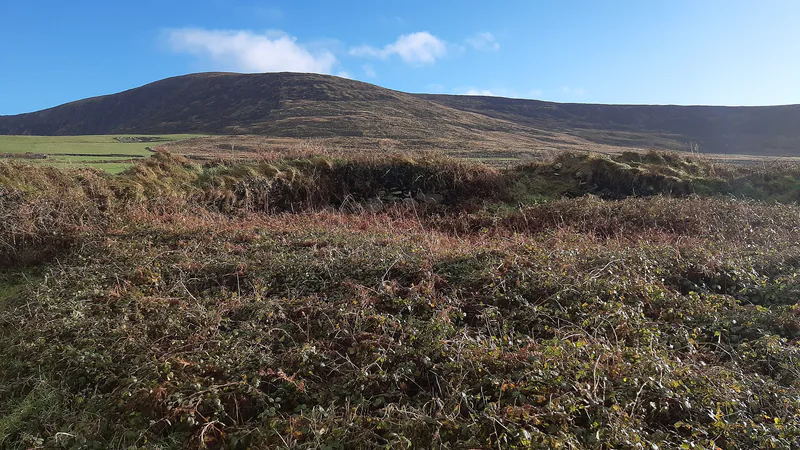
The stories reflect a central idea of Irish folk belief: that illness and misfortune could come from the fairies, the aos sí, who lived in raths and hills and could "strike" or take away people and animals, sometimes leaving a sickly substitute in their place, as described in Changelings and Fairy Abduction. A person who had dealings with the fairies, or who had been "away" with them, might gain knowledge to undo their harm. Healers of this kind were known as fairy doctors, and women among them as bean feasa. Biddy Early's bottle served both as a scrying instrument and as the material token of her connection with that hidden world.
Cures, Clients and the Fairy Doctor Tradition§
People came to Biddy Early from Clare, Galway, Limerick and Tipperary with sick children, failing cattle, injuries and troubles of every kind. According to tradition she often knew why a visitor had come before they spoke, and she could tell whether an illness was "natural" or from the fairies. Her remedies were mainly herbal preparations and bottles of liquid to be taken home, often with conditions attached, such as not looking back on the road or not letting the bottle touch the ground.
She was said not to take money directly, though she accepted gifts in kind, including food and whiskey, and was known for hospitality. Some stories show her refusing to help people who came in a bad spirit or warning that a case was beyond her power. She also took a moral tone, urging clients to make peace with neighbours or to pay their debts.
In this she resembled many rural healers across Europe, from the English cunning man James Murrell to the charmers described in Healing Charms and Charmers. What distinguished the Irish fairy doctor was the explanation of illness through the fairy world rather than through witches, and the healer's role as mediator with that world. Her practice belongs within the broader patterns traced in Folk Magic: Cunning Folk, Charms and Everyday Ritual.
Conflict with the Clergy and the Ennis Case§
The Catholic clergy of the nineteenth century, intent on reforming popular religion, condemned recourse to fairy doctors and wise women as superstition. Priests preached against Biddy Early and discouraged visits to her. Folk stories turn these conflicts into contests of power: a priest who rode out to rebuke her is said to have found his horse unable to move until he relented. Yet she is also remembered as advising people to listen to their priests, and the tension was less a rejection of the Church than a rivalry over spiritual authority, discussed more broadly in Folk Christianity.
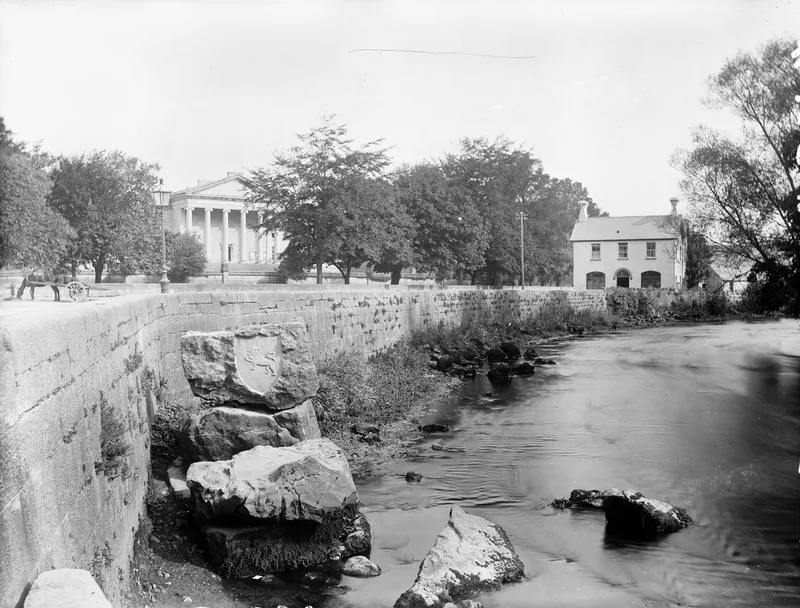
Later accounts claim that in 1865 she was brought before the court at Ennis, the county town, accused of witchcraft under an old Elizabethan statute, and that the case failed because witnesses refused to testify against her. Historians have been cautious: no reliable record of such a trial has been produced, and the story may reflect local memory of other legal troubles, such as a case in which her husband Tom Flannery was implicated, or the general hostility of authorities. Some scholars have interpreted the campaign against her as a local moral panic driven by clergy and respectable opinion.
Lady Gregory, Yeats and the Making of a Legend§
Biddy Early's fame spread beyond Clare largely through the Irish literary revival. In the 1890s Augusta, Lady Gregory, collected folklore from people in Clare and Galway, many of whom had visited Biddy Early or knew someone who had. Their testimonies appear in her Visions and Beliefs in the West of Ireland (1920), which also contains essays by W. B. Yeats, whose interest in Irish fairy lore was closely bound up with his occult studies (see W. B. Yeats and the Golden Dawn).
The stories Lady Gregory recorded are vivid, contradictory and revealing. They show Biddy Early as wise, sharp-tongued, generous and feared, and they set her among a world of spirits, changelings and fairy hosts that was still alive in the minds of the rural poor. For folklorists, the value of these accounts lies less in what they prove about her than in what they reveal of belief in post-Famine Ireland.
Later writers kept her memory in print. Meda Ryan's Biddy Early: The Wise Woman of Clare (1978) combined oral history with documentary research, and the storyteller and folklorist Edmund Lenihan's In Search of Biddy Early (1987) gathered a further harvest of local tradition in Clare.
Death, the Lake and Biddy Early's Afterlife in Memory§
Biddy Early died at her cottage in Kilbarron on 22 April 1874, attended by a priest, and was buried in Feakle. Tradition says that before her death she asked that her bottle be thrown into the lake below her house, and that the priest or a trusted neighbour did so. The lake has since been known locally as Biddy Early's lake, and stories of people searching it for the bottle continue to be told.
Her cottage, now a ruin, became a place of local pilgrimage and curiosity. In modern times she has been claimed as a figure of Irish women's history, as a symbol of a vanished healing tradition and, in some popular writing, as a witch, a label she rejected in life. Historians stress that she belongs to a specific nineteenth-century Irish world of poverty, fairy belief, Catholic reform and oral storytelling, in which a poor woman could gain an independent livelihood and lasting fame through her reputation for knowledge.
Frequently asked questions§
Who was Biddy Early?§
Biddy Early (c. 1798–1874) was a folk healer from Feakle, County Clare, Ireland. She was believed to cure people and animals with herbs and with knowledge gained from the fairies, and she became the most famous Irish wise woman.
What was in Biddy Early's bottle?§
Tradition describes a blue or dark bottle containing a liquid into which she looked to diagnose illness and foresee events. Stories say it came from the fairies or from a dead relative, and that it was thrown into the lake near her home at her death.
Was Biddy Early tried as a witch?§
Later accounts say she was charged with witchcraft at Ennis in 1865 and freed when witnesses would not testify. Historians have not found firm evidence of such a trial, and it may be part of her legend.
Where can I read stories about Biddy Early?§
The richest early collection is in Lady Gregory's Visions and Beliefs in the West of Ireland (1920). Meda Ryan's biography (1978) and Edmund Lenihan's In Search of Biddy Early (1987) gather later research and oral tradition.
Sources and further reading§
- Visions and Beliefs in the West of Ireland — Lady Gregory, 1920
- Biddy Early: The Wise Woman of Clare — Meda Ryan, 1978
- In Search of Biddy Early — Edmund Lenihan, 1987
- The Burning of Bridget Cleary: A True Story — Angela Bourke, 1999
- Irish Witchcraft and Demonology — St John D. Seymour, 1913