Liber II · Ancient Magic · Chapter IV: Folk Magic
Cunning Murrell: The Last Great Cunning Man of Essex
James 'Cunning' Murrell (1785–1860), the Hadleigh cunning man: his life, iron witch bottles, astrology, the Canewdon witches and Arthur Morrison's novel.

James Murrell (c. 1785–1860), known as "Cunning Murrell", was a shoemaker, herbalist and cunning man of Hadleigh in south-east Essex who for decades sold remedies, horoscopes and protection against witchcraft to clients across the county and beyond. Remembered for his iron witch bottles, his night-time journeys and his claim to be "the Devil's Master", he became, through a novel by Arthur Morrison and the research of folklorists, the best-known English cunning man of the nineteenth century and a key figure for historians of popular magic.
Life of James Murrell: Rochford, London and Hadleigh§
Murrell was probably born in or near Rochford, Essex, and was baptised in October 1785. Local tradition, repeated by Arthur Morrison, held that he was the seventh son of a seventh son, a birth order widely believed in British folklore to confer healing and second sight. As a young man he seems to have trained with a surveyor and then worked in London as a "stillman", distilling for a manufacturing chemist, an experience that gave him some knowledge of medicines and chemical preparations.
In 1812 he married Elizabeth Button, a woman from Hadleigh, in Bermondsey, and the couple eventually settled in her village, a small community on the Thames estuary overlooked by the ruins of Hadleigh Castle. They had many children, a large number of whom died young, and Elizabeth died in 1839. Census returns and other records describe Murrell variously as a shoemaker, a labourer and a herb doctor, which suggests how cunning folk combined their magical work with ordinary trades.
He was small, reserved and unsociable, and later accounts describe him walking the lanes at night with a basket and an umbrella in all weathers, collecting herbs and visiting clients. Such details, partly confirmed and partly embroidered, gave him an aura of mystery that he seems to have cultivated.
The Devil's Master: Murrell's Practice and Reputation§
Murrell called himself "the Devil's Master", a title meant to reassure clients that he commanded evil spirits rather than served them. His work spanned the whole repertoire of English cunning folk described in Folk Magic: Cunning Folk, Charms and Everyday Ritual. He treated people and animals with herbal remedies, cast horoscopes, located lost and stolen property, and undertook exorcisms and the breaking of spells. Contemporary and later reports mention his use of a crystal, a mirror and a bowl of water for divination, a copper charm said to detect lies, and a telescope through which he claimed to see distant events.
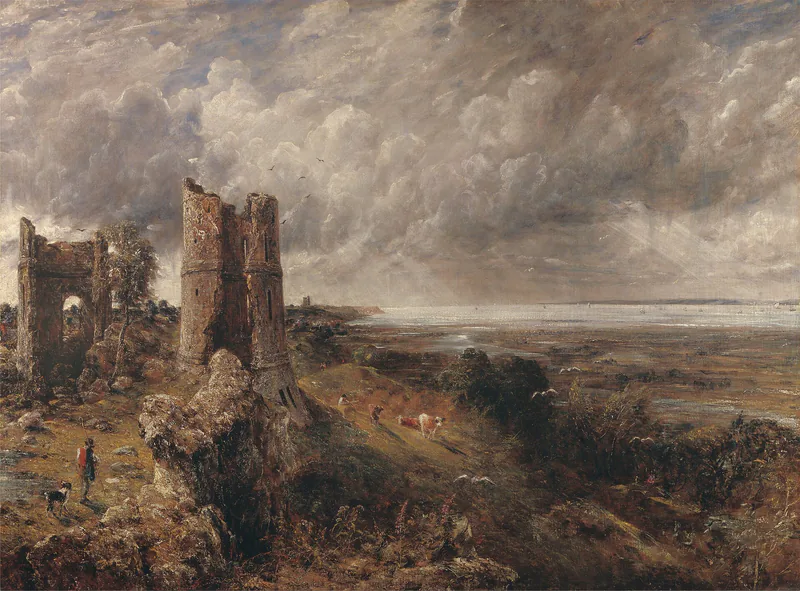
His fees were modest, from a few pence for charming warts to a few shillings for lifting a bewitchment. Newspaper reports from the 1840s and 1850s show him at work in towns and villages across south Essex and on the Thames. In 1857 he was said to have recovered stolen silver for soldiers at Tilbury Fort, and in 1858 a crowd of around two hundred gathered when he was expected to remove a curse from a woman at East Thorpe, until police dispersed them. The press of the time was sceptical, calling him a quack doctor and herbalist, but such reports confirm the continuing demand for his services among labouring and farming families.
Witch Bottles, Counter-Magic and the Canewdon Witches§
The service most associated with Murrell is counter-witchcraft. Belief in witches remained strong in rural Essex in the nineteenth century, and the village of Canewdon near Rochford had a particular reputation as a home of witches; tradition later claimed that there would always be a set number of witches there. Murrell's sister lived in Canewdon, and he was consulted by villagers who believed named neighbours had bewitched them.
His characteristic remedy was the witch bottle, a form of counter-magic described in Witch Bottles: History and Archaeology of a Counter-Spell. Earlier English witch bottles were usually stoneware jugs; Murrell had iron bottles made by a local blacksmith, Stephen Choppen, whom Arthur Morrison later interviewed. In the traditional understanding, the bottle contained substances from the bewitched person, linking it sympathetically with the witch, and was sealed and heated so that the witch would feel the effects and be forced to lift the spell or reveal herself. One widely told story claimed that a bottle exploded during the procedure.
These practices show how the cunning man acted as a counter-witch, a specialist who diagnosed bewitchment and fought it on the client's behalf. Historians stress that such services could intensify local suspicion against particular women, even after witchcraft had ceased to be a crime: the Witchcraft Act of 1735 treated the claim to magical power as fraud rather than recognising witchcraft itself.
Astrology, Books and the Key of Solomon§
Murrell was literate and owned a working library. Accounts of his papers mention books on astrology, medicine and conjuration, notebooks of remedies and charms, and astrological calculations for clients. Arthur Morrison reported that the papers included a manuscript copy of the Key of Solomon, the Renaissance grimoire of ritual magic discussed in The Key of Solomon and available in the library as a catalogued text.
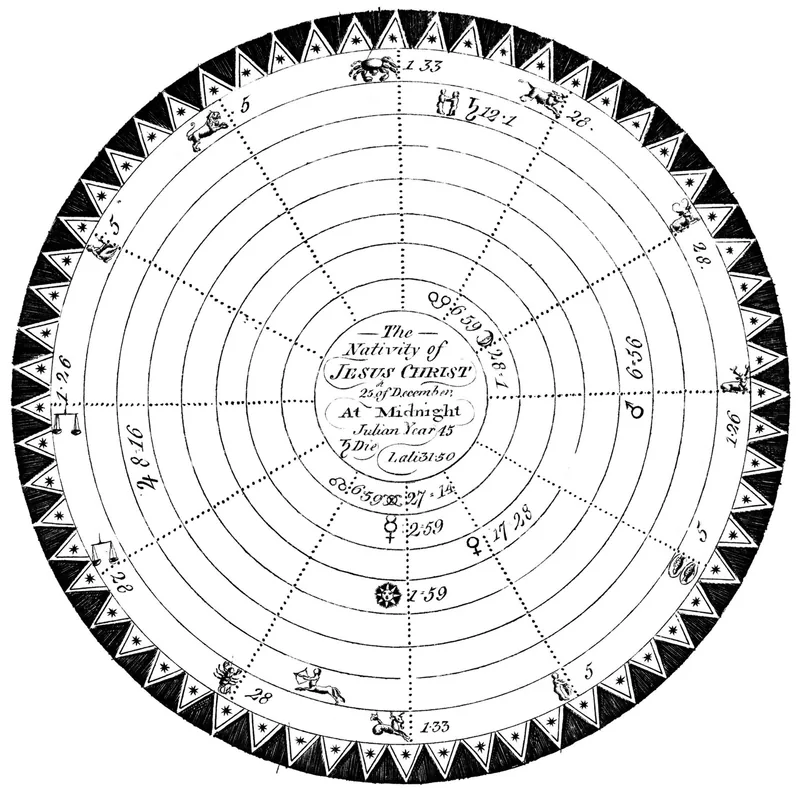
This combination of popular astrology, learned grimoire material and herbal medicine was typical of the more successful English cunning folk. Owen Davies has shown that many of them drew on printed astrological manuals, almanacs and cheap editions of magical works that circulated widely in the eighteenth and nineteenth centuries, and that literacy and books were part of their authority. A cunning man's ability to calculate a horoscope or copy a charm from a manuscript set him apart from ordinary charmers and gave his clients confidence in his learning.
Death, Papers and Arthur Morrison's Novel§
Murrell died at Hadleigh on 16 December 1860; his death certificate described him, with some irony, as a "quack doctor". Folklore later claimed that he predicted the day and hour of his death. He was buried in an unmarked grave in the churchyard of St James the Less, Hadleigh.
His son Edward, known as Buck, kept some of his father's belongings and papers, which according to one story had been buried in a chest and later recovered. In the 1890s the novelist Arthur Morrison, known for his realistic fiction of London's East End, visited Hadleigh, talked to Buck Murrell and the blacksmith Choppen, and examined surviving material. He published an article, "A Wizard of Yesterday", in The Strand Magazine and the novel Cunning Murrell in 1900. The novel, set in the 1850s among smugglers and villagers of the Essex marshes, fictionalised its hero but preserved many details of local belief. Much of the surviving paperwork was later lost; some was reportedly destroyed in the 1950s.
Murrell in Folklore and Scholarship§
In the 1950s the folklorist Eric Maple collected oral traditions about Murrell and the Essex witches, publishing articles in the journal Folklore in 1960 and a popular book, The Dark World of Witches, in 1962. Maple called him perhaps the last of the great cunning men. His stories, including tales of Murrell appearing in two places at once or flying, show how quickly a real practitioner became a legend.
Later historians placed Murrell in a wider context. Owen Davies's studies of cunning folk and of witchcraft after 1736 used him as a well-documented example of a profession that flourished in England until the late nineteenth century. Ronald Hutton, in The Triumph of the Moon, described him as the most celebrated cunning man of nineteenth-century southern England and discussed how folklore about Essex practitioners, including George Pickingill of Canewdon, later fed into claims made by twentieth-century witchcraft revivalists (see Traditional Witchcraft). Some researchers have argued that stories first told of Murrell were transferred to Pickingill.
Murrell's career illustrates the long survival of magical services in an industrialising society, the persistence of witchcraft fears among the rural poor and the role of print in popular magic. It also shows, as Keith Thomas and others have argued, that the "decline of magic" was slow and uneven.
Frequently asked questions§
Who was Cunning Murrell?§
James Murrell (c. 1785–1860) was a cunning man of Hadleigh, Essex, who offered healing, astrology, recovery of stolen goods and protection against witchcraft. He is the best-documented English cunning man of the nineteenth century.
What was Cunning Murrell's iron witch bottle?§
Instead of the usual stoneware jug, Murrell used iron bottles made by a local blacksmith. Following traditional counter-witchcraft belief, the bottle was linked to the bewitched person and heated so that the suspected witch would suffer and release the victim.
Is Arthur Morrison's Cunning Murrell a true story?§
Morrison's 1900 novel is fiction, but it is based on interviews with people who knew Murrell and on his surviving belongings. It preserves real details of his practice while inventing plot and dialogue.
Where is Cunning Murrell buried?§
He was buried in December 1860 in an unmarked grave in the churchyard of St James the Less, Hadleigh, Essex.
Sources and further reading§
- Cunning Murrell — Arthur Morrison, 1900
- The Dark World of Witches — Eric Maple, 1962
- Cunning-Folk: Popular Magic in English History — Owen Davies, 2003
- Witchcraft, Magic and Culture, 1736–1951 — Owen Davies, 1999
- The Triumph of the Moon: A History of Modern Pagan Witchcraft — Ronald Hutton, 1999
- The Archaeology of Ritual and Magic — Ralph Merrifield, 1987