Liber XXVIII · Solomonic Magic · Chapter VII: Other Grimoires
The Sixth and Seventh Books of Moses: History of a Grimoire
The Sixth and Seventh Books of Moses: Scheible's 1849 German grimoire, its seals and names, the 1880 English edition and its influence on hoodoo, the Caribbean and West Africa.

The Sixth and Seventh Books of Moses is a German grimoire first printed in the late 1840s by the Stuttgart bookseller Johann Scheible, presented as the secret magical books that Moses wrote in addition to the five books of the Torah. A jumble of seals, divine and angelic names, conjurations and charms, it became one of the most widely circulated magic books in the world, and its English edition of 1880 made it a cornerstone of African American hoodoo and of popular magic in the Caribbean and West Africa.
Origins: manuscript magic and the printer Scheible§
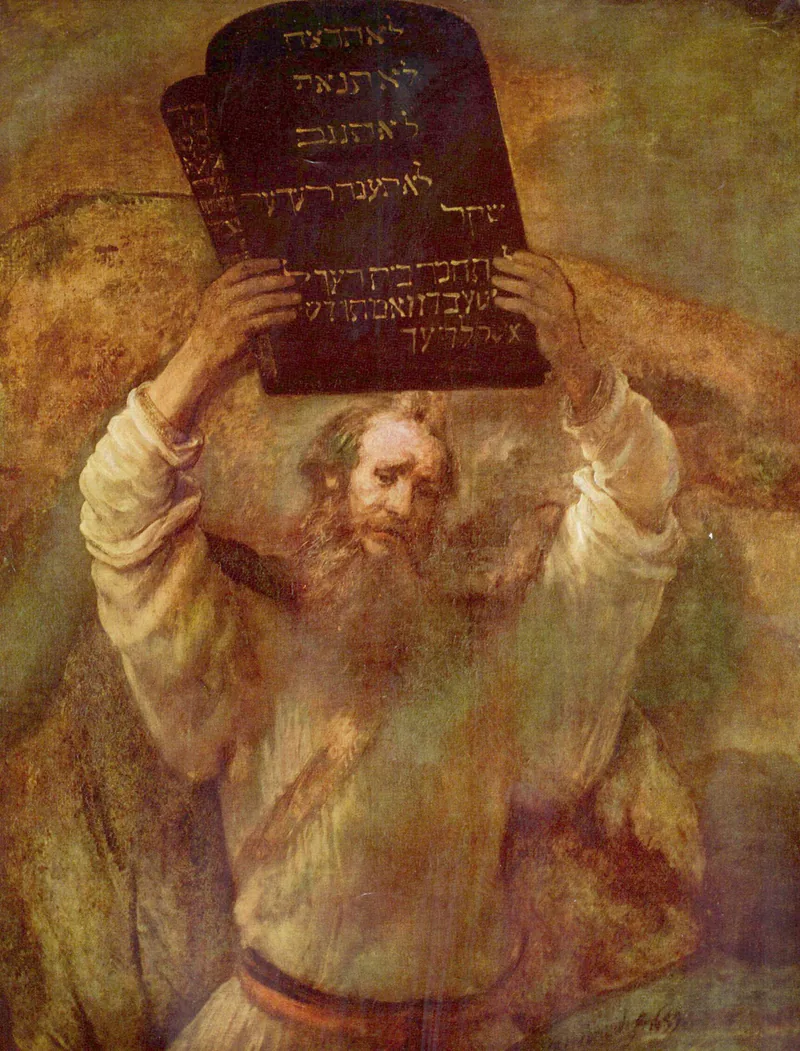
In early modern Germany, handwritten books of magic circulated under the names of Moses, Solomon and Faust. Treasure-hunters, cunning folk and curious clergy copied conjurations, seals and charms, and some manuscripts claimed to contain the "sixth and seventh books" of Moses — the secret supplement, supposedly hidden from ordinary readers, to the five books of the Pentateuch. The title exploited the reputation of Moses as a magician, who in Exodus outdoes the sorcerers of Pharaoh.
Johann Scheible (1809–1866), a Stuttgart antiquarian bookseller, published a large series of old German popular literature and magic in the 1840s, the multi-volume anthology Das Kloster, which also printed Faust books and other grimoires. The Sixth and Seventh Books of Moses appeared in this context and as a separate volume, commonly dated 1849. Scheible presented his material as antiquarian curiosities, but he drew it from manuscripts that were still in use, and his printed edition turned scattered manuscript traditions into a single, endlessly reprinted book.
What the book contains§
The book is not a coherent work but a compilation, and its contents vary between editions. Typical elements include:
- "Moses' magical spirit-art": instructions for conjuring spirits, with prayers and conjurations in a Christianised Jewish idiom.
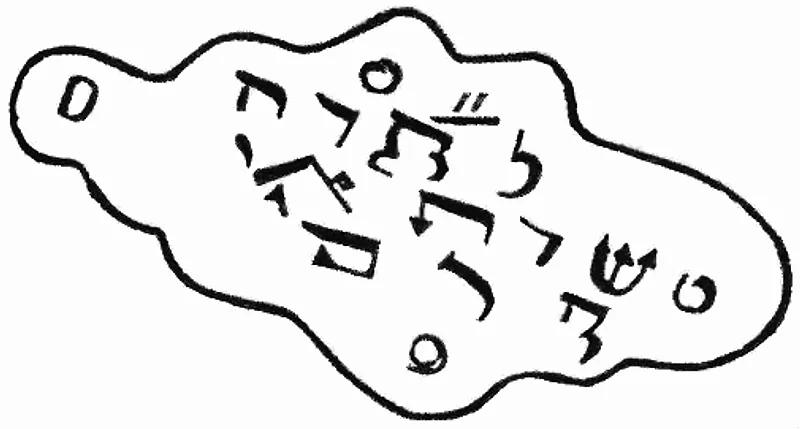
- Seals and tables: the "seals of the seven planets", seals for commanding spirits of the various elements and tables of Hebrew-looking letters and names. Many of the Hebrew names are badly garbled, a sign of repeated copying by people who did not know the language.
- The Schemhamphoras: material on the seventy-two names of God and angels, derived ultimately from Jewish speculation on the divine name — see the seven names of God for the background.
- The use of the Psalms: later editions add a German version of the Shimmush Tehillim, a Jewish text assigning a magical purpose to each psalm (for safe travel, healing, success in court and so on).
The overall picture is of Christian folk magic dressed in Hebrew authority. Like the Key of Solomon, the book claims ancient origins it does not have; like the folk charm books of the same period, it promises help with very practical problems.
The English edition and American hoodoo§
An English translation was published in New York in 1880, and from then on the book was continuously reprinted by American publishers of occult and spiritual supplies. It found a large readership among African Americans in the South and in the growing cities of the North. Hoodoo practitioners, who already treated the Bible as a book of power and Moses as the archetypal conjurer, adopted it as a source of seals and of authority. Folklorists who documented hoodoo in the 1920s and 1930s, including Zora Neale Hurston and Harry Middleton Hyatt, found the book named again and again by root doctors and their clients. Its seals were copied onto paper and parchment as amulets, and the Psalms section was widely used. The article on hoodoo and rootwork describes this context.
Caribbean and West Africa§
Through mail-order catalogues, above all those of the Chicago publisher L. W. de Laurence in the early twentieth century, the book reached the Caribbean and West Africa. In Jamaica, Trinidad and elsewhere it became associated with obeah, and colonial authorities treated de Laurence's publications as dangerous; some were banned. In Ghana and Nigeria the "Sixth and Seventh Books of Moses" acquired a reputation as a book of formidable power, said to bring wealth or madness to those who use it, and it features in sermons against occultism as well as in popular culture. Scholars such as Owen Davies have shown how a German antiquarian publication became a global text of popular magic in this way.
Reputation and controversy§
From the nineteenth century onward the book had a sinister reputation. German Protestant and Catholic clergy warned that owning it led to misfortune, mental illness or damnation, and stories circulated of people driven mad by reading it. Courts occasionally encountered it in cases of fraud by treasure-hunters and healers. At the same time it was sold openly and in huge numbers. This combination — feared and forbidden, yet cheap and accessible — is typical of the most successful grimoires.
Reading the book historically§
Historians read the Sixth and Seventh Books of Moses as evidence for the history of popular magic, printing and religious exchange rather than as a guide to practice. It shows how Jewish name-magic was absorbed into Christian folk magic, how printers turned manuscripts into mass-market books, and how a single text could take on new meanings in German villages, American cities, Caribbean islands and West African towns. Its seals and names are best understood as the end product of centuries of copying, misunderstanding and creative reuse.
Frequently asked questions§
Who wrote the Sixth and Seventh Books of Moses?§
No single author. It is a compilation of German manuscript magic, published by the Stuttgart bookseller Johann Scheible in the late 1840s and attributed to Moses to give it authority.
Is the Sixth and Seventh Books of Moses in the Bible?§
No. The Bible contains the five books of Moses (the Pentateuch). The "sixth and seventh books" are a modern grimoire with no connection to the biblical text or to ancient Jewish tradition.
Why is it associated with hoodoo?§
After its English publication in 1880 it was widely sold to African American readers, who already regarded Moses as the greatest of conjurers. Hoodoo practitioners used its seals and its psalm instructions, and folklorists of the 1920s–1930s recorded it as one of the most important books in the tradition.
Why is the book feared?§
Clergy and popular stories warned that using it led to madness or misfortune, and in West Africa and the Caribbean it became a byword for dangerous magic. These warnings are part of its history and have only added to its appeal.
Sources and further reading§
- Grimoires: A History of Magic Books — Owen Davies, 2009
- The Sixth and Seventh Books of Moses — Joseph H. Peterson (ed.), 2008
- Hoodoo—Conjuration—Witchcraft—Rootwork — Harry Middleton Hyatt, 1970
- Mules and Men — Zora Neale Hurston, 1935
- Hoodoo, Voodoo, and Conjure: A Handbook — Jeffrey E. Anderson, 2008
- The Cultural Politics of Obeah — Diana Paton, 2015