Liber XXXIV · Vodou & Hoodoo · Chapter III: Hoodoo & Rootwork
Hoodoo and Rootwork: The History of African American Conjure
Hoodoo and rootwork explained: African American conjure from slavery to today, root doctors, mojo bags, Psalms and Moses, Hyatt, Hurston and curio companies.

Hoodoo, also called conjure or rootwork, is the African American tradition of folk magic and spiritual healing that developed among enslaved people in the American South. It combines Central and West African ideas about spirit-empowered medicines with Native American and European herbal lore and a strongly Protestant use of the Bible, especially the Psalms. Unlike Haitian Vodou or Cuban Lucumí, hoodoo is not a separate religion with its own gods and priesthood, but a body of practical spiritual knowledge used for protection, healing, luck, love, justice and retaliation.
What Hoodoo, Conjure and Rootwork Mean§
The words overlap. Conjure was the most common term in older Southern sources, and a practitioner might be a conjure doctor, conjure woman or conjurer. Rootwork emphasises the roots and herbs at the heart of the tradition, and its specialists were root doctors or rootworkers. Hoodoo, a word of uncertain origin first attested in the nineteenth century, became the dominant name in the twentieth. A person who could both cause and cure spiritual harm was sometimes called a two-headed doctor.
The typical concerns of hoodoo were those of everyday life under pressure: curing illness, protecting oneself and one's family, finding work, winning a court case, attracting or keeping a lover, gaining luck in gambling, and identifying and reversing a "fix" or "trick" laid by an enemy. Many illnesses, particularly sudden or lingering ones that did not respond to ordinary treatment, were attributed to being "conjured" or "rooted", and the root doctor's task was both diagnostic and therapeutic.
Because hoodoo was concerned with power in an unjust world, it was neither purely benevolent nor purely harmful. Practitioners could offer healing and protection and also, on request, harmful magic against an enemy, a moral ambiguity that it shares with magical traditions worldwide, as explored in maleficium, curses and protective magic.
African Origins and the Experience of Slavery§
Kongo minkisi and spirit-filled objects§
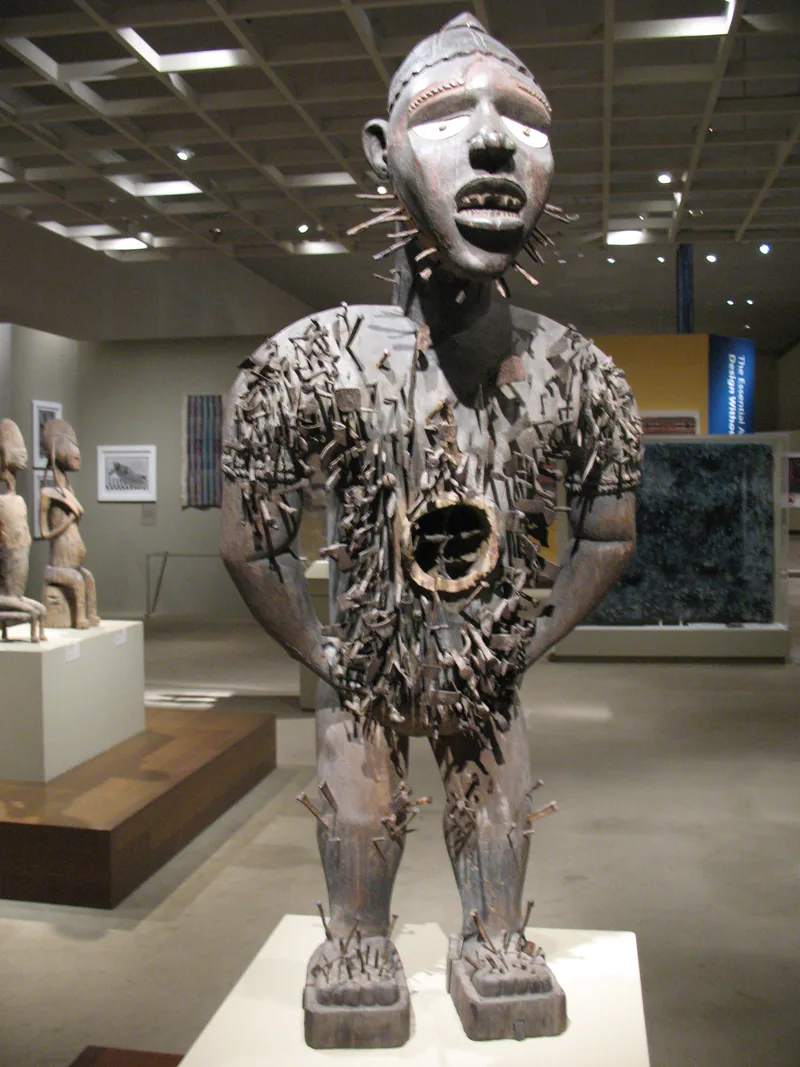
The most important African contribution to hoodoo came from West-Central Africa, particularly the Kongo cultural region, which supplied a large share of captives to North America. In Kongo religion an nkisi (plural minkisi) is a container, such as a bundle, gourd, horn or carved figure, filled with substances that house or direct a spirit's power. Grave dirt, roots, minerals and other "medicines" were combined to heal, protect or punish. Scholars such as Robert Farris Thompson, Yvonne Chireau and Jeffrey Anderson see a clear line from these objects to the hoodoo "hand", "toby" or mojo bag: a small cloth packet of roots, minerals and personal items carried for luck or protection. The word mojo itself may derive from a Kongo term, though its etymology is not certain. Senegambian traditions contributed the word gris-gris, used for charms in Louisiana.
Conjure on the plantation§
Under slavery, conjure provided a source of healing where medical care was scarce and a source of power where enslaved people were otherwise powerless. Formerly enslaved autobiographers mention it frequently. Frederick Douglass's Narrative (1845) describes how a fellow enslaved man, Sandy Jenkins, gave him a root to carry for protection before his confrontation with the "slave-breaker" Edward Covey; Douglass was sceptical but noted that he was not beaten again. Henry Bibb's Narrative (1849) recounts buying charms to avoid punishment and win a woman's affection, and his disappointment when they failed.
Archaeologists have found caches of objects such as pierced coins, crystals, buttons and pins beneath the floors and hearths of quarters at plantation and urban sites, which many interpret as protective spirit bundles in an African idiom. Planters sometimes feared conjurers as leaders of resistance, and accusations of poisoning and conjure appeared in slave-era court records.
The Bible, Moses and Printed Magic§
Protestant Bible magic§
As enslaved and freed African Americans embraced Christianity, particularly Baptist and Methodist forms, the Bible became itself an object and source of power. Hoodoo practitioners used particular Psalms for specific purposes, such as protection, healing or success, recited over a person or written and carried. Many Black Christians understood God as the ultimate source of a conjurer's gift. Yvonne Chireau's Black Magic (2003) shows that Christianity and conjure were not opposites in African American life but coexisted, with practitioners often seeing their work as a spiritual gift used under God.
Moses held a special place. The Exodus story spoke directly to an enslaved people, and Moses's contest with Pharaoh's magicians made him, in folk tradition, the greatest conjurer of all. Zora Neale Hurston recorded this view in Mules and Men and developed it in her novel Moses, Man of the Mountain (1939). The theologian Theophus Smith's Conjuring Culture (1994) argues that African American Christianity as a whole has a "conjurational" character, using biblical figures as powerful patterns for transforming reality.
The Sixth and Seventh Books of Moses and other grimoires§
In the late nineteenth century printed magical texts entered the tradition. The Sixth and Seventh Books of Moses, a German grimoire published by Johann Scheible in 1849 and translated into English in New York around 1880, claimed to preserve secret magical books of Moses, with seals and Hebrew names of power. It became widely sold by mail order and was valued in African American communities as a supposed key to Moses's power; it was also banned in some Caribbean colonies. Other influential books included Secrets of the Psalms, an English version of a German compilation that derived ultimately from the Jewish Shimmush Tehillim tradition, and John George Hohman's Pennsylvania German The Long Lost Friend (1820). These sit alongside the older European grimoire tradition represented by the Key of Solomon. In the twentieth century, pseudonymous authors such as "Henri Gamache" and "Lewis de Claremont" wrote booklets aimed at the hoodoo market.
Root Doctors and Their Communities§
Root doctors were usually paid specialists, consulted much as a person might visit a physician or lawyer. Some were famous across whole regions. Dr. Buzzard, a name associated with practitioners in Beaufort County, South Carolina, in the early twentieth century, was reputed to influence court cases and was later the subject of local legend. Many root doctors were women, who drew on midwifery and herbal healing knowledge.
A consultation might involve diagnosis of the client's trouble through divination, conversation or examination; the preparation of a charm, bath, powder or bottle; prayers and Psalms; and instructions on how to carry or dispose of items. Some workers were deeply religious and regarded their gift as being "born with a caul" or receiving a call from God. Others were frank entrepreneurs, and clients were well aware that charlatans existed.
The most famous botanical symbol of hoodoo is High John the Conqueror, a root (usually identified with a species of morning glory, Ipomoea jalapa) associated with a legendary trickster hero who outwitted the slaveholder. Hurston's 1943 essay "High John de Conquer" presented him as an emblem of Black resilience and laughter. The cunning folk of Britain, described in our article on traditional witchcraft, offer an instructive comparison: paid local specialists who healed, protected and counteracted witchcraft within a Christian worldview.
Hyatt, Hurston and the Documentation of Hoodoo§
Zora Neale Hurston§
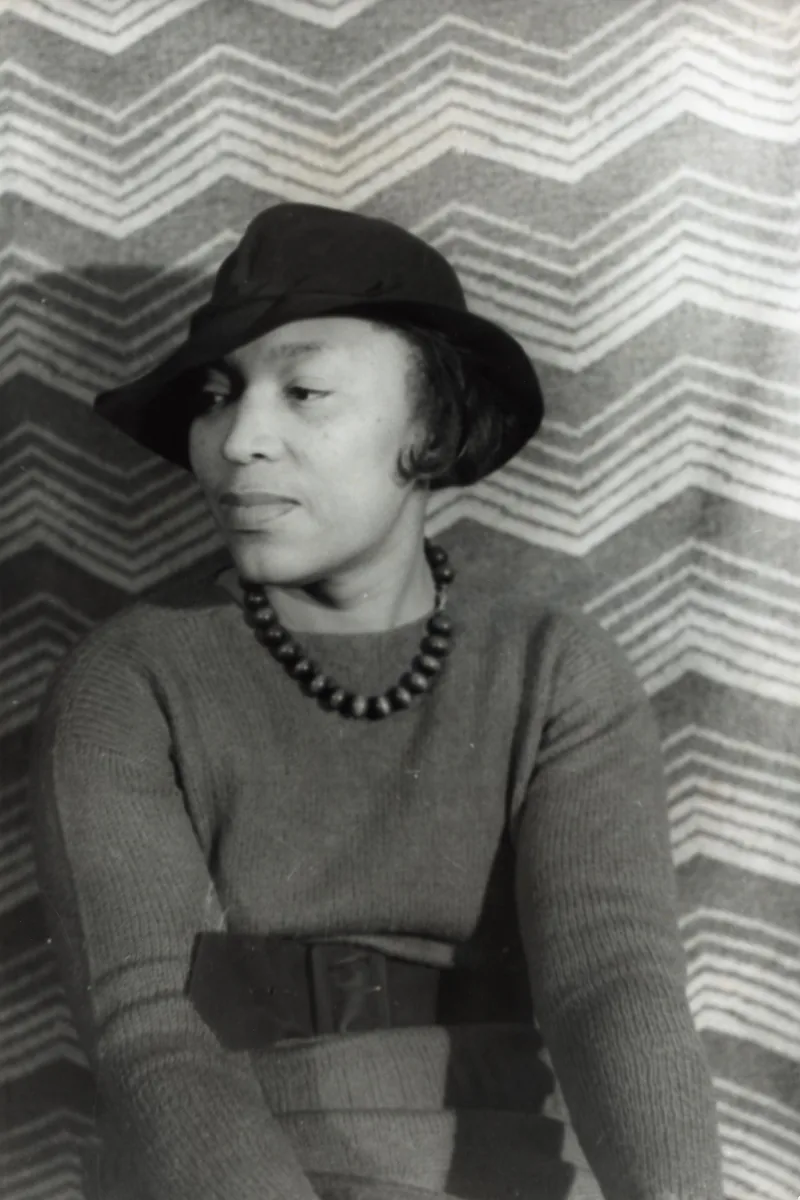
The novelist and anthropologist Zora Neale Hurston, trained under Franz Boas, carried out fieldwork in Florida and New Orleans in the late 1920s. Her article "Hoodoo in America" (Journal of American Folklore, 1931) and the second half of Mules and Men (1935) describe her apprenticeship with several New Orleans practitioners and her own initiations. Scholars value her vivid, insider-oriented record while recognising that she sometimes compressed and dramatised events.
Harry Middleton Hyatt§
The largest single source is the work of Harry Middleton Hyatt, an Anglican clergyman and folklorist. Between 1936 and 1940, with a further trip around 1970, he interviewed roughly 1,600 informants, most of them African American, across the South and the Atlantic seaboard, recording their words on early sound-recording machines. The transcripts were published as Hoodoo—Conjuration—Witchcraft—Rootwork in five volumes between 1970 and 1978. Hyatt's methods, including paying informants and summarising some material, have been criticised, but the collection preserves the voices of hundreds of practitioners and clients and remains indispensable.
Earlier, Newbell Niles Puckett's Folk Beliefs of the Southern Negro (1926) collected a large body of material, though from a perspective that treated it largely as superstition. Literary works such as Charles W. Chesnutt's The Conjure Woman (1899) also drew on conjure tradition.
Curio Companies and the Spiritual Marketplace§
With the Great Migration, millions of African Americans moved to Chicago, Detroit, New York and other northern cities, bringing hoodoo with them. In urban settings, roots gathered in the woods were increasingly replaced by commercial products. From the early twentieth century, curio companies and spiritual supply houses, many in Chicago, Memphis and New York, sold incense, oils, sachet powders, candles, "lucky" soaps, roots and dream books by mail order and through drugstores and "candle shops". Firms such as Valmor in Chicago and the Lucky Heart Company in Memphis advertised widely in the Black press. Some manufacturers were white or Jewish entrepreneurs who adapted products to a market they observed; others were Black-owned.
Carolyn Morrow Long's Spiritual Merchants (2001) traces this commercial history in detail. Products took names that reflected traditional concerns: luck in gambling, success, love, protection, uncrossing. The blues spread hoodoo imagery to a national audience, with songs about mojo hands, black cat bones and John the Conqueror root, most famously in Muddy Waters's recording of Willie Dixon's "Hoochie Coochie Man" (1954).
Katrina Hazzard-Donald's Mojo Workin' (2013) distinguishes an "Old Tradition" hoodoo, once embedded in African-derived religious practices such as the ring shout, from a later "marketeered" hoodoo shaped by commerce. Her argument has been influential, though other scholars see commercialisation as one more stage in a tradition that was always adaptive.
Hoodoo Compared with Vodou, Voodoo and Santería§
Hoodoo is often confused with Voodoo, partly because the words sound alike and partly because New Orleans practice blended the two after the decline of organised Voodoo, as described in Louisiana Voodoo and Marie Laveau. The key distinctions are:
- Haitian Vodou and Santería or Lucumí are religions, with a pantheon of spirits (lwa or orishas), initiated priests, temples, communal ceremonies and spirit possession.
- Hoodoo has no pantheon of its own, no initiatory priesthood and no communal liturgy. Its practitioners have overwhelmingly been Protestant Christians, and its spiritual powers are typically God, the Holy Spirit, biblical figures, the dead and the virtues of natural substances.
- Hoodoo developed mainly in Protestant, English-speaking regions of the United States, where large communal African religious gatherings were suppressed more thoroughly than in Catholic colonies, which helps explain why African traditions survived there in individual, practical forms.
The Contemporary Revival of Hoodoo§
Since the 1990s, and especially with the growth of online communities and social media, hoodoo has seen a striking revival. Many African Americans, particularly women, approach it as ancestral heritage and a form of spiritual self-determination, often alongside renewed interest in African and Afro-Caribbean religions. Online stores and teachers have made hoodoo knowledge more widely available, and debates have followed about whether hoodoo is a "closed" practice belonging to African American communities, about commercialisation, and about how to distinguish traditional knowledge from modern invention. Most serious practitioners stress respect for ancestors, the importance of the Bible in historical practice, and the need to learn from the documented tradition rather than from popular stereotypes of "voodoo".
Frequently asked questions§
Is hoodoo the same as Voodoo?§
No. Voodoo (in Louisiana) and Vodou (in Haiti) are religions with spirits, priests and ceremonies. Hoodoo is African American folk magic and healing, practised mostly by Protestant Christians, though in New Orleans the two traditions overlapped heavily.
Is hoodoo a religion?§
Most scholars describe hoodoo as a system of magic and spiritual healing rather than a religion in its own right. Historically it functioned within African American Christianity, drawing on the Bible, the Psalms and prayer as sources of power.
What is a mojo bag?§
Historically, a mojo bag, also called a hand, toby or gris-gris, was a small cloth bag containing roots, minerals and personal items, made by a root doctor and carried for luck, protection or love. Scholars trace it to Central African minkisi, containers believed to hold spiritual power.
Who was Harry Middleton Hyatt?§
Hyatt was an Anglican minister and folklorist who interviewed some 1,600 people across the American South between 1936 and 1940. His transcripts, published in five volumes from 1970 to 1978, form the largest oral record of hoodoo ever compiled.
Why is the Sixth and Seventh Books of Moses linked to hoodoo?§
This German grimoire, translated into English around 1880, claimed to reveal Moses's secret magic. Because Moses was revered in African American tradition as the greatest conjurer, the book became popular among hoodoo practitioners and was widely sold by mail order.
Sources and further reading§
- Hoodoo—Conjuration—Witchcraft—Rootwork (5 vols.) — Harry Middleton Hyatt, 1970–1978
- Mules and Men — Zora Neale Hurston, 1935
- Black Magic: Religion and the African American Conjuring Tradition — Yvonne P. Chireau, 2003
- Conjure in African American Society — Jeffrey E. Anderson, 2005
- Hoodoo, Voodoo, and Conjure: A Handbook — Jeffrey E. Anderson, 2008
- Mojo Workin': The Old African American Hoodoo System — Katrina Hazzard-Donald, 2013
- Spiritual Merchants: Religion, Magic, and Commerce — Carolyn Morrow Long, 2001
- Conjuring Culture: Biblical Formations of Black America — Theophus H. Smith, 1994
- Flash of the Spirit: African and Afro-American Art and Philosophy — Robert Farris Thompson, 1983
- Folk Beliefs of the Southern Negro — Newbell Niles Puckett, 1926
- Narrative of the Life of Frederick Douglass — Frederick Douglass, 1845