Liber II · Ancient Magic · Chapter III: Egyptian Magic
Moses the Magician: Mosaic Magic from Exodus to Hoodoo
How Moses became a master magician in ancient, medieval and modern lore: Pharaoh's sorcerers, the Greek magical papyri, the Sword of Moses and the Sixth and Seventh Books.

In the Bible, Moses is a prophet who works wonders through the power of God, but from antiquity onward many readers saw him as something else as well: the greatest magician who ever lived. Greek and Roman writers listed him among famous sorcerers, the Greek magical papyri invoked him as an authority, Jewish texts credited him with secret names of power, and nineteenth-century printers sold the Sixth and Seventh Books of Moses as his lost magical manual. This "Mosaic magic" is one of the longest-lived traditions in the history of magic.
Moses and Pharaoh's magicians§
The story that made Moses a magician is told in Exodus 7–12. When Moses and Aaron appear before Pharaoh, Aaron's staff becomes a serpent; Pharaoh's "wise men and sorcerers" — the Hebrew word hartummim is borrowed from an Egyptian title for priestly scribes — do the same with their staffs, but Aaron's serpent swallows theirs. The Egyptian magicians also imitate the first plagues, turning water to blood and bringing up frogs, but they fail at the plague of lice and confess, "This is the finger of God" (Exodus 8:19).
The narrative draws a careful line. The Egyptians work by "their enchantments"; Moses and Aaron act at God's command. Later tradition, however, often blurred the line, and the contest itself looked like a duel of magicians. Jewish and Christian writers even gave Pharaoh's sorcerers names: Jannes and Jambres, mentioned in the New Testament (2 Timothy 3:8) and in a Jewish apocryphon called the Book of Jannes and Jambres. In the Qur'an, the story is retold with the same contest between Musa and Pharaoh's sorcerers, who, defeated, believe in Musa's God (Surahs 7, 20 and 26).
Moses in Greek and Roman eyes§
For Greek and Roman authors, Moses was the lawgiver of the Jews and, increasingly, a famous wonder-worker. The Roman encyclopaedist Pliny the Elder, in his account of the origins of magic (Natural History 30.11), writes of "another sect of magic" deriving from Moses, Jannes and Lotapes, Jews. In the second century CE the North African writer Apuleius, defending himself against a charge of sorcery, cited Moses alongside Zoroaster, Ostanes and others as one of the renowned magi of history (Apology 90). The historian John G. Gager collected these pagan references and showed how widely Moses' reputation as a magician had spread.
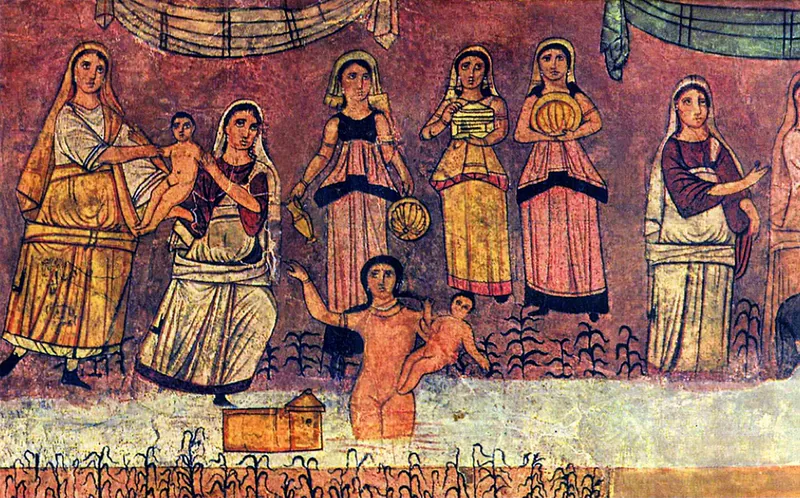
Jewish writers of the Hellenistic age responded in different ways. Artapanus, writing in Greek in Egypt, portrayed Moses as a culture hero who taught the Egyptians their arts and whose power came from the divine name: in one episode Moses whispers the name of God into Pharaoh's ear and the king falls speechless. Philo of Alexandria and Josephus, by contrast, insisted that Moses was a philosopher and prophet rather than a sorcerer.
Moses in the Greek magical papyri§
The Greek magical papyri (PGM), a collection of handbooks from Roman Egypt written between about the second century BCE and the fifth century CE, show that practising magicians took Moses as an authority. The long text known as PGM XIII contains several versions of a rite called "the Eighth Book of Moses" or "the Holy Book called Monad or Eighth of Moses", an elaborate initiation in which the practitioner seeks a revelation of the supreme god and learns his secret name. The papyri also include a "Diadem of Moses" spell and references to "the secret moon book of Moses". These texts blend Egyptian, Greek and Jewish elements: the Jewish God is invoked as Iao, Sabaoth and Adonai alongside Egyptian deities and long strings of magical names. For the authors of the papyri, attributing a rite to Moses gave it the authority of the most powerful magician they knew.
The Sword of Moses and Jewish name-magic§
Within Judaism, the idea that Moses received secret names of power took shape in texts of late antiquity and the early Middle Ages. The Hebrew Harba de-Moshe (The Sword of Moses), first published in 1896 by Moses Gaster from a medieval manuscript, presents itself as a revelation of divine and angelic names given to Moses, followed by a long list of practical uses — for healing, protection, love and harm — each performed by reciting a section of the "sword" of names. Modern scholarship, especially Yuval Harari's critical edition (1997), dates its core to late antiquity or the early medieval period.
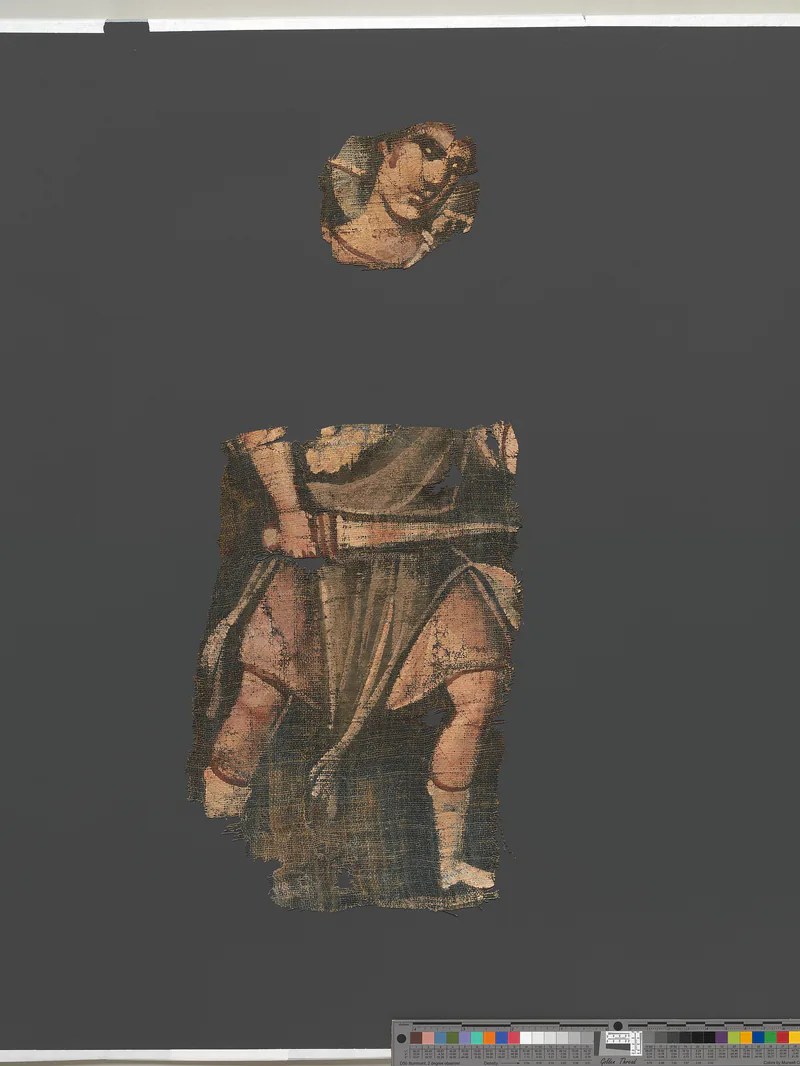
The same belief appears in rabbinic legend, where Moses ascends to heaven to receive the Torah and is taught names by the angels, and in the later idea that the seventy-two-letter name, derived from three verses of Exodus 14 describing the parting of the Red Sea, was the power by which Moses divided the waters. Jewish practical Kabbalah inherited these traditions, and amulets invoking "the name by which Moses split the sea" were common in the Middle Ages. See the seven names of God for how the divine names were classified and revered.
The Sixth and Seventh Books of Moses§
The modern legend of Mosaic magic rests above all on a printed book. In 1849 the Stuttgart antiquarian Johann Scheible published Das sechste und siebente Buch Mosis in his series Das Kloster, a compilation of German manuscript magic presented as the secret books Moses supposedly wrote in addition to the five books of the Torah. It contains seals of the planetary spirits, tables of Hebrew-looking names (much of them garbled), invocations and charms, together with material on the "Schem hamphoras" and the use of the Psalms. An English translation was published in New York in 1880.
The book had an extraordinary afterlife. Cheap editions spread through the German-speaking world, where clergy denounced it, and through the United States, where it became one of the most important printed sources of African American hoodoo. Zora Neale Hurston's novel Moses, Man of the Mountain (1939) draws on this tradition of Moses as the greatest "hoodoo man". Through mail-order catalogues the book reached the Caribbean and West Africa, where it became associated with powerful and dangerous magic and in some places was banned. A full account of the book is in the article on the Sixth and Seventh Books of Moses.
Why Moses?§
Scholars offer several explanations for Moses' magical reputation. The Exodus narrative itself, with its staff, plagues and contest of wonders, invited comparison with magic. Moses was also the figure most closely associated with the revelation of the divine name, and in the ancient world names were the central instruments of magic. For Greeks and Romans he was an exotic sage of the East, like Zoroaster. And for Jews and Christians who practised magic, attributing a text to Moses gave it the greatest possible authority, just as attribution to Solomon did for the grimoires of the Solomonic tradition. The Egyptologist Jan Assmann has traced the long Western memory of "Moses the Egyptian" as a figure who stood between Egyptian wisdom and biblical religion.
Frequently asked questions§
Was Moses a magician in the Bible?§
No — the Bible presents Moses' wonders as acts of God, contrasted with the "enchantments" of Pharaoh's magicians. But the contest of wonders in Exodus made it easy for later readers, from Roman writers to modern folk magicians, to see him as a magician.
Who were Jannes and Jambres?§
They are the names later Jewish and Christian tradition gave to Pharaoh's magicians who opposed Moses. They appear in 2 Timothy 3:8 and in an apocryphal Book of Jannes and Jambres, and Pliny the Elder mentions a Jannes among famous magicians.
What is the Eighth Book of Moses?§
It is the name given to a rite preserved in the Greek magical papyri (PGM XIII), an initiation in which the practitioner seeks a revelation of the supreme god's name. It has nothing to do with the Bible, but was attributed to Moses to give it authority.
Are the Sixth and Seventh Books of Moses really by Moses?§
No. They were compiled from German magical manuscripts and first printed by Johann Scheible in 1849. The attribution to Moses is a traditional device to lend the book power and prestige.
Sources and further reading§
- Moses in Greco-Roman Paganism — John G. Gager, 1972
- Moses the Egyptian: The Memory of Egypt in Western Monotheism — Jan Assmann, 1997
- The Greek Magical Papyri in Translation — Hans Dieter Betz (ed.), 1986
- Harba de-Moshe (The Sword of Moses): A New Edition and a Study — Yuval Harari, 1997
- Grimoires: A History of Magic Books — Owen Davies, 2009
- Moses, Man of the Mountain — Zora Neale Hurston, 1939
- Magic in the Ancient World — Fritz Graf, 1997