Liber XXII · Occultism · Chapter II: Clairvoyance & Psychical Research
Clairvoyance and Psychical Research: History and Evidence
Clairvoyance and psychical research from second sight and mesmeric lucidity to the SPR, Rhine's ESP tests, remote viewing and the replication debate.

Clairvoyance, literally "clear seeing", is the claimed ability to perceive objects, places or events beyond the reach of the ordinary senses, and psychical research is the attempt, begun in earnest in the 1880s, to test such claims with the methods of science. The story runs from Highland second sight and the "lucid" somnambulists of mesmerism, through the Society for Psychical Research founded in London in 1882, to J. B. Rhine's card-guessing experiments at Duke University and the laboratory parapsychology of today. After nearly a century and a half of investigation, mainstream science has not accepted that clairvoyance or telepathy has been demonstrated, but the history of the search is one of the most revealing chapters in modern occultism.
Clairvoyance, Telepathy and Second Sight: The Vocabulary§
Psychical research has its own technical language, and much of it is surprisingly recent. Clairvoyance was used by French magnetisers in the early nineteenth century for the lucid perception of an entranced subject; English writers borrowed it by the 1840s. Telepathy was coined by the classicist Frederic W. H. Myers in 1882 to replace the clumsier "thought-transference". Precognition refers to knowledge of future events, psychokinesis to the claimed influence of mind on matter, and extrasensory perception, abbreviated ESP, was popularised in the 1930s by J. B. Rhine as an umbrella for the first three. Psi became the neutral shorthand for all such phenomena.
Older vocabularies existed long before. In the Scottish Highlands and Islands, the taibhsearachd or "second sight" was the visionary foreknowledge, often of deaths, attributed to certain individuals. The Episcopalian minister Robert Kirk discussed it in The Secret Commonwealth (written in 1691, published in 1815), and Martin Martin described it in his account of the Western Isles (1703). What distinguished the modern period was the attempt to explain such gifts in natural terms and then to measure them.
Seers Before Science: Swedenborg and Mesmeric Lucidity§
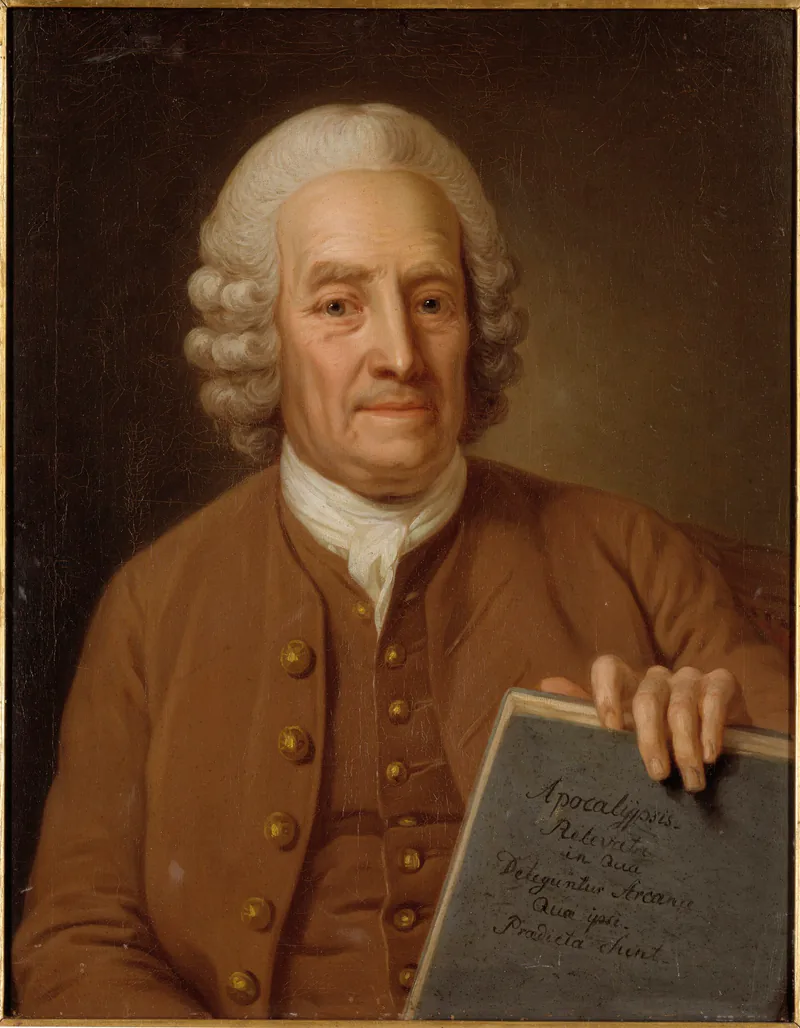
The most famous eighteenth-century case concerned the Swedish scientist and visionary Emanuel Swedenborg. In July 1759, according to accounts that circulated widely, he described a great fire in Stockholm while dining in Gothenburg, some 400 kilometres away, hours before any messenger could have arrived. The story reached the philosopher Immanuel Kant, who made it the starting point of Dreams of a Spirit-Seer (1766), an ironic but searching essay on whether metaphysics could tell spirit-seeing apart from fantasy.
The decisive step came with mesmerism. In 1784 the Marquis de Puységur found that some magnetised subjects fell into a "magnetic sleep" in which they claimed to see inside their own bodies, diagnose illness and perceive distant scenes. Throughout the following decades French and German magnetisers exhibited "lucid somnambulists" who read with their eyes bandaged or described rooms they had never entered; the Paris clairvoyant Alexis Didier, active in the 1840s, drew sceptical observers and eager believers alike. These performances supplied both the word and the model: clairvoyance was a latent faculty of the soul, released when ordinary consciousness was suspended. The wider story of mesmerism belongs to its own chapter of this book, and the parallel rise of the séance is told in Spiritualism.
Clairvoyance in Occult Teaching§
For nineteenth-century occultists, clairvoyance was not a question but a goal. The Theosophical Society taught that human beings possess subtle bodies whose senses can be awakened by discipline, and C. W. Leadbeater's Clairvoyance (1899) set out a graded scheme of astral and mental sight. In Theosophy, as described in What Is Theosophy?, such sight was also a source of doctrine: Leadbeater and Annie Besant published "clairvoyant investigations" of auras, past lives and even the structure of atoms. Rudolf Steiner, after his break with the Theosophists, presented a more restrained path to "knowledge of higher worlds" in essays first serialised in 1904–1905.
Ritual magicians had their own techniques. The Hermetic Order of the Golden Dawn trained members in "skrying in the spirit vision", using coloured symbols adapted from the Hindu tattvas as doorways for guided visualisation. Crystal-gazing, inherited from older magical practice, enjoyed a fashionable revival in the 1880s and 1890s and attracted the interest of psychical researchers; its long history is surveyed in Theodore Besterman's Crystal-Gazing (1924). The American Edgar Cayce (1877–1945) gave trance "readings" on health and past lives that inspired a lasting movement. In all of these settings clairvoyance was framed as a spiritual capacity, verified by inner experience rather than by controlled test.
The Society for Psychical Research and Its Investigations§
The Society for Psychical Research (SPR) was founded in London in 1882 by a circle of Cambridge scholars, including the philosopher Henry Sidgwick, Myers and Edmund Gurney, with Spiritualists also among its early members. Its aim was to examine "debatable phenomena" without prejudice. Committees were formed on thought-transference, mesmerism, apparitions and physical mediumship, and an American society followed in 1885.
The society's distinctive method was the collection of testimony on a massive scale. Phantasms of the Living (1886), by Gurney, Myers and Frank Podmore, gathered hundreds of cases of apparitions seen at the moment of a distant person's death or crisis and argued that telepathy was the best explanation. The Census of Hallucinations, published in 1894, surveyed some 17,000 people. This work shaped modern thinking about ghosts and hauntings and about the psychology of perception.
Mediums under investigation§
Psychical researchers also sat for long periods with individual mediums. The Boston trance medium Leonora Piper was studied from 1885 by the psychologist William James, who came to regard her as a case that could not be dismissed, and then by SPR investigators in England. The Italian physical medium Eusapia Palladino impressed several scientists but was repeatedly caught using a freed hand or foot. Myers's posthumous Human Personality and Its Survival of Bodily Death (1903) gathered the evidence into a theory of a "subliminal self" whose hidden powers might include telepathy and survival.
Other researchers drew psychological conclusions. The Geneva psychologist Théodore Flournoy, in From India to the Planet Mars (1900), showed how the medium Hélène Smith's elaborate revelations could be traced to forgotten memories, a process he called cryptomnesia, and the young C. G. Jung wrote his doctoral dissertation (1902) on the séances of a cousin. In France the physiologist Charles Richet, Nobel laureate in 1913 for his work on anaphylaxis, gave the field the name métapsychique, and the Institut Métapsychique International was founded in Paris in 1919.
Rhine and the Birth of Parapsychology§
The move from séance room to laboratory was led by Joseph Banks Rhine (1895–1980), a botanist who joined William McDougall at Duke University in North Carolina in 1927. Rhine replaced mediums with ordinary volunteers and stories with statistics. Using a pack of twenty-five cards bearing five simple symbols, designed with the psychologist Karl Zener, subjects tried to identify cards they could not see, and scores were compared with chance expectation. Extra-Sensory Perception (1934) reported results far above chance, and the Journal of Parapsychology followed in 1937.
Rhine's work made "parapsychology" a recognised term and won wide public attention, but critics quickly identified weaknesses: cards whose symbols could be glimpsed through the backs, loose controls in early trials, selective reporting and a decline in striking results as procedures tightened. Independent laboratories often failed to replicate the highest scores. The Parapsychological Association was founded in 1957 and admitted to the American Association for the Advancement of Science in 1969, a mark of professional status that has not translated into general scientific acceptance. The broader question of how occult claims have fared against scientific method is examined in occultism and science.
Ganzfeld, Remote Viewing and the Replication Debate§
From the 1970s parapsychologists developed new protocols. In the ganzfeld experiment, associated with Charles Honorton, a "receiver" in mild sensory isolation describes impressions while a "sender" elsewhere concentrates on a randomly chosen image; the receiver then tries to pick the target from four options. Meta-analyses have produced competing conclusions. Honorton and the sceptical psychologist Ray Hyman debated the early database in the 1980s and agreed on stricter standards, and later meta-analyses have reported positive and null results in turn, depending on which studies are included.
At Stanford Research Institute, the physicists Russell Targ and Harold Puthoff began "remote viewing" experiments in 1972, and US government agencies funded a series of programmes on the subject for over two decades. An evaluation commissioned in 1995, in which the statistician Jessica Utts and Hyman reached sharply different readings of the data, concluded that remote viewing had never provided intelligence of practical use, and the last programme, known as Stargate, was closed. In 2011 the social psychologist Daryl Bem published experiments claiming evidence of precognition in a leading psychology journal; failed replications made the paper a landmark in the wider "replication crisis" debate over statistical practice.
Universities have maintained small research units, notably the Koestler Parapsychology Unit at Edinburgh, established in 1985. The prevailing scientific view is that no psi effect has been demonstrated reliably enough to be reproduced by independent sceptical laboratories, and that positive findings are better explained by flexible analysis, publication bias and subtle methodological flaws. Historians, for their part, study psychical research as a serious attempt to bring the claims of occultism under scientific scrutiny, and as a field whose debates helped shape experimental psychology and statistics.
Frequently asked questions§
What is the difference between clairvoyance and telepathy?§
In the terminology of psychical research, telepathy is the claimed transfer of information from one mind to another, while clairvoyance is the claimed perception of objects or events directly, without another mind as intermediary. Precognition extends the same idea to future events. In practice experiments often could not separate the three, which is why Rhine grouped them as extrasensory perception.
What was the Society for Psychical Research?§
It is a learned society founded in London in 1882 by Henry Sidgwick, Frederic Myers, Edmund Gurney and others to investigate mediumship, apparitions, telepathy and related claims impartially. It still exists, publishes a journal and holds an archive of historical cases. Its members included sceptics and believers, and it exposed many fraudulent mediums.
Has science proven that clairvoyance exists?§
No. Some experiments have reported results above chance, but they have not been reproduced reliably by independent researchers under strict controls, and mainstream scientific bodies do not accept psi as established. A minority of researchers continue to argue that the cumulative data deserve further study.
Is parapsychology the same as occultism?§
Not quite. Occultists generally treat clairvoyance as a spiritual faculty confirmed by inner experience, whereas parapsychologists treat it as a hypothesis to be tested by experiment. The two fields share a history and some personnel, but their aims and methods differ.
Sources and further reading§
- Dreams of a Spirit-Seer — Immanuel Kant, 1766
- Phantasms of the Living — Edmund Gurney, Frederic W. H. Myers and Frank Podmore, 1886
- From India to the Planet Mars — Théodore Flournoy, 1900
- Human Personality and Its Survival of Bodily Death — Frederic W. H. Myers, 1903
- Extra-Sensory Perception — J. B. Rhine, 1934
- The Other World: Spiritualism and Psychical Research in England, 1850–1914 — Janet Oppenheim, 1985
- Ghost Hunters: William James and the Search for Scientific Proof of Life After Death — Deborah Blum, 2006
- Authors of the Impossible: The Paranormal and the Sacred — Jeffrey J. Kripal, 2010