Liber XXII · Occultism · Chapter IV: German Occultism
Guido von List and Ariosophy: Runes, Race and Occultism
Guido von List and Ariosophy: the Armanen runes, Lanz von Liebenfels, the Thule Society and how Austrian racial occultism related to Nazism.

Ariosophy was a racist occult movement that arose in Austria and Germany between about 1900 and 1930, combining Germanic nationalism, Theosophy and invented runic lore into a doctrine of "Aryan" spiritual supremacy. Its chief founders were the Viennese writer Guido von List (1848–1919), who devised the eighteen "Armanen" runes, and Jörg Lanz von Liebenfels, who coined the name "Ariosophy". Historians, above all Nicholas Goodrick-Clarke, have traced how its ideas fed into the völkisch milieu from which Nazism emerged, while also showing that its direct influence on Nazi policy was limited.
Guido von List: Life and Background§
Guido List was born in Vienna on 5 October 1848 into a prosperous merchant family. He worked for years in the family leather business, while spending his free time rowing, hiking and visiting the ruins and prehistoric sites of Lower Austria, which he came to regard as sanctuaries of a forgotten Germanic religion. After his father's death he turned to journalism and fiction, publishing feature articles on landscape and folklore and historical novels such as Carnuntum (1888), set among Germanic tribes on the Roman frontier. Around the 1890s he began to style himself "von List", a claim to nobility that the Austrian authorities did not recognise.
List belonged to the pan-German movement in Austria, which looked to union with the German Empire and was hostile to Catholicism, Slavs and Jews. His writings fused this political nationalism with a romantic cult of the old gods, especially Wotan, and with ideas borrowed from the Theosophy of Helena Blavatsky.
The Armanen and the Secret of the Runes§
In 1902 List underwent an operation for cataracts that left him temporarily blind for some months. During this period, he later said, the secret of the runes was revealed to him. He came to believe that ancient Germanic society had been ruled by a priest-king caste, the Armanen, whose religion, "Wotanism", had an outer, popular form and an inner, esoteric one. When Christianity arrived, he claimed, the Armanen had concealed their wisdom in coded forms: in runes, in heraldic devices, in the names of places, in folk customs and even, he thought, in the symbolism of later secret societies.
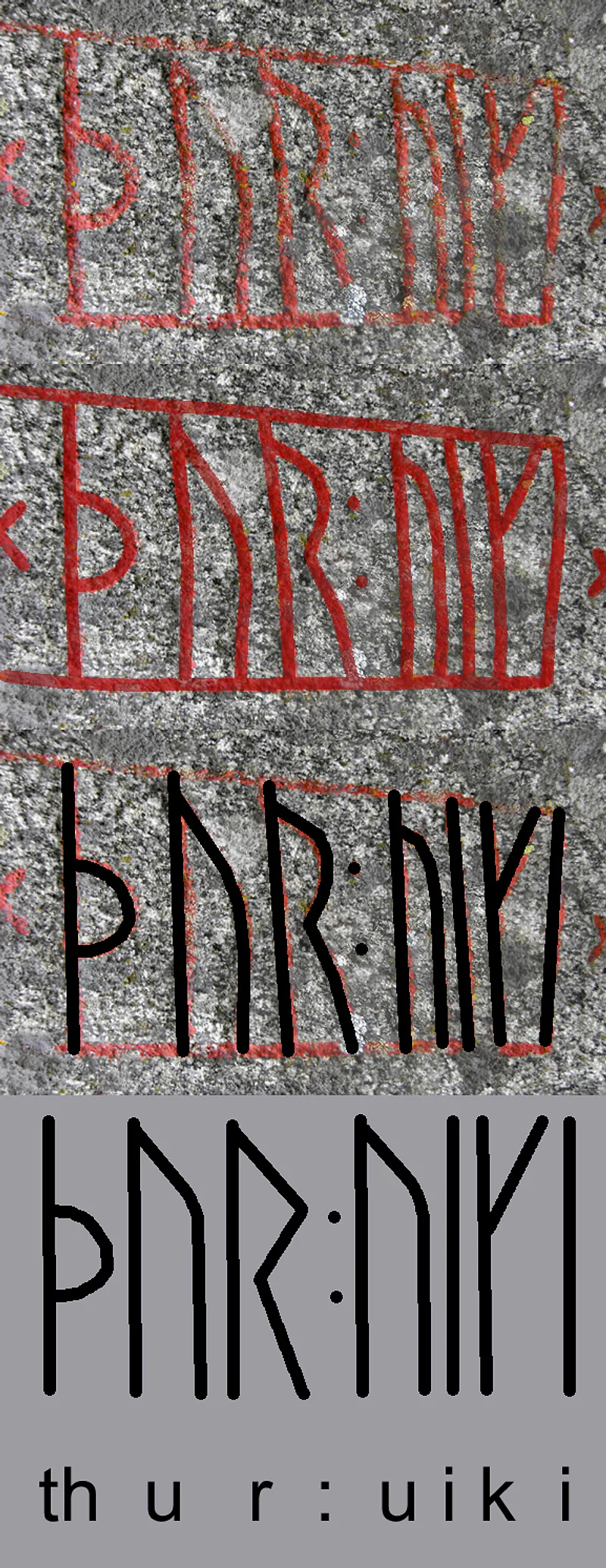
The eighteen Armanen runes§
Das Geheimnis der Runen (The Secret of the Runes, 1908) set out a runic row of eighteen signs, which List linked to the eighteen spells listed by Odin in the Old Norse poem Hávamál. The historical runic alphabets are the Elder Futhark of twenty-four runes and the Younger Futhark of sixteen; List's row was based on the Younger Futhark with two invented additions, and each rune was given an esoteric meaning in German. The Armanen system has no basis in archaeology or medieval sources, a point stressed by all modern runologists. Our guide to runes describes the historical scripts.
List set out the rest of his doctrine in a series of research reports between 1908 and 1914, including Die Bilderschrift der Ario-Germanen (The Picture Writing of the Aryo-Germans, 1910), in which he read heraldic figures as concealed runes. He used a speculative method he called kala, the uncovering of hidden meanings by sound and etymology, which allowed almost any word to be traced back to an Armanist root.
The List Society and the High Armanen Order§
In 1908 a group of admirers, including industrialists and pan-German politicians, founded the Guido von List Society to finance his publications. In 1911 an inner circle, the Hoher Armanen-Orden (High Armanen Order), was established for selected members, who undertook pilgrimages to sites List regarded as Armanist sanctuaries. List died in Berlin on 17 May 1919.
Theosophy and Race: The Intellectual Sources§
The structure of List's thought owed much to The Secret Doctrine, which taught that humanity evolves through a series of "root races" in vast cycles of time. Blavatsky's scheme was not designed as a programme of racial domination, but List and his followers reinterpreted it as a history in which the "Aryan" race, identified with the Germanic peoples, was the bearer of spiritual evolution and was threatened by mixture with "lower" races.
These ideas also drew on nineteenth-century linguistics, which had used "Aryan" for the Indo-European language family, on racial anthropology, and on the cultural pessimism and antisemitism widespread in Central Europe around 1900. Ariosophy is best understood as an occult and religious expression of this völkisch nationalism rather than as a development within the older Western esoteric traditions described in our article on German occultism.
Lanz von Liebenfels, Ostara and the Order of the New Templars§
Jörg Lanz von Liebenfels (born Adolf Josef Lanz, 1874–1954) was a former Cistercian novice who left his monastery in 1899 and also adopted an invented noble title. In Theozoologie (1905) he developed a grotesque theology in which an original race of divine "god-men", identified with the Aryans, had been degraded by interbreeding with "beast-men", from whom he derived the "lower" races. Salvation required racial purification, which he presented in the language of Christian mysticism and Grail legend.
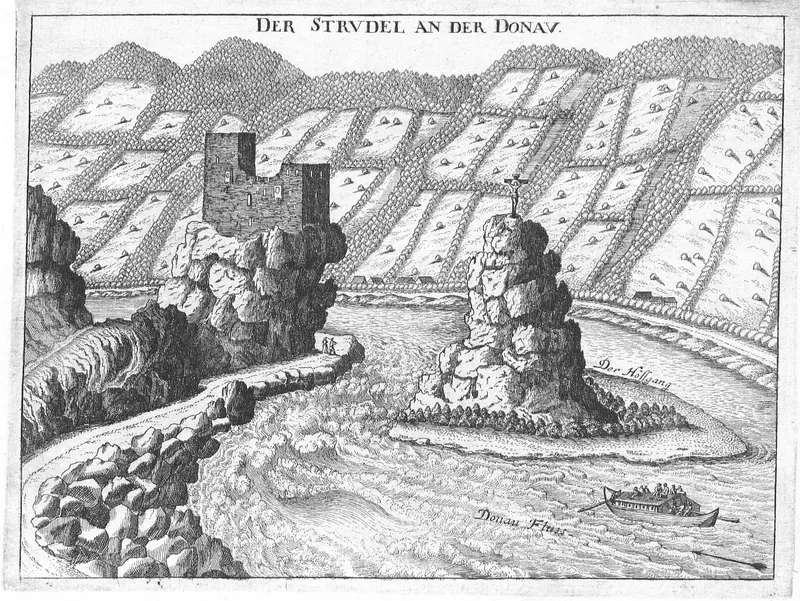
From 1905 Lanz published Ostara, a series of cheap pamphlets of racial theory, and in 1907 he founded the Ordo Novi Templi (Order of the New Templars) at the castle of Burg Werfenstein on the Danube, where he raised a swastika flag. He used the term "Ariosophy" for his doctrine from about 1915. The Austrian psychologist Wilfried Daim claimed in 1958 that the young Hitler had visited Lanz in Vienna to obtain back numbers of Ostara; the story rests on Lanz's own later account and is treated cautiously by historians.
From the Germanenorden to the Thule Society§
List's ideas spread through a network of small societies. The Germanenorden, founded in Leipzig in 1912, combined antisemitic politics with a Masonic-style ritual influenced by List. In Munich, its Bavarian branch was reorganised in 1918 by Rudolf von Sebottendorf under the cover name of the Thule Society, which mixed runic and astrological study with right-wing agitation during the revolutionary upheavals of 1918–1919. Members of the Thule milieu helped sponsor the small German Workers' Party, which Hitler joined in 1919 and which became the Nazi party.
During the 1920s other writers developed "Ario-Germanic" occultism further: Rudolf John Gorsleben founded the Edda Society, while Friedrich Bernhard Marby and Siegfried Adolf Kummer taught a "rune gymnastics" in which the body imitated runic shapes. Under the Nazi regime, however, most independent occult groups were suppressed, particularly after 1937 and 1941, and Marby was held in concentration camps. The notable exception was Karl Maria Wiligut, a retired Austrian officer who claimed ancestral clairvoyant memory and who worked for Heinrich Himmler in the SS from 1933 to 1939, contributing to its ceremonial designs. The question of how far occultism shaped Nazism is examined in our article on conspiracy myths.
Legacy and Scholarship on Ariosophy§
After 1945 the Armanen runes were revived in German esoteric circles, notably by Karl Spiesberger, and translated into English in the 1980s. They have been used by some modern rune magicians, but most practitioners of contemporary Heathenry work with the historical Elder Futhark and reject List's racial doctrines. Armanen symbols and Ariosophical ideas also circulate among neo-Nazi groups, which is one reason scholars watch the subject closely.
The foundational study remains Nicholas Goodrick-Clarke's The Occult Roots of Nazism (1985), which used archival sources to replace a popular literature of sensational claims about "occult Nazis". Goodrick-Clarke showed that Ariosophy anticipated many Nazi themes, such as the swastika, racial purity and a mythic Germanic past, but argued that its influence was mainly symbolic and indirect. More recent historians, among them Eric Kurlander, have argued that a broader "supernatural imaginary" of folklore, border science and esotericism ran more deeply through Nazi culture than once assumed. Both views agree that List and Lanz offered a religious language for racism, and that their doctrines must be studied critically as history, not revived as wisdom.
Frequently asked questions§
What is Ariosophy?§
Ariosophy, "the wisdom of the Aryans", was an Austrian and German occult movement of roughly 1900 to 1930. It combined Theosophical cosmology, invented runic lore and antisemitic racial theory into a doctrine of Germanic spiritual supremacy.
Are the Armanen runes historical?§
No. The eighteen Armanen runes were devised by Guido von List and published in 1908. They are loosely based on the Younger Futhark but have no attestation in ancient or medieval inscriptions.
Did Ariosophy influence the Nazis?§
Ariosophy contributed symbols and ideas to the völkisch milieu from which Nazism grew, and the Thule Society helped sponsor the early Nazi party. Most historians, however, see its direct influence on Nazi policy as limited, and the regime suppressed most occult groups.
Who was Lanz von Liebenfels?§
Jörg Lanz von Liebenfels (1874–1954) was an Austrian former monk who published the racist magazine Ostara and founded the Order of the New Templars in 1907. He coined the term Ariosophy for his racial theology.
Sources and further reading§
- The Secret of the Runes — Guido von List, 1908
- The Occult Roots of Nazism: Secret Aryan Cults and Their Influence on Nazi Ideology — Nicholas Goodrick-Clarke, 1985
- Black Sun: Aryan Cults, Esoteric Nazism, and the Politics of Identity — Nicholas Goodrick-Clarke, 2002
- Hitler's Monsters: A Supernatural History of the Third Reich — Eric Kurlander, 2017
- Norse Revival: Transformations of Germanic Neopaganism — Stefanie von Schnurbein, 2016