Liber XIII · High Magick · Chapter I: Angelic Magic & Invocation
Angel Magic: A Complete Guide to Angelic Invocation in History
Angel magic explained: the history of angelic invocation from Jewish adjurations and medieval grimoires to Agrippa, John Dee and the Golden Dawn.

Angel magic is the branch of ritual magic in which the practitioner calls on angels, rather than demons or impersonal forces, through prayer, divine names, seals and carefully timed ceremonies. It runs from Jewish adjurations of late antiquity through the medieval Ars Notoria and Sworn Book of Honorius, the Renaissance occult philosophy of Trithemius, Agrippa and John Dee, to the rituals of the Golden Dawn and modern ceremonial magicians.
What Is Angel Magic?§
The phrase "angel magic" covers a wide range of practices whose common feature is an appeal to angels: the messengers and ministers of God in Jewish, Christian and Islamic tradition. In magical texts angels are named individually, assigned to planets, days, hours, elements or zodiacal degrees, and approached through prayers, purifications, divine names and symbols. The aims vary from the practical (protection, healing, finding lost goods) to the intellectual (instant knowledge of the liberal arts) and the mystical (a vision of the divine or the "knowledge and conversation" of a personal angel).
Scholars often use the older word theurgy for this kind of practice. Claire Fanger and others have shown that medieval angel magic was usually understood by its practitioners as a form of devotion, close to ordinary prayer, even when church authorities saw it as illicit. The distinction between angel magic and demonic magic, or "goetia", is ancient but never stable: the same manuscript may invoke angels to compel demons, and critics repeatedly argued that spirits answering a magician were demons in disguise. For the wider cast of beings in ceremonial magic, see angels and spirits in ceremonial magic.
Ancient Roots: Angel Names in Jewish and Late Antique Magic§
The Hebrew Bible names almost no angels; Michael and Gabriel appear only in the late book of Daniel (Daniel 10). In the Second Temple period angelology expanded rapidly. 1 Enoch lists archangels and their offices, and the Dead Sea Scrolls describe angelic liturgies. This growing catalogue of names was quickly put to practical use.
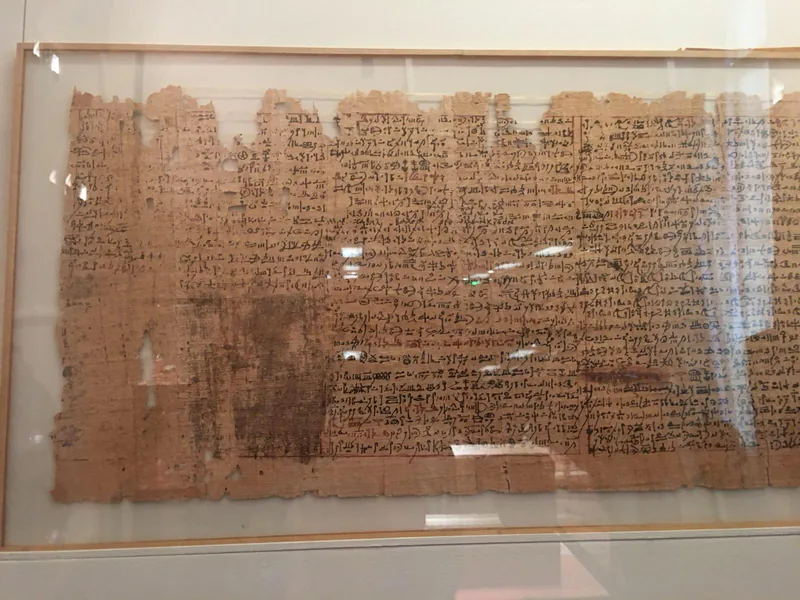
The Greek magical papyri of Roman Egypt invoke Michael, Gabriel, Raphael and Ouriel alongside Greek and Egyptian gods and Hebrew divine names such as Iao and Sabaoth. The Hebrew Sefer ha-Razim ("Book of the Mysteries"), usually dated to late antiquity, describes seven firmaments populated by named angels and gives rites for enlisting them in healing, love, protection and foreknowledge. In the Hekhalot literature, adepts adjure the "Prince of the Torah" and other angelic princes by divine names to gain learning or to ascend to the heavenly palaces; see Merkavah and Hekhalot mysticism.
Aramaic amulets and incantation bowls from the same centuries call on angels to drive away demons and illness. The Testament of Solomon builds a whole demonology on the principle that each demon is thwarted by a particular angel (Testament of Solomon). From the start, then, angel magic was bound up with protection against evil spirits.
Medieval Angel Magic: Ars Notoria, Honorius and the Almandal§
In Latin Christendom, angel magic flourished among literate clerics from the twelfth century onward. The Ars Notoria offered prayers in Latin, Greek and strange angelic languages, recited with fasting and contemplation of figures (notae), to obtain swift mastery of grammar, rhetoric, philosophy and theology. Its prayers ask angels and God to illuminate the mind.
The Sworn Book of Honorius (Liber Iuratus), probably compiled in the thirteenth or fourteenth century, promises its practitioner the vision of God, of heaven and of the angels, as well as powers over spirits (Sworn Book). The Almandal, a Solomonic text probably of Arabic origin, describes a wax altar with four candles on which the angels of the four "altitudes" are called; its later English form survives in the Ars Almadel. In the early fourteenth century the Benedictine monk John of Morigny reworked the Ars Notoria into his Book of Flowers, a Marian prayer book that still sought visions and learning through angelic help.
Churchmen viewed all this with suspicion. Thomas Aquinas argued that spirits responding to a magician's signs and words must be demons, since good angels do not obey human summons, and the theology faculty of Paris condemned propositions defending ritual magic in 1398. Medieval angel magic thus lived in a grey zone between private devotion and forbidden "necromancy"; see necromancy in the Middle Ages.
Renaissance Angel Magic: Trithemius, Agrippa and Dee§
The Renaissance gave angel magic a philosophical and Kabbalistic foundation. Giovanni Pico della Mirandola and Johann Reuchlin argued that Hebrew divine names and the Kabbalah held the key to working wonders through angels. Reuchlin's De arte cabalistica (1517) discussed the seventy-two angels drawn from the Shem ha-Mephorash.
The abbot Johannes Trithemius wrote the Steganographia, which appears to describe sending messages through planetary angels and spirits, and De septem secundeis (1508), on seven angels who govern the world in turn. His younger friend Heinrich Cornelius Agrippa devoted the third book of his Three Books of Occult Philosophy (1533) to ceremonial magic, divine names and angels, and set out the planetary angels, intelligences and spirits that later magicians used for talismans. The Heptameron, attributed to Peter of Abano, and the Arbatel (1575) offered practical rites addressed to angels of the days and to the Olympic spirits.
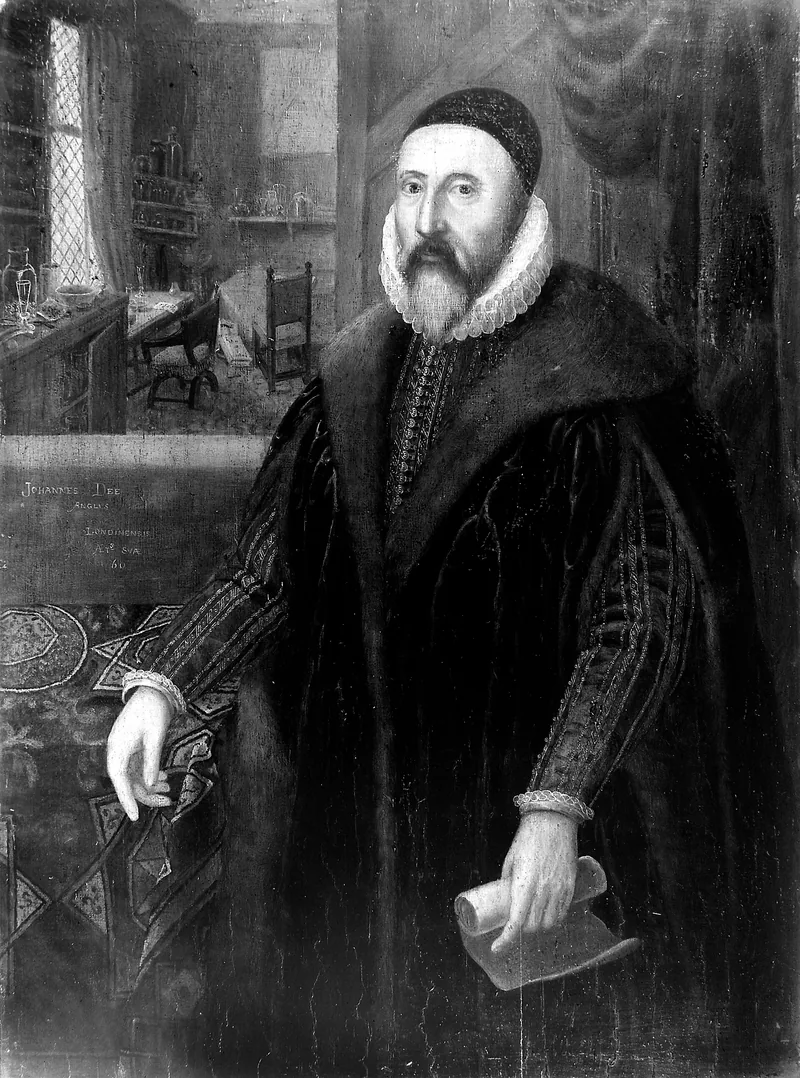
The most detailed record of angelic practice in the period is the diary of John Dee, who from 1582 worked with the scryer Edward Kelley and recorded hundreds of conversations with angels in a crystal. Dee regarded his sessions as a pious continuation of the biblical prophets' converse with heaven. See Enochian magic and John Dee and the catalogue entry for his Invocations of the Good Angels.
In the seventeenth century, compilers gathered several angelic works into the Lemegeton, alongside the Goetia, and the German Book of Abramelin framed the whole of magic around the Holy Guardian Angel.
Methods of Angelic Invocation§
Although the systems differ, most angel magic shares a recognisable set of methods:
- Purity and preparation. Texts prescribe fasting, confession, chastity, clean clothing and periods of retreat, sometimes for weeks or months.
- Prayer and divine names. Invocations are framed as prayers to God, asking him to send a named angel. Hebrew names such as Tetragrammaton, Adonai, El and Agla, and lists of angelic names, give the prayer its authority.
- Timing. Angels are linked to planetary days and hours, seasons and zodiacal degrees, so the operator chooses the moment carefully; the site's planetary hours tool shows how this reckoning works.
- Seals and instruments. Lamens, pentacles, wax tablets, rings and holy tables carry the angel's seal or divine names; examples are collected among the seals of the grimoires.
- Scrying. Many rites expect the angel to appear in a crystal, a mirror or a basin of water, often to a child or a designated seer rather than to the operator.
- Thanksgiving and licence. Sessions end with thanks and a formal dismissal.
These methods are described in the sources as practised by their authors; their effects are matters of religious experience and belief rather than demonstrable results.
Angel Magic in the Golden Dawn and Modern Practice§
The Hermetic Order of the Golden Dawn, founded in London in 1888, absorbed Agrippa's tables, Dee's Enochian system and the Book of Abramelin. It made angelic invocation a daily discipline through rituals such as the Lesser Banishing Ritual of the Pentagram, in which the magician calls the four archangels Raphael, Gabriel, Michael and Uriel to the quarters. Higher grades sought contact with the "Higher Genius", and Aleister Crowley made the knowledge and conversation of the Holy Guardian Angel the central goal of his system.
Twentieth-century authors such as Israel Regardie and Franz Bardon published practical manuals, and since the 1980s angel magic has also blended with popular angel devotion, New Age channelling and Christian or Jewish mystical prayer. Some modern practitioners treat angels as independent beings, others as symbols of psychological or spiritual forces; both readings appear within the same traditions.
Theology and Criticism of Angel Magic§
Angel magic has always raised a theological question: may a human being call on angels by name? The Council of Laodicea in the fourth century condemned the "naming" of angels, and a Roman synod of 745 rejected prayers to angels other than Michael, Gabriel and Raphael. Medieval theologians held that good angels act only at God's command, so a spirit who comes at a magician's bidding is suspect. Protestant reformers and Catholic inquisitors alike treated learned angel magic as superstition or demonolatry.
Practitioners answered that they did not command angels but prayed to God for their help, as Tobias received Raphael's aid in the book of Tobit. Modern historians, including Frank Klaassen and Sophie Page, emphasise that this tension between devotion and transgression is what makes angel magic historically interesting: it shows how ordinary religious hopes for knowledge, protection and vision could slide into practices that authorities called magic. For the wider context, see what is ceremonial magic?
Frequently asked questions§
Is angel magic the same as praying to angels?§
Not exactly. Prayer to angels, especially to Michael or a guardian angel, is part of mainstream Catholic and Orthodox devotion. Angel magic adds names, seals, timing, purifications and ritual procedures intended to produce a specific result or an appearance, which is why church authorities historically treated it as a separate and often suspect practice.
What are the main texts of angel magic?§
Key sources include the Sefer ha-Razim, the Ars Notoria, the Sworn Book of Honorius, the Almandal, Agrippa's Three Books of Occult Philosophy, the Heptameron, the Arbatel, Trithemius' writings, John Dee's angel diaries, the Ars Paulina and Ars Almadel of the Lemegeton, and the Book of Abramelin.
Which angels are most often invoked in magic?§
The archangels Michael, Gabriel, Raphael and Uriel are the most frequent, followed by the planetary angels such as Cassiel, Sachiel, Samael and Anael, the seventy-two angels of the Shem ha-Mephorash and, in modern practice, the Holy Guardian Angel.
Did the Church allow angel magic?§
Generally no. Theologians accepted that angels guard and help people at God's command, but they condemned attempts to summon named angels by ritual, arguing that such spirits were likely demons. Many practitioners were nonetheless clergy and monks who saw their work as devotional.
Sources and further reading§
- Invoking Angels: Theurgic Ideas and Practices, Thirteenth to Sixteenth Centuries — Claire Fanger (ed.), 2012
- Conjuring Spirits: Texts and Traditions of Medieval Ritual Magic — Claire Fanger (ed.), 1998
- Magic in the Middle Ages — Richard Kieckhefer, 1989
- The Transformations of Magic: Illicit Learned Magic in the Later Middle Ages and Renaissance — Frank Klaassen, 2013
- Magic in the Cloister: Pious Motives, Illicit Interests, and Occult Approaches to the Medieval Universe — Sophie Page, 2013
- Ancient Jewish Magic: A History — Gideon Bohak, 2008
- John Dee's Conversations with Angels — Deborah E. Harkness, 1999
- Angels: A History — David Albert Jones, 2010