Liber XIII · High Magick · Chapter I: Angelic Magic & Invocation
Planetary Angels in Agrippa and the Heptameron: A History
Planetary angels in Agrippa and the Heptameron: the angels of the seven planets and days, intelligences and spirits, magic squares, seals and talismans.

Planetary angels are the angels that Western magic assigns to the seven classical planets (Saturn, Jupiter, Mars, the Sun, Venus, Mercury and the Moon) and through them to the days of the week and the hours of the day. Their classic sources are Heinrich Cornelius Agrippa's Three Books of Occult Philosophy (1533), which added planetary "intelligences" and "spirits" with seals drawn from magic squares, and the Heptameron, attributed to Peter of Abano, which gives the angels of each day, hour and season and the conjurations used to call on them.
Angels of the Seven Planets: Origins of the Scheme§
The idea of seven chief angels is ancient. In the book of Tobit, Raphael calls himself one of seven holy angels who stand before God; 1 Enoch lists seven archangels with their offices; and Revelation describes "the seven angels which stood before God" (Revelation 8). Since the classical astronomy of the period counted seven planets, it was natural to connect the two sevens.
Late antique and medieval sources made the link explicit. Jewish texts such as the Sefer ha-Razim and the medieval Sefer Raziel placed angels over the heavens and times, and the Latin Liber Razielis transmitted angels of the planets, months and days to Christian readers (Sepher Raziel). Arabic astral magic, known in Latin through the Picatrix, spoke of the spiritual powers (rūḥāniyyāt) of each planet that could be drawn down into images. In 1508 the abbot Johannes Trithemius wrote De septem secundeis, in which seven planetary angels, among them Orifiel for Saturn and Michael for the Sun, govern the world in turn for ages of several centuries.
Agrippa on Planetary Angels, Intelligences and Spirits§
Agrippa's Three Books of Occult Philosophy gathered these traditions into tables. In his "scale of the number seven" he lists seven angels who stand before God: Zaphkiel for Saturn, Zadkiel for Jupiter, Camael for Mars, Raphael for the Sun, Haniel for Venus, Michael for Mercury and Gabriel for the Moon. Readers soon noticed that this placement of Raphael and Michael is the reverse of the Heptameron's, and later authors chose between them or, like the Golden Dawn, used different lists in different contexts.

Agrippa also introduced, for each planet, an intelligence and a spirit. The intelligence is a good, governing power; the spirit is a more material and potentially harmful one, to be directed by the intelligence. Saturn has the intelligence Agiel and the spirit Zazel; Jupiter, Iophiel and Hismael; Mars, Graphiel and Barzabel; the Sun, Nakhiel and Sorath; Venus, Hagiel and Kedemel; Mercury, Tiriel and Taphthartharath; and the Moon has the spirit Chasmodai and an intelligence with a long, compound Hebrew name. Agrippa presents these as Hebrew names whose letters add up to the key numbers of each planet. The full text can be read in the 1651 English translation (Three Books of Occult Philosophy).
Magic Squares and the Seals of the Intelligences§
Each planet in Agrippa has a magic square, or kamea, in which every row, column and diagonal adds up to the same sum: a three-by-three square for Saturn, four-by-four for Jupiter and so on up to nine-by-nine for the Moon. The total of Saturn's square is 45, the number of the names Agiel and Zazel; the Sun's six-by-six square totals 666, the number of Sorath. Such squares reached Latin Europe from Islamic sources in the Middle Ages, but Agrippa's arrangement became the standard one.
Agrippa printed three kinds of figure beside each square: a seal of the planet, a seal of the intelligence and a seal of the spirit. Later occultists, especially in the Golden Dawn, explained these seals as lines traced across the square from number to number following the letters of the name, and used the same technique to create new sigils; Agrippa himself does not describe the method. Engravings of the seals can be compared in the site's appendix of planetary seals, for example Saturn and the Sun, and in the ritual entries for the table of Saturn and table of Jupiter.
The Heptameron: Angels of the Days, Hours and Seasons§
The Heptameron, or Magical Elements claims the authority of the Paduan physician and philosopher Peter of Abano (c. 1250–c. 1316), but the attribution is doubtful and the text is known from the sixteenth century, when it was printed with Agrippa's collected works and the spurious Fourth Book of Occult Philosophy. Robert Turner's English translation appeared in 1655 (Heptameron).
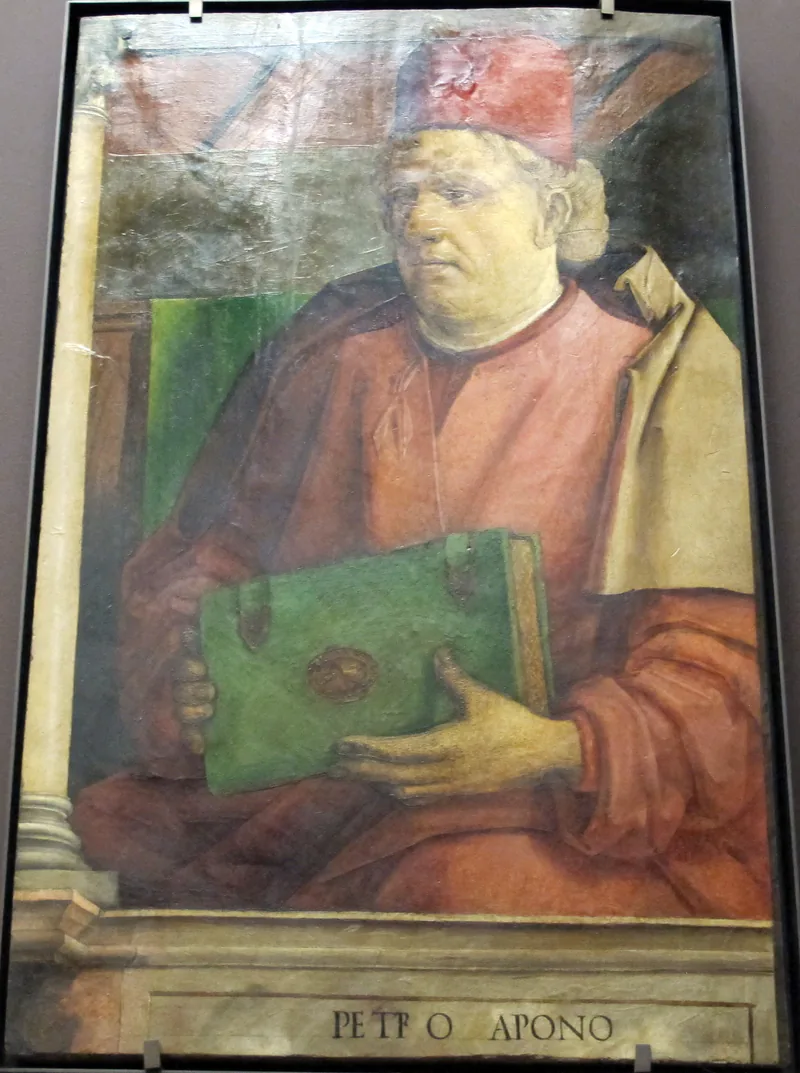
The Heptameron is a compact manual for a seven-day cycle of angelic conjuration. It assigns a chief angel to each day: Michael to Sunday, Gabriel to Monday, Samael to Tuesday, Raphael to Wednesday, Sachiel to Thursday, Anael to Friday and Cassiel to Saturday. It names the angels of the four seasons, the angels and names of each hour of day and night (the first hour of the day, for instance, is called Yayn), and the "angels of the air" who rule each day under a king, with ministers in the four directions.
The operator builds a circle whose inscriptions change with the hour, season and day, consecrates it with prayers, and recites a conjuration of the day addressed to its angels; the seven conjurations are summarised in the site's ritual entries, starting with the conjuration of Sunday. Because the airy spirits invoked under the angels are morally ambiguous, the Heptameron sits on the borderline between angel magic and spirit conjuration, as do many grimoires.
Planetary Talismans and Angelic Seals in Practice§
Planetary angels were used above all in talismanic magic. Following Agrippa and the astral tradition, a talisman was made in the metal of the planet (lead for Saturn, tin for Jupiter, iron for Mars, gold for the Sun, copper for Venus, mercury alloys or mixtures for Mercury and silver for the Moon), at a day and hour ruled by that planet, and engraved with its square, seals, divine names and angelic names. The intelligence was invoked to govern the talisman's influence, while the spirit, if used at all, was subordinated to it.
Seals of angels also appear in the grimoires as lamens worn on the breast, as pentacles in the Key of Solomon and as characters in circles. The Olympic spirits of the Arbatel formed a parallel planetary series with their own seals (Olympic spirits). Historians treat these objects as evidence of belief and ritual practice; the texts themselves claim powers for them that cannot be tested, and the seals were never a substitute for medical or practical help.
Later Tradition: Barrett, the Golden Dawn and the Almanac§
Agrippa's tables were reprinted almost without change in Francis Barrett's The Magus (1801), which carried them into the nineteenth-century occult revival. The Hermetic Order of the Golden Dawn combined Agrippa's archangels, intelligences and spirits with the Kabbalistic Tree of Life and with its own colour scales, and its members made planetary talismans as part of their training. Modern almanacs and magical calendars still calculate the angels of the days and hours using the Heptameron's Chaldean order of the planets; the site's planetary hours page follows the same reckoning.
Because the lists derive from different sources, modern practitioners meet inconsistencies, such as Michael and Raphael exchanging the Sun and Mercury, or Camael and Samael both serving for Mars. Historians see these as signs of the layered, compiled character of the tradition. For broader context, see astral magic and angel magic: a complete guide.
Frequently asked questions§
What are the angels of the days of the week?§
According to the Heptameron: Michael for Sunday, Gabriel for Monday, Samael for Tuesday, Raphael for Wednesday, Sachiel for Thursday, Anael for Friday and Cassiel for Saturday. Other sources give slightly different names.
What is the difference between a planetary intelligence and a planetary spirit?§
In Agrippa's system the intelligence is a good, ruling power of the planet and the spirit a lower, more material and potentially harmful one. The magician was to work through the intelligence, which governs the spirit.
Who wrote the Heptameron?§
It is traditionally attributed to Peter of Abano, a thirteenth-century Italian philosopher and physician, but most scholars think the attribution is false. The text circulated in the sixteenth century and was printed with works of Agrippa.
Why does Agrippa give Raphael to the Sun and Michael to Mercury?§
Agrippa followed a different source tradition from the Heptameron. Both schemes circulated in the Renaissance, and later occultists used whichever suited their system.
Sources and further reading§
- Three Books of Occult Philosophy — Henry Cornelius Agrippa, 1533
- The Fourth Book of Occult Philosophy — Stephen Skinner (ed.), 1978
- The Language of Demons and Angels: Cornelius Agrippa's Occult Philosophy — Christopher I. Lehrich, 2003
- Arbatel: Concerning the Magic of the Ancients — Joseph H. Peterson (ed.), 2009
- Spiritual and Demonic Magic from Ficino to Campanella — D. P. Walker, 1958
- The Magus — Francis Barrett, 1801
- Sepher Raziel: Liber Salomonis — Don Karr & Stephen Skinner, 2010
- Picatrix: A Medieval Treatise on Astral Magic — Dan Attrell & David Porreca (trans.), 2019