Liber V · Chaos Magick · Chapter IV: Sigils
Sigils: History from Solomonic Seals to Spare and Chaos Magic
A history of sigils: ancient magical characters, Solomonic seals of spirits, Agrippa's planetary signs, Icelandic staves, Austin Osman Spare and chaos magic.

A sigil is a graphic sign believed to have magical power, either because it represents and summons a particular spirit or because it encodes a desire or intention in symbolic form. The word comes from the Latin sigillum, "little seal", and the history of sigils runs from the magical characters of late antiquity, through the seals of spirits in Solomonic grimoires and the planetary signs of Renaissance magic, to Austin Osman Spare's method of sigilising desire, which became the signature technique of chaos magic.
From Seal to Sigil: Words and Origins§
In Latin, sigillum meant a small figure or a seal impression, the mark that authenticated a document or sealed a container. Seals carried authority: a sealed letter spoke in the name of its owner. Magic borrowed this logic. A seal could represent a god, angel or demon, invoke its authority, or bind it, as Solomon was believed to bind demons with his ring, the subject of Solomon's Ring and Seal.
In English, "seal" and "sigil" were long used interchangeably for magical signs, and "character" was another common term. Only in the twentieth century, especially after Spare and chaos magic, did "sigil" come to mean primarily a personal symbol created by the practitioner to express an intention.
Ancient Magical Characters§
The Greek Magical Papyri and the late antique engraved gems discussed in Greco-Roman Magic contain charaktēres: strange signs made of lines, crosses and stars, often terminating in small circles, which scholars sometimes call "ring letters". They were written alongside divine names and vowel series on amulets, curse tablets and papyri, and appear to have been understood as a kind of divine script, intelligible to spirits if not to humans.
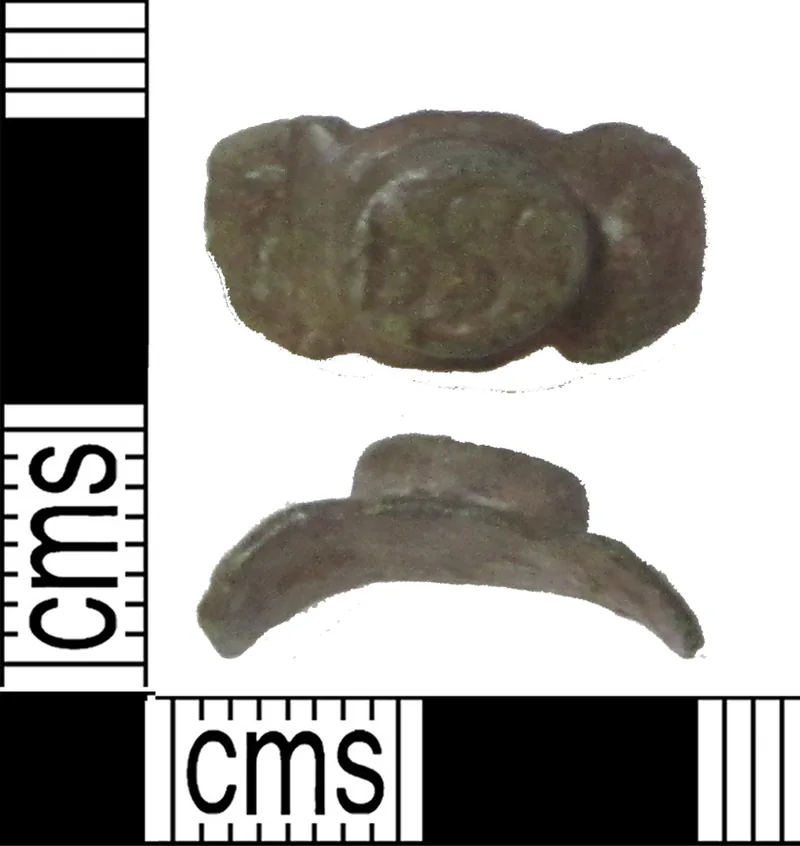
Similar signs passed into Jewish, Christian, Arabic and Byzantine magic. Arabic and Hebrew magical texts preserved "ring letters" in special magical alphabets, and the Byzantine Hygromanteia, a Greek Solomonic handbook described in the catalogue entry for the Magical Treatise of Solomon, combines characters, seals and planetary hours in ways that anticipate later Latin grimoires.
Seals of Spirits in the Grimoires§
Medieval and early modern European grimoires developed the idea that every spirit had its own seal or character, which the magician drew, wore or displayed to command it. The best-known example is the Ars Goetia, the first book of the seventeenth-century compilation known as the Lesser Key of Solomon, which gives a seal for each of its seventy-two spirits; these are explored in The 72 Spirits of the Ars Goetia. The Key of Solomon, described in The Key of Solomon, contains elaborate pentacles combining divine names, verses and figures. Other texts, such as the Grimorium Verum, supply characters for infernal spirits.
The angelic and divine seals of the medieval Sworn Book of Honorius and John Dee's Sigillum Dei Aemeth, a complex table of divine and angelic names on which Dee's scrying apparatus rested, show how sigils served sacred as well as demonic magic. These seals are catalogued in entries such as the Sigillum Dei Aemeth and the Goetia.
Agrippa, Magic Squares and Planetary Seals§
Cornelius Agrippa's Three Books of Occult Philosophy (1533) systematised the construction of sigils. In the second book he presented magic squares (kameas) for each of the seven planets, together with seals of the planets and characters of their intelligences and spirits. Many of these characters were formed by tracing a line through the numbers corresponding to the letters of a name on the planet's square, a technique of tracing that many later authors adopted. Agrippa also gave alphabets used by magicians, such as the "Celestial" and "Passing the River" scripts.

These designs, described in Agrippa's Three Books of Occult Philosophy, entered countless later grimoires. In the late nineteenth century the Hermetic Order of the Golden Dawn introduced another method, tracing the letters of a Hebrew name across the twenty-two petals of the rose on its Rose Cross lamen to produce a sigil for an angel or spirit.
Folk Staves and Ritual Diagrams§
Sigils were not confined to learned magic. In Iceland, manuscripts of magic from the seventeenth century onwards contain galdrastafir, magical staves intended for protection, luck, fishing, love or harm. The best known today, the Ægishjálmur ("helm of awe") and the Vegvísir ("way-finder"), are recorded in relatively late manuscripts, the Vegvísir in the nineteenth-century Huld manuscript, rather than in Viking-age sources, despite their modern popularity as "Norse" symbols.
In Haitian Vodou, vèvè, intricate ground drawings made with cornmeal or other powders, invite and represent the lwa during ceremonies, as described in Haitian Vodou. Although they are often compared with sigils, they belong to a distinct religious tradition with African and European roots and should be understood on their own terms.
Austin Osman Spare and the Sigil of Desire§
The modern meaning of the sigil was created by the English artist Austin Osman Spare (1886–1956). In The Book of Pleasure (Self-Love): The Psychology of Ecstasy (1913) he proposed a method in which a desire is written as a sentence, the repeated letters are removed, and the remainder is combined into an abstract monogram. The sigil is then charged at a moment of "vacuity" or intense emotion, when the conscious mind is silenced, and deliberately forgotten. Spare's theory was that the desire would sink into the subconscious, where, free from the anxious "lust of result", it could work unhindered. He also developed an "alphabet of desire", a personal symbolic language.
Spare's sigils thus differed fundamentally from older seals. They did not represent external spirits but encoded the magician's own will, and they required no tradition or divine names. This psychological approach suited twentieth-century interest in the unconscious.
Sigils in Chaos Magic and Popular Culture§
When chaos magic emerged in the late 1970s, Spare's sigil became its central technique. Ray Sherwin's The Book of Results (1978) and Peter J. Carroll's Liber Null presented it as a simple, effective method, and Frater U∴D∴'s Practical Sigil Magic added variants such as pictorial and sound-based sigils. Thee Temple ov Psychick Youth spread sigil practice through the music underground in the 1980s, and Grant Morrison extended it to the "hypersigil", an entire narrative work conceived as a magical act. The history and philosophy behind this are discussed in Chaos Magick and What Is Chaos Magick?
Sigils are now among the most widely recognised elements of modern occult culture, appearing in tattoos, artwork, logos and social media. Historians point out that this popularity often blurs very different things, such as ancient characters, Solomonic spirit seals, Icelandic staves and Spare's monograms, under a single word. Understanding the distinct history of each is the first step towards understanding what any particular sigil was meant to do. Their place in wider culture is discussed in Magic and Culture.
Frequently asked questions§
What is the difference between a sigil and a seal?§
Historically the words were often interchangeable. In modern usage a "seal" usually means a traditional sign of a spirit or planet found in grimoires, while a "sigil" often means a personal symbol created by a practitioner to encode an intention, following Austin Osman Spare.
Where do the Goetic seals come from?§
The seals of the 72 spirits appear in the Ars Goetia, the first book of the Lesser Key of Solomon, compiled in the seventeenth century. The list of spirits draws on Johann Weyer's Pseudomonarchia Daemonum (1577), which lacks the seals; their exact origin is uncertain and varies between manuscripts.
Are Icelandic staves like the Vegvísir Viking symbols?§
No surviving Viking-age source shows them. The Vegvísir and similar staves are known from early modern and nineteenth-century Icelandic manuscripts of magic, though these may preserve older traditions in some form.
Who invented modern sigil magic?§
The method of turning a written desire into an abstract monogram and charging it in an altered state was developed by Austin Osman Spare and published in 1913. Chaos magicians from the late 1970s onward popularised and adapted it.
Sources and further reading§
- The Book of Pleasure (Self-Love): The Psychology of Ecstasy — Austin Osman Spare, 1913
- Three Books of Occult Philosophy — Heinrich Cornelius Agrippa, 1533
- The Lesser Key of Solomon: Lemegeton Clavicula Salomonis — Joseph H. Peterson (ed.), 2001
- Practical Sigil Magic — Frater U∴D∴, 1990
- The Book of Results — Ray Sherwin, 1978
- Liber Null and Psychonaut — Peter J. Carroll, 1987
- Grimoires: A History of Magic Books — Owen Davies, 2009
- The Galdrabók: An Icelandic Grimoire — Stephen E. Flowers (ed.), 1989
- Images and Oracles of Austin Osman Spare — Kenneth Grant, 1975
- Curse Tablets and Binding Spells from the Ancient World — John G. Gager, 1992