Liber V · Chaos Magick · Chapter I: Chaos Magick
Peter J. Carroll: Founder of Chaos Magick and Liber Null
Peter J. Carroll, co-founder of chaos magick: his life, Liber Null, Psychonaut and Liber Kaos, the Illuminates of Thanateros and his theories of magic.

Peter J. Carroll (born 1953) is the English occultist most closely identified with the foundation of chaos magick. His books Liber Null (1978), Psychonaut (early 1980s) and Liber Kaos (1992) set out a stripped-down, results-oriented approach to magic, and in 1978 he co-founded, with Ray Sherwin, the Illuminates of Thanateros, the best-known chaos magick order.
Early Life and the British Occult Scene of the 1970s§
Relatively little has been published about Carroll's private life, and he has generally preferred to let his books speak for him. He was born in 1953 and grew up in England, and by his own account studied science at university in London before turning to magic. The scientific training matters: throughout his career he has written about magic in the vocabulary of experiment, probability and physics, and he describes himself as a kind of sorcerer-scientist rather than a mystic.
He came of age in the British occult scene of the early 1970s, a world shaped by the posthumous fame of Aleister Crowley, the rediscovery of the artist Austin Osman Spare through Kenneth Grant's books, the counterculture's interest in Eastern meditation and psychedelics, and small presses and magazines that published magical writing outside the established orders. Carroll's circle overlapped with that of Ray Sherwin, who edited the magazine The New Equinox, and with a network of young magicians who found the elaborate grade systems of the Golden Dawn tradition and the doctrinal commitments of Thelema more burdensome than useful.
The question they asked was simple: what, if anything, actually works in magic, and what is merely the cultural clothing of a particular period? Carroll's answer, worked out over the next two decades, became chaos magick.
Liber Null and the Founding of the Illuminates of Thanateros§
Liber Null first circulated in 1978 as a short, privately produced book. It was conceived as a training manual rather than a treatise, and its sections move briskly through exercises in "mind control" (stillness of body, regulated breathing, concentration and the suppression of thought), techniques of "metamorphosis" designed to loosen habitual beliefs and personality traits, and short accounts of the main magical operations: evocation, divination, enchantment, invocation and illumination.
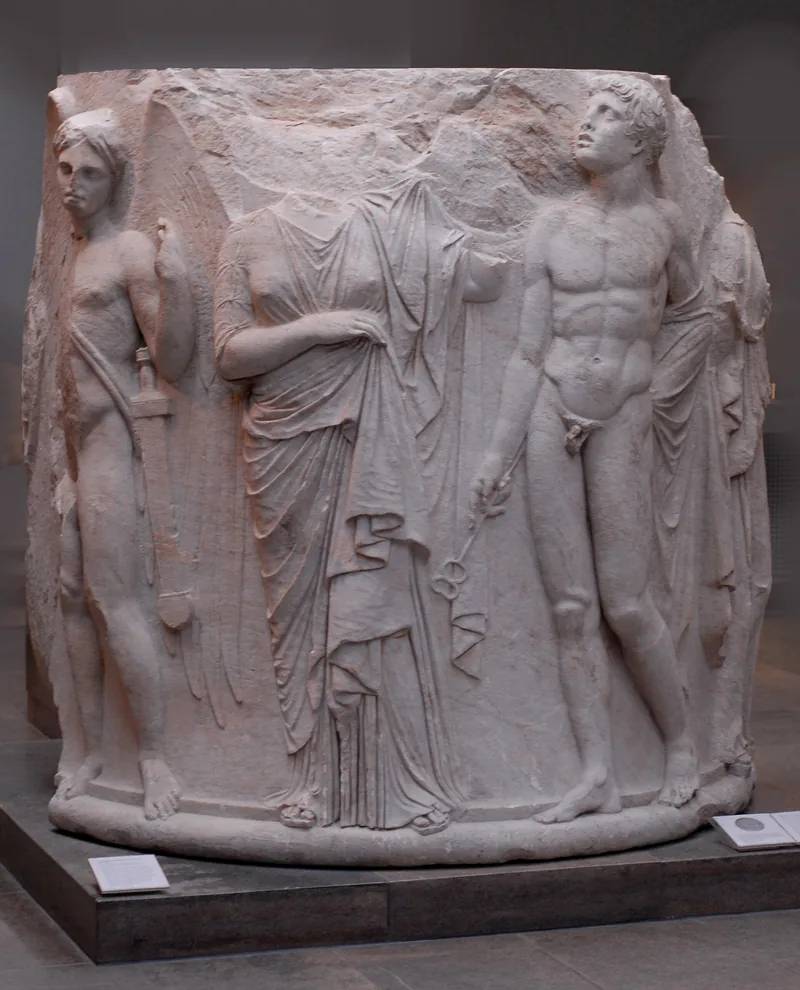
Two ideas in Liber Null proved especially influential. The first is the concept of gnosis, Carroll's name for the altered states of single-pointed attention in which, he argued, magical intentions take effect. He divided them into inhibitory states reached through stillness and excitatory states reached through arousal, a scheme discussed fully in Gnosis in Chaos Magick. The second is the treatment of belief as something the magician can deliberately adopt and discard. Borrowing from Spare, Carroll called the hidden source of consciousness Kia and the creative, formless background of the universe Chaos. Neither could be described adequately in words, so all doctrines were treated as approximations to be used and then set aside.
Liber Null also contained a sketch of history in "aeons": a shamanic age, followed by ages dominated by transcendental religion and by materialist rationalism, and a coming age Carroll called the "Pandaemonaeon", in which magical and scientific thinking might combine. The scheme owes something to Crowley's doctrine of aeons but is less prophetic and more openly speculative.
In the same year Carroll and Sherwin announced the formation of the Illuminates of Thanateros. The name joins the Greek thanatos (death) and eros (love or desire), echoing Spare's interest in sex and death as gateways to altered states and, more distantly, Freud's pairing of the life and death drives. The group was at first a loose association of correspondents working through the Liber Null curriculum, which circulated in condensed form as the order's basic syllabus.
Psychonaut and the Magic of Groups§
Psychonaut, written in the early 1980s, turned from the solitary magician to the group. It treats the shaman of tribal societies as a model for the modern practitioner, discusses how small circles might work together, and offers outlines of group rituals. Carroll's interest in shamanism reflected a wider trend of the period, when Mircea Eliade's studies and popular books on "neo-shamanism" encouraged Western magicians to look beyond the Hermetic and Kabbalistic tradition for models of ecstatic practice; see Shamanism for the history and debates around that word.
In 1987 the American publisher Samuel Weiser issued Liber Null & Psychonaut in a single volume. This edition brought Carroll's work to a much wider readership and became, with Sherwin's The Book of Results and later Phil Hine's Condensed Chaos, one of the standard introductions to the subject. Many readers met the ideas of chaos magick for the first time through it, often without ever contacting the IOT.
Liber Kaos, the Eight Colours and the Magical Equation§
Liber Kaos (1992) is Carroll's most systematic work. It sets out a theory of magic, a curriculum of rituals, and a body of ceremonial material for the IOT, including the group rites known as the Mass of Chaos.
The eight colours of magic§
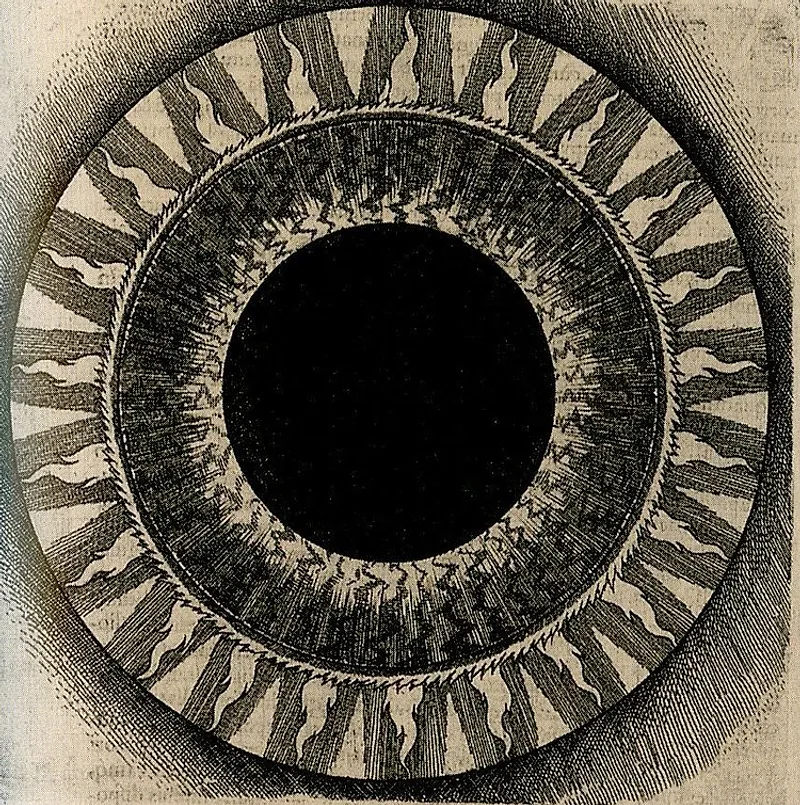
The most widely known part of the book is its division of magic into eight "colours", each linked to a kind of aim and often displayed on the eight arrows of the chaos star: black for death magic, blue for wealth, red for war and aggression, yellow for the ego and self-image, green for love, orange for thinking and cleverness, purple for sexuality, and octarine for "pure" magic, the magician's own relationship with the art. The name octarine came from Terry Pratchett's comic fantasy The Colour of Magic (1983). The scheme is a modern construction, partly modelled on the planetary correspondences of Renaissance magic, and Carroll offered it as a convenient working classification rather than an ancient system. The emblem itself is examined in The Chaos Star.
Probability and the magical equation§
Liber Kaos also introduced Carroll's "magical equation", a semi-mathematical expression of the idea that magic does not override physical law but nudges probability. According to this model, a magical act is most effective when the desired outcome is already possible, when the magician achieves deep gnosis, when there is a strong "link" to the target, and when conscious awareness and unconscious resistance are low. The last two factors restate Spare's teaching that "lust of result" spoils an enchantment, which is why sigils are forgotten after they are charged (see Sigil Magic). Carroll presented the equation half seriously: as a way of thinking about why magic should be aimed at plausible outcomes, not as a measurable law of nature.
Later Work: Physics, Time and the Online School§
After Liber Kaos Carroll published PsyberMagick (1995), a collection of short essays on advanced ideas, and then, after a long pause, a series of books with the Oxford publisher Mandrake: The Apophenion (2008) and The Octavo (2010), the latter subtitled "a sorcerer-scientist's grimoire". These works develop a speculative cosmology in which time has three dimensions rather than one and the universe is described as a kind of hypersphere. Carroll suggested that such a model could make room for effects like retroactive enchantment and divination. Physicists have not taken these proposals up, and Carroll himself frames them as conjectures, but they illustrate the movement's ambition to reconcile magical practice with modern science rather than with traditional theology.
In the 2000s Carroll also helped to establish Arcanorium College, an online school of chaos magick, and in 2014 he produced Epoch, a large illustrated volume created with the artist Matt Kaybryn that combines ritual and philosophical material with elaborate imagery. His later writing is more reflective, sometimes describing magic as a form of play with probability, and it continues to treat belief, ritual and symbolism as instruments.
Influence and Criticism§
Carroll's influence on late twentieth-century magic is hard to overstate. The idea that magicians may choose their paradigm, the methods of gnosis and sigil charging, the language of "results", the eight-arrowed emblem and the image of the magician as experimenter all spread through his books into the wider occult world, where they shaped Wiccan, Thelemic and Pagan practitioners as well as self-described chaotes. His writing also gave the movement a characteristic tone: brief, dry, frequently ironic and impatient with grand metaphysical claims.
His withdrawal from the leadership of the IOT in the mid-1990s, after a period of bitter internal dispute sometimes called the "Ice War", showed the difficulty of building an organisation on an anti-dogmatic philosophy. Critics have also questioned his science, arguing that equations and talk of hyperspheres lend an appearance of rigour to claims that cannot be tested. Others, including scholars of religion, have pointed out that "belief as a tool" can sit uneasily with the living traditions whose deities chaos magicians borrow. Carroll's defenders reply that his books always present their theories as provisional models, to be discarded if they stop being useful, which is itself the core of the chaos magick attitude. The wider story of the movement he helped to found is told in Chaos Magick: History, Sigils and Belief as a Tool.
Frequently asked questions§
Who is Peter J. Carroll?§
Peter J. Carroll is an English occultist, born in 1953, who is regarded as a principal founder of chaos magick. He wrote Liber Null, Psychonaut and Liber Kaos and co-founded the Illuminates of Thanateros with Ray Sherwin in 1978.
What is Liber Null about?§
Liber Null is a short training manual of magic first circulated in 1978. It teaches concentration and mental discipline, exercises for changing beliefs and habits, and outlines of the main magical operations, and it introduces Carroll's concept of gnosis as the key to magical effect.
What are the eight colours of magic?§
In Liber Kaos (1992) Carroll classified magic into eight types: black (death), blue (wealth), red (war), yellow (ego), green (love), orange (thinking), purple (sex) and octarine (pure magic). The scheme is modern and was offered as a working classification, with the name octarine borrowed from Terry Pratchett.
Is Peter Carroll still involved with the IOT?§
Carroll withdrew from the leadership of the IOT in the mid-1990s after internal disputes. He has continued to write, teach and publish independently, including through the online Arcanorium College.
Sources and further reading§
- Liber Null & Psychonaut — Peter J. Carroll, 1987
- Liber Kaos — Peter J. Carroll, 1992
- PsyberMagick: Advanced Ideas in Chaos Magick — Peter J. Carroll, 1995
- The Apophenion: A Chaos Magic Paradigm — Peter J. Carroll, 2008
- The Octavo: A Sorcerer-Scientist's Grimoire — Peter J. Carroll, 2010
- The Book of Results — Ray Sherwin, 1978
- The History of British Magick After Crowley — Dave Evans, 2007
- Stealing Fire from Heaven: The Rise of Modern Western Magic — Nevill Drury, 2011